











–‘We’re now recognized globally as having a “stable, well-functioning, and integrated” regulatory system” – Prof. Adeyeye
—
(Prof. Mojisola Adeyeye earned unique commendation from President Bola Ahmed Tinubu for her lofty achievements in NAFDAC, including taking Nigeria to WHO level 03 few years ago and retaining the status)

(Prof Mojisola Adeyeye is a Professor of Pharmaceutics, Manufacturing Science and Drug Product Evaluation at the College of Pharmacy, Roosevelt University in Schaumburg, Illinois, where she spent 7 years.[4] She was also a Professor of Pharmaceutics and Manufacturing for 21 years at Duquesne University in Pittsburgh, Pennsylvania, USA. She is Senior Fulbright Scholar and Specialist and 2008 American Association of Pharmaceutical Scientists Fellow (the first African woman fellow).

(Prof. Mojisola Adeyeye sensitising Nigerians on public health)

By Biola Lawal
When President Bola Ahmed Tinubu announced the removal of Chief Executive Officers of all federal government parastatals in late 2023, it was not surprising at all, that the Commander-in-Chief left Prof. Mojisola Christianah Adeyeye untouched as the Director General of the National Agency for Food and Drug Administration and Control (NAFDAC).
Political observers discerned then that, the singular action of retaining Prof. Adeyeye in NAFDAC, showed that President Tinubu was truly on top of the country’s situation – positive or negative in all major sectors of Nigeria’s national life, especially, the crucial public health sector, before ascending the nation’s leadership.

(Prof Mojisola Adeyeye with hubby and pillar of support, Distinguished Senator Olusola Adeyeye)
”It showed that, President Tinubu is not a careless person, and was truly knowledgeable on the nation’s progress and setbacks even before ascending the Presidential Seat,” a veteran media practitioner, Iyiola Olalere stressed.

From late 2017 when Prof. Mojisola Adeyeye took over the mantle of leadership, NAFDAC, the Agency saddled with Safeguarding the health of Nigeria’s over 200 million people, had undergone so much incredible transformation through technological, administrative and innovative surgical operations.
Prof Adeyeye’s leadership has earned the honour, respect and recognition Nigeria now enjoys as a nation with one of the most reliable, trustworthy, effective and efficient health regulatory body in the world.
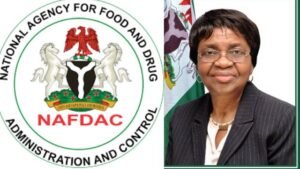
The successes of Prof Adeyeye’s bold, well-thought out initiatives and actions, is now bringing global respect and honour to Nigeria among commity of nations in the global human health protection and management, a stakeholder stated.
-Prof . Adeyeye distinguishedly summed up her incredible achievements through a statement on Wednesday reproduced verbatim for dissemination and historical record purposes:

PROF MOJISOLA CHRISTIANAH ADEYEYE, DIRECTOR GENERAL MEDIA PARLEY AND SPEECH WEDNESDAY 21ST JANUARY, 2026 MODERNISATION AND FOUNDATION LAYING OF NAFDAC REGULATORY SYSTEMS (2018 – DATE): REFLECTIONS ON 2025
It is my pleasure to address you today on the modernisation of NAFDAC’s regulatory systems, a road map that started in January 2018 with the drive to safeguard the nations’ health by imbibing and implementing international standards and best practices in all regulatory processes.
The road map was very steep, rough with a lot of challenges. The foundation laying came with a resolve to start from the beginning which was based on establishing a Quality Management System (QMS) and having a Legal Framework for all the regulatory activities. This was accompanied by a continued evolution of all the regulatory practices
THE FOUNDATION FOR MODERNIZATION: Regulatory modernisation is a strategic imperative to ensure that our systems remain credible, efficient, transparent, and fit for purpose, while protecting public health and supporting access to quality, safe, and effective regulated products.
Modernization of NAFDAC is rested on the five Strategic Pillars of NAFDAC which are: 1) Strong Leadership and Governance; 2) Institutionalization of Best Practices; 3) Safety and Quality of Regulated Products; 4) Continuous Monitoring along the Supply Chain, and 5) Efficient Financial and Performance Management.

The foundation shown below is laid on the composite of the Pillars but molded based on Institutionalization of Best Practices. Establishment and Implementation of Agency-Wide Quality Management Systems.
At the foundation of NAFDAC’s implementation of Individualized Development Plans (IDPs)/ Regulatory System Strengthening interventions was the establishment of a QMS based on ISO 9001:2015 standard, which enabled NAFDAC design, implement and institutionalize systems, processes, policies, guidelines and procedures for all regulatory processes that ensure consistent delivery of services and regulatory system strengthening.
Notable among these are: Focus on the ConsumerPolicies and SOPs on risk management during public health emergenciesGuidelines for complaints and appeal against regulatory decisionsThese instruments ensure fairness, consistency, and preparedness in regulatory decision-making. Lending further credence to these efforts,

NAFDAC attained ISO 9001 certification in 2019 and has since demonstrated a culture of continual improvement by consistently sustaining the certification to date. Institutionalization of Agency-Wide Good Regulatory Practices One of our most significant achievements has been the institutionalization of Good Regulatory Practices (GRP) across the Agency based on strong legal framework.
This involves embedding principles of transparency, accountability, consistency, stakeholder engagement, and evidence-based decision-making into our regulatory processes.
To support this, NAFDAC strengthened and gazetted more than 28 regulations for our regulated products, providing a robust legal and operational framework that ensures clarity, predictability, and fairness in regulatory oversight.
MEDICINES REGULATION AND CONTROL: Nigeria’s engagement with the WHO Global Benchmarking Tool (GBT) marked a defining moment in the evolution of NAFDAC’s regulatory system.
The composition of the GBT team in 2018 and the commencement of the WHO benchmarking programme provided us with an objective, internationally recognised framework for assessing regulatory performance.

Following this, NAFDAC underwent its first formal benchmarking assessment by the World Health Organization in June 2019. This exercise was not merely diagnostic; it culminated in the IDPs that catalysed the systematic identification of gaps, drove targeted institutional reforms, strengthened regulatory systems, and aligned our practices with global best standards.
Thus began Nigeria’s journey toward achieving a stable, well-functioning, and fully integrated regulatory system. The elements used for the foundation of medicine regulation are Quality Management, ISO-Aligned standards Good Regulatory Practice mentioned earlier, Reliance and Risk-based approach to registration and market surveillance post approval.Regulatory Reliance and Regional Harmonization
Recognizing the need for efficiency in an increasingly complex regulatory environment, NAFDAC has actively adopted regulatory reliance and regional harmonization mechanisms.
It is a key principle underscoring the WHO GBT.By leveraging trusted regulatory decisions and WHO prequalification outcomes, we have reduced duplication of effort, improved turnaround times, and ensured timely access to safe, effective, quality, and affordable essential medicines and vaccines.
Our regulatory maturity has also positioned Nigeria as a mentor at both global and regional levels under the WHO GBT framework, contributing to capacity building across Africa.The cumulative effect of institutionalizing the above represents ML3 benchmarking of medicines in March 2022. As a Zonal Director puts it:
“The WHO has a system to grade how well a country’s drug and food regulatory agency works. It’s like a report card. Level 1 is failing. Level 2 is passing. Level 3 is excellent. Level 4 is outstanding. Nigeria moved from struggling to excellent.
”We’re now recognized globally as having a “stable, well-functioning, and integrated” regulatory system”.
WHO Global Benchmarking Tool (GBT) Even more noteworthy is the fact that NAFDAC was successfully re-benchmarked in 2025. And became the first regulatory authority in Africa to achieve this feat, underscoring the strength, resilience, and institutional maturity of our regulatory systems.
In addition, NAFDAC successfully underwent formal WHO benchmarking of medical devices regulation in 2024, expanding regulatory maturity beyond medicines and strengthening oversight of an increasingly important product category.
The Agency’s trajectory into compliance with international standards – ISO 9001:2015 (2019), ML3 (2022), International Medical Device Regulatory Forum (IMDRF) – 2023, successful ML3 Re-benchmarking (2025), recognition by leading national regulatory authorities (NRAs) of NAFDAC’s strengthening of its regulatory framework, implementation of many international guidelines, led to the prestigious admission of NAFDAC as 24th member into the International Council for Harmonization (ICH) in November 2025 in Singapore.
This achievement is significnat because there are 194 NRAs globally and ICH is comprised of only 25 member NRAs.
LOCAL MANUFACTURING AND QUALITY-DRIVEN NAFDAC REGULATION:
As a means of improving access to medicines to our citizens, NAFDAC initiated 5+5 regulatory directive in 2019 and the The Ceiling List in 2020 designed to phase out the importation of selected medicines that could be manufactured locally.
The selected products are those for which local manufacturers have the capacity to produce.Under the 5+5 initiative the manufacturers and Market Authorization Holders were given five years moratorium of five years post the five-year registration license to set up facility locally or do contract manufacturing from existing suitably qualified local manufacturers.
The Ceiling List facilitated local manufacturing through increase in the number of products that can only be manufactured locally from 9 products to 36.These led to growth in facility layouts submissions for both Pharmaceutical and Medical Devices companies.
As of October 2025; a total of 161 layout reviews has been approved by the Agency (Existing companies – 65 and New companies – 96)Medical Devices Coys: 6 (New companies)There was a corresponding shift from importation to local production. More than 70% of products under 5+5 and Ceiling list are now locally manufactured. reflecting growing local industry confidence and investment.Ratio of Import: Locally manufactured – From 70:30 (2019) to 60:40 (2025)Good Manufacturing Practice (Quality) compliance is easier with local manufacturersContract manufacturing partnerships with compliant local manufacturers also increased from 10 in 2019 to 87 in 2025This approach is reducing reliance on international supply chains and supports the development of domestic production capacity.
This reflects a strategic move toward sustainable and scalable local operations.There has been a marked increase in foreign investment, particularly in the medical devices sector. International investors are entering joint ventures with Nigerian firms to establish local manufacturing facilities, further boosting industrial growth.
Examples: Finecure, India & Pinnacle Health Pharma, NigeriaSD Biosensor, South Korea & Codix Bio, NigeriaTroment, Turkey & NASENI (National Agency for Science and Engineering Infrastructure) Another positive offshoot of engaging of local manufactures is increasing implementation of technology transfer of formulations for which there is capacity locally. Examples includeInnova Pvt India and Fidson Healthcare PlcSD Biosensor and Colexa Biosensor, NigeriaGSK and Fidson Healthcare PlcMedicine, Vaccines and Medical Device Pharmacovigilance (Safety Monitoring) Coordination
The following milestones were attained since 2018 with key examples
1. Institutional Strengthening of National Pharmacovigilance Coordination Nigerian National Pharmacovigilance Policy (2020)Good Pharmacovigilance Practice Regulations 2021Guidelines for ADR reporting by MAHs and healthcare professionalsPharmacovigilance Inspection Guidelines for Nigeria, Regulated Drugs 2024.
2. Establishment and Maintenance of a Functional National Safety Database Establishment of a national ADR/AEFI reporting and medicine-related problems database.Establishment of national AE/Incident reporting database for medical devices, IVDs and related products
3. Digital Transformation of Pharmacovigilance ReportingDeployment of electronic safety reporting platforms, including:Med Safety AppNAFDAC E-Reporting PlatformStrengthened national signal detection and monitoring capacity.
4. Expansion of Pharmacovigilance Scope and Specialised Safety MonitoringExpansion of pharmacovigilance scope to include drugs, vaccines, medical devices, and cosmetics, ensuring lifecycle safety monitoring of all registered medical products.Enhanced Passive Surveillance for Vaccination Programmes through programmes like the African Union Smart Safety Surveillance (AU3S) initiative
,LOOKING AHEAD: As we look to the future, NAFDAC remains firmly committed to continuous improvement. Our priorities include the following goals which are anchored on sustainability, innovation, and public health protection.
Advancement to WHO GBT Maturity Level 4 and designation as a WHO-Listed Authority (WLA)Transition to ISO 9001:2026 certificationDeepening and expanding regulatory reliance pathways
Full digitalization of regulatory processes through the implementation of the Integrated Regulatory Information Management System (IRIMS) and Artificial Intelligence in Drug Approval, Safety and Efficacy.
Monitoring Strengthening local manufacturing through smart and predictable regulation Consolidating Nigeria’s role in global and regional regulatory leadership
FOOD SAFETY REGULATION AND MODERNIZATION: Over the years, the scope, complexity, and volume of regulated food products have expanded significantly, driven by rapid advancements in food technology, globalization of trade, and increasing digitalization of regulatory processes.
These realities have necessitated a deliberate shift from traditional regulatory models to modern, technology-driven, and risk based regulatory systems.
A major achievement is the decentralization of the food registration process in 2018, which has significantly supported the timely registration of the growing number of locally produced processed food products.
This has been beneficial to micro-scale and small-scale food industries, which previously faced challenges related to product registration. This initiative not only promotes local manufacturing but also strengthens regulatory oversight at State and Zonal levels. Significant strides in harnessing the digital transformation and automation have also been made.
The Directorates have leveraged on the process improvement modules across electronic platforms such as NAFDAC Automated Product Administration and Monitoring System (NAPAMS), e-permits, Digital Fortification Quality Traceability Plus – DFQT+), Laboratory Information Management System (LIMS), Trade.gov, and other digital solutions which have resulted in an improved efficiency, reduced manual bottlenecks, and improved regulatory turnaround time.
Recognizing that modernization is driven by people skilled in the art, NAFDAC prioritized capacity building through the development of a robust curriculum and structured training plans, alongside the use of digital learning platforms, regulatory officers are continuously equipped with the skills required to operate in a modern regulatory environment.
This has translated into improved efficiency and strengthened regulatory activities.NAFDAC gazetted the Fats and Oils and Food Containing Fats and Oils Regulations in 2022. Collaboration with other MDAs and Partners to develop the Strategy and Roadmap. This is to implement and enforce the set regulatory limits for Trans Fatty Acids.
It is established worldwide that cardiovascular diseases remain the leading cause of mortality worldwide. TFAs increased risk of cardiovascular diseases by increasing the ratio of LDL cholesterol to HDL cholesterol. The regulation is meant to reduce harm and improve quality of life of the citizenry.
The Agency has also enhanced capacity building for food safety management systems (FSSC 22000, HACCP, GMP, etc.) and Food Fraud.NAFDAC has also implemented strategic interventions in 2025/2026 to reduce the harmful use of alcohol in children, including the phased elimination of sachet alcohol and below 200ml alcohol packaged in PET and glass bottles, as well as the reduction of alcoholic strength in small-volume containers.
These actions underscore our commitment to public health protection.These achievements clearly demonstrate that modernization is not merely aspirational—it is already delivering tangible, measurable results that are safeguarding the health of Nigerians and fostering trade and the economy.
Modernization is a continuous process and beyond 2025, NAFADC is evolving into use of Artificial Intelligence and data analytics to proactively identify food safety risks before they escalate and to effectively monitor advertisements.
FOOD SAFETY AND VETERINARY MEDICINE AND ALLIED PRODUCTS:
Food safety remains one of the most critical public health, economic, and development priorities for any country, and VMAP covers animal feed and crop protection products that have a direct link to food safety along the farm-to-fork continuum.
One of the most critical modernizations to the regulatory system is the attainment of ML3, although not directly linked to food, ML3 is about strengthening systems, and when a system is strengthened, all other parts that play within that system benefit from the ripple effects.
Modernization of NAFDAC regulatory system has influenced food safety and our processes over the last 8 years. The VMAP directorate is transforming the formation through:Collaboration on the world stage of the One Health approach.
By ensuring that food safety practices are entrenched long before the food gets to consumers through feed quality and crop protection practices.
Strengthening of Market Authorization process: Online and digitalized registration process has encouraged transparency and efficiencyPre-Market Control and Approval systems: This is especially important in animal feed, the control of additives, premixes, etc and has a direct effect on the quality of feed.
This authorization and approval process is done via the Nigerian Single Window and NAPAMS Adoption of global best practices Alignment with Codex standard on Maximum Residual Limits (MRLs)Encouraging and enforcing Good Manufacturing Practices (GMP) and HACCP-based feed safety systems, thereby shifting our regulatory direction to preventive instead of reactive Implementation of risk management actions: to protect public health
The outright ban of some pesticides, reclassification of others, and restriction of selected pesticides following assessments of their impact on human health and environmental safety.
These actions demonstrate a shift toward preventive regulation and long-term public health protection. Decisive regulatory controls through the institution of regulatory directives to eliminate high-risk practices, such as enforcing the prohibition of use of colistin as a coccidiostat, use of gentian violet as an anti-mould agent, and the combination of more than two antibiotics in a formulation, etc.
This represents a strong regulatory intervention to protect food safety and also support national and global efforts to combat antimicrobial resistance.Laboratory Strengthening and Residue Monitoring
The well-equipped, accredited laboratories are capable of detecting veterinary drug residues, feed contaminants, and pesticide residues. Which has a direct impact on the safety of food Human Capacity Development
The collaboration with some support partners, such as the Fleming Fund and the Danish Veterinary Food Administration, has contributed to the continuous investment in people, which is required for a sustainable modernization of a regulatory system.
Where experiences and knowledge in regulatory science, risk assessment, inspection techniques, and emerging technologies are shared and transferred, where applicable.
These learning sessions have opened up new opportunities for the future.Continuous Stakeholder Engagement Continuous engagement with farmers, veterinarians, feed manufacturers, agrochemical users, and consumers through education, workshops, and transparent communication improves compliance and public trust.
Lifecycle Management Engagement for pesticidesThe agency introduced Initiatives such as the NAFDAC–CropLife Nigeria Stewardship Programme, which exemplify how regulators can partner with industry to promote safe pesticide distribution, use, and disposal across the entire product lifecycle.
Strengthened Antimicrobial Resistance (AMR) initiative Institutional governance mechanisms through the establishment of an Agency-Wide One Health AMR Committee, to guide regulatory actions across human medicines, veterinary medicines, animal feed, and food.
This platform supports the effective implementation of national action plans on AMR in NAP 2.0 and ensures alignment across departments.
NAFDAC REGULATORY – BATTLES FROM THE ZONES:
.The battles for NAFDAC regulatory controls are fought daily at the zones and states, be it for substandardard falsified medicines, unwholesome foods and water, diversion of chemicals and dangerous chemicals in cosmetics.
Safeguarding the health of the citizens is the result of years of relentless work, modernization, and transformation within NAFDAC. Exaamples of nine food safety battles identified are stated below.
The creation of a directorate structure and decentralization of food registration made these battles real because NAFDAC is always there :The third Pillar of NAFDAC Strategic Plan – Safety and Quality of Regulated Products – involes the composite battles that sometines can be life threathening.
However, NAFDAC at the headquartes and zones have used technology, sensitization and traiming to confranot these challenges. Modernization of NAFDAC Regulatory and Drug and Food Safety and Post approval Marketing – Quality Control TestingQuality Control Testing in Market Authorization and Post Approval Safety Monitoring is a critical tool for pronouncement on quality and detection of Sub-standard medicines, particularly in a dynamic constantly evolving regulatory landscape.
NAFDAC has seven full-size laboratories in five geographical zones, five of which have ISO 17025 certification and recertifications since 2018.
Four mini labs are at different stages of constructions in Sokoto, Kano, Edo and Oyo States.Milestones in the Modernisation of QC Laboratory Testing – CDCL, Kaduna and Agulu, Vaccine, Biologics and Medical Devices Laboratory. Construction of new CDCL Lab in Yaba and Almost complete State-of-the-Art Vaccine Lab in Oshodi.
Leveraging Technology and Digitalization for process improvement in the labs Upgrade of the Laboratory Information Management System; alert system, auto-generation and printing of labels, OOS process, Laboratory report generation Real-Time Environmental monitoring using the Viasala Data Logger General Transition from pre-market focused QC – Risk Based Sampling and Testing in all labs Nationwide
Laboratory Harmonization Project; started in 2019. Harmonization of QMS of seven NAFDAC Laboratories, Joint ISO 17025:2017 Accreditation with Accreditation Body, Establishment of Intra-Laboratory Comparisons (ILC) and Inter-Laboratory Audits Expand scope of CDCL’s WHO PQ to microbiology analysis and accreditation for additional Laboratory Strategic Priorities for the Next Phase of QC Testing Sustained regional and international reliance activities;
RCORE in QA, information sharing, reliance and collaboration; Leveraging WHO Prequalification to strengthen NAFDAC’s position as a reference Laboratory for nationally, regionally and internationally (e.g. institutions, National Regulatory Agencies, International Organizations)
WHO Prequalification for Microbiology scopeHealth, Safety, and Environmental StewardshipAs part of modernization of NAFDAC regulatory system, the Agency continues to strengthen Health, Safety, and Environment (HSE) practices through: Renovation and modernization of laboratory complexes Improved laboratory workflows and safety systemsQuarterly health checks for staff.
A strengthened safety culture across all laboratory operationsThese measures safeguard staff welfare and ensure sustainable operationsCall to ActionReiterate that modern regulatory systems are only as strong as QC laboratories Emphasis on QC laboratory testing as: Enablers of drug safety and cornerstones of post-approval market control.
Need for sustained investment, collaboration, and innovation to achieve NAFDAC’s commitment to protecting public health through science-driven, modern regulatory oversight.
Chemical Safety: OPCW Perspectives – Achievements and Future OutlookNAFDAC safeguards public health, the environment, and national security through chemical regulations.Framework aligned with Organization for the Prohibition of Chemical Weapons (OPCW) objectives and Nigeria’s obligations under the Chemical Weapons Convention (CWC).
By its mandate, NAFDAC regulates industrial chemicals, agrochemicals, controlled and dual-use substances. NAFDAC–OPCWIs ordinated nationally through the National Authority on Chemical &Biological Weapons Convention (NAC&BWC) and its focus areas include: Chemical analysis and laboratory verification,
Quality management systems, Emergency preparedness and response and Oversight of toxic industrial chemicals
Key Achievements (2018–2025) include: Entry into OPCW Chemical Analysis Competency Tests (CCACT) Significant upgrades to chemical laboratory infrastructure Achievement of “Very Good” OPCW proficiency rating (2023)OPCW assessment of NAFDAC Central Laboratory (Lagos) Hosting of OPCW Basic Course for English-speaking African States (2025).
Strengthened national and regional recognition of Nigeria’s chemical verification capacity Future Outlook (2026–2030):
Pathway to OPCW Laboratory Designation Consolidation of regulatory and laboratory gains Sustained high performance in OPCW proficiency testing Strengthening of ISO/IEC 17025-compliant quality systemsIncremental upgrades of analytical instrumentation Expanded method development for scheduled and toxic industrial chemicals Continued human capacity development and inter-agency collaboration Strategic pathway toward possible OPCW laboratory designation NAFDAC has made significant progress in strengthening Nigeria’s chemical safety framework; Sustained investment and strategic partnerships are essential for future resilience and compliance.
INVESTIGATION AND ENFORCEMENT – MODERN PERSPECTIVES: Regulatory oversight today operates in an environment defined by globalisation, complex supply chains, evolving chemical risks, and increasingly sophisticated regulatory crimes.
In this context, NAFDAC’s mandate to protect public health requires a regulatory system that is agile, intelligence-driven, and resilient.The Investigation and Enforcement Directorate has been central to translating regulatory policy into measurable outcomes ensuring that compliance is not optional and that chemical safety standards are enforced across the entire value chain.
The achievements of the directorate over the last years are stated below. First, NAFDAC has progressively shifted from a predominantly reactive enforcement posture to a risk-based, intelligence-led regulatory enforcement model. This is in line with the WHO Global Benchmarking Tool as it relates to Market Control function.
This transition has enhanced the strategic use of limited resources, improved targeting of high-risk products and operators, and strengthened deterrence against substandard, falsified, and unsafe regulated products.Secondly, the Directorate has benefited from the gradual integration of technology into regulatory enforcement.
Digital registration systems, improved product traceability, electronic documentation, and data-supported inspections have enhanced transparency, accountability, and the legal robustness of enforcement actions.Thirdly, inter-agency collaboration has been institutionalised as a regulatory necessity rather than an option.
Strategic partnerships with Customs, security agencies, environmental regulators, and subnational structures have significantly expanded NAFDAC’s enforcement reach, particularly at ports, borders, and high-risk distribution corridors.A particularly notable illustration of this progress was the Open Drug Market (ODM) enforcement operation conducted in February 2026, which stands as one of the most coordinated and impactful market sanitisation exercises in recent years.
The operation successfully dismantled entrenched distribution networks involved in the trade of falsified and unregistered medicines, resulting in extensive seizures and the closure of illicit outlets.
Specifically, the operation led to the arrest of forty (40) suspects, with five (5) cases currently undergoing prosecution. In addition, one hundred and thirty-eight (138) truckloads of substandard and falsified medicines were evacuated from circulation. To conclusively eliminate the risk of re-entry into the supply chain, over One Trillion Naira (₦1,000,000,000,000) worth of seized substandard and falsified drugs were destroyed in April 2026.
This decisive action sent an unequivocal message that illicit drug markets have no safe haven under a modern, intelligence-driven regulatory enforcement regime.Similarly, the August enforcement action against the “In-Call Pack” phenomenon demonstrated NAFDAC’s capacity to adapt enforcement strategies to emerging and unconventional regulatory threats. By decisively addressing this evolving pattern of illicit and fake regulated product distribution, the Agency reaffirmed its commitment to protecting public health even in non-traditional and digitally enabled supply channels.Finally, there has been measurable improvement in institutional professionalism and operational discipline.
The standardisation of operating procedures, strengthened evidence management, and focused staff capacity development have enhanced the credibility and authority of Investigation and Enforcement as a core regulatory function of the Agency.The number of arrests made in 2025 was one hundred and fourteen.
The number sent to legal was sixteen Future Outlook:Technological lag may undermine enforcement effectiveness if regulatory tools do not keep pace with increasingly sophisticated criminal networks.Skills and capacity gaps may emerge if continuous professional development particularly in chemical risk assessment, digital forensics, intelligence analysis, and emerging risk detection, is not institutionalised.Judicial and prosecutorial constraints may reduce deterrence if enforcement outcomes are not consistently translated into timely, conclusive, and well coordinated legal sanctions.In addition, resource sustainability, including funding, logistics, infrastructure, and staff welfare, remains a critical determinant of regulatory resilience and operational continuity.
Modernisation is a culture of governance which is Pillar I in NAFDAC Strategic Plan.
NAFDAC DIGITAL TRANSFORMATION JOURNEY AND MODERNIZATION OF REGULATORY CONTROL: The Agency adopted a phased, regulation‑first approach anchored on transparency, efficiency, and public health. Key milestones include:Modernized Corporate Website – gateway for information and stakeholder engagement.
NAFDAC Automated Product Administration and Monitoring System (NAPAMS) supports the end-to-end regulation of products by providing a unified digital platform for online product registration covering foods, drugs, cosmetics, medical devices, chemicals, packaged water, and other regulated products.
The NAPAMS platform was recently upgraded to enable such processes that include:The submission and processing of applications through structured documentation upload, validation, and assessment workflowsImproved turnaround time and auditability of regulatory workflowsEnhanced traceability of regulated products throughout their lifecycle Enhanced reporting to government and international partnersDossier Management System (DMS) is a specialized digital platform used to manage the submission, review, assessment, storage, and lifecycle management of regulatory dossiers, especially for medicines and other complex regulated products.
Electronic Clinical Trials Application Platform (eCTAP) is a digital system used to manage the submission, review, approval, and oversight of clinical trial applications in Nigeria.Laboratory Information Management System (LIMS) is a digital platform used by the Agency to manage laboratory testing, sample analysis, and quality control activities across its laboratories.Ports Inspection Data Capture And Risk Management System (PIDCARMS) is a platform deployed to regulate and control imported regulated products before they are cleared at Nigeria’s ports, airports, and land borders.
NAFDAC Green Book Platform is an official digital reference platform used by the Agency to publish and provide public access to approved and registered pharmaceutical products in Nigeria.
NAFDAC Traceability Information System (NTIS) is a digital platform based on GS1 technology to enable end-to-end traceability of regulated products across the supply chain, particularly medicines and other health products. The system captures and manages product identification, serialization, and movement data in line with GS1 standards, supporting supply chain visibility from manufacture or importation to distribution and dispensing.
NTIS enhances regulatory surveillance, post-market monitoring, and rapid response to substandard and falsified products, while providing a trusted data backbone for pharmacovigilance, recalls, and regulatory decision-making. It was used to monitor the supply chain of millions of doses of COVID-19 vaccines, now being used for narcotincs and maternal, newborn and child commidities. NAFDAC is leading the NRAs in Africa in the use of the technology.National Single Window Integration
NAFDAC systems has an seamless electronic data exchange with Nigeria Customs Service bt enabling importers and exporters to submit regulatory and customs information through a single digital interface rather than multiple platforms..
Microsoft Office 365-driven Communication and Collaboration Tool: NAFDAC enhanced collaboration with the adoption of Microsoft SharePoint platforms form Microsoft Office 365 ecosystem and standardize communication through corporate email.
These efforts supported NAFDAC’s attainment and sustainance of WHO GBT Maturity Level 3 status.Our most strategic achievement is the Integrated Regulatory Information Management System (IRIMS), unifying regulatory data and decision‑making across the Agency.Impact of DigitalizationEfficiency: Faster product registration and approvals, elimination of manual bottlenecks.Transparency:
Digital audit trails and applicant tracking reduce uncertainty.Data Integrity: Centralized systems ensure accuracy and compliance.Public Health: Quicker access to safe products, stronger surveillance against substandard goods.Resilience: Continuity of regulation during emergencies.
The Road Ahead : We are moving from digitalization to intelligent regulation. Priorities include:Full consolidation of IRIMS.Advanced analytics and dashboards.Artificial Intelligence for triaging, document review, and regulatory chatbots.Stronger interoperability with national and regional systems.Cybersecurity and data governance as core safeguards.Continuous capacity building for staff.
All the transformative changes and modernization presented in this media parley couldn’t be possible without or digitizationS
TAFFING, INFRASTRUCTURE, WORKFORCE MOTIVATION AND DISCIPLINE: Engaging individuals with the right skill sets for regulatory duties such as Food scientists, Pharmacists, Doctors, Veterinarians, Lawyers and other persons with science background is the engine on which modernization of.
A regulatory runs.The Management has placed emphasis on this, and President Bola Ahmed Tinubu (GCFR) has responded positively to increasing our staff strength. Deliberate effort to attract persons with second degrees – Masters and PhD. The staffing engagement focused on quality over quantity.
The Agency has seen a leap in infrastructural development since 2018. Usually, the Agency office accommodations are donated at the Federal Government Secretariat Complex which is not suitable for the Agency’s operations because they cannot be easily accessed by clients. The Management embarked on the construction of state offices around the country.
Thus far, twelve state offices including Yaba Central Drug Laboratory have been completed while thirteen zonal/state offices, laboratories are under construction and Modern working tools or infrastructure like computers (~1350), furniture are provided to facilitate the work. New vehicles (>140) have been procured to enhance regulatory activities.
This has ended the tradition of relying on those regulated to transport officers to their facilities.A well-motivated and disciplines workforce is the core strength of any organisation.
The NAFDAC management knows this too well.Staff welfare is one area the Agency has placed a high premium on because when the staff are motivated and happy, they put in their best to ensure that the mandate is achieved.Capacity building and staff development have been provided to motivate staff.
A special Staff Development Programme was instituted in 2021 for staff who wish to pursue higher degrees while still working. It is an arrangement with some universities and fully funded by the Agency.
The idea is to ensure that officers approving regulated products – food or drug know the science behind the products.To date more than twenty-five (25) staff are in graduate programmes at different universities pursuing MSc and PhD while on the job full time.The management has responded to staff allowances as part of motivation.
Payment of these allowances have done much to improve the social economic wellbeing of the staff and rekindled their resolve to work harder and improve productivity.
While staff welfare stands as the carrot, staff discipline is the stick the management employs to ensure that staff operate and behave within the acceptable bounds as stipulated in Public Service Rules and the Agency’s code of conduct.
Infractions are swiftly punished as exemplary conducts and exceptional performance are rewarded.
As a regulatory Agency discipline is critical to the success of NAFDAC in the onerous task of safeguarding the health of the nation, which is enunciated in our motto; ‘’Costumer-Focus, Agency Minded”. As stated earlier, without a motivated and discipline staff there cannot be modernization of a regulatory agency. The evidence shows.
Thank youProf Mojisola Christianah Adeyeye, FAS Director General, NAFDAC