





Enugu 4-tier health system built on inclusive, affordable, quality healthcare delivery – Enugu Govt.
The Enugu State Government says that the state 4-tier health system is built on inclusive, affordable, quality and international standard healthcare delivery based on the Sustainable Development Goals (SDGs).
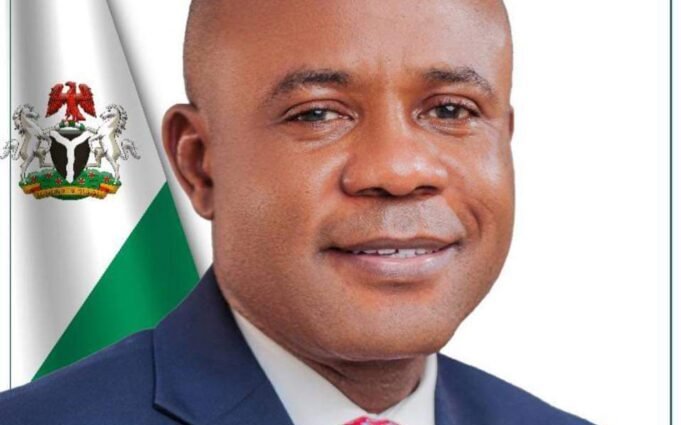
The state Commissioner for Health, Prof. George Ugwu, said this at the weekend in a lecture he delivered at the Researching Africa Conference 2 held at Princess Alexandria Hall in the University of Nigeria, Nsukka (UNN).
The conference was organised by UNN’s Department of Sociology and Anthropology in partnership with Insight Health Group.
The lecture was themed: “Three Years of Bold Reforms Across Primary, Secondary, Tertiary, and Emerging Quaternary Healthcare in Enugu State by Gov.
Peter Mbah.”

Ugwu said that Gov. Mbah’s current huge investment in healthcare infrastructure is not merely a physical investment; it is an investment in human development, social protection, productivity, and a sustainable future.
He noted that the health-loving governor had envisioned a functional 260 Type-2 Primary Healthcare Centres (PHCs) in each political ward (first-tier) and General/Cottage Hospitals scattered in the state’s 17 council areas (second-tier).
He said that there is two tertiary or teaching hospitals (third-tier) and the upcoming 300-bedded International (Quaternary) Hospital, Enugu equipped with modern state-of-the-art medical equipment to serve as international medical tourism hub (four-tier).
Ugwu noted that the government had created patronage and access to these health facilities for residents through an all-inclusive Universal Health Coverage (UHC) via the state health insurance scheme of N12,000 annually per resident.

He encouraged all residents to embrace health insurance.
According to him, the Type-2 PHCs in all 260 political wards provides quality healthcare services just a walking-distance to residents’ homes both in rural and urban areas.
He noted that the PHCs, which some have started operation and others at various stages of completion, have clean water/sanitation facilities, maternal and child health systems, solar power, immunisation support and doctors/nurses quarters among others.

The commissioner said that the state government recently recruited an additional 2,250 health workers to strengthen the PHCs statewide and digitalised the PHCs with Electronic Medical Record (EMR) system.
Ugwu said that most of the General/Cottage hospitals are included in our renovation programme, received modern diagnostic equipment, expanded surgical capacity, emergency-care infrastructure, strengthened clinical laboratories, modern ambulances and referral systems.
He said that the state have two tertiary/teaching hospitals – Enugu State University Teaching Hospital (ESUTH), Parklane, Enugu and the State University of Medical and Applied Sciences (SUMAS) Teaching Hospital, Igbo-Eno, Nsukka.
“In ESUTH, we have brand-new Twin 6-Floor Laboratory and Clinical Complex; 7-Floor Nursing Complex with MRI Diagnostic Suite and 2-Floor Accident and Emergency Department with new diagnostic and surgical wing linked to a state emergency-response.
“SUMAS Teaching Hospital, Igbo-Eno, Nsukka has been remodelled and expanded, and is now recruiting suitable medical and allied professionals to commence full-scale services,” he said.

He said that the state’s flagship healthcare facility – Super-Specialist 300-bedded International Hospital, Enugu – was designed to curb outbound medical tourism from Africa, with the latest state-of-the-art equipment and seasoned medical professionals.
On training of healthcare personnel, Ugwu said that the state secured full accreditation for Awgu School of Midwifery; Enugu State College of Nursing Sciences in Enugu and Oji River, even as the government secured WHO equipment support for them.
“Gov. Mbah did an upgrade at Awgu School of Midwifery 150-bed hostel, another newly-constructed student accommodation, solar-lights, library stocked with current books and ICT; clinical demo room upgrade, modern classroom blocks with digital learning facilities among others.”
He noted that due to the state government current huge investment and expansion of health facilities, the Medical and Dental Council of Nigeria (MDCN) approved increase of annual intake of medicine and surgery students to 350 in ESUTH Teaching Hospital.
Ugwu said that the state established a Public Health Emergency Operations and plans to link it with ambulances and emergency control centre as well as an ultra modern central medical store for medical supply management and secured storage.
He said, “The strong health systems/tiers have enabled the state to be at the forefront of achieving the six health related SDG goals, which included: SDG Goal 1 – No Poverty – as out-of-pocket health costs are a leading driver of household poverty.
“SDG Goal 3 – Good Health and Well-being – reduced mortality, better maternal outcomes and UHC; and SDG Goal 5 – Gender Equality – maternal services and women-led workforce strengthen women’s agency.
“SDG Goal 8 – Decent Work and Growth – recruitment of 2,250 workers and a healthier workforce expand productivity; SDG Goal 10 – Reduced Inequalities – ward-level PHCs close rural; and SDG Goal 11 – Sustainable Cities and Communities – resilient health infrastructure makes for safer communities.”

The Commissioner of Health, Prof. George Ugwu, who is also a well respected Professor of Medicine at UNN, was applauded for his immense contributions to research and improvement of health systems and programmes.
The lecture, which left the Princess Alexandria Hall filled up with top academics, was attended by the Vice-Chancellor of UNN, Prof. Simon Ortuanya, represented by his deputy, members of university council and community among others.