
Year: 2026

  • Children’s Day: Foundation unveils 2 initiatives for dream actualisation 

    Children’s Day: Foundation unveils 2 initiatives for dream actualisation 

    Children’s Day: Foundation unveils 2 initiatives for dream actualisation


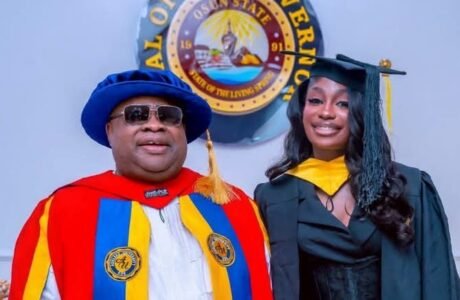
    Miss Ayomitide Ebo, Founder Estelle Education Foundation


    By Bushrah Yusuf-Badmus

    The Estelle Education Foundation has unveiled two initiatives, “The Girl Re-Script Project” and “Adopt A Future”, to help children in the actualisation of their dreams.


    Founder of the Foundation, Miss Ayomitide Ebo made this known while unveiling the initiatives on Saturday in Ilorin, at the foundation’s 2026 Children’s Day Programme.


    The theme of the Programme is “The Power of a Child’s Dream”.


    She said that, an investment in a child is an investment in the future of the society itself.


    “The Girl Re-Script Project is a dedicated initiative designed to support teenage girls who have had to leave school due to early pregnancy or forced marriage.


    “For many of these young women, the loss of education leads to a life of total financial dependency, our mission is to break that cycle.


    “By providing vocational training, mentorship, and essential life skills, we aim to help these girls move from a place of forced reliance to one of self-sufficiency.


    “We want them to know that their mistakes, pain, or circumstances do not have to define the rest of their lives.


    “We believe every girl deserves the chance to re-script her story and build a future defined by her own potential rather than her past circumstances.


    “Because when society gives up on a girl child, we lose more than one life, we lose dreams, leadership, creativity, and generations of possibilities,” she said.


    Miss Ebo added that “Adopt A Future” is an initiative where individuals, families, and organizations can support the education of secondary school students by sponsoring their school fees and learning materials, including textbooks and essential academic resources.


    “Sponsors will receive termly updates, including academic progress reports, notes on performance, and general development updates about their adopted child, thereby ensuring transparency,” she said.


    Miss Ebo said the children’s day programme was to serve as a reminder that child’s dream may seem small today, but the dreams of children often become the solutions of tomorrow.


    An education expert, Dr James Adewale tasked parents and teachers to help children nurture their dreams for them to be successful.


    Adewale said parents should be observant to know their child’s dream and guide them to pursue them.


    He further advised teachers not to kill the dream of their pupils with words and actions, but rather encourage them with affirmative word.


    In her remarks, Miss Faith Adaramola also urged the children to pay attention to their dreams and pursue it by being serious and determined.


    Chairman of the occasion, Dr Segun Oyelabi said the power of a child’s dream is unlimited, hence the importance to support their dreams and help them materialise it.


    Highlights of the programme was a Spelling Bee Competition, games and presentation of certificates to all the children

  • Folarin, Adelabu commend peaceful APC presidential primary

    Folarin, Adelabu commend peaceful APC presidential primary

    Folarin, Adelabu commend peaceful APC presidential primary


    By Adewale Owoade


    Former Senate Leader, Teslim Folarin, and former Minister of Power, Adebayo Adelabu, have commended the peaceful conduct of the APC presidential primary in Oyo State.


    Members of the All Progressives Congress (APC) turned out in large numbers for the exercise held across the state.

    Across several wards in Ibadan and other parts of the state, party faithful queued peacefully to cast their votes under the supervision of electoral officials.


    Folarin monitored the voting process at Ward 5 in Ona-Ara Local Government Area, where he praised party members for the impressive turnout.


    “I have been moving around town, and my observation is that there is appreciation for President Bola Tinubu’s efforts, real and true appreciation.


    “Support from the people is truly organic, and I think we are good to go.


    “To improve the votes of the president by 35 per cent has always been the target, and I believe we can achieve that.


    “The turnout today shows acceptance of the president.


    “Truly, things have been tough for some time, but people also understand why things have been tough, and they are prepared to support the president to the end.


    “They believe the next four years will be better, and I also believe that it will be much better.


    “There is an energy crisis all over the world, but people are prepared to stick with the president due to the capability he has demonstrated.


    “The right thing to do is to stick with the president, and we will begin to see real changes in his next term,” he said.


    Speaking separately, Adelabu monitored the exercise at Ward 9 in Ibadan South-East Local Government Area.


    He described the overwhelming support shown by APC members in Oyo State as a reflection of President Tinubu’s commitment to strengthening internal democracy within the party.


    “I have not noticed any infraction, irregularity or misconduct.


    “There is a peaceful atmosphere, and people came out en masse to ensure that President Tinubu is re-elected for a second term.


    “I can tell you that this particular election of Mr President is 100 per cent credible.


    “My message to Nigerians is to join the good people of our party and ensure that President Tinubu proceeds to win the general election.


    “This is a vote of confidence in the president,” Adelabu said.

  • APC PRIMARIES DEMONSTRATE INTERNAL DEMOCRACY, DEEPEN GRASSROOT POLITICS, SAYS PRESIDENT TINUBU

    APC PRIMARIES DEMONSTRATE INTERNAL DEMOCRACY, DEEPEN GRASSROOT POLITICS, SAYS PRESIDENT TINUBU


    By Iyiola Olalere

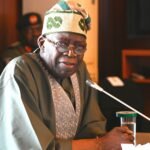
    President Bola Ahmed Tinubu on Saturday described the conduct of the 2026 All Progressives Congress (APC) primaries nationwide as a strong demonstration of internal democracy within the ruling party.

    President Tinubu stated this after he participated in the APC Presidential Primaries at Ikoyi-Obalende Ward L2 in Lagos, noting that the exercise has further deepened the democratic process.

    The President, who arrived at the venue alongside his wife, Sen. Oluremi Tinubu, was received by the Lagos State Governor, Babajide Sanwo-Olu, Lagos APC Chairman, Pastor Conerlius Ojelabi, Minister of Industry, Trade and Investment, Dr Jumoke Oduwole, and former Minister of Finance, Wale Edun, among other party leaders.

    The President commended party members for their orderly conduct, enthusiasm, and commitment to democratic values, a statement by Bayo Onanuga, the Presidential Spokesman disclosed.

    “This is a demonstration of internal democracy, and it has been going on very well according to plan. This is grassroots politics where every member of the party has the right to participate.

    “It shows that we have internal democracy and it’s peaceful and well organised.

    On the conduct of the primaries across the states, President Tinubu said, “I am very satisfied that Governors have done well in their various states, from the ward congresses to Local Government congresses to the delegate accreditation, validation, membership registration and the certification of the electoral process. It has been done very well, and with this, you could rate democracy at a high level.”

    He reiterated that APC remains committed to transparent and inclusive democratic processes that give party members at the grassroots the opportunity to freely choose their leaders and representatives, emphasising that their involvement remains the foundation for sustainable democratic development.

    President Tinubu also praised electoral officials, party leaders, and security agencies for ensuring the exercise was conducted peacefully and credibly, and urged Nigerians to continue supporting democratic institutions and national unity.

    The President reaffirmed his administration’s commitment to democratic ideals, good governance, and policies to improve the welfare of Nigerians while strengthening political stability nationwide.


  • WMC Customs hands over drugs worth N235.7m to NDLEA, NAFDAC

    From third right, the Deputy Commander of Narcotics, Apapa Strategic Command of the NDLEA, Mr Akinwunmi Olufemi, receiving the intercepted cannabis parcels from Customs Area Controller, Western Marine Command, Comptroller Patrick Ntadi on Wednesday in Lagos


    WMC Customs hands over drugs worth N235.7m to NDLEA, NAFDAC
    Lagos, May 20, 2026 , Nigeria Customs Service (NCS), Western Marine Command, has intensified its anti-smuggling operations along Nigeria’s waterways with the seizure of cannabis and pharmaceutical products worth over N235.7 million.
    The Customs Area Controller of the command, Comptroller Patrick Ntadi, disclosed this during a news conference and handover ceremony on Wednesday in Lagos.
    Ntadi said the command intercepted 822 loaves of cannabis sativa and cannabis indica, which were handed over to the National Drug Law Enforcement Agency (NDLEA) for further investigation and destruction.
    He added that 532 bottles of pharmaceutical products, including codeine and other controlled substances, were also transferred to the National Agency for Food and Drug Administration and Control (NAFDAC).
    According to him, the seizures were recorded through intelligence-driven operations aimed at combating smuggling, protecting public health and strengthening border security.
    Ntadi said officers also seized 10 bales of second-hand clothing, 569 pairs of used adult shoes and 517 pairs of children’s shoes during the operations.
    He disclosed that smugglers concealed narcotics inside sacks of used clothing in an attempt to evade detection.
    “We received credible intelligence that smugglers were disguising contraband inside used textiles.
    “When officers intercepted and searched the consignment, large quantities of cannabis concealed inside the sacks were discovered,” he said.
    The comptroller said 320 loaves of cannabis sativa were recovered from the 10 sacks of second-hand clothing.
    He described the interception as a major breakthrough in efforts to curb trans-border crimes along Nigeria’s waterways.
    Ntadi noted that some suspects escaped arrest by jumping into the waterways during the operation.
    He said the Duty Paid Value (DPV) of the seizures exceeded N117 million, with cannabis sativa valued at N46.7 million and cannabis indica estimated at N71 million.
    The comptroller commended officers and men of the command for their professionalism and resilience despite the operational risks associated with marine anti-smuggling activities.
    The Customs Area Controller, Western Marine Command, Comptroller Patrick Ntadi, handing over interception pharmaceuticals to the official of the National Agency for Food and Drug Administration and Control in Lagos on Wednesday
    He also praised the collaboration between Customs, NDLEA and NAFDAC, noting that inter-agency cooperation remained critical to tackling illicit drug trafficking and prohibited imports.
    He also praised the collaboration between Customs, NDLEA and NAFDAC, noting that inter-agency cooperation remained critical to tackling illicit drug trafficking and prohibited imports.
    Receiving the seized drugs, Deputy Commander of Narcotics, Apapa Strategic Command of NDLEA, Mr Akinwunmi Olufemi, commended the NCS for its sustained efforts against drug smuggling.
    “We see Customs as our brothers. We have maintained strong cooperation over the years to rid the country of agents of darkness seeking to destroy Nigeria through drug trafficking,” he said.
    Olufemi assured that the collaboration between both agencies would continue to strengthen surveillance across waterways and land borders.
    He warned perpetrators to desist from the illegal trade, stressing that offenders arrested would face prosecution.
    “There is no way the law will not catch up with them. If arrested, they will be prosecuted and jailed,” he said.
    The Customs Area Controller, Western Marine Command, Comptroller Patrick Ntadi, honoured by the African International Wrestling Federation for his anti-smuggling efforts and support for youth-focused advocacy initiatives
    Interception
    Meanwhile, the African International Wrestling Federation honoured Ntadi for his anti-smuggling efforts and support for youth-focused advocacy initiatives.
    A picture of the African International Wrestling Federation team, the Customs Area Controller, Western Marine Command, Comptroller Ntadi, and the management team to the command on Wednesday in Lagos
    The organisation also unveiled a campaign titled “Pro-Wrestling Against Border Smuggling,” aimed at using sports entertainment to sensitise youths on the dangers of smuggling and cross-border crimes.
    According to the organisers, the initiative will promote lawful trade, responsible citizenship and youth empowerment through awareness campaigns and collaboration with security agencies.


  • Aolalubarika Pupo Pupo: The Grassroots Voice for 2027

    Aolalubarika Pupo Pupo: The Grassroots Voice for 2027

    As political conversations ahead of the 2027 general elections continue to gather momentum across Ogbomosho and Oyo State at large, stakeholders, youths, community leaders, and grassroots mobilizers are increasingly canvassing massive support for Hon. Sakariya Mohammed Taofiq popularly known as Aolalubarika Pupo Pupo — a seasoned administrator, grassroots politician, legislative expert, and accomplished public servant whose wealth of experience has positioned him as a strong and credible voice for quality representation at the Oyo State House of Assembly.

    Born in Ogbomosho and deeply connected to the aspirations of the people, Hon. Sakariya Mohammed Taofiq has consistently demonstrated uncommon commitment to leadership, governance, youth development, and community advancement over the years. Armed with sound academic qualifications including a Bachelor’s Degree from Ahmadu Bello University and two Master’s Degrees in Public Administration and Election Administration from the prestigious University of Ilorin and University of Ibadan respectively, Aolalubarika Pupo Pupo stands out as a refined, intellectually equipped, and politically experienced leader prepared for the legislative responsibilities ahead.

    Political observers believe his vast administrative exposure and practical governance experience distinguish him among contemporary political actors. Having served in several managerial and leadership capacities both in private and public establishments, he built a reputation for diligence, organizational efficiency, accountability, and effective human relations. His service as Supervisory Councilor in Ogbomosho North where he oversaw critical sectors such as Education, Community Development, Youth Development, Sports, Information, and Social Services further endeared him to the grassroots and gave him firsthand understanding of the developmental needs of the people.

    Beyond local governance, Hon. Sakariya Mohammed Taofiq also garnered strategic legislative experience at the national level, serving as Senior Legislative Aide to the Majority Leader and later as Special Assistant to the Honourable Speaker at the Federal House of Representatives, Abuja. These remarkable experiences exposed him to the practical workings of lawmaking, constituency management, policy implementation, and democratic governance — qualities many constituents now describe as highly essential for effective representation in 2027.

    Aolalubarika Pupo Pupo’s political journey has also remained defined by resilience, loyalty, accessibility, and consistent grassroots engagement. From his active participation in student union leadership to his contributions in party administration and community service, he has remained a familiar and respected figure among the people. His multilingual ability in English, Yoruba, and Hausa further portrays him as a bridge-builder capable of relating with people across diverse backgrounds.

    As consultations intensify ahead of the Oyo State House of Assembly race, many residents and political stakeholders are strongly canvassing support for Hon. Sakariya Mohammed Taofiq, describing him as a tested and experienced leader whose emergence would bring responsive representation, people-oriented legislation, youth empowerment, and accelerated development to the constituency.

    Indeed, the growing calls for support in favour of Aolalubarika Pupo Pupo reflect the confidence many people have in his capacity, competence, political maturity, and readiness to deliver impactful representation. With his rich blend of administrative expertise, legislative exposure, grassroots connection, and passion for public service, supporters believe Hon. Sakariya Mohammed Taofiq represents the kind of visionary and accessible leadership needed to move Ogbomosho to greater heights at the Oyo State House of Assembly in 2027.

  • Nigerian Elite and the Death of Democratic Promise

    Nigerian Elite and the Death of Democratic Promise


    By Richard Ikiebe

    British voters have delivered a massive jolt to their political establishment. The latest local council elections saw the demolition of the two old parties that have governed Britain for over a century, with voters migrating in significant numbers toward insurgent alternatives. The crisis is still unfolding.

    It is messy and deeply humbling, particularly for the Labour Party leaders. But it is also democracy doing precisely what it is designed to do by forcing a tired political elite to reckon with its own obsolescence. Britain’s political turbulence, for all its drama, is a system renewing itself. The institutions are absorbing the shock. And somewhere in that churn, an emerging governing class is being tested and shaped.

    In contrast, the urgent question Nigeria has avoided for too long is this: does the country have any mechanism, any at all, for the peaceful and organic replacement of a governing elite whose time has passed? The honest answer is no, and the consequences of that absence now define the country’s unsightly political condition.

    Nigeria has repeatedly tried to clean its stables before, but the efforts often ended badly. In 1976, Generals Murtala Mohammed and Olusegun Obasanjo arrived with brooms, declaring war on the entrenched bureaucratic class. The “super permanent secretaries” (men who had quietly become the real power behind government), were swept out in a flurry of dismissals. The system shuddered, but did not transform. New occupants settled in and invented worse arrangements.

    General Muhammadu Buhari, in 1983, took a blunter approach. His target was the political class itself, particularly those he found too loud, too Southern, or too powerful. Many of them ended up behind bars and were largely forgotten there. The military regime called it discipline; history has been less generous.

    General Sani Abacha dispensed with even that pretence. He burned the ladder he had climbed, jailed Obasanjo, his former Chief of Staff, General Shehu Musa Yar’adua, and business mogul MKO Abiola, with the last two dying in custody. Abacha was also accused of sending killer squads after some of those he could not cage. The rest of Nigeria’s political class went quiet, licking its wounds and calculating the cost of visibility.

    When Obasanjo returned in 1999 as an elected civilian president, he purged the  (political) military class from office. It was, arguably, the most institutionally coherent of the transitions. His purge built nothing, but cleared the ground without planting.

    A common mistake of the previous experiments was the belief that replacing people is the same thing as renewing a system. Vilfredo Pareto, the Italian sociologist, who spent decades studying how political classes rise and fall, distinguished between the mere rotation of elites and their genuine renewal.

    According to him, rotation recycles faces, while renewal changes the quality, accountability, and orientation of the class itself.

    Nigeria, across military and civilian governments alike, has mastered rotation. It has not begun to learn renewal. The problem, today, runs deeper than incompetent leadership. It is structural and has been quietly worsening for over two decades.

    In the 27 years of the Fourth Republic, Nigeria’s governing elite has calcified in a singular survival strategy. It would rather absorb opposition than compete with it.  When a rival becomes too prominent, the system does not defeat him on the merits. It buys him, pressures him, or renders the environment hostile enough that joining the ruling arrangement becomes more convenient than resisting it.

    The result is a political landscape populated by alliances that make no ideological sense whatsoever. Men who once stood on opposite sides of fundamental questions about governance, economics, and national direction now share platforms, trade endorsements, and appear at the same rallies, bound together by nothing more principled than the shared need to remain relevant and protected.

    Without ideology, political parties lack vision, and without vision, they cannot credential a new generation of leaders on merit. And without that credentialing process, no political system can produce the organic elite replacement that every maturing democracy requires. Italian political scientist Gaetano Mosca observed that in every society and every era, an elite minority has always governed.

    The question is whether our elite minority is accountable, constrained by institutions, and capable of renewing itself. The honest answer on all three counts has been steadily worsening.

    What we have is an ageing cohort that controls access, distributes patronage, and sets the terms of political survival. Those with genuine talent and ambition are not absent from the arena; they are simply made to understand that entry is available on one condition of total submission.

    The British example is instructive. Their system is not perfect, but it demonstrates that even a deeply conservative political establishment can be compelled to renew itself when the institutional architecture is strong enough to demand it. Parties lose. Leaders resign. New faces earn their place through genuine competition. The system is self-correcting precisely because it retains what Nigeria’s political order has spent 25 years dismantling – functional parties, ideological distinctions, and elections that mean something.

    Nigeria does not need another strongman arriving with a broom and borrowed moral authority, only to scatter the dirt in different directions. What Nigeria urgently needs is an architecture of elite renewal, succession pathways that reward merit, and an opposition with the spine to be a genuine alternative rather than a waiting room for defectors. The old order must end. If it does not, every future season of “change” will do what it has always done – re-costume the old cast and restart the same tired play.


    *(Dr Richard Ikiebe is a Media and Management Consultant, Teacher and Chairman, Board of Businessday Newspaper*)

  • ECOWAS Court Orders Prison Decongestion, an end to Prolonged Detention without Trial in Nigeria

    ECOWAS Court Orders Prison Decongestion, an end to Prolonged Detention without Trial in Nigeria


    *By Ajayi Osahon

    The ECOWAS Community Court of Justice has ordered the de-congestion of Nigerian prisons and a periodic review to end the prolonged detention of awaiting trial inmates in the country.

    According to 2024 official statistics, of the estimated 79,237 inmate population in Nigeria, 26,718 were convicted, while 52,519 were awaiting trial, representing nearly 66 per cent of the total prisoner population.

    In a judgement delivered on 15 May 2026 on case No ECW/CCJ/APP/05/25 filed by the Centre for Community Law, a Nigeria-registered NGO, over violations of the rights of awaiting-trial inmates in Nigeria’s correctional facilities, the ECOWAS Court held that the “prolonged detention of a substantial number of awaiting-trial inmates and the resulting overcrowded prison conditions breached the inmates’ rights to liberty, dignity, fair hearing, presumption of innocence, the right to be tried within a reasonable time, and equality before the law as guaranteed under the African Charter on Human and Peoples’ Rights (ACHPR).”

    The Court therefore ordered Nigeria to “undertake immediate institutional and corrective measures aimed at addressing the deficiencies within its criminal justice and correctional systems.”

    The country should also “introduce and implement a comprehensive prison de-congestion policy, including the adoption of non-custodial measures for minor and bailable offences,” and “within six months, submit a detailed compliance report to the Court, including statistical updates on the number of inmates released or tried.”

    The Centre for Community Law, which is engaged in the promotion and enforcement of Community laws and human rights protection, initiated the action in the public interest, challenging the prolonged detention of accused persons awaiting trial in Nigeria, as the respondent.

    The Centre, as the Applicant, further posited that many detainees were held for bailable offences and remained in detention for periods exceeding the maximum punishment prescribed by law.

    It also argued that custodial facilities were severely overcrowded and that the continued detention of large numbers of awaiting-trial inmates imposed an excessive burden on public resources.

    The Centre argued that the situation constituted violations of Articles 1, 3, 5, 6, 7, 22, and 26 of the African Charter, and other applicable international human rights instruments.

    In reaching its decision, the ECOWAS Court dismissed Nigeria’s preliminary objections, which challenged the Centre’s legal capacity to initiate the action.

    The Court further noted that under Article 9(4) of the 2001 ECOWAS Supplementary Protocol on Democracy and Good Governance, it has jurisdiction to determine cases of human rights violations occurring within Member States. On admissibility, the Court affirmed the doctrine of *actio popularis,* recognising the right of individuals and organisations to institute public interest actions on behalf of identifiable groups whose rights are allegedly violated.

    It was observed that the Applicant, as a duly registered NGO, had established its legal personality and standing to initiate the action against Nigeria.

    It also noted that the Applicant produced credible and corroborated evidence, including official records and public admissions by Nigeria’s correctional authorities.

    The Court said that Nigeria failed to rebut the evidence with any credible contrary material, adding that the prolonged detention without trial and prison overcrowding violated the rights of inmates to liberty, presumption of innocence, equal treatment before the law, respect for human dignity, the right to be tried within a reasonable time… and also breached the Respondent’s international obligation to adopt legislative, administrative, and institutional measures necessary to give effect to protected rights.

    The Court, however, found that the alleged violations of Articles 22 and 26 of the African Charter were not sufficiently established and dismissed those claims. It also ordered each party to bear its own legal costs.

    Professor Amos Enabulele, Executive Director of the Centre, welcomed the ECOWAS Court’s judgment, saying that it “exposes a deep structural problem within Nigeria’s custodial system.”

    He said the Centre “does not view the judgment as an indictment on Nigeria, but rather, a victory for the country, as it presents a timely opportunity to confront the longstanding suffering of prison inmates whose dignity and humanity have been diminished by decades of neglect and mismanagement of the correctional system.”

    Professor Enabulele also drew the attention of current policymakers to what he called “an uncomfortable but important reality of past policymakers, who fail to reform the deplorable prison conditions, and now find themselves incarcerated in the very facilities they never imagined they would enter.”

    According to him, “societies thrive when people who are not directly affected by injustice nevertheless stand up and fight against it as though they themselves were victims.

    *Ajayi Osahon is Media Manager at the Centre for Community Law)

  • NYSC @53: Post-war plan bridges Nigeria’s unity — Scholar 

    NYSC @53: Post-war plan bridges Nigeria’s unity — Scholar 

    NYSC @53: Post-war plan bridges Nigeria’s unity — Scholar
    A Scholar, Dr Roberson Okoro, says the National Youth Service Corps (NYSC) scheme is a formidable post-war plan that bridged Nigeria’s unity.
    Okoro described NYSC scheme as a gift of unity and national development in his presentation at a public lecture in commemoration of 53 years of NYSC establishment in Sokoto.
    He said the NYSC was born out of necessity to heal the deep wounds left by the Nigerian civil war adding that the scheme grown beyond its founding mandate, becoming a major driver of national integration and social cohesion.
    According to him, the NYSC has directly fostered inter-tribal marriages and relationships, breaking down ethnic barriers by bringing young Nigerians from different backgrounds together.
    Okoro noted that the impact of corps members is felt in “many communities” nationwide, especially in critical sectors like health and education.
    He praised the contributions of corps doctors serving in rural clinics and corps teachers deployed to schools to bridge educational gaps in underserved areas.
    Earlier, the NYSC State Coordinator, Tyoyer Gabriel-Ter, described the 53rd anniversary as a moment of joy and sober appreciation for the scheme’s resilience.
    Gabriel-Ter emphasized that the NYSC remains one of Nigeria’s most enduring national institutions since it was established in 1973 under General Yakubu Gowon.
    He stressed that the relevance of the NYSC to nation-building and integration “cannot be underestimated” and called on corps members and staff to sustain its founding ideals.
    The State Coordinator also commended the Federal Government for keeping the scheme alive despite economic and security challenges over the decades.
    He appealed to the Federal Government to fully implement the proposed NYSC Trust Fund, saying it would better support serving corps members.
    Also speaking, the Acting Director of Northwest Area Office 2, Mr Usman Yakubu-Yaro, urged corps members to remain hardworking and uphold the tenets of the scheme, which he described as “a scheme of reward.”
    The event featured a sensitisation session where corps members were reminded of the NYSC’s core objectives: national unity, reconstruction, reconciliation, and rehabilitation.
    The anniversary celebration in Sokoto climaxed with the cutting of the 53rd anniversary cake, as officials and corps members reaffirmed their commitment to the scheme’s vision.
  • NSW records 39,039 trade applications in 8 weeks

    L-R, the Operation Director, National Single Window (NSW), Mr Peter Ekunkoya; the Director of the NSW, Mr Tola Fakolade; and the Director of Training of the Association of Nigeria License Customs Agent (ANLCA) Dr Anthony Ikharo, during a briefing on Friday in Lagos


    NSW records 39,039 trade applications in 8 weeks
    Lagos, May 22, 2026,  No fewer than 39,039 licences, permits, certificates and related applications were submitted through the National Single Window (NSW) portal within eight weeks.
    The Director of the NSW, Mr Tola Fakolade, disclosed this during a briefing on Friday in Lagos.
    Fakolade reviewed progress since phase one of the platform was deployed on March 27.
    He said the figure reflected increasing reliance on the platform for processing trade-related documents nationwide.
    “Over the last eight weeks since go-live, approximately 39,039 LPCO applications have been submitted through the platform.
    “This indicates growing reliance on the NSW for submission and processing of licences, permits, certificates and other trade-related documents,” he said.
    Fakolade said the Standard Organisation of Nigeria (SON) submitted 30,937 applications through the platform during the review period.
    He added that the National Agency for Food and Drug Administration and Control submitted 7,942 applications.
    According to him, the National Environmental Standards and Regulations Enforcement Agency processed 138 applications.
    He said the National Agricultural Quarantine Service recorded 22 applications on the platform.
    Fakolade stated that 7,567 registered users had been integrated into the NSW platform within eight weeks.
    The Director of the NSW, Mr Tola Fakolade

    The Director of the NSW, Mr Tola Fakolade
    He said the users included traders, importers, licensed customs agents, clearing agents and other private-sector stakeholders.
    According to him, 6,935 importers registered on the platform during the review period.
    He added that 359 clearing and forwarding agents, 104 freight forwarders and 169 licensed customs agents also registered.
    Fakolade said the Air Cargo Manifest Module became operational on March 27, with DHL serving as the pilot airline.
    He disclosed that about 136 manifests had been submitted through the module since deployment.
    According to him, eight airlines and courier operators have submitted Air Cargo Manifests through the NSW platform.
    Fakolade said stakeholder training began in February across Lagos, Abuja, Port Harcourt and Kano.
    He explained that the training prepared ministries, departments, agencies and private stakeholders for effective use of the platform.
    He said end-user training for private stakeholders remained ongoing to support new users and improve operational understanding.
    According to him, about 2,990 private-sector stakeholders had already been trained nationwide.
    He said the sessions targeted importers, exporters, freight forwarders, customs agents and other private-sector users.
    “We also engaged in public stakeholder training and trained a total of 579 MDA representatives.
    “The training ensures MDA officers understand NSW process flows and their agency-specific responsibilities,” Fakolade said.
    He said the programme also covered application reviews, approvals, escalations and stakeholder support responsibilities.
    Fakolade said agencies trained included NAQS, SON, NESREA and NAFDAC, among others.
    He disclosed that phase two of the rollout would begin in June.
    According to him, the second phase will complete manifest integration for airlines and shipping lines on the platform.
    Fakolade commended stakeholders for their level of compliance with the NSW initiative.
    He said that the management of NSW had delivered Phase 1 of the project in March 2026 which includes:Licenses, certificates, and permits, Application submission for imports, Centralised risk management for regulatory agencies such as SON, NAFDAC, and NAQS
    Fakolade added that Phase 2 would be delivered between Q2 and Q3 2026, noting that would covered licenses, LCPO applications, export submissions, and export process applications from Form M  will be initiated on the Single Window platform, alongside data analysis reports and dashboards.
    For Phase 3, he said it would commence in Q1 2027 adding that the phase would  be handled declaration submissions, duty assessments and payments, Advanced Risk Analysis (ARA), the Trade Visualization System (TVS), and operational reports and dashboards.
    He urged more users to participate in ongoing training to support successful implementation of the platform nationwide.
    The briefing was attended by Mr Peter Ekunkoya, Operations Director of NSW; Dr Anthony Ikharo, the Director of Training at the Association of Nigeria Licensed Customs Agents (ANLCA); Head of Communications at NSW, Mr Oluwafemi Ogundoro; and other technical staff. For four hours, they briefed maritime media on recent progress in the project to deepen their understanding of it.
    A group picture of the management of the National Single Window and some of the maritime media during a briefing held on Friday in Lagos