









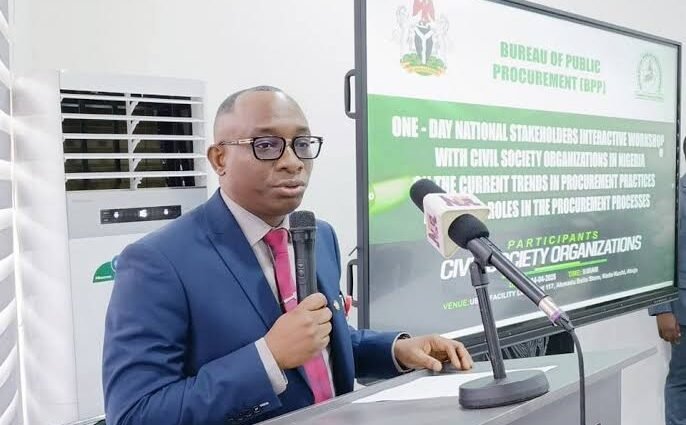
Flowerbud News/ The Director-General of the Bureau of Public Procurement (BPP), Dr Adedokun Adebowale, has urged procurement officers to strictly adhere to rules to drive reforms and national development.
Adebowale made the call on Thursday while presenting a paper titled “Transforming Public Procurement Systems through Reforms and Innovations for Sustainable Development: A Strategic Playbook”.
He spoke at the third capacity-building event of the Association of Public Procurement Practitioners of Nigeria which held in Lagos.
He urged procurement officers to always lead by example, stressing that failure to follow established regulations weakened the system and undermined public trust.
“If procurement officers do not submit to rules, they can not expect others to comply,” he said.
Adebowale described public procurement as the largest component of government expenditure and a key driver of national development outcomes.
He said every procurement decision either strengthened public trust through quality delivery or eroded confidence through compromised processes.
According to him, Nigeria must shift from a legacy system focused on paperwork and narrow compliance to one centred on service delivery, innovation, and measurable impact.
He outlined seven pillars for a sustainable procurement system, namely, transparency, integrity, competition, efficiency, digital transformation, professional capacity, and accountability.
“Transparency through open contracting and public disclosure will reduce corruption and improve trust in government processes,” he said.
He emphasised ntegrity, urging practitioners to avoid conflicts of interest and uphold ethical standards in all procurement activities.
The director-general said that improved efficiency had led to savings of about N1.1 trillion within 11 months, compared to N2.2 trillion saved over two decades.
He attributed the gains to strengthened oversight, price intelligence mechanisms, and direct access to leadership.
Adebowale highlighted digital transformation as critical, noting increased adoption of electronic submission platforms and plans for a full e-procurement system.
He said classification of contractors based on competence would eliminate manipulation and ensure only qualified firms handled specific projects.
He stressed the importance of collaboration between public and private sectors, noting that effective procurement requires both demand and supply sides working together.
Adebowale urged private sector players to train their staff in public procurement processes and align with national reform objectives.
He also advocated localisation policies, including prioritising Nigerian-made goods and services to boost domestic industries and employment.
The director-general said affirmative procurement would allocate 30 per cent of contracts to vulnerable groups, including women, youths, and persons with disabilities.
He said that community-based procurement would enable local participation in projects across the country’s 774 local government areas.
Adebowale called for stronger oversight and early detection mechanisms, including publication of procurement data and regular audits.
He said enforcement would involve collaboration with anti-corruption agencies to investigate and prosecute infractions.
According to him, procurement officers must embrace continuous learning, ethical conduct, and professionalism to sustain reforms.
“Procurement is not paperwork; it is nation building,” he said.
Adebowale said a strong procurement system would enhance economic growth, reduce poverty, attract investment, and promote fairness across society.
He urged practitioners to choose integrity and transparency, noting that their decisions would determine whether public confidence is strengthened or eroded.
Also making a presentation, the Director-General, Lagos State Public Procurement Agency, Mr Fatai Onafowote, called for stronger procurement systems to drive sustainable development.
Onafowote urged practitioners to uphold professionalism and embrace transparency, accountability, and value for money.
He described procurement as a strategic process that supports government service delivery and influences economic, social, and environmental outcomes.
Onafowote stressed the need for digital transformation through e-procurement to improve efficiency and reduce corruption.
He also advocated support for local industries, SMEs, and vulnerable groups through inclusive and competitive procurement practices.
The director-general highlighted Lagos state’s progress in e-procurement and environmental sustainability initiatives.
He said a strong procurement system would boost economic growth, promote inclusion, and improve citizens’ quality of life.
NAN
•