





Shippers Day: Stakeholders call for tax reforms, urge full NSW window implementation
December 3, 2025: The Shippers’ Association of Lagos State (SALS) has spotlighted key issues confronting the maritime and logistics sector, including multiple taxes and levies, calling for the full implementation of the National Single Window (NSW).
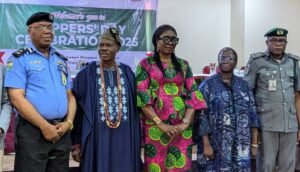
The shippers made the call during the 2025 Shippers’ Day Celebration at Rockview Hotel, Apapa, Lagos, with the theme: “National Single Window – Simplifying Trade Process for Nigerian Shippers”.
Delivering the keynote address, the Executive Secretary/CEO of the Nigerian Shippers’ Council (NSC), Dr Pious Ukeyvima, represented by the Director Consumer Affairs, Mrs Ify Okolue, commended SALS for convening the event.
Ukeyvima noted the critical role of shippers in facilitating trade, strengthening the economy, and advancing Nigeria’s competitiveness globally.
He highlighted the event’s theme, “Multiple Taxes and Levies”, stressing that overlapping, contradictory charges undermined pricing transparency, increased costs, and weakened Nigeria’s position as a trade hub.
Ukeyvima emphasised that the council remained committed to reforms that promoted fairness, transparency, and efficiency across the ports.
He expressed strong support for the full implementation of the National Single Window, describing it as a structural reform that integrated all port processes, reduced delays, eliminated duplicated documentation, and streamlined cargo clearance for importers and exporters.
Addressing the four per cent tax on Free On Board (FOB) value of imported goods imposed by the Nigeria Customs Service, (NCS), Akutah acknowledged stakeholders’ concerns about import costs and business sustainability.
He assured that the NSC was engaging relevant authorities in ensuring that fiscal policies were harmonised with national economic priorities.
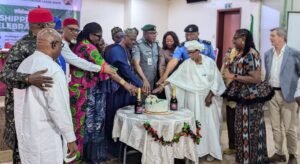
The NSC boss also lauded SALS for providing a forum where industry issues could be openly discussed and addressed, describing the association’s advocacy as a driving force for positive change in the maritime sector.
The Chairman of the occasion , the Managing Director, Greenville Nigeria Ltd., Mr Akin Omole, represented by Mrs Omobolanle Onasanya, Director of Human Resources, commended SALS for its commitment.
He pledged continuous support for shippers and acknowledged the dedication of stakeholders in ensuring smooth cargo operations at Nigerian ports.
The Comptroller-General of Customs (CGC), Bashir Adeniyi, said the National Single Window and its relationship with the B’Odogwu platform, highlighted government’s modernisation agenda in trade facilitation.
Adeniyi, who was represented by the Zonal Coordinator Zone ‘A’, Assistant Comptroller General, Muhammed Babadede, described the B’Odogwu platform, an indigenous Unified Customs Management System, as a powerful tool to digitise and streamline cargo clearance.
According to Adeniyi, B’odogwu reduces human interface, minimises errors, and provides real-time visibility to all stakeholders.
He further highlighted modernisation initiatives under the Comptroller-General of Customs, including the Advance Ruling System, Time Release Study, Authorised Economic Operator programme, and One-Stop Shop initiative.
The customs boss said all above mentioned customs policies aimed to improve efficiency, transparency, and reduce clearance times.
He explained that the National Single Window and B’Odogwu platforms were complementary, with full integration expected in the first quarter of 2026, providing a unified digital trade ecosystem aligned with global best practices.
The President of SALS, Rev. Nicholas Odolo, in his remarks, emphasised the importance of the event as a platform for knowledge sharing, networking, and collaboration.
Odolo encouraged participants to work collaboratively to build a sustainable, efficient, and competitive shipping industry, where trade policies promoted growth rather than create bottlenecks or uncertainties.
The President of SALS called for 24-hour cargo clearance and continuous stakeholder engagement, urging industry players to achieve proactive solutions for the maritime sector.
Odolo stressed the importance of transparent, predictable, and non-punitive revenue policies, which he said were crucial to Nigeria’s ambition of becoming a Blue Economy Maritime Nation.
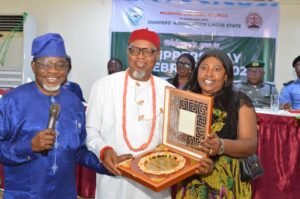
A Maritime Lawyer, Chief Osuala Nwagbara, in his goodwill message, noted the need to streamline maritime operations through legal reforms.
He commended the turnout and stressed that the presence of major industry players, including Dangote Group, signalled a new era where shippers would no longer accept excessive charges.
The President of the Barge Owners Association and Exporters, Mr Bunmi Olumekan, urged both exporters and importers to continue supporting national development, also emphasized the critical role of trade in sustaining Nigeria’s economy.
The Registrar of the Council for the Regulation of Freight Forwarding (CRFFN), Mr Kingsley Igwe, represented by the Director of Enforcement, Mr Ben Ojuma, recognised the strategic role of shippers in national commerce.
Igwe called on the government to provide incentives for shippers to own larger vessels, thereby enhancing trade facilitation.
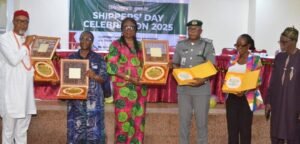
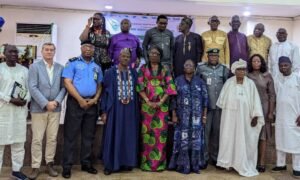
The event, organised in collaboration with the Nigerian Shippers’ Council (NSC), attracted distinguished stakeholders, industry leaders, government officials, and private sector operators, providing a platform to address pressing challenges and explore opportunities in Nigeria’s trade ecosystem.