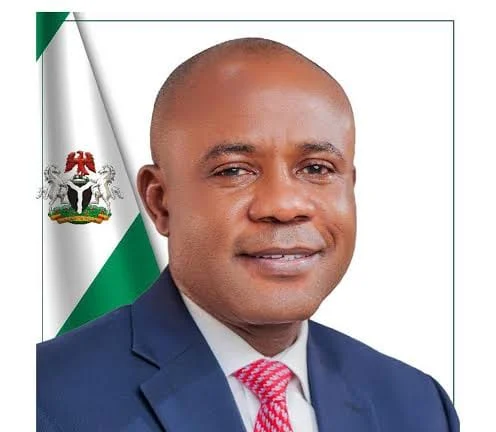

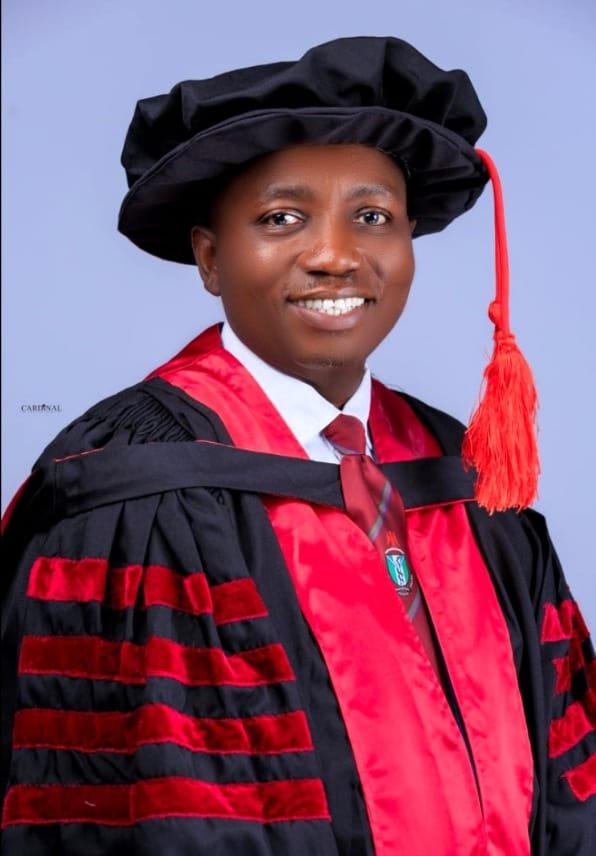
Prof. Ugwu Advocates Community Health Stewardship By Individuals, Organisations Adopting Public Health Facilities
A University Don and Enugu State Commissioner for Health, Prof. George Ugwu, has advocated community health stewardship by influential, renowned personality, wealthy individuals, community leaders and organizations adopting and ensuring public health facilities optimal functionality as their personal project for better supervision and oversight.
Ugwu, a distinguished Professor of Obstetrics and Gynaecology, made the recommendation at the weekend while he delivered the 251st Inaugural Lecture of the University of Nigeria, Nsukka (UNN).
The 251st UNN Inaugural Lecture, which was delivered at the University of Nigeria Enugu Campus (UNEC) was titled “The Mother, the Child and the State: My Triumphant Journey from Evidence to Action.”
He noted that effective community contributions, through community health stewardship, should supplement Government efforts especially in supervision and oversight to ensure optimal functioning and funding of health facilities.
According to him, women, young people, persons with disabilities, poor households and marginalised settlements need meaningful representation or someone formidable to stand for them and ensure access and quality healthcare gets to them always health facilities in their locality. This can inspire better uptake of health insurance and enhance access to health.
“I propose a model of Community Health Stewardship, in which respected individuals, professional associations, private organisations, faith-based institutions and community leaders voluntarily adopt public health facilities and provide sustained support through long-term stewardship agreements.
“States should use equity mechanisms to prevent wealthy communities from accumulating well-supported facilities while poorer communities fall further behind,” Ugwu, who is a former Executive Secretary of Enugu State Primary Health Care Department Agency (EN-PHCDA), said.
He also recommended the protection of health workforce as well as make health data usable and be translated to health impact on the people.

“The government must address the conditions that drive attrition and physician emigration, including poor working conditions, inadequate equipment, insecurity, limited professional opportunities, and weak institutional credibility.
“Workforce policy should combine fair remuneration with safe workplaces, essential tools, continuing development and credible career pathways.
“Digital systems should be built around decisions rather than dashboards.
“Every priority indicator should have a named owner, an action threshold, a feedback cycle and an auditable response,” he said.

Ugwu, who is an over two decades research-clinician, noted that the main clinical causes of maternal and newborn mortality are factors well known.
“Haemorrhage and hypertensive disorders account for large shares of direct maternal deaths, while infection, complications of abortion, thromboembolism and indirect medical conditions add to the burden.
“Prematurity, intrapartum-related events, congenital conditions and infection account for much of newborn mortality,” he said.
He said that high-quality antenatal care, skilled attendance at birth, timely emergency obstetric and newborn care, blood transfusion, safe surgery, newborn resuscitation, family planning and appropriate postnatal care would check maternal death or close to death situation (maternal near-miss).
The don noted that the persistent burden of newborn mortality,, maternal mortality and maternal near-miss, therefore, reflects more than a shortage of medical knowledge.

According to him, a clinically effective intervention has no effect when the woman cannot access it, the facility does not provide it, the health worker lacks the required tools, the family cannot afford it, or the institution does not learn from previous failures.
It would be recalled that Prof. Ugwu had made pivotal contributions to public health and clinical medicine as a clinician and technocrat with over 70 academic research publication to his credit.
He holds an MBBS, Master of Public Health (MPH), and fellowships from prestigious international and national surgical colleges—including FWACS, FMCOG, and FICS among others.