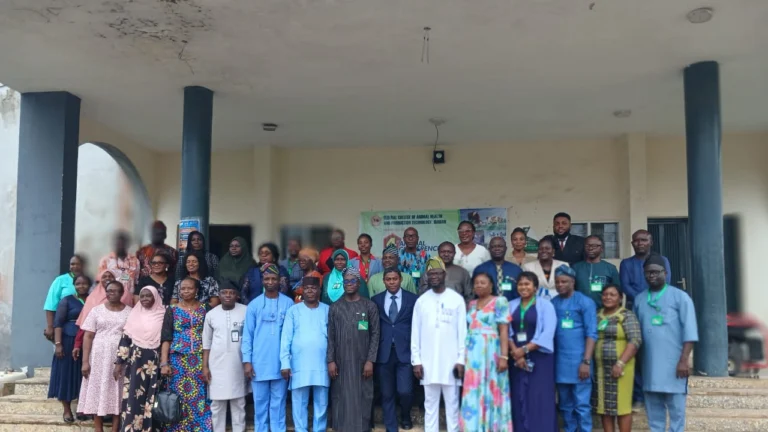


By Jimoh Babatunde
Nigeria could unlock new opportunities for job creation, agro-industrial development and foreign exchange earnings through commercial moringa production, but the absence of an organised value chain, reliable industry data and adequate processing capacity is limiting the crop’s economic potential, Dr Ashimashiga Michael Akoloaga has said.
Akoloaga, Chairman of the Moringa Productions Marketers and Farmers Welfare and Empowerment Association of Nigeria and Chairman/Chief Executive Officer of Eden Moringa Group, said Nigeria needed to move beyond small-scale cultivation and develop moringa into a commercially viable agricultural commodity capable of supporting local industries and export markets. He advocated a national moringa development programme, processing and export clusters, and stronger private-sector investment to connect farmers to reliable markets.
He spoke against the backdrop of a proposed 2,000-hectare Moringa Plantation, Integrated Animal Colony and Agro-Industrial Development Project in Nasarawa State, which he said was designed to demonstrate the potential of large-scale production linked to processing and market access.
According to him, approximately 1,900 hectares of the project would be devoted to moringa cultivation, while the remaining 100 hectares would accommodate the integrated animal colony and associated facilities.
Akoloaga said Nigeria possessed the land, favourable climate, labour force and entrepreneurial capacity to become a major player in the global moringa market, but had yet to organise these advantages into a coordinated production and processing system.
He identified market uncertainty, inadequate financing, weak infrastructure, inconsistent product quality and poor access to certification as some of the challenges discouraging investment in the sector.
“The problem has never been that Nigeria cannot grow moringa. The missing link has been an organised commercial value chain,” he said.
He explained that commercialising the crop required more than expanding cultivation, stressing the need for improved planting materials, extension services, irrigation, aggregation centres, industrial drying facilities, processing equipment, laboratories and dependable off-take arrangements.
Akoloaga noted that farmers could record good harvests and still suffer losses where there were no reliable buyers or appropriate facilities to preserve their produce and meet quality requirements.
He said a market-led approach to agricultural development would help address the problem by linking production to identified processors and buyers before farmers committed substantial resources to cultivation.
On the economic opportunities, he said moringa could generate employment across several segments, including nursery development, farming, harvesting, transportation, drying, milling, packaging, laboratory services, logistics, marketing and export.
He added that women and young people could participate in different parts of the value chain, not only as farm workers but also as processors, machine operators, agribusiness owners, marketers and agritech entrepreneurs.
Beyond its leaves, moringa seeds, oil, seed cake and biomass could provide raw materials for food ingredients, cosmetics, animal feed and other agricultural and industrial products, he said.
Akoloaga argued that Nigeria should prioritise local value addition instead of relying largely on the sale of raw agricultural produce.
“Nigeria should export value, not simply agricultural weight,” he said, advocating increased production of standardised moringa powder, tea, seed oil, nutraceutical ingredients, cosmetics inputs, animal-feed ingredients and organic fertiliser.
However, he cautioned that investment in processing must be accompanied by food safety measures, laboratory testing, traceability, certification, hygienic drying, appropriate packaging and consistent product quality to meet international market requirements.
The association chairman also identified the absence of reliable national production statistics as a major constraint to attracting investment into the sector.
He said Nigeria lacked sufficiently consolidated data to establish the exact number of commercial moringa farmers, hectares under cultivation, annual production volumes and total market value.
According to him, the information gap makes it difficult for investors to determine the availability of raw materials, assess processing capacity requirements and establish commercially viable supply arrangements.
He called for a National Moringa Production and Value-Chain Database to capture registered farmers, farm locations, cultivated acreage, expected harvests, processors, certification status, aggregation centres and off-take agreements.
“Reliable data is not merely for statistics. Data is investment infrastructure,” he said.
To address the challenges, Akoloaga urged the Federal Government to establish a National Moringa Development Programme and develop processing and export clusters in major producing regions.
He said such clusters should provide industrial drying, processing, storage, packaging, laboratory testing and certification services, enabling smallholder farmers to access facilities they might not be able to finance individually.
He also called for affordable long-term agricultural financing, improved access to suitable farmland and irrigation, stronger extension services, mechanisation and incentives for businesses investing in domestic processing.
He stressed the need for coordination among government institutions responsible for agriculture, livestock, water resources, health, trade and investment, given the multiple uses of moringa and its potential links with different industries.
Akoloaga maintained that the success of a national moringa programme should be measured not merely by the number of hectares cultivated but by improvements in farmers’ incomes, jobs created, volumes processed locally and foreign exchange generated.
He said the proposed Nasarawa project was intended to demonstrate how organised production, processing and market access could help transform moringa from an underutilised crop into a commercially competitive agricultural commodity.
He added that with appropriate infrastructure, reliable market information and sustained private-sector participation, moringa could become a source of rural employment, industrial raw materials and export revenue for Nigeria.