







Ex-Minister warns maritime challenges slowing Nigeria’s blue economy
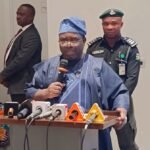
December 4, 2025 A former Interior Minister, Capt. Emmanuel Iheanacho, says persistent problems in Nigeria’s maritime and blue economy sector continue to hinder revenue growth and efficiency.
Iheanacho, a retired Merchant Navy Captain, listed “ageing infrastructure, dependence on road haulage, and weak private sector involvement” as major obstacles.
He spoke at the Maritime Reporters Association of Nigeria (MARAN) book launch on the 50 Drivers of Nigeria’s Marine and Blue Economy held in Lagos on Thursday.
The book launch celebrated innovators and institutions “steering Nigeria’s marine economy” and shaping national maritime progress.
Iheanacho said 2025 began with a landmark policy that reset the nation’s approach to developing its coastal and inland waterways.
“The policy became a compass, guiding maritime trade, aquaculture, blue tourism, and clean ocean energy while promising new jobs,” he said.
He added that experts projected annual earnings of $44 billion but warned that “only strong governance and real private sector partnerships can unlock this potential.”
He said the government had moved to rebuild Apapa and Tin Can Ports, with procurement advancing for the long-neglected Eastern Ports
“The ministry celebrated a 75 per cent score, with zero piracy and clear gains in port modernisation.
“Yet ageing infrastructure and road dependence continued to slow revenue and operational growth,” he said.
He noted that the year still ended on an optimistic note with the approval of the National Marine and Blue Economy Policy (2025–2034).

Iheanacho said the policy aimed to harness Nigeria’s 853-kilometre coastline and vast inland waterways for diversification and sustainability.
“It offers actionable guidance on maritime trade, aquaculture, blue tourism, and clean energy,” he explained.
He said the sector could contribute $44 billion yearly “with improved governance and regulation.”
He added that private investment and PPPs were “vital for mobilising expertise and capital” for sector reforms.
“The government has approved contracts to rebuild Apapa and Tin Can Ports, with work on Eastern Ports ongoing,” he said.
Iheanacho said the ministry had achieved zero piracy in two years and continued to advance port modernisation.
He added that the policy was expected to drive sustainable growth and support broader economic development.
Experts, he noted, had urged full implementation of frameworks needed to capture the projected revenue.
Nigerian Shippers’ Council’s Executive Secretary, Dr Pius Ukeyima, said the book launch marked “a major milestone” for maritime stakeholders.
Represented by Mrs Juliana Saka, an assistant Director at NSC, he said MARAN’s professionalism “deserves commendation and broad industry appreciation.
“The blue economy offers vast opportunities that require collaboration, innovation, and accountability.”
He added that MARAN’s work strengthens public awareness and shapes discourse on policy and investment.

Former NSC chief, Mr Hassan Bello, said the sector’s achievements over six decades made the celebration significant.
“Nigeria’s maritime economy remains central to national growth and demands continuous development,” he said.
Mrs Carol Ufere, former SERVICOM head at NPA, said the book offered deep insights on agencies, leaders, and reforms.
“It emphasises governance, digitalisation, security, and institutional strengthening,” she said.
She said the chapters analyse NIMASA, NPA, NIWA, Customs, the Railway Authority, and others.
She added that the book highlighted achievements, gaps, and needed reforms to improve competitiveness and sustainability.

MARAN Chairman, Mr Tunde Ayodele, said the event honoured individuals and institutions shaping maritime development.
He said the publication captured their contributions and highlighted reforms and innovations driving progress.
“This first edition also recognises emerging talents and future contributors,” he said.
The Ports Consultative Council (PCC) executive and maritime lawyer, Mrs Gloria Kanabe, praised the media for amplifying maritime interests.
She said media reporting had strengthened the sector and aided trade facilitation nationwide.
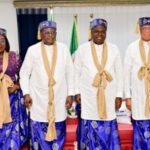
The event drew former officials, dignitaries, and key maritime stakeholders.