





NCS hosts House Committee on safety standards at Apapa command
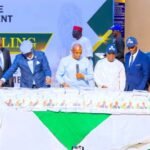
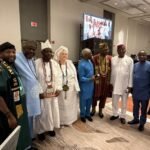
Lagos, Nov. 4, 2025, The Nigeria Customs Service (NSC) on Tuesday hosted members of the House of Representatives Committee on Safety Standards and Regulations at the Apapa Area Command in Lagos.
The engagement formed part of an ongoing legislative oversight mission designed to evaluate safety compliance and regulatory efficiency across strategic national institutions.
The lawmakers are currently touring major operational centres to better understand how agencies enforce safety rules, monitor imports, and protect public health and welfare.
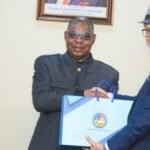
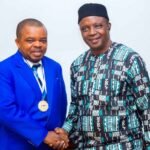
The delegation was led by Committee Chairman, David Zacharias, and received by Apapa Area Controller, Emmanuel Oshoba, representing the Comptroller-General of Customs, Bashir Adeniyi.
Oshoba welcomed the lawmakers and reaffirmed the service’s readiness to support legislative oversight aimed at improving operational transparency and national safety frameworks.
The visit followed earlier assessments at the NCS headquarters in Abuja, where committee members interacted with senior Customs leadership on border management priorities.
The inspection focused on safety procedures, border control systems, cargo processing standards, and the service’s contribution to protecting Nigerians from harmful imports.
Zacharias said the exercise aligned with the committee’s constitutional mandate to promote accountability, enhance regulatory efficiency, and safeguard national interests.
He noted that the committee had received petitions highlighting alleged lapses in safety enforcement by some regulatory agencies, including Customs.
He said the visit sought to verify those concerns through first-hand observation, engagement, and documentary assessment rather than speculative conclusions.
According to him, the mission was not designed to indict any agency but to build collaborative mechanisms for strengthening safety enforcement across national entry points.
He emphasised that ensuring citizens’ safety required partnership between lawmakers, regulatory agencies, and border security institutions, including the Nigeria Customs Service.
He recalled that the committee began its review at the Customs headquarters and obtained approval to visit terminals and commands nationwide.
Zacharias said Customs plays a frontline role in preventing dangerous, unapproved, or substandard products from entering Nigeria’s markets and endangering lives.
He described product safety, port integrity, and border surveillance as critical to national development and consumer protection, especially in a rapidly expanding economy.
During the session, lawmakers raised concerns about fake cables, substandard building materials, expired products, and other dangerous items linked to accidents and building collapse.
They asked Customs to explain its coordination framework with the Standards Organisation of Nigeria in intercepting illegal or inferior goods at points of entry.
They also inquired about digital scanning systems, enforcement capacity, and resource needs for improving border monitoring and container screening operations.
Zacharias applauded Customs for its transparency during the engagement, stating that constructive oversight ultimately strengthens public institutions and safeguards citizens.
He expressed confidence that the committee’s findings would inform legislative interventions, policy improvements, and budgetary support for enhanced national safety systems.
In response, Oshoba reiterated the service’s unwavering commitment to safety, saying Customs enforces strict trade standards to protect Nigerians and the economy.
He explained that officers regularly seize substandard, counterfeit, and prohibited items, ensuring such goods do not reach consumers or contribute to public hazards.
Oshoba added that Customs coordinates closely with SON, NAFDAC, and security agencies to tighten surveillance, improve inspection technology, and enhance trader compliance.
He stressed that Apapa Command does not clear consignments that threaten public safety, national security, or environmental standards.
He said Customs remains firm on compliance and will continue strengthening inter-agency cooperation to deliver an efficient and secure trade environment.
Oshoba acknowledged persistent challenges from Nigeria’s porous borders, noting that some unapproved goods enter through unauthorised routes in spite of rigorous patrols.
He called for continued stakeholder support, investment in technology, and intelligence sharing to strengthen border control capacity nationwide.
The lawmakers toured port facilities, examined screening operations, and reviewed enforcement documents to better understand Customs’ safety protocols and operational systems.
They also held briefings with senior officers and border enforcement units at the command to assess front-line procedures.
The committee is expected to submit its findings to the House and propose policy reforms that may improve regulatory efficiency and national safety culture.
