






By Alex Enumah
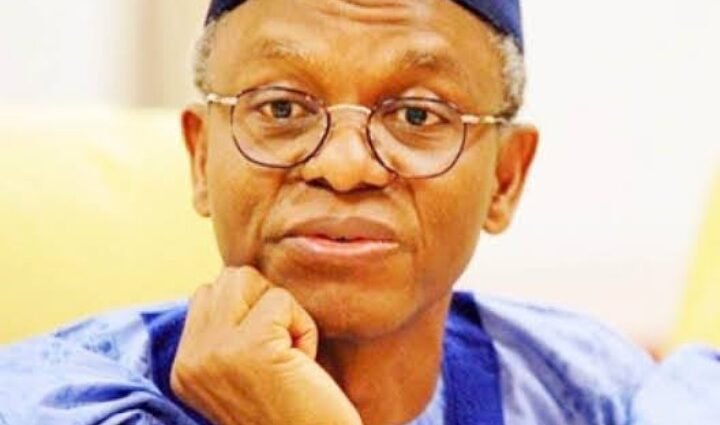
Temporary relief eluded former Kaduna State Governor and chieftain of African Democratic Congress (ADC), Mallam Nasiru El-Rufai, as Independent Corrupt Practices and Other Related Offences Commission (ICPC) took him into custody yesterday night, upon his release by Economic and Financial Crimes Commission (EFCC).
El-Rufai had been in the custody of EFCC since Monday morning, when he honoured the commission’s invitation to respond to corruption allegations levelled against his administration.
The state Assembly had petitioned anti-corruption agencies to investigate El-Rufai over alleged fraud and misappropriation of state funds to the tune of over N423 billion. Others, too, including rights activists and Abuja-based lawyer, Mr Deji Adeyanju, had last week called on EFCC and others anti-graft agencies to probe El-Rufai for, allegedly, engaging in financial misconduct, abuse of office, releasing funds to bandits while holding the office of Governor of Kaduna State.
The former governor had resisted an attempt by security operatives to arrest him last Thursday at Nnamdi Azikiwe International Airport, Abuja, on his return to the country, demanding a formal letter of invitation, before his visit to the headquarters of the anti-graft agency two days ago.
After spending two nights with EFCC investigators, THISDAY learnt that El-Rufai might have been granted administrative bail.
However, he was immediately taken into custody by ICPC, which had earlier invited him, also, in respect of corruption allegations.
A statement by ICPC on Wednesday night disclosed that El-Rufai was with them as at the close of work on Wednesday.
Head, Media and Public Communications /spokesperson of ICPC, John Odey, who issued the statement, disclosed that the former governor was being held in connection with investigation.
The statement read, “The Independent Corrupt Practices and Other Related Offences Commission (ICPC) writes to state that Malam Nasiru El-Rufai, the former governor of Kaduna State, is in our custody as at close of work today, Wednesday, the 18th day of February, 2026.
“Malam Nasiru El-Rufai is in the custody of the commission in connection with investigations.”
Department of State Service (DSS) had on Monday filed a three-count charge bordering on alleged cybercrime offences against El-Rufai before a Federal High Court in Abuja.
He was accused of unlawfully wiretapping the phone lines of National Security Adviser (NSA), Mr Nuhu Ribadu.
El-Rufai, following his attempted arrest at Nnamdi Azikiwe International Airport, Abuja, had accused the NSA of orchestrating his arrest.
In a series of interviews granted after the airport drama, El-Rufai claimed knowledge of a conversation where Ribadu gave the order for his arrest. Following his claim, the federal government, dragged him to court for engaging in cybercrime offences.
In the three-count charge, DSS accused El-Rufai of unlawful interception of the phone communications of Ribadu.
The criminal charge filed at Abuja Division of the Federal High Court was marked: FCT/ABJ/CR/99/2026.
The agency, in the charge, cited the statements made by the ADC chieftain during a live interview on Arise TV’s Prime Time programme on February 13, 2026, in Abuja.
According to the charge filed by M. E. Ernest on behalf of DSS, El-Rufai, 65, admitted during the broadcast that he was aware of some persons who had intercepted the private phone communications of the NSA.
The federal government claimed that the alleged act amounted to a serious breach of Nigeria’s cybercrime and communications laws and posed a threat to public safety and national security.
Court documents further alleged that the former governor not only acknowledged those who carried out the interception but also failed to report them to relevant security agencies, despite being aware of the alleged offence.
DSS also claimed that the unlawful use of technical equipment to intercept the NSA’s communications compromised national security and created reasonable apprehension of insecurity among Nigerians.
The charge was predicated on the provisions of the Cybercrimes (Prohibition, Prevention, etc.) (Amendment) Act, 2024, as well as the Nigerian Communications Act, 2003.