Tag: Palestine

  • 60 Former UK Ambassadors Warm of Israel’s West Bank Annexation Moves

    60 Former UK Ambassadors Warm of Israel’s West Bank Annexation Moves


    A group of former British diplomats has called on the UK and its allies to take stronger action against Israeli settlement expansion in the occupied West Bank, warning that current policies risk enabling annexation and undermining international law.

    In a letter published in the Financial Times on Friday, more than 80 former diplomats – including 60 ambassadors, high commissioners and senior officials – said Israel’s expansionist activity and policies in the occupied Palestinian territories amounted to “accelerating annexation.”

    “America is indeed falling out of love with Israel. So is Europe. While the world watches Iran and Lebanon, Israel extends control over the West Bank and Gaza. Its accelerating annexation is unmistakable,” the letter said.

    They argued that Israel is in breach of both the EU-Israel Association Agreement and the UK-Israel Trade and Partnership Agreement, which require respect for human rights and democratic principles.

    “Israel is in breach of both agreements,” the letter said, citing expanding occupier placements, discrimination against Palestinians and what it described as “systematic state-supported settler violence.”

    The signatories called for the EU to suspend its association agreement with Israel, ban trade with settlements, halt arms transfers and restrict Israel’s participation in EU programs. They also urged the UK to ban all trade with settlements and review its agreements with Israel.

    “Israel’s settlements project aims to kill the viability of the Palestinian state – Gaza, East Jerusalem and the rest of the West Bank – which Britain recognized in September 2025. That aim needs to fail, for the sake of long-term stability and a just peace.”

    The diplomats warned that continued occupier settlement construction, including planned projects in the E1 area of the West Bank, could further undermine the viability of a future Palestinian state.

    “Mere words of condemnation are ignored. While the world is distracted, grave contraventions of international law continue in occupied Palestine. We have drawn the EU letter to foreign secretary Yvette Cooper’s attention. Government action is now needed,” the letter added.

  • 1000+ Diaspora leaders call for action against ‘Jewish-extremist terror in the West Bank’

    1000+ Diaspora leaders call for action against ‘Jewish-extremist terror in the West Bank’


    The letter, organized by the London Initiative, was directed to Israeli President Isaac Herzog.

    Over 1,000 Diaspora Jews are petitioning Israeli President Isaac Herzog to intervene against settler violence in the West Bank, saying that the settlers are threatening Israeli security.

    “Mr. President, the terror, death and destruction inflicted by Jewish-Israeli extremists against innocent Palestinians across the West Bank is an abomination,” says an open letter published Thursday. “It is not only morally shameful but a strategic threat to the future of Israel. It damages world Jewry and the relationship of future generations with Israel.”

    The letter continues, “Sadly, based on events and on the statements of the most extreme coalition partners it can be concluded that the violence now engulfing the West Bank is not only condoned by the government but is in fact policy.”

    The letter was organized by the The London Initiative, a liberal Zionist network founded earlier last year to “strengthen Israeli democracy, advance a fairer shared future for all citizens of Israel, revive hope in the prospects of achieving secure peace, and improve relations between all Israelis and world Jewry.” The number of signatories is growing as the letter circulates.

    It comes as violence against Palestinians in the West Bank — often unpunished by Israeli authorities — has reached new heights, with settlers allegedly killing seven Palestinians in the last month, including one on Thursday, and driving others from their homes.

    The situation has grown so extreme that the Israeli army this week took the unprecedented step of diverting soldiers from Lebanon, where Israel is battling Hezbollah, to the West Bank. Both the chief of staff of the Israeli Defense Forces and the Central Command chief have warned in recent days that conditions in the West Bank are contributing to a dire manpower shortage in the army.

    The issue has also ignited concern from the United States, and from Israel’s U.S. ambassador, Rabbi Yechiel Leiter, who told Ynet that he believed the situation was deterring some in Washington from supporting Israel. He called on the rabbis of the West Bank to constrain their disciples.

    “I’m so angry about the issue of Jewish riots in Judea and Samaria,” Leiter said. “It’s a handful of a few hundred people who are staining an entire enterprise — and everyone is silent.”

    The new letter signed by Diaspora Jews calls on Herzog to advocate for change with Prime Minister Benjamin Netanyahu and his far-right ministers who have not interceded to stop the violence. The signatories include prominent philanthropists including Charles Bronfman; liberal rabbis from multiple countries; and former British and Canadian ambassadors to Israel.

    “Mr. President, Pesach is upon us. As we have for millennia, Jews everywhere will reflect on the promise of freedom and responsibilities of power,” the letter says. “We call on you to use your position to implore the government to put an end to the abomination of Jewish-extremist terror and the era of impunity for its perpetrators.”

  • Netherlands says Starvation, Aid Obstruction key in Proving Genocidal  Intent in Gaza

    Netherlands says Starvation, Aid Obstruction key in Proving Genocidal Intent in Gaza


    – Dutch ICJ intervention highlights role of acts against children in determining genocidal intent

    Selma Aksunger

    THE HAGUE

    The Netherlands, in its intervention submission to the International Court of Justice (ICJ) in the genocide case filed by South Africa against Israel, stated that starvation and the deliberate obstruction of humanitarian aid may play an important role in determining genocidal intent.

    The Netherlands, which intervened in the ongoing genocide case at the ICJ, presented its views on the interpretation of acts of genocide and the determination of genocidal intent in the submission it filed on March 12.

    The Netherlands said that acts of genocide could take the form of starvation and the deliberate withholding of humanitarian aid and that these could play a significant role in determining genocidal intent.

    The country stated in its submission that, considering the prohibition of genocide as a peremptory norm of international law (jus cogens) and the obligations under the Genocide Convention as erga omnes partes, all states have a common interest in ensuring the realization of the Convention’s objectives.

    Referring to the ICJ’s statement in its first provisional measures decision in the case regarding the interests of all states parties to the Genocide Convention, the Netherlands said that its intervention concerns the interpretation, application, and implementation of the Convention.

    Forced displacement may constitute an act of genocide

    The Netherlands stated that forced displacement, depending on the facts, may correspond to or lead to one of the underlying acts of genocide and may play an important role in determining specific intent.

    It argued that forced displacement may lead to one of the underlying acts listed in Articles 2(b) and 2(c) of the Genocide Convention and may also constitute evidence of specific genocidal intent.

    It stated that forced displacement may cause or contribute to serious bodily or mental harm prohibited under Article 2(b) of the Convention and may also correspond to or lead to the creation of conditions of life calculated to bring about the physical destruction of a group under Article 2(c).

    The Netherlands emphasized that forced displacement may not only lead to or correspond to underlying acts of genocide but may also serve as evidence of specific genocidal intent.

    Acts against children should be assessed differently

    The Netherlands stated that acts committed against children should be assessed differently and that such acts may play an important role in determining specific genocidal intent.

    The Netherlands presented its view that, in light of children’s specific needs and vulnerabilities, a lower threshold should apply when assessing “serious bodily or mental harm” under Article 2(b) of the Genocide Convention when the victim is a child.

    The Netherlands noted that conditions of life calculated to bring about the physical destruction of a group under Article 2(c) should be assessed in light of children’s specific needs and vulnerabilities and argued that the effects of forced displacement on children, under certain conditions, may correspond to an act of genocide.

    The Netherlands also presented its views on determining specific intent, stating that when interpreting the requirements under Article 2 of the Genocide Convention, the court may consider the targeting of children, including killing, in several ways.

    The Netherlands emphasized that the targeting of children may serve as evidence of genocidal intent and is relevant to determining specific intent and interpreting what constitutes the destruction of a group in whole or in part.

    Starvation and obstruction of aid may constitute acts of genocide

    The Netherlands stated that starvation and the deliberate withholding of humanitarian aid may constitute underlying acts of genocide and may play an important role in determining genocidal intent.

    The Netherlands argued that, under Article 2(c) of the Genocide Convention, acts that create conditions of life calculated to bring about the physical destruction of a group are not limited to methods that cause immediate death.

    The Netherlands noted that such acts must be calculated to lead to the eventual physical destruction of the group and that this does not require actual physical destruction to occur, but rather that the conditions are calculated to result in such destruction.

    The Netherlands argued that, when interpreting the requirements of specific intent under Article 2 of the Convention, the court should consider starvation and the deliberate withholding of humanitarian aid, particularly when carried out based on a coordinated plan or a consistent pattern of conduct.

    The Netherlands also stated that the obligation to prevent genocide is a due diligence obligation and therefore a duty of conduct.

    Alongside the Netherlands, Colombia, Libya, Mexico, Palestine, Spain, Türkiye, Chile, Maldives, Bolivia, Ireland, Cuba, Belize, Brazil, Comoros, Belgium, Paraguay, Norway, Iceland, Namibia, the US, Hungary, and Fiji have also submitted declarations of intervention in the case against Israel.

    While many countries’ interventions align with South Africa’s claims, the submissions of Paraguay, the US, Hungary, and Fiji partially reflect arguments similar to those presented by Israel.

    Germany, France, UK, Canada did not intervene

    Similar arguments to those put forward by the Netherlands had also been defended in a joint intervention submission by Canada, Denmark, France, Germany, the Netherlands, and the UK in the case filed by The Gambia against Myanmar regarding allegations of genocide against Rohingya Muslims.

    However, among these six countries, only the Netherlands intervened in South Africa’s genocide case, while Germany, Canada, France, the UK, and Denmark refrained from intervening, leading to comments on double standards and inconsistency.

    The Israel Information and Documentation Center (CIDI), a pro-Israel lobby organization in the Netherlands, objected to the country’s intervention submission.

    In a statement on social media, the CIDI said the intervention shows that the Netherlands has not distanced itself from South Africa and described this as highly concerning, adding that the Netherlands does not distance itself from South Africa’s attempts to broaden the definition.

    The CIDI also argued that, although the Dutch government is not obliged to consult parliament on such a decision, it would have been more appropriate to do so.

    South Africa’s genocide case against Israel at ICJ

    The Republic of South Africa filed a case at the ICJ on Dec. 29, 2023, alleging that Israel violated the 1948 UN Convention on the Prevention and Punishment of the Crime of Genocide.

    South Africa requested provisional measures from the court due to the urgency of the humanitarian situation in Gaza.

    The court issued three separate provisional measures decisions on Jan. 26, March 28, and May 24, 2024.

    In these decisions, Israel was requested to take all necessary measures to prevent acts defined under Article 2 of the Genocide Convention, ensure that its military does not commit such acts, immediately implement measures to prevent genocide, particularly halt military operations in Rafah that may create a risk of genocide, and regularly report to the court on the measures taken.

    Israel Deputy Attorney General Gilad Noam stated in a post on US social media company X that Israel had declared in its defense submission to the ICJ on March 12 that South Africa’s allegations are completely baseless and defamatory.

    Noam said that Israel remains committed to its obligations under the Genocide Convention and that any claims to the contrary aim to undermine the right and obligation of states to defend themselves against terrorist armed groups determined to destroy them.

    In a statement signed by South African President Cyril Ramaphosa, it was noted that South Africa will assess Israel’s response and decide whether to request permission from the court to submit additional written statements or proceed directly to the oral phase.

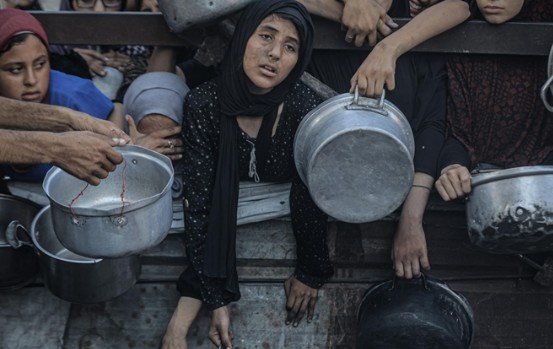
    The statement added that despite the ceasefire dated Oct. 10, 2025, and three binding ICJ decisions ordering Israel to prevent acts of genocide and ensure the immediate and unhindered provision of essential services and humanitarian aid, Israeli attacks, casualties, and severe living conditions in Gaza continue.

  • Israel massacred far more Palestinians than anyone could imagine

    Israel massacred far more Palestinians than anyone could imagine


    The Lancet report of a 35% undercount in Gaza’s death toll raises questions about the true scale of genocide – but will it move world leaders to act?
    Would the world have stood by, even armed such a genocide against the Israeli people, as they have against Gaza? asks Richard Silverstein.

    The Lancet has released the most extensively researched study of the Gaza death toll. Using methods based on in-person interviews of 2,000 households, it tallied their deceased and injured family members. The findings indicated that the actual number of deaths (violent and non-violent) between October 7 and January 2025 totaled nearly 90,000.

    The categories of violent deaths and non-violent deaths were defined respectively as those directly at the hands of Israeli forces vs. ancillary deaths. The latter is defined as ‘traumatic injuries’ which are by far the largest contributor to mortality…but also endemic and epidemic infectious diseases, maternal and neonatal health, and non-communicable diseases in its calculations. It also included scenarios of epidemic outbreaks of cholera, polio, measles, and meningitis…

    (Would the world have stood by, even armed such a genocide against the Israeli people, as they have against Gaza? asks Richard Silverstein. )


    The mortality figures could very well be an undercount since the data collectors could not reach all areas of the enclave. This figure represents 3.4% of Gaza’s entire population. In comparison, the Gaza health ministry counted 50,000 (not including non-violent deaths) in the same period.

    The Lancet found that the MOH figure was an undercount, and that the actual number was 35% higher.

    Extrapolating from this percentage, the total number of deaths from October 7 till January 2026 could be placed closer to 130,000. This is based in part on month by month death toll statistics compiled by the Gaza ministry of health (MOH) and published by Statista. That equals 4.4% of Gaza’s population.

    There’s been 2,000 Israelis killed since October 7, over half on that single day. The ratio of Palestinian to Israeli dead is 65 to 1.

    An earlier survey by the Max Planck Institute, using different methodology, assessed 78,000 deaths during the same period the Lancet studied. It projected that as of November 2025 (the publication date of the survey), 100,000 Gazans had been killed. It further found that life expectancy was half what it would be without the genocide.

    An earlier Lancet finding projected as many as 186,000 deaths as of November 2024. But this figure was extrapolated based on statistics compiled from “recent conflicts” such as the Yemen civil war, the Serbia-Kosovo conflict, Darfur genocide, and Tigray.

    Prof. Devi Sridhar, chair of the University of Edinburgh’s global public health program, writing in the Guardian, projected that the death toll could be as high as 335,000. Even if this is potentially an overcount (as it is based on projections from previous conflicts like Serbia-Kosovo, the Darfur genocide, and Tigray), it supports multiple reports that the number of dead is significantly higher than the MOH figures.

    Would the world have stood by, even armed such a genocide against the Israeli people, as they have against Gaza? On the contrary, the only way Israel could have killed as many as it did, is through the flow of nearly $25-billion worth of lethal armaments from Western nations-including the US, UK, Germany and France. As the old saying goes: “we couldn’t have done it without you.”

    So why does it matter whether the death toll is 70,000, 100,000, 186,000 or 335,000? It’s a genocide regardless of which statistic you use. It should not make a difference whether it’s lower or higher. And if it is higher, will it make it any more likely the world will act to stop it?

    Will this new Lancet study influence global public opinion, or that of key Western states providing diplomatic cover and military support to Israel? Thus far, opposition to the genocide has begun in the grassroots and crept upward to the political leaders. With enough pressure, they have taken incremental measures against Israel’s crimes.

    Similarly, that tide has slowly risen as the death toll has as well. The higher it rises, the more world leaders are pressured and the more responsive they become. However, this groundswell is a slow, incremental process. Thus, the Lancet paper will impact global opinion as the Palestine solidarity movement and media disseminate it. Though it will never be enough, in and of itself to provoke a decisive break with the Western nations’ indifference.

    Whitewashing genocide

    There are two states implicated in the genocide, which desperately seek to distract from their culpability: Israel and the US. For the first two years of the conflict, they engaged in genocide denialism, discrediting the Gaza mortality figures. They claimed they were devised by Hamas.

    That MOH was not credible, despite its methodology being based on meticulous data-collection. Even former President Joe Biden declared he had “no confidence in the number that the Palestinians are using ” and The National Security Council spokesperson…called the MOH “a front for Hamas.”

    Bari Weiss’ pro-Israel Free Press, published an “exposé” claiming a starving Palestinian child whose image was disseminated throughout the world, had a pre-existing medical condition. As if that discredited wider claims of mass starvation due to Israeli siege.

    US Congress even barred the State Department from citing the MOH statistics, fearing they would create fraudulent sympathy for Palestinian victims.

    Similarly, the long-term campaign against Iran, which led to a joint attack in June and the one anticipated imminently, is a “war of distraction” from the Gaza genocide. It pushes it from the headlines, which enables the catastrophe to fade from the minds of the global public. The less attention focused on Gaza, the less outrage against those perpetrating it.

    Similarly, Trump’s Board of Peace is an assemblage of states contrived by the President to support his campaign to ending the war. While he claims he negotiated a ceasefire and the killing is over, facts and Israeli missiles prove otherwise. 2,000 Palestinians have been killed since the so-called ceasefire.

    Every Board member joined either because it owes something to, or wants something from Trump. It is not a coalition of the willing, but a coalition of the “wanting”.

    The first formal meeting of the group last week purportedly produced pledges of $7-billion towards Gaza reconstruction. Trump added a $10-billion US contribution. This is a drop in the bucket compared to the $80-billion required, according to expert projections.

    Join us on WhatsApp

    Further, past conferences in similar circumstances produced pledges from many of the same states, most of which were never fulfilled. Even if the pledges are paid in full, the actual physical reconstruction is totally dependent on Israeli cooperation. Based on past history, this is unlikely; as it is against Israel’s interest to permit it.

    The likelihood that the Board of Peace will reconstruct Gaza is about as high the likelihood Israel will stop killing Palestinians.

    It is a vanity project, blowing smoke in the world’s eyes; to conceal the corpses piling up like cordwood. It’s designed by Trump to burnish his image as a “peacemaker,” while also distracting from the US role.

    As for Israel, Netanyahu is an expert at sleight of hand and a shrewd manipulator, who has deftly exploited the same contrivances. This allows him to skate under the radar and deflect attention. In contrast, the MOH mortality count and Lancet study stand stark testimony to his crimes.

  • Israel publishes updated death penalty bill for Palestinian prisoners

    Israel publishes updated death penalty bill for Palestinian prisoners

    (Extreme-right minister Itamar Ben-Gvir originally proposed the law allowing the execution of Palestinian prisoners [Getty])


    MENA

    Israel has published a new draft of a bill imposing the death penalty for Palestinians, with those taking part in the October 2023 attack specifically named

    Extreme-right minister Itamar Ben-Gvir originally proposed the law allowing the execution of Palestinian prisoners [Getty]

    An updated draft of a bill proposing the death penalty for Palestinian prisoners who Israel accuses of “terrorism” was published on Thursday, introducing new provisions that would significantly expand the powers of Israeli military courts.

    The bill and its provisions have sparked outrage from human rights organisations.

    According to Israeli media, the draft legislation would impose a mandatory death sentence on Palestinians accused of taking part in the Hamas-led attack of 7 October 2023, as well as other Palestinian prisoners, without requiring approval from prosecutors.

    The revised bill reportedly specifies that executions would be carried out by shooting, the electric chair, hanging or lethal injection, by a prison officer whose identity would remain secret.

    It would also grant military courts authority to impose the death penalty on Palestinian prisoners from the occupied West Bank regardless of the prosecution’s position, while removing the requirement for unanimous verdicts and abolishing the rule that all judges must hold the rank of lieutenant colonel or above.

    The proposal would further amend the Penal Code to allow capital punishment for any Palestinian prisoner who “intentionally” causes the death of an Israeli citizen or resident.

    The bill justifies the death penalty for Palestinians on the grounds of combating “terrorism”, strengthening “deterrence” and reducing incentives for prisoner exchange deals.

    In all cases, executions would be carried out by the Israeli Prison Service within 90 days of a final judicial ruling.

    For the first time, the draft also reportedly includes a specific clause relating to those Israel claims participated in the 7 October attack, stipulating that “the death penalty shall be mandatory for anyone who causes the death of Israeli citizens or residents in the massacre, as the acts shall be classified as genocide according to the Genocide Law.”

    The death penalty proposal – first submitted by the extreme-right Jewish Power (Otzma Yehudit) party led by National Security Minister Itamar Ben-Gvir- has now reached a decisive stage in the legislative process.

    Ben-Gvir is a vocal supporter of the war on Gaza and the annexation of the West Bank. He has a history of violent incitement against Palestinians.

    The bill has sparked alarm among Palestinian activists, with Palestinian prisoners already suffering torture, abuse, starvation and rape in Israeli custody. As of November 2025, an estimated 9,500 Palestinians are being held in Israeli prisons.

    Hamas said the proposed law “embodies the ugly fascist face of the rogue Zionist occupation and represents a blatant violation of international law”.

    The Palestinian Authority’s foreign ministry, based in Ramallah, described the bill as a “new form of escalating Israeli extremism and criminality against the Palestinian people”.

  • Palestinian Territory and Implications of ICJ’s latest Ruling

    Palestinian Territory and Implications of ICJ’s latest Ruling


    *By Sonny Onyegbula

    The International Court of Justice (ICJ) has delivered a landmark advisory opinion emphasising Israel’s obligations as an occupying power in the Occupied Palestinian Territory (OPT) since 1967.

    According to the ruling, Israel bears a multifaceted legal duty including facilitating humanitarian relief operations, removing restrictions that hinder access to aid, and preserving the human rights of the Palestinian population.

    The ICJ’s position underscores that international human rights law complements international humanitarian law in the OPT, binding Israel to respect, protect, and fulfil a broad spectrum of rights. These include the fundamental right to life, protection from torture and ill-treatment, liberty and security, freedom of movement, family unity, and an adequate standard of living.

    Additionally, Israel is obligated to ensure access to essential health services and education, prohibit discrimination, and uphold the Palestinian people’s right to self-determination.

    Specifically, the court has ruled that Israel must ensure that Palestinians in Gaza and the OPT have access to vital supplies such as food, water, medicine and electricity, crucial for their survival.
    Israel is further required to facilitate relief schemes, particularly in Gaza, where supplies have been severely restricted, and cooperate with UN agencies such as the UNRWA (United
    Nations Relief and Works Agency for Palestinian Refugees), ensuring that their activities benefit the local population without obstruction.

    The ICJ’s advisory opinion, which carries significant moral and legal weight, emphasises Israel’s responsibilities as an occupying power.

    The UN Human Rights Chief Volker Türk stresses Israel’s obligations and the need for compliance to improve the dire humanitarian situation.

    The UN Secretary-General, António Guterres, has also welcomed the ICJ’s opinion, urging Israel to adhere to its legal duties and highlighting the importance of upholding international law and human rights in resolving the conflict.

    This ruling resonates with broader efforts to promote human rights and governance, particularly given the severe humanitarian crisis in Gaza and concerns over restricted aid access. It is expected to
    increase pressure on Israel to cooperate with humanitarian agencies, despite its rejection of the ruling as politicised.

    The Court underscored that compliance with the stated obligations necessitates concrete actions from Israel and other nations, including lifting unjustified blockades, ensuring the safety of aid workers, and enabling sustainable humanitarian access.

    It also reaffirmed the importance of a humanitarian ceasefire in Gaza to prevent further loss of life and pave the way for longer-term peace negotiations grounded in respect for human rights and international law.

    United Nations members are now expected to align their policies with the Court’s directives, which could influence diplomatic efforts, international aid policies, and legal accountability processes.

    The ruling intensifies the international community’s call for an immediate increase in humanitarian aid to Gaza, aiming to alleviate the dire humanitarian crisis characterized by food shortages, clean water, medical supplies, and fuel.

    Perspectives on the ICJ ruling vary among international actors
    and observers.

    The UN Human Rights Chief Volker Türk has underscored the importance of swift compliance and concrete measures to improve the humanitarian situation, stressing that adherence to the Court’s legal framework is essential for conflict resolution.

    Implementing the ruling will require the cooperation
    of the parties – Israel, the Palestinian Authority and the international community – to ensure unimpeded humanitarian access and the advancement of peacebuilding efforts based on respect for international law.

    The ICJ’s advisory opinion is part of broader international legal proceedings related to Israel’s actions in the OPT.

    The Court had previously concluded that Israel’s occupation is unlawful and should end, with implications for settlements, reparations, and human rights.

    From experience, Israel hardly complies with ICJ’s decisions, and it remains to be seen whether there will be a change of heart.

    However, the court’s latest ruling is a pivotal legal benchmark, clarifying Israel’s legal obligations in the OPT and reaffirming the international community’s responsibility to uphold international law and human rights amid ongoing tensions and conflict.

    *Dr Sonny Onyegbula is a US-based legal consultant*

  • Finally, Trump Unveils 20-Point Gaza Peace Plan

    Finally, Trump Unveils 20-Point Gaza Peace Plan


    – Israel and Palestine in Middle East on contour map. Palestinian territories of Gaza and West Bank. Jerusalem and Jordan River on outline map. Theme of Israel, war, conflict.

    After days of speculation, the White House on Monday released a 20-point plan for ending the nearly two-year war in Gaza, releasing hostages held by Hamas, and outlining the Palestinian enclave’s future.

    Speaking alongside President Donald Trump at the White House, Israeli Prime Minister Benjamin Netanyahu gave cautious backing to plan.

    Here is the plan, as released by the White House:

    1. Gaza will be a deradicalized terror-free zone that does not pose a threat to its neighbors.

    2. Gaza will be redeveloped for the benefit of the people of Gaza, who have suffered more than enough.

    3. If both sides agree to this proposal, the war will immediately end. Israeli forces will withdraw to the agreed upon line to prepare for a hostage release. During this time, all military operations, including aerial and artillery bombardment, will be suspended, and battle lines will remain frozen until conditions are met for the complete staged withdrawal.

    4. Within 72 hours of Israel publicly accepting this agreement, all hostages, alive and deceased, will be returned.

    5. Once all hostages are released, Israel will release 250 life sentence prisoners plus 1,700 Gazans who were detained after October 7th 2023, including all women and children detained in that context. For every Israeli hostage whose remains are released, Israel will release the remains of 15 deceased Gazans.

    6. Once all hostages are returned, Hamas members who commit to peaceful co-existence and to decommission their weapons will be given amnesty. Members of Hamas who wish to leave Gaza will be provided safe passage to receiving countries.

    7. Upon acceptance of this agreement, full aid will be immediately sent into the Gaza Strip. At a minimum, aid quantities will be consistent with what was included in the January 19, 2025, agreement regarding humanitarian aid, including rehabilitation of infrastructure (water, electricity, sewage), rehabilitation of hospitals and bakeries, and entry of necessary equipment to remove rubble and open roads.

    8. Entry of distribution and aid in the Gaza Strip will proceed without interference from the two parties through the United Nations and its agencies, and the Red Crescent, in addition to other international institutions not associated in any manner with either party. Opening the Rafah crossing in both directions will be subject to the same mechanism implemented under the January 19, 2025 agreement.


    9. Gaza will be governed under the temporary transitional governance of a technocratic, apolitical Palestinian committee, responsible for delivering the day-to-day running of public services and municipalities for the people in Gaza. This committee will be made up of qualified Palestinians and international experts, with oversight and supervision by a new international transitional body, the “Board of Peace,” which will be headed and chaired by President Donald J. Trump, with other members and heads of State to be announced, including Former Prime Minister Tony Blair. This body will set the framework and handle the funding for the redevelopment of Gaza until such time as the Palestinian Authority has completed its reform program, as outlined in various proposals, including President Trump’s peace plan in 2020 and the Saudi-French proposal, and can securely and effectively take back control of Gaza. This body will call on best international standards to create modern and efficient governance that serves the people of Gaza and is conducive to attracting investment.

    10. A Trump economic development plan to rebuild and energize Gaza will be created by convening a panel of experts who have helped birth some of the thriving modern miracle cities in the Middle East. Many thoughtful investment proposals and exciting development ideas have been crafted by well-meaning international groups, and will be considered to synthesize the security and governance frameworks to attract and facilitate these investments that will create jobs, opportunity, and hope for future Gaza.

    11. A special economic zone will be established with preferred tariff and access rates to be negotiated with participating countries.

    12. No one will be forced to leave Gaza, and those who wish to leave will be free to do so and free to return. We will encourage people to stay and offer them the opportunity to build a better Gaza.

    13. Hamas and other factions agree to not have any role in the governance of Gaza, directly, indirectly, or in any form. All military, terror, and offensive infrastructure, including tunnels and weapon production facilities, will be destroyed and not rebuilt. There will be a process of demilitarization of Gaza under the supervision of independent monitors, which will include placing weapons permanently beyond use through an agreed process of decommissioning, and supported by an internationally funded buy back and reintegration program all verified by the independent monitors. New Gaza will be fully committed to building a prosperous economy and to peaceful coexistence with their neighbors.

    14. A guarantee will be provided by regional partners to ensure that Hamas, and the factions, comply with their obligations and that New Gaza poses no threat to its neighbors or its people.

    15. The United States will work with Arab and international partners to develop a temporary International Stabilization Force (ISF) to immediately deploy in Gaza. The ISF will train and provide support to vetted Palestinian police forces in Gaza, and will consult with Jordan and Egypt who have extensive experience in this field. This force will be the long-term internal security solution. The ISF will work with Israel and Egypt to help secure border areas, along with newly trained Palestinian police forces. It is critical to prevent munitions from entering Gaza and to facilitate the rapid and secure flow of goods to rebuild and revitalize Gaza. A deconfliction mechanism will be agreed upon by the parties.

    16. Israel will not occupy or annex Gaza. As the ISF establishes control and stability, the Israel Defense Forces (IDF) will withdraw based on standards, milestones, and timeframes linked to demilitarization that will be agreed upon between the IDF, ISF, the guarantors, and the Unites States, with the objective of a secure Gaza that no longer poses a threat to Israel, Egypt, or its citizens. Practically, the IDF will progressively hand over the Gaza territory it occupies to the ISF according to an agreement they will make with the transitional authority until they are withdrawn completely from Gaza, save for a security perimeter presence that will remain until Gaza is properly secure from any resurgent terror threat.

    17. In the event Hamas delays or rejects this proposal, the above, including the scaled-up aid operation, will proceed in the terror-free areas handed over from the IDF to the ISF.

    18. An interfaith dialogue process will be established based on the values of tolerance and peaceful co-existence to try and change mindsets and narratives of Palestinians and Israelis by emphasizing the benefits that can be derived from peace.

    19. While Gaza re-development advances and when the PA reform program is faithfully carried out, the conditions may finally be in place for a credible pathway to Palestinian self-determination and statehood, which we recognize as the aspiration of the Palestinian people.

    20. The United States will establish a dialogue between Israel and the Palestinians to agree on a political horizon for peaceful and prosperous co-existence.

    AFP

  • International Recognition of Palestine Raises Hope

    International Recognition of Palestine Raises Hope


    By Zizette Darkazally

    Palestinians must unite around a national plan and the political factions must come together under the umbrella of the Palestine Liberation Organisation (PLO) and work with supportive countries to agree an inclusive agenda of reform in response to PLO’s recognition by more countries.

    on 21 September, Canada, the UK, and Australia joined 147 other countries in recognizing the State of Palestine. On 22 September France, Belgium and other countries also announced their recognition.

    This marks a major foreign policy shift for key allies of Israel, whose long-standing position has been that statehood should be an outcome of a negotiated settlement.

    Reacting to the recognition on 21 September, Palestinian President Mahmoud Abbas said it would allow the ‘State of Palestine to live side by side with the State of Israel in security, peace, and good neighbourliness’.

    But Israeli Prime Minister Benjamin Netanyahu reacted as expected by condemning the move: ‘To those leaders who recognize a Palestinian state after the horrific massacre of October 7 (2023): You are giving a huge reward to terrorism. And I have another message for you: It will not happen. A Palestinian state will not be established west of the Jordan River.’

    Recognition has been a consistent demand by the PLO, and its diplomatic missions. Now that their demand has been realized, what should the Palestinians do?

    Hope

    There is still no sign of any meaningful progress to reach a ceasefire agreement in Gaza and no viable post-war-plan that is agreed upon by all key actors. European and Arab countries are vital players and must keep up diplomatic and economic pressure. But establishing a Palestinian state still broadly hinges on Israel and the US.

    To make it a reality, Israel and third parties would need to comply by the International Court of Justice ruling of July 2024 to end the unlawful occupation of Palestinian territory. And the US would have to stop using its veto power to block ceasefire resolutions in the United Nations – and revive a peace process. Both currently seem like impossibilities.  Many Palestinians therefore see the recognition mainly as a signal of hope, where hope is in short supply.

    They realize, however that in the short term the war in Gaza will continue to rage and the threat of Israeli annexation of the West Bank may accelerate as a result of recognition. The Israeli government reacted furiously to recognition statements. Israeli Finance Minister Bezalel Smotrich, a far-right member of Netanyahu’s coalition, said: ‘The only answer to the anti-Israeli move is sovereignty over the homeland of the Jewish people in Judea and Samaria’ – using an Israeli term for the West Bank.

    A Palestinian plan

    Regardless, moving forward statehood requires important steps from Palestinians. The groundwork was laid in July, when France and Saudi Arabia convened a UN summit under the umbrella of The Global Alliance for the Implementation of the Two-State Solution.

    The summit’s concluding statement, known as the New York Declaration, committed to empowering a sovereign and economically viable Palestinian state. Notably, its plan entrusted governance, law enforcement and security across all Palestinian territory solely to the Palestinian Authority, which like the PLO is led by Palestinian President Mahmoud Abbas.

    That provides an important foundation. Palestinians now need to push countries supporting a two-state solution for more clarity on an agreed constructive reform package. Canada’s recognition statement listed a number of defined actions, including to hold general elections in 2026. But terms such as ‘fundamental reforms in governance’ are too open to interpretation. That may hinder progress, preventing a common understanding of the path forward.

    Palestinian leadership must also work to reset the internal political and national agenda through an inclusive process.

    All political factions and government institutions should come together under the umbrella of the PLO, which officially represents Palestinians worldwide.

    Refugees in neighbouring countries and the diaspora must be included in this reset, alongside Palestinians in the West Bank and Gaza. Palestinian leadership, institutions and society should then move to translate the New York Declaration into a detailed, workable national action plan with clear objectives, structures, timelines, roles and responsibilities.

    Elections

    Preparation for national elections across the occupied territory – including East Jerusalem – should be a time-bound priority, coupled with a clear commitment by the international community to accept elections results. Elections are a democratic obligation and a necessary means to renew the legitimacy of Palestinian institutions, break the political stagnation and consolidate state-building efforts.

    Currently, legal, political and technical challenges, and the reality on the ground in Gaza, render national elections unattainable. But enhancing the necessary legal framework and technical organizational readiness can be undertaken now.

    Recent preparations for holding elections to the PLO’s National Council, and the establishment of a constitutional committee, are encouraging signs that credible election processes are possible. But clearer safeguards for transparency and inclusivity in these processes are needed.

    Other practical steps include close coordination with the Global Alliance’s international follow-up mechanism through its eight thematic working groups to help advance the summit’s commitments. Palestinian diplomatic missions overseas must be supported and trained to enable them to collaborate on a representative national agenda. And Fatah must reconcile within itself and with the rest of the PLO factions it managed to alienate in the past decade.

    Formal reconciliation between Fatah and Hamas cannot be a requirement for advancing these necessary and feasible constructive measures: too many attempts have failed.

    Hamas must not be a spoiler. It should create a clear framework to carry out its stated willingness to step down from governing Gaza and disarm. Palestinians’ right to self-determination existed before Hamas was created and before the brutal 7 October attacks were perpetrated.

    Statehood is not a punishment for Israel or a stick wielded only to achieve a ceasefire. It is a fundamental right that is enshrined in international law. Equally, ending the war and famine in Gaza is a legal, political and moral obligation.

    It is crucial that recognizing countries immediately follow up their commitments by taking concrete measures to help realize the rights of the Palestinian people to self-determination and counter Israel’s illegal settlement policy.

    One of their first tasks must be to agree measures to prevent the forcible displacement of Palestinians and annexation of territory. In that respect, their willingness to match their words with actions may soon be put to the test.


    *Zizette Darkazally is an Associate Fellow, Middle East and North Africa Programme of the British Policy and Research think-tank, Chatham House, London.*

  • Israel’s war on Gaza among most horrific of 20th, 21st centuries: Abbas

    Israel’s war on Gaza among most horrific of 20th, 21st centuries: Abbas


    –  “I speak to you today after almost two years in which our Palestinian people in the Gaza Strip have been facing a war of genocide, destruction, starvation and displacement,” said Palestinian President Mahmoud Abbas while addressing the UN General Assembly via video link.

    UNITED NATIONS,:  (Xinhua)/Flowerbudnews :  — Palestinian President Mahmoud Abbas on Thursday accused Israel of committing “a war of genocide” on Gaza, saying these crimes will be recorded in “the pages of international conscience as one of the most horrific chapters of humanitarian tragedy in the twentieth and twenty-first centuries.”

    “I speak to you today after almost two years in which our Palestinian people in the Gaza Strip have been facing a war of genocide, destruction, starvation and displacement,” said Abbas while addressing the UN General Assembly via video link.

    Genocide has been “waged by the Israeli occupation forces,” in which they killed and injured more than 220,000 Palestinians, the majority of whom are unarmed children, women and the elderly, he stressed.

    The president also condemned the Israeli government’s settlement expansion on the West Bank, warning that it threatens the two-state solution.

    “We reject and completely deplore” a plan by Israeli Prime Minister Benjamin Netanyahu for a “greater Israel,” Abbas said, while drawing attention to the increasing “terrorism of settlers.”

    Meanwhile, “we reject what Hamas carried out on the seventh of October,” said Abbas, noting that such acts do not represent the Palestinian people, nor “their just struggle for freedom and independence.”

    He affirmed that the Gaza Strip “is an integral part of the State of Palestine,” and the Palestinian Authority is “ready to bear full responsibility for governance and security there.”

    “Hamas will not have a role to play in governance,” he added.

    On Thursday, Israeli troops advanced further into Gaza City, as Netanyahu vowed to prevent the establishment of a Palestinian state before departing for New York to address the General Assembly on Friday.

    The Israeli strikes in Gaza have killed at least 65,419 Palestinians since October 2023, according to the Gaza health authorities.