
ActionAid Tasks Agricultural Stakeholders On Public Financing, Sustainable Production, Value-addition, Agro-Industrialisation
ActionAid Nigeria has tasks agricultural stakeholders on public financing, sustainable production, value-addition, agro-industrialisation and market access through coherent policies and coordinated investments to create sustainable future for agricultural sector.
The Deputy Country Director, ActionAid Nigeria, Suwaiba Muhammad Dankabo, gave the task on Thursday in an address at the 48th Regular Meeting of the National Council on Agriculture and Food Security holding in Enugu.
Dankabo noted that ActionAid Nigeria remained committed to working with the Federal Ministry of Agriculture and Food Security, state governments, farmers’ organisations, civil society, development partners and the private sector to translate these commitments into concrete actions and measurable results.
“Our collective responsibility is to ensure that agricultural transformation is not measured only by increased production, but also by improved farmers’ incomes, decent employment, sustainable livelihoods, stronger local industries and affordable nutritious food for all Nigerians,” she said.
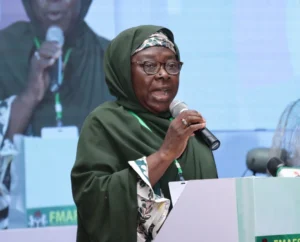
The deputy country director appreciated the collective efforts of stakeholders towards sustainable agricultural transformation, through the development and approval of the National Agroecology Strategy (2026–2030) by the Honourable Minister of Agriculture and Food Security.
“While we commend the Honourable Minister and the Ministry for this important achievement, the true success of the Strategy will be measured by its implementation and the tangible benefits it delivers to farmers and communities across Nigeria,” she said.
She said that in a continued efforts to promote effective public financing for agriculture, ActionAid Nigeria recently conducted a Business Case and Political Economy Analysis (BCPEA) of government expenditure in four strategic agricultural value-chains: rice, cassava, dairy and aquaculture.
The deputy country director said that the survey analysis covered the Federal Government and Kano, Niger and Oyo States between 2021 and 2025.
According to her, the findings revealed significant opportunities for improving agricultural investment and maximising its economic returns.
She noted that over the five-year period, approximately ₦215.7 billion was allocated to these four value chains, with the Federal Government accounting for 86 per cent of the total.
She said, “However, the average Federal budget allocation to agriculture stood at just 2.6 per cent, while allocations across the three selected States ranged between 2.8 per cent and 5.8 per cent.
“This is significantly below the 10 per cent Maputo/Malabo and Comprehensive Africa Agriculture Development Programme (CAADP) commitment.
“More importantly, our economic modelling suggests that optimising public investment across these value chains could potentially increase government revenue by approximately 50 per cent at the Federal level.
“With a projected increases of 82 per cent in Kano, 58 per cent in Niger and 76 per cent in Oyo States.
“The analysis further estimates the potential creation of approximately 1.23 million jobs across the three States, alongside substantial employment opportunities at the national level.”
Dankabo said that these findings reinforce a fundamental message that strategic investment in agriculture is not merely an expenditure but an opportunity to generate government revenue, create employment, strengthen agro-industrialisation and improve national food and nutrition security.
“We, therefore, call on the Federal and State Governments to prioritise increased agricultural budgetary allocations towards the 10 per cent CAADP commitment, ensure timely release and effective utilisation of approved funds.
“There is also need to strengthen investment in critical infrastructure, including irrigation, agro-processing facilities, storage, cold-chain logistics, agricultural finance and market access,” she added.
The council meeting, themed: “Enhancing Agricultural Value Chains, Agro-Industrialization and Market Access for Economic Growth.” brought together various sub-national, national and foreign stakeholders in the agriculture and agro-Industrialization sector.
It is expected that the meeting would deliberate on strategies for strengthening agricultural value chains, promoting agro-industrialization and improving market access to support economic growth and food security in Nigeria.