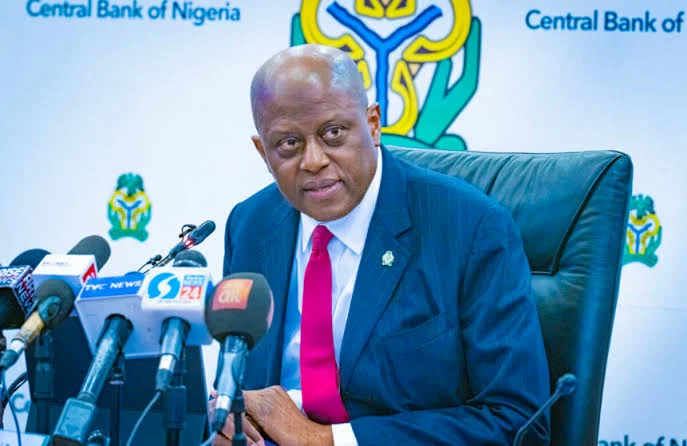
Flowerbud News/ The Governor of the Central Bank of Nigeria (CBN), Olayemi Cardoso, says Nigeria’s economic reforms and tight monetary policy have helped ease inflation, strengthen external reserves and restore investor confidence.
Cardoso said this during a debate on the global economy, with the theme, “Forging Resilient and Dynamic Economies for the Future”, on Thursday in Bangkok, Thailand.
He said that the reforms, including foreign exchange market adjustments and aggressive monetary tightening, were necessary to address economic challenges and restore credibility.
According to him, inflation, which peaked at about 34 per cent, has gradually declined to approximately 15 per cent.
The CBN governor said that Nigeria’s external reserves had risen to their highest level in 18 years, reflecting improved investor confidence.
He said the CBN raised interest rates aggressively in 2024, even as other economies began easing monetary policy.
He said that the measures helped to address weaknesses in monetary policy transmission and align market expectations with the bank’s policy decisions.
The CBN governor said that clear communication and consistency in implementing reforms helped prevent market panic and also strengthened confidence in the CBN.
Cardoso said that Nigeria had tackled severe external financing challenges, including net external reserves falling to about three billion dollars and outstanding foreign exchange obligations exceeding seven billion dollars.
The CBN governor said that an orthodox monetary policy approach helped stabilise the economy, settle the outstanding obligations and attract investment.
“Diaspora remittances were a major source of foreign exchange diversification, as that monthly inflows increased from 200 million dollars to 600 million dollars within a year.
“Nigeria subsequently targeted one billion dollars in monthly remittances, with inflows reaching about 950 million dollars in July.
“The improvement is partly due to digital solutions, engagement with Nigerians abroad and the removal of bottlenecks affecting international money transfers,” he said.
Cardoso said that Nigeria must sustain its reforms and diversify revenue sources beyond crude oil to strengthen economic resilience.
He cited the Dangote Refinery as an example of domestic value addition that could reduce dependence on exporting crude oil and importing refined petroleum products.
He said improved macroeconomic stability had also supported Nigeria’s return to international market indices, including the FTSE and JPMorgan bond indices.
Cardoso said that the country would maintain its reform momentum, stressing that credibility depended on consistent action rather than promises.
He said Nigeria, a major African economy with a large population, had a responsibility to demonstrate that sustained reforms could deliver lasting economic change.
NAN