By Majekodunmi Oseriemen Ebhohon
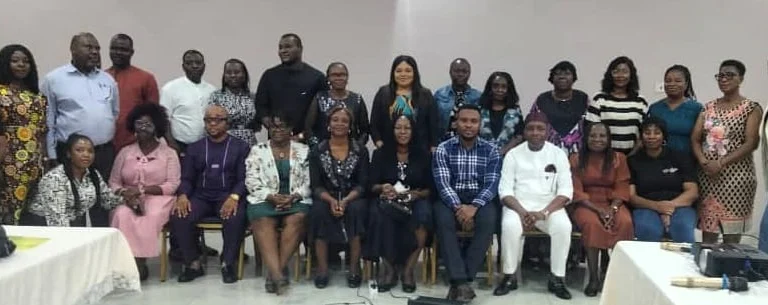
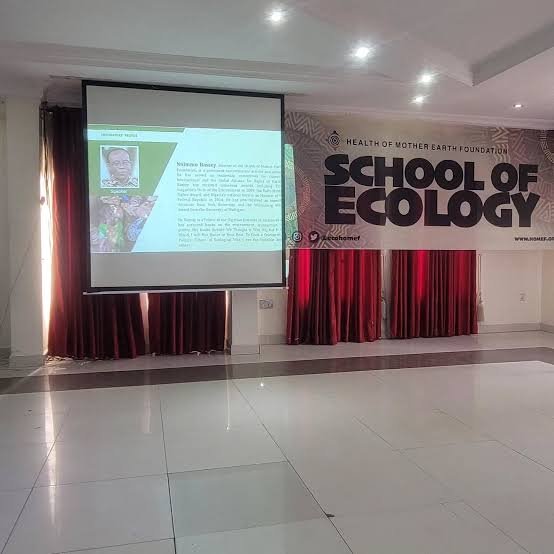
From 22 to 23 September 2026, I attended the two-day EtiUwem School of Ecology organized by the Health of Mother Earth Foundation (HOMEF) with a singular expectation. As a playwright, I sought to learn the language of the ecological struggle, translate those complex technicalities into accessible drama, and present them on stage. By breaking down the realities of corporate extractivism through dramatization, I intended to educate more people, unmask the systemic rot perpetuated by transnational extractive forces, and inspire communities to take action against extractivism. However, during this intensive session, the ideological depth of the presentations by the School’s “Instigators” pulled ecology out of a silo and placed it at the center of global political economy, deepening my expectations.
This interdisciplinary approach is what I found so impactful about the EtiUwem School of Ecology. Listening to organizers from across the globe, I observed conventional definitions of “environmental degradation” give way to a broader understanding. The Instigators did not treat oil spills, deforestation, or toxic dumping as isolated industrial errors. Instead, they traced these forms of environmental destruction to their underlying causes, examining them through Marxist analysis and locating them within processes of privatization and the structures of capitalism, colonialism, and neocolonialism. Through this lens, the School drew a historical connection between extractivism and slavery. The transatlantic slave trade was an economic system built on the extraction of human labour and the commodification of human beings; modern extractivism extends a similar logic to land, ecosystems, natural resources, and the communities that depend on them, turning them into sources of accumulation and profit. To see ecological discourse treated not merely as a scientific crisis but as an ongoing struggle against a system that strips humanity of its subjectivity was significant. For a dramatist, this link expands the canvas of ecological theatre from conservationism to a critique of global capitalism.
One constraint I noticed during the School was time. Whenever I got the microphone, I felt as though I was being chased by the clock, and I noticed that the same pressure affected several of our Instigators. Some had to rush through their presentations or skip sections to stay within the schedule. For a programme dealing with complex ecological, political, and economic questions, this can limit the time available for students to absorb, reflect on, and discuss what they have learnt. Future editions of the School could consider fewer presentations each day, to give Instigators and students more time to question, debate, and develop the ideas introduced during the sessions.
I also wished we had more time to explore the question of Africa’s transition to alternative energy, which came up during the School. I particularly wondered whether the global energy transition being proposed takes Africa’s present energy and industrial conditions into account. Africa’s energy needs and infrastructure differ fundamentally from those of countries that already have reliable electricity and established industrial systems, and this disparity deserves careful attention. Moving to full industrialisation without relying on fossil fuels would require large amounts of reliable energy and new technologies. This would include large-scale renewable power, energy storage, green hydrogen, and wider use of electricity in industrial production. However, Africa does not yet have the basic infrastructure to make such a transition on this scale. According to the International Energy Agency (IEA), around 600 million people in sub-Saharan Africa lacked access to electricity in 2024, which means the continent is dealing with a basic energy shortage while also being expected to make a major shift in how it produces and uses energy.
Furthermore, moving to non-fossil industrialisation requires huge upfront investment, technical know-how, reliable infrastructure, and access to affordable capital, while many African countries face high borrowing costs and limited financial and technical capacity. Again, the International Energy Agency reports that the cost of capital for utility-scale clean-energy projects in Africa is at least two to three times higher than in advanced economies. Expecting a continent that still lacks reliable power infrastructure and affordable financing to move directly into green industrialisation risks overlooking its immediate energy and development needs. There is also a question of historical responsibility. According to the Global Carbon Budget, Africa accounted for just 2.93% of cumulative global CO₂ emissions from fossil fuels and industry between 1750 and 2024, compared with 29.9% for Europe and 27.07% for North America. This raises a question about how the burden of the energy transition should be distributed. Should Africa not have the space to develop its basic infrastructure and expand access to reliable energy, utilizing its available resources to establish the foundation for industrialisation while building the technical capacity for its own transition, rather than being expected to adopt a capital-intensive, Western-centred model that the continent, at present, cannot afford?
This question of who gets to define Africa’s development path also led me to reflect on the role of civil society organisations in challenging the systems that shape these choices. In this case, HOMEF deserves immense commendation for the ideological boldness with which it approaches these questions. In a civil society space saturated with compromised, reformist Non-Governmental Organizations (NGOs), HOMEF sets itself apart as a radical anomaly. Many NGOs exist to preserve the status quo. They are comfortable cogs within the extractive system, avoiding any critique of capitalism for fear of losing their funding or privileges. Another Instigator at the EtiUwem School of Ecology, Barrister Maurice Chukwu, aptly captured this dynamic in his presentation by distinguishing between stakeholders and right holders. The stakeholders are the professional NGO bureaucrats who claim to advance the cause of the commons but treat the struggle of the commons as a meal ticket. They frequent luxury international conferences, gorge on hotel buffet lines, pocket their per diems, and sign off on whatever watered-down declarations are handed to them. They sit at the table as window dressing, without meaningful decision-making power, while helping to legitimise the very structures they claim to challenge. Their accommodation within these processes helps explain why, after more than three decades of United Nations climate negotiations, the global climate crisis continues to deepen.
By contrast, the right holders are the communities themselves—the people who possess an unalienable right to the commons. They do not seek a seat at a rigged table to beg for mitigation, but demand the power to determine what happens to their lives and environment. Given HOMEF’s ideological leadership, its willingness to participate in established spaces without allowing those spaces to undermine its clarity is unsurprising, yet deeply commendable. HOMEF does not shy away from naming capitalism and neocolonialism as forces at the root of the extractivist crisis. It has the courage to say what others cannot say, and to say openly what others who dare to say will only say in private.
I also noted a major point of consensus among the speakers that relying on the judiciary to abolish the extractive class is an exercise in futility. While public interest litigation occasionally scores isolated victories, such cases are often frustrated, delayed, or thrown out through institutional and procedural barriers. This roadblock is predictable. Across Africa and other parts of the Global South, the judiciary does not operate in a vacuum; it sits within state structures whose political and economic interests converge with those of transnational extractive forces. Where these class interests align, the legal system becomes a mechanism for protecting established capitalist economic arrangements rather than challenging them.
A historical example occurred in Nigeria between 2017 and 2018. The Health of Mother Earth Foundation (HOMEF), alongside sixteen other civil society organisations, sued the National Biosafety Management Agency, Monsanto Agricultural Nigeria Limited, and other government bodies over permits issued for genetically modified cotton and maize. The plaintiffs challenged the legality of the permits and raised questions concerning biosafety, public participation, fundamental rights, and the protection of the public from potential ecological and health risks. In August 2018, the Federal High Court in Abuja struck out the suit after upholding an objection that the action against public officers had been instituted outside the statutory limitation period. Yet the judge also stated that the plaintiffs had a cause of action and that the case was not being struck out for lack of merit or cause of action. This is the contradiction that should concern the public. The court acknowledged that there was a case to answer, but a procedural limitation prevented it from examining the substance of the case. The result was that questions concerning the safety of the permits, the adequacy of the regulatory process, and the rights of the Nigerian public were left unresolved. For communities confronting extractive terrorism, the implication is that even when they succeed in bringing a substantive public-interest grievance before the courts, procedural rules can prevent that grievance from ever receiving judicial determination.
This systemic betrayal contrasts with how sovereign states exercise political will. For instance, when the United States government confronted the overwhelming public health crisis and mounting medical costs associated with tobacco, it deployed the full machinery of the state against the tobacco industry. During the Clinton era, the administration pursued sweeping federal tobacco legislation, while state governments pursued litigation that culminated in the 1998 Master Settlement Agreement with the major tobacco companies. The agreement imposed substantial financial obligations on the companies and restrictions on tobacco advertising and promotion. In 1999, the U.S. Department of Justice went further, filing a federal lawsuit against the major cigarette companies to recover billions of dollars in smoking-related healthcare costs borne by the federal government.
This historical contrast brings us to the unavoidable question of political power. It takes the heft of a state—its economic, legislative, administrative, and judicial power—to decisively confront and ultimately abolish the extractive class. Organizations like HOMEF have executed their mandate flawlessly; they are educational and campaigning powerhouses, not political parties. The EtiUwem School of Ecology serves as a magnificent incubator for ideological orientation amongst ecological activists. However, we cannot stop at talks, community organizing, and endless, frustrated litigation. As I raised during my engagement with the School’s Instigators, Comrade Jaye Gaskia and Comrade Ken Henshaw, both of whom shared the understanding that extractivism is fundamentally class-based. There is a class that profits from extraction, and there is a class that is commodified and objectified by it. Having established this class character, the question that naturally follows is, how do we move from ideological orientation and political education to organised political power in order to assert system change? For the commons to survive, they must abolish the extractive class. As both Instigators emphasized, this requires organized political struggle capable of contesting for, capturing, and wielding state power. We must therefore complement HOMEF’s educational outreach by organizing the conscious masses for that struggle. Until the ideological clarity gained at the EtiUwem School of Ecology is translated into organized political power, it is difficult for me to see how the commons will truly reclaim their right to a sustainable life. The ultimate classroom is the struggle for the soul of the state.
Let me express my gratitude to HOMEF and the organizers of the EtiUwem School of Ecology for the opportunity to participate and for the hospitality extended to us throughout the programme, allowing us to engage fully with the conversations and activities.
And now, I return to Super Tomato, the play I came to the School already working on, about genetically modified tomatoes, the tomato pest Tuta absoluta, and the larger struggle over who controls our food, our agriculture, and the conditions under which we live. The EtiUwem School of Ecology has given me much more to think about as I return to this play. So, it is back to the script. We meet again in Super Tomato!
— Majekodunmi Oseriemen Ebhohon is a Nigerian theorist-playwright, poet, and anti-extractivist campaigner. He is a participant in the EtiUwem School of Ecology and the author of The Great Delusion, winner of the ANA Prize for Drama.
sankara101010@gmail.com
+234 (0) 913 920 8624