







…Bemoans public institutions’ failure to reward hard work, guarantee fairness
…. Says patriotism cannot be sustained by slogans, decrees or repeated appeals alone
…Urges leaders to ensure consequences for misuse of public resources
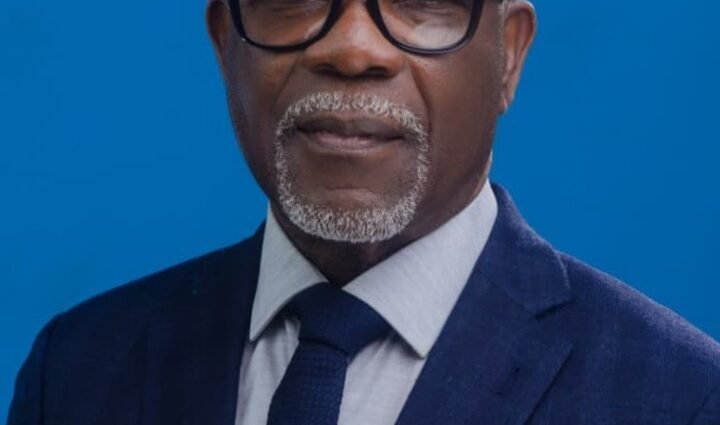
A People’s Redemption Party (PRP) presidential aspirant, Engr. (Dr) Yakubu Mohammed Kingsley (YMK), currently awaiting the Federal High Court November 2 judgment on the primary election dispute, has called on governments at various levels to restore integrity and accountability in governance in order to rebuild patriotism.
Kingsley, who is challenging the declaration of Donald Duke as winner of the May 25 poll by INEC, expressed dissatisfaction over the failure of public institutions to reward hard work, guarantee fairness and provide equal opportunities for all.
He spoke in a statement he made available on Friday in Abuja titled: “Rebuilding Patriotism by Restoring Faith in the Nigerian System.”
According to him, central to rebuilding patriotism is the restoration of integrity and accountability in governance.
“The foundation of national trust must start at the top.
“When public officials demonstrate accountability, transparency, fiscal discipline and respect for the rule of law, citizens are far more likely to believe in the national project.
“Laws must apply to everyone, regardless of status, wealth, ethnicity, religion or political connections. Corruption must be confronted seriously, and citizens must see that there are consequences for the misuse of public resources,” he said.
He observed that for far too long, Nigerians have been accused of lacking patriotism, as though the gradual decline in national confidence and civic commitment were created by the citizens.
“The truth, however, is more complex. Perhaps, Nigerians have not stopped loving Nigeria; rather, many have become discouraged by the reality of living in a country where the relationship between citizens and the state has too often felt one-sided.
“People naturally find it difficult to remain deeply connected to a system that does not consistently make them feel safe, protected, heard, valued or given a fair opportunity to succeed.
“When citizens struggle with insecurity, inequality, unemployment, poor public services and weak confidence in institutions, asking them simply to “be more patriotic” can appear unrealistic.
“Patriotism cannot be sustained by slogans, decrees or repeated appeals alone.
“It grows where citizens see a corresponding commitment from those entrusted with the responsibility of governing them,” he said.
Kingsley said the assumption that Nigerians are generally unpatriotic does not tell the complete story.
“Beyond politics and government, Nigerians continue to demonstrate remarkable passion for their country.
The global achievements of Nigerians in Afrobeats, Nollywood, literature, fashion, science, business and other creative and professional fields continue to generate enormous national pride.
“Whenever Nigerian athletes represent the country in international competitions, Nigerians across ethnic, religious and political divides often unite behind the national flag.
“Across communities, citizens frequently organise themselves to provide neighbourhood security, maintain local infrastructure and create informal social support systems where government services are inadequate.
“These realities demonstrate that the problem is not the total absence of patriotism,” he added.
He said the love for Nigeria still exists.
“What has weakened over time is the confidence of many citizens in the institutions responsible for governing the country.
“Many Nigerians find it increasingly difficult to extend their emotional attachment to the Nigerian nation into confidence in a system that they believe has not consistently earned their trust.
“When public institutions fail to reward hard work, protect merit, guarantee fairness and provide equal opportunities, the spirit of national service is weakened.
“When citizens repeatedly encounter corruption, insecurity, poor services, unemployment, broken infrastructure and policy uncertainty, many gradually become disenchanted with the system.
“When people see favouritism, bribery, misuse of public resources and the influence of ‘who you know’ becoming normalised, some begin to question why they should continue to obey the rules when others appear to benefit from breaking them.”
He said economic hardship also has consequences for civic commitment.
“It is difficult to ask a citizen struggling to feed a family, find employment or access basic services to feel enthusiastic about national sacrifice without addressing the conditions that make daily life increasingly difficult.
“Citizens are more willing to make sacrifices for their country when they believe that those entrusted with leadership are also making sacrifices, obeying the law and being held to the same standards,” he said.
Kingsley, who urged leaders to ensure consequences for misuse of public resources, called on government institutions to also deliver the basic services that give citizens confidence in their country.
“Reliable electricity, improved infrastructure, quality education, accessible healthcare, security, clean water and efficient public services are not merely development objectives; they are part of rebuilding the social contract between the Nigerian state and the Nigerian people.”
According to him, patriotism is not only waving the national flag, singing the national anthem or repeating national slogans.
“True patriotism includes understanding one’s rights and responsibilities, obeying legitimate laws, paying lawful taxes, protecting public property, keeping communities clean, participating responsibly in elections and holding leaders constructively accountable.
“Civic education in our schools must therefore move beyond the passive memorisation of national symbols,” he said.
He, therefore, commended patriotic Nigerians and Nigerian business leaders who have continued to invest, create employment, develop industries and build enterprises despite an environment that has often been difficult and discouraging.
“The YMK Nigeria Project rejects the idea that the country belongs to a privileged few.
“No Nigerian should be made to feel like a stranger in his or her own country.
“Whether rich or poor, leader or follower, from the North or the South, from a majority or minority ethnic nationality, every citizen must have a genuine sense of belonging.
“To us, no Nigerian is better than another Nigerian,” he said.