By Dianabasi Effiong
Asaba (FLOWERBUDNEWS): Gov. Sheriff Oborevwori of Delta has restated why nations continually invest in the education of citizens, saying such investments are most strategic for any nation to make.
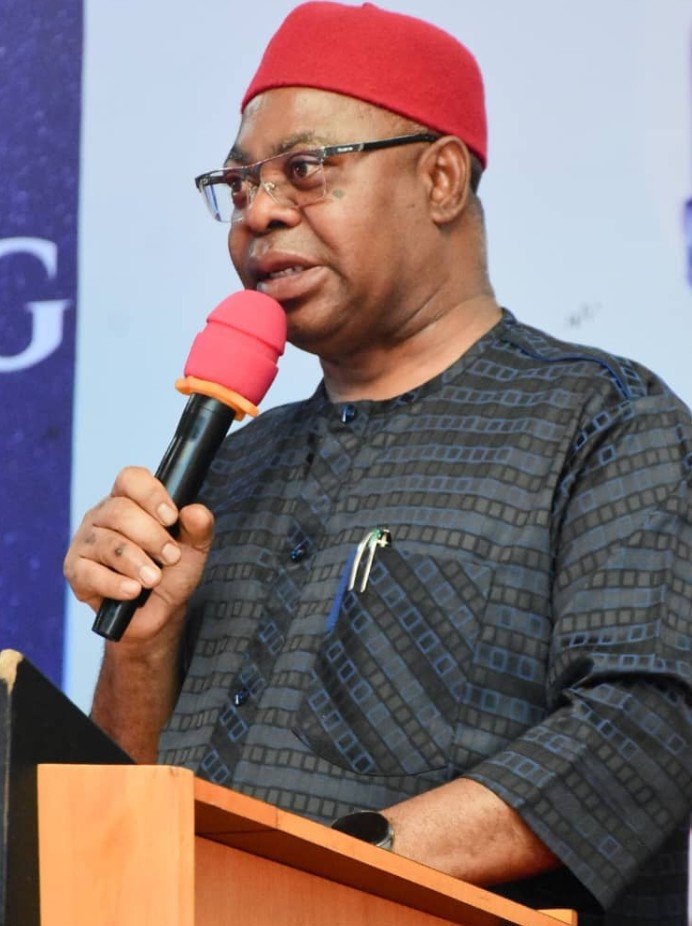
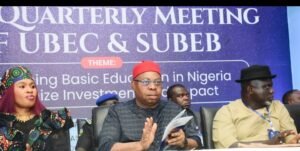
The Governor said this during the 30th Quarterly Meeting of the Universal Basic Education Commission (UBEC) management with the State Universal Basic Education Board SUBEB Chairmen and officials of the Federal Ministry of Education on Tuesday in Asaba.
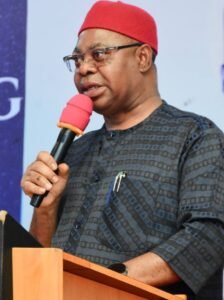
Represented by his Deputy, Sir Monday Onyeme, the governor said, “Education is the most strategic investment any nation can make; it is the foundation of economic growth, social stability, innovation, and national development
 .
.
”A strong basic education system equips children with the literacy, numeracy, values, and critical thinking skills that underpin lifelong learning.
”In Delta State, this conviction drives our M.O.R.E. Agenda: Meaningful Development, Opportunities for All, Realistic Reforms, and Enhanced Peace and Security.
”We have prioritised education because sustainable development begins with an educated and empowered people.
”Our commitment is reflected in our consistent support for the Universal Basic Education Programme; Delta State has consistently paid its UBEC counterpart funds to access Federal Government intervention funds.”
He said his administration recently approved the release of the 2026 counterpart fund after fulfilling our 2025 obligation in order to reaffirm the belief that no investment was greater than an investment in the future of the children of the State.
He also expressed appreciation to UBEC for approving two additional Model Smart Schools for Delta State.
According to him, the government has already provided the required land and will work with the Commission to deliver these projects.
He said that the state’s partnership with SUBEB had produced encouraging results such that more than 302,000 pupils enrolled in public basic schools across the State, with no less than 187,000 learners, representing 62 per cent of total enrolment, benefiting directly from various educational interventions.
”Working with SUBEB, we have constructed 174 new classrooms, renovated 815 classrooms, and are building 24 additional classrooms. We have also constructed 39 perimeter fences and gatehouses, renovated five gatehouses, provided 230 VIP toilets, and installed 12 solar-powered boreholes, creating safer and healthier learning environments.
”To strengthen teaching and learning, we have supplied 16,834 classroom furniture units, built 10 staff quarters, and provided boarding facilities in strategic schools.
”At our SMART School in Orogun, complementary infrastructure, including two staff quarters, six teachers’ apartments, a hostel, and refectory blocks, has been completed to support technology-driven learning and prepare our children for the digital world,” he said.
He added that beyond SUBEB interventions, the Ministries of Primary and Secondary Education provided more than 200 classrooms, 15,000 furniture units, and other essential educational facilities across the State.
”Our investment also extends to technical and vocational education; we have established new Government Technical Colleges, upgraded existing ones, and provided modern workshops, laboratories, classrooms, hostels, and equipment.
”These investments are equipping young people with the practical skills, innovation, and entrepreneurial capacity required in today’s labour market.
”No education system can rise above the quality of its teachers. That is why teacher recruitment, welfare, motivation, and professional development remain priorities.
”Through SUBEB, over 5,500 teachers have received training in modern teaching methods, digital literacy, and subject-specific instructional methods through programmes such as Jolly Phonics, STEP, SMASE, ECCDE, and School-Based Training.
”We have also deployed 53 community tutors to underserved communities to address teacher shortages,” the governor said.
He commended UBEC for convening the meeting and for choosing ‘Repositioning Basic Education in Nigeria to Optimise Investment and Impact’ as the theme.
He said that the true measure of investment in education was not in what we spent, but in the quality of learning we delivered, the opportunities we created, and the future we secured for our children.
”I am pleased that all 16 professional development programmes scheduled for this year have been successfully implemented in my state. In addition, the Ministries of Primary and Secondary Education have trained over 3,000 teachers across the State.
”To further motivate our teachers, we approved the career progression of primary school teachers from Grade Level 14 to Grade Level 17, reinforcing professionalism and recognising their indispensable role in nation-building.
”Technology is central to modern education. As such, SUBEB has distributed 167,707 textbooks, 1,843 tablets, 28 laptops, 13 desktop computers, 64 interactive smart boards, and over 10,000 teaching and learning aids across 276 public primary and junior secondary schools.
”Electronic clocking systems have also been introduced to strengthen teacher attendance and maximise instructional time.
”Community participation is equally important, so we have strengthened School-Based Management Committees through the establishment of 25 Local Government Steering Committees and over 800 School-Based Management Committees, while sensitisation campaigns in all 25 Local Government Areas have boosted enrolment and encouraged communities to support school development,” he said.
In her remarks, the Executive Secretary of UBEC, Dr. Aisha Garba, said the meeting provided an important platform to strengthen collaboration and review shared priorities, noting that basic education alone caters to more than 14 million pupils and students in the country.
She said that the ₦177 billion that had remained unaccessed by states for many years was now being accessed, following reforms jointly introduced and implemented.
He said that accessing the funds was not enough as effective utilisation must also be a priority.
Garba announced the ongoing review of the 10-Year Strategic Roadmap for Basic Education, extending it from 2026 to 2035, the fully developed Basic Education Action Plan Management System for digital planning from 2026, strengthened minimum standards for schools, a National Learning Assessment expected to take effect by the end of the year or early next year, and an additional supplementary budget secured for UBEC and SUBEBs from 2026.
In his remarks, the Dean of SUBEB Chairmen and Executive Chairman of Kwara State SUBEB, Prof. Shehu Adaramaja, challenged stakeholders to move beyond counting classrooms and money spent, asking pointedly whether increasing investment automatically guarantees results.
Earlier, the Executive Chairman of Delta State SUBEB, Samuel Mariere, commended Gov. Oborevwori’s digitalisation vision describing him as the “Making a Difference Governor.”
In a goodwill message on behalf of the Ministries of Education, Delta State Commissioner for Secondary Education, Dr. Kingsley Ashibogu, said foundational literacy and numeracy should remain a national emergency and a central performance indicator for basic education.
In his remarks, the Asagba of Asaba, Prof. Epiphany Azinge, said that every project improved learning adding that no child should be left behind.
He also described education as a collective national responsibility.
”If we build strong schools today, we shall build a stronger Nigeria tomorrow,” Asagba Azinge said.