By Rasheed Tayo Tijani
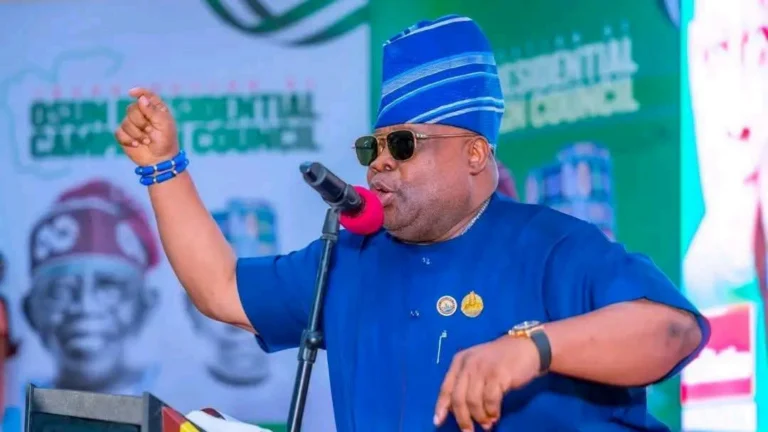
Nigeria is gradually becoming a country of political billboards. From major highways to neighbourhood streets, President Bola Tinubu’s campaign messages are increasingly visible. Posters, banners, promotional materials and political advertisements are competing for public attention ahead of the 2027 general elections. But amid all this publicity, something interesting happened on ARISE News on Friday, 27 November 2026.
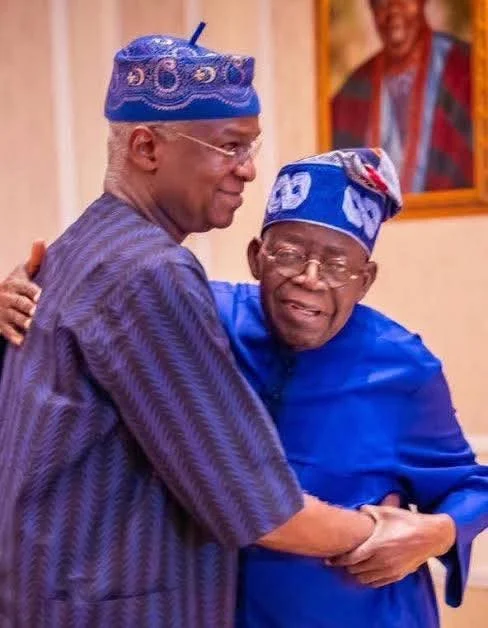
Former Lagos State Governor and former Minister of Works, Babatunde Raji Fashola, sat down with Ojy Okpe and did something that millions of naira in campaign advertising cannot easily achieve: he attempted to give Nigerians reasons to defend, reconsider and possibly support the Tinubu administration.
I watched the arguments emerging from that interview and came away with one major observation: Fashola may have done more for Tinubu’s political communication in one television appearance than an enormous collection of campaign billboards could achieve.
This is not necessarily because every argument he presented was unanswerable. It is because he understood something that political campaign organisations sometimes overlook: visibility is not persuasion.
A billboard can remind people that a candidate exists. A campaign poster can communicate a slogan. But when voters are asking difficult questions about the economy, fuel prices, insecurity, infrastructure and the direction of government, they need more than photographs and promises. They need explanations. That was what made Fashola’s intervention politically significant.
Consider how he approached the issue of economic hardship. He did not simply dismiss the suffering Nigerians are experiencing. He acknowledged the cost-of-living challenge but argued that the administration should be judged by the reforms it had initiated and the results expected from them.
He cited measures including the new minimum wage, NELFUND, tax reforms, stamp-duty waivers on lease agreements and compressed natural gas initiatives. He also warned against abandoning the reform process and returning to fuel subsidy.
One may disagree with his assessment of the reforms or question whether their benefits are reaching ordinary Nigerians quickly enough. Those are legitimate arguments. But Fashola was offering supporters something they could use beyond saying, “Tinubu is doing well.” He was giving them a defence of the administration’s economic direction.
His argument about infrastructure was equally deliberate. He contrasted the PDP’s years in power with the APC’s record, pointing to railway projects, major roads, the Second Niger Bridge, port development and the Petroleum Industry Act.
Again, these claims deserve independent scrutiny. Infrastructure projects often span several administrations, and no political party should receive exclusive credit for every project completed during its time in office. Nevertheless, Fashola was presenting a historical argument about what he believes the APC has delivered and why voters should consider that record.
Then came perhaps one of the most interesting moments of the interview: his account of Tinubu’s role in the events that led to Eko Atlantic.
Fashola said that when he served as Tinubu’s Chief of Staff in Lagos, he personally drafted letters to then-President Olusegun Obasanjo seeking federal intervention against the Atlantic’s encroachment. According to him, those requests were repeatedly rejected before Lagos pursued another route that eventually produced the Eko Atlantic development. He insisted that Tinubu deserved credit for initiating the intervention.
That testimony carries a different weight from ordinary campaign praise. Fashola was not merely repeating a campaign slogan. He was presenting himself as someone who had been present during the events and had personally participated in the process.
Whether one agrees with every aspect of his account or not, it is the kind of political argument that invites people to examine a specific record.
He also defended Tinubu’s political leadership by asking voters to consider his ability to retain political associates and bring former opponents into his political circle. Fashola described this as a kind of leadership reference, suggesting that the people who continue to work with a politician can tell voters something about that politician’s ability to work with others.
This was another attempt to move the conversation beyond campaign slogans and towards an assessment of political relationships and leadership.
Interestingly, Fashola did not defend every position associated with the political atmosphere ahead of 2027. On the controversial “rig and die” rhetoric, he rejected the suggestion that election riggers should be killed, insisting that electoral offences must be punished within the law. He also acknowledged that questions surrounding the procurement process for the Lagos-Calabar Coastal Highway were legitimate and should be answered by the appropriate minister.
These moments matter. They show that the interview was not simply a succession of flattering statements. Fashola engaged with difficult subjects, expressed reservations where he said he lacked the necessary facts and defended his positions where he believed he had evidence. That approach is part of what made the interview interesting. Now, imagine the difference between two campaign messages. One says: “Vote Tinubu for continuity.” The other says: “Here is why the reforms should continue, here are the projects we believe demonstrate progress, here is the history behind a major development, and here is why we think the alternative could be uncertain.”
The second gives people something to debate. It gives supporters talking points, gives critics specific claims to challenge and gives undecided voters material to consider. That is the difference between political visibility and political persuasion.
Of course, we cannot establish how many votes Fashola’s interview has won for Tinubu. There is no polling evidence to measure that. Nor should one television appearance be mistaken for proof that Nigerians have accepted his arguments. The same interview may strengthen the convictions of supporters while giving opponents more material for criticism. But its political communication value should not be underestimated.
Tinubu’s campaign does not necessarily need more people to see his face. Nigerians already know who he is. What it needs is a convincing explanation of his administration’s record, particularly to citizens who are struggling and want to understand why they should give the government another four years. Fashola attempted to provide that explanation.
And perhaps that is a lesson for political parties in Nigeria: you can spend heavily to occupy public spaces with posters and billboards, but you cannot buy public conviction simply by increasing visibility.
A credible argument, clearly presented and open to scrutiny, can sometimes travel further than the biggest campaign billboard.
Forget the billboards for a moment. Fashola may have just demonstrated the kind of political communication Tinubu needs most as 2027 approaches.