NIMAREX 2026 panelists: Experts urge stronger regional unity to boost maritime security
Lagos, Nov. 17, 2026, Maritime experts have called for stronger regional cooperation to secure Nigerian waters, cut shipping costs and boost trade under the African Continental Free Trade Area (AfCFTA).
The experts made the disclosure during a panel session on the topic: Regional Cooperation for Maritime Security, at the 2026 Nigeria Maritime Conference and Exhibition (NIMAREX) on Tuesday in Lagos.
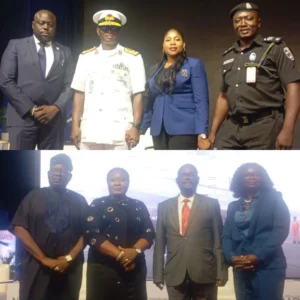
The Moderator, a maritime expert, Mrs Temilade Oguniyi, said that Nigeria has several security agencies, but coordination gaps, jurisdictional conflicts and rivalry still weaken operations.
Oguniyi asked how the inter-agency framework could be strengthened and how Nigeria can lead a coordinated regional maritime security architecture.
She also asked how technology and domain awareness could be integrated to end silo operations among agencies and private operators.
One of the panelists, the President, Maritime Security Providers Association of Nigeria (MASPAN), Mr Emmanuel Maiguwa, said that insecurity raises costs through risk assessments, extra guards, training and insurance on vessels, crew and cargo.
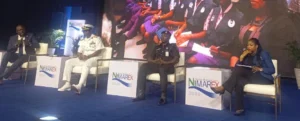
Maiguwa said that pirates come from shorelines, not the sea, so Nigeria should build a framework linking state and private security responses.

The Chief Superintendent of Police, Marine Police, (CSP) Segun Mara, said that maritime crime is transnational, adding that regional cooperation, information sharing and joint training were essential for prosecution.
He said the SUPMO Act and regional information sharing had helped prosecution, adding that agencies still need vessels, tools and evidence support.
Rear Admiral Nnamdi Ekwom said that Nigeria leads the region in maritime domain awareness through Falcon Eye and C4i systems.
He said that piracy fell by over 90 per cent since 2021, lowering insurance costs and boosting investor confidence in Nigerian waters.
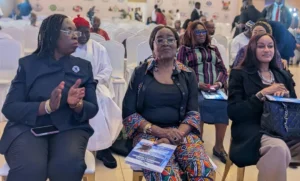
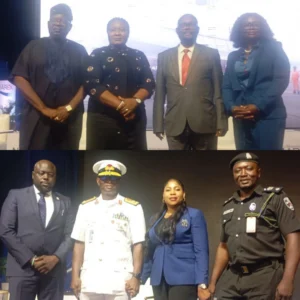
Another panelists session on Capacity Building:Maritime Education and Workforce Development, stakeholders also called for urgent action to close maritime education gaps and prepare workforce for blue economy growth.
The Moderator, President Women in Maritime Africa (WIMAfrica) Mrs Theodora Nwaeze, said that training institutions should address quality, quantity and placement gaps facing cadets in Nigeria.
Nwaeze asked how institutions can keep curriculum compliant with international standards and responsive to industry manpower needs.
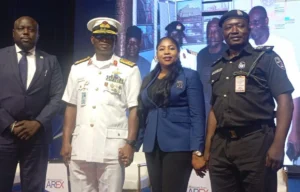
One of the panelists, Mrs Rollins Macfoy said placement is most critical gap because many cadets train for years without sea time for certification.
Macfoy urged the Nigerian Maritime Administration and Safety Agency (NIMASA) to mandate shipowners to take two or three cadets on each vessel operating in Nigerian waters.
She said that collaboration between regulators, shipowners and training institutions could place 5,000 cadets onboard every year.
A lecturer from Maritime Academy Oron, Mr Imoh Ekpo, said that capacity building works at individual, institutional and systemic levels to prepare workforce for maritime jobs.
Ekpo said Academy Oron trains cadets in nautical science, marine engineering and maritime transport to global standards.
He urged industry to stop asking where seafarers are and start asking how many cadets they can adopt yearly.