
Nigeria needs cargo guarantees, not government-funded vessels- Agbakoba
Lagos, Oct. 29, 2026, A maritime lawyer, Mr Olisa Agbakoba (SAN), says Nigeria needs guaranteed cargo, bankable contracts and regulatory certainty to attract private investment into indigenous shipping, rather than relying on government to finance vessels.
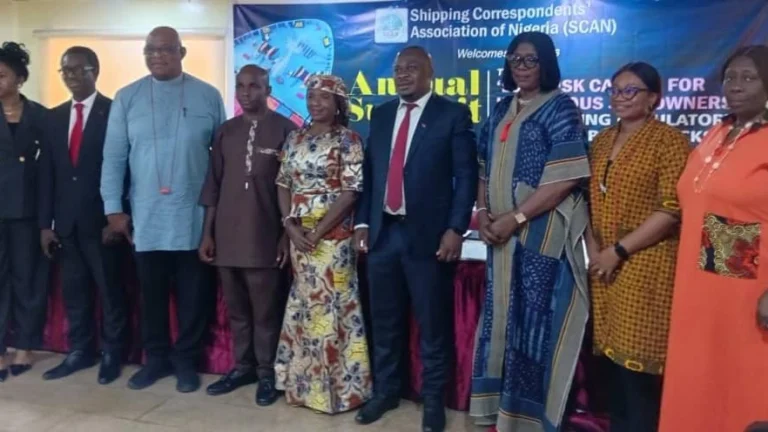
Agbakoba disclosed this on Thursday in Lagos at the annual summit of the Shipping Correspondents Association of Nigeria (SCAN), with the theme, “Low-Risk Capital for Indigenous Ship Owners: Overcoming Regulatory, Financial Bottlenecks”.
Agbakoba a Senior Advocate of Nigeria, was represented by Mr John-Paul Akunne, a maritime lawyer.
He said that the theme addressed the need to transform Nigeria’s maritime potential into a commercially viable indigenous shipping industry capable of retaining more freight earnings in the country.
He said that indigenous shipowners continued to face limited access to finance and reliable commercial opportunities despite the country’s substantial cargo volumes.
According to him, a Nigerian national fleet would retain more freight earnings, create jobs for seafarers, strengthen ship management and repair services, and expand Nigeria’s participation in domestic, regional and international shipping.
He, however, stressed that fleet development required more than vessel acquisition, noting that commercially viable vessels, competent operators, dependable cargo demand and sustainable financing were essential.
Agbakoba said that maritime financing involved risks relating to vessel values, foreign exchange, insurance, operating costs and freight rates, which could be managed through proper legal, technical and financial due diligence.
He said that lenders must verify vessel ownership, registration, mortgages, insurance, regulatory compliance and borrowers’ capacity to repay loans.
He added that ship mortgages, guarantees and the assignment of charter earnings and insurance proceeds could provide appropriate security for lenders.
Agbakoba emphasised that collateral alone could not make an unviable project bankable, noting that vessels needed reliable revenue sources backed by enforceable cargo or charter contracts.
The former President of the Nigerian Maritime Law Association said that cargo availability was central to shipping investment, as vessels without dependable employment struggled to secure financing.
He urged major oil companies, terminal operators and cargo owners to engage qualified Nigerian shipowners through commercially viable contracts specifying cargo volumes, duration, freight rates, performance standards and payment obligations.
Agbakoba said that the Coastal and Inland Shipping (Cabotage) Act, 2003, and the Nigerian Oil and Gas Industry Content Development Act, 2010, provided frameworks for greater Nigerian participation in shipping and oil and gas operations.
He called for effective enforcement of the laws, transparent administration of waivers and improved access to cargo for indigenous operators.
He also identified regulatory uncertainty as a factor increasing investment costs, urging better coordination among the Nigerian Maritime Administration and Safety Agency (NIMASA), the Federal Ministry of Marine and Blue Economy, the Nigerian Ports Authority (NPA) and the Nigerian Ports Economic Regulatory Agency.
Agbakoba said that the Cabotage Vessel Financing Fund remained important but should complement commercial lending, development finance and private investment.
He called for transparent eligibility requirements, rigorous credit assessment, adequate collateral and effective monitoring of the fund.
He recommended six priority measures for sustainable fleet development: cargo-backed financing, improved cargo access, regulatory coordination, mobilisation of private capital, stronger maritime capacity and an implementation framework with clear timelines and measurable outcomes.