
By Jimoh Babatunde
Tourism journalist and lawyer, Wale Ojo-Lanre, has said he warned against the expansion of the regulatory powers of the National Institute for Hospitality and Tourism (NIHOTOUR) during a public hearing at the National Assembly in 2017.
Ojo-Lanre, a former Chairman of the Nigeria Union of Journalists (NUJ), Oyo State Council, said his concerns about the proposed supervisory powers of the institute had resurfaced following the recent Federal High Court judgment in the legal dispute between NIHOTOUR and the Hotel Owners and Managers Association of Lagos (HOMAL).
In a statement, Ojo-Lanre said he had argued during the hearing on the NIHOTOUR Establishment Bill before the Eighth Senate that the institute should focus on professional training, research and capacity development rather than assume extensive regulatory authority over hospitality establishments and their workers.
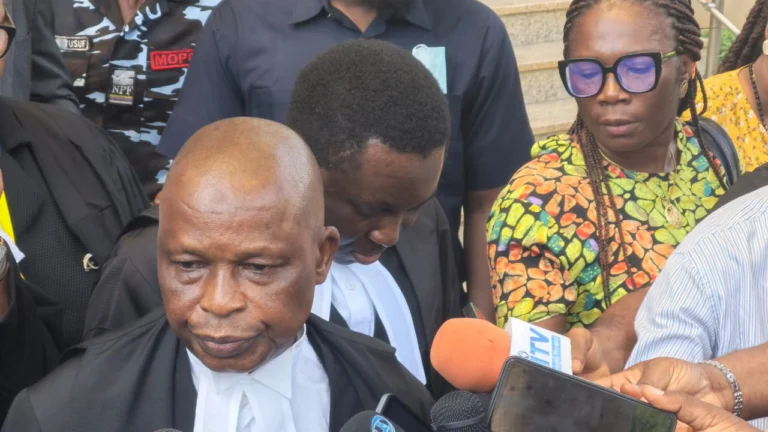
He said other tourism stakeholders had also raised objections to some of the proposed provisions, adding that records of the interventions were available in newspaper reports and photographs taken at the National Assembly.
According to him, the recent court judgment, which reportedly declared certain NIHOTOUR regulatory and enforcement actions against hospitality businesses operating in Lagos unconstitutional, has brought renewed attention to the constitutional limits of federal regulatory authority.
He noted that the court reportedly awarded HOMAL N10 million in damages and restrained specified enforcement activities, while NIHOTOUR had indicated its intention to challenge the decision.
Ojo-Lanre, however, argued that the controversy should prompt a broader review of the legal mandates of Nigeria’s tourism institutions, particularly the division of responsibilities between the Federal Government and state governments.
He recalled the 2013 Supreme Court judgment in the dispute between the Attorneys-General of the Federation and Lagos State, which addressed the constitutional limits of federal authority over hotel regulation.
According to him, the judgment underscored the need to distinguish federal responsibilities relating to tourist traffic from the regulation of local hospitality establishments, which falls within the relevant legislative competence of state governments.
The tourism expert also disclosed that he participated in another public hearing on the legislation that transformed the Nigerian Tourism Development Corporation (NTDC) into the Nigerian Tourism Development Authority (NTDA).
He said he had equally advocated the establishment of a standalone Federal Ministry of Tourism, stressing that Nigeria needed clearly defined institutional responsibilities to accelerate tourism development.
Ojo-Lanre maintained that NIHOTOUR should concentrate on professional training, research and legally authorised certification, while the NTDA should focus on national tourism promotion, destination development and investment facilitation within its lawful mandate.
He added that state governments should exercise their constitutionally authorised regulatory powers over local hospitality businesses, while the Federal Government should provide national leadership and coordination without encroaching on the powers of the states.
Expressing concern over what he described as persistent institutional conflicts in the sector, Ojo-Lanre said Nigeria had devoted considerable attention to disputes over registration, certification, inspection and fee collection, while many tourism destinations remained underdeveloped.
He questioned the absence of sufficiently coordinated destination marketing programmes, investments and measurable improvements in visitor spending, employment and revenue.
Ojo-Lanre said the NIHOTOUR-HOMAL dispute should serve as an opportunity to clarify the legal responsibilities of tourism institutions and resolve overlapping mandates that could undermine industry growth.
He disclosed that he was working on a comprehensive legal, constitutional and institutional review of the controversy, including the 2013 Supreme Court judgment, the recent Federal High Court decision and the legislative history of NIHOTOUR and NTDA.
The proposed review, he said, would also examine Nigeria’s tourism governance structure, compare its legal framework with those of other countries and recommend practical measures for resolving institutional conflicts.
He insisted that tourism prosperity could not be achieved through regulation alone, but required clear laws, effective institutions, investment, infrastructure and marketable destinations.
Note for publication: The specific findings and orders of the Federal High Court, the N10 million damages award and the status of NIHOTOUR’s proposed appeal should be independently verified against the certified judgment and the parties’ official statements before publication.