By ashir Rabe Mani in Sokoto
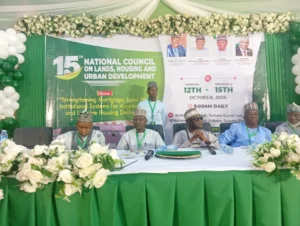
TSokoto (FLOWERBUDNEWS):. The 15th Meeting of the National Council on Lands, Housing and Urban Development, commenced on Monday in Sokoto, with focus on strengthening mortgage, land and institutional systems for accelerated and inclusive housing delivery in Nigeria.
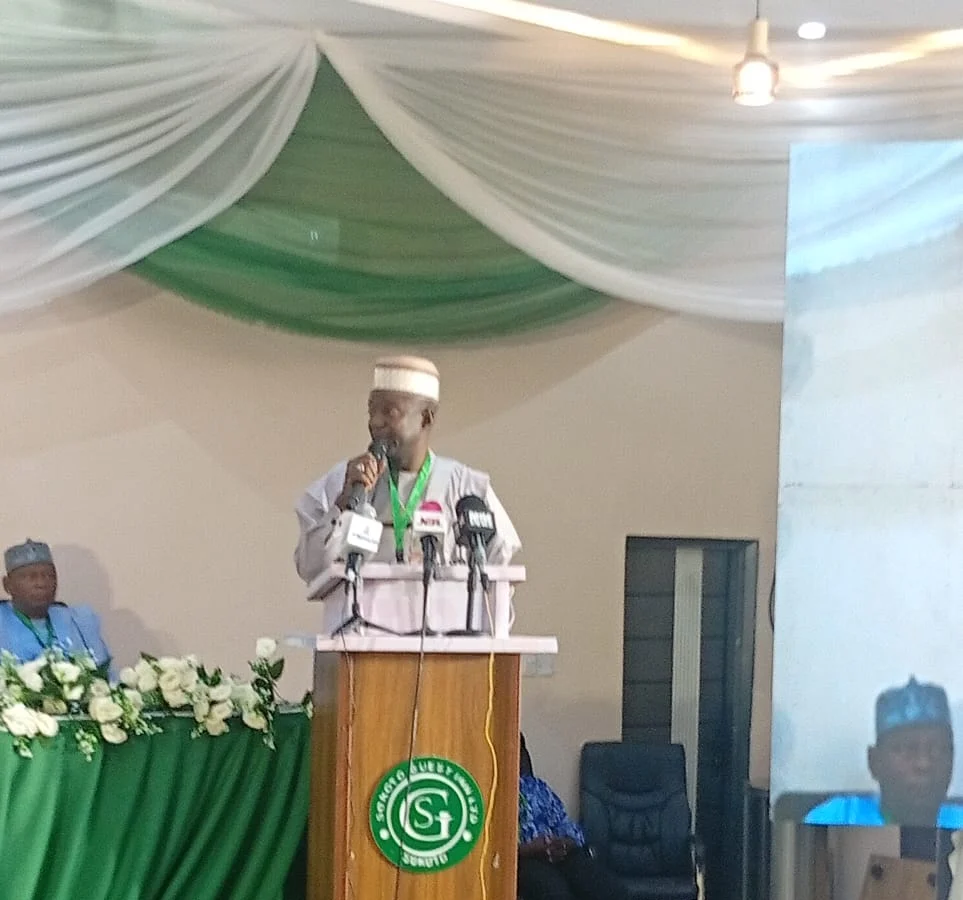
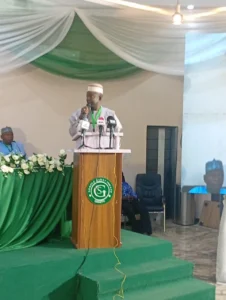
Declaring the technical session open on Monday, the Director, Planning, Research and Statistics, Federal Ministry of Housing and Urban Development, Alhaji Mukhtar Umar, said the theme of this year’s meeting, “Strengthening Mortgage, Land and Institutional Systems for Accelerated and Inclusive Housing Delivery,” provides a critical platform to examine challenges affecting the housing sector and develop practical solutions to improve housing delivery across the country.
Umar, who welcomed delegates on behalf of the Ministry, expressed appreciation to the government and people of Sokoto State for their warm hospitality and arrangements for the successful hosting of the meeting.
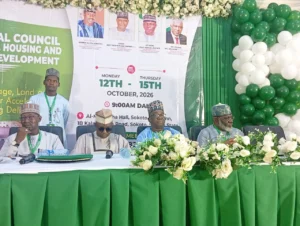
He explained that the Council meeting is structured into three major stages. According to him, the first stage, which began on Monday, 12th October and continues on Tuesday, 13th October, involves detailed examination of memoranda by Directors and technical officers through various thematic working groups to review issues, identify challenges, assess proposed interventions and develop clear, practical and actionable recommendations.
The second stage, he said, will take place on Wednesday, 14th October, when Permanent Secretaries from the States, the Federal Capital Territory and the Federal Ministry will consider the outcomes of the technical deliberations, to further examine, refine and harmonize the recommendations to ensure issues requiring policy direction are adequately captured.
The final stage, scheduled for Thursday, 15th October, will be the meeting of the Minister of Housing and Urban Development, the Minister of State and Commissioners from the States and the FCT, to consider reports and recommendations, deliberate on memoranda and provide necessary policy directions.
Umar added that the final Council session will also review the status of implementation of decisions reached at the 14th meeting held in Ilorin, Kwara State, to assess progress, identify outstanding issues and strengthen accountability, as well as determine the venue and date for the 16th meeting before the adoption of the communique.
He urged Directors and technical officers to approach the memoranda with diligence, objectivity and a strong sense of responsibility, ensuring recommendations are evidence-based, implementable and directed at addressing practical challenges confronting land administration, housing finance, institutional coordination and sustainable urban development.
Also speaking, the Commissioner, Sokoto State Ministry of Lands, Housing, Survey and Town Planning, Barrister Nasiru Dantsoho, said the theme was strategically selected to ensure policies are geared towards ensuring every citizen has access to decent housing.
Dantsoho commended Gov. Ahmed Aliyu for prioritizing urbanization and transforming Sokoto from a largely rural setting to an urban city, noting that anyone who visited the state four or five years ago would notice tremendous changes.
He lamented that Nigeria faces a housing deficit of over 14.5 million units, with about 50.6 million people living in unsafe houses, describing the situation as worrisome.
The Commissioner advocated single-digit interest rates on mortgage loans, down from the current double-digit rates, and extension of mortgage tenor from 25 to 35 years to make repayment more affordable.
He also called for expansion of mortgage access beyond the formal public and private sectors to capture Nigerians in the informal sector, including traders and farmers, who constitute the majority but are often excluded from housing finance policies.
He urged financial institutions, including the Federal Mortgage Bank of Nigeria, to provide adequate funds and flexible repayment plans tailored to seasonal earners, such as farmers who can repay after harvest, and stressed the need for states to digitize land administration to improve efficiency and transparency.
In his remarks, the Permanent Secretary, Sokoto State Ministry of Lands, Housing, Survey and Town Planning, Engr. Moyi Tambuwal, said land remains not merely a physical resource but the basis of livelihood, economic activity, social development and intergenerational heritage.
Tambuwal said in recognition of its importance, the Sokoto State Government has continued to pursue reforms, including ongoing digitization of land records, efforts to reduce processing time for Certificates of Occupancy and provision of land for mass housing development under the Renewed Hope Housing Programme of the Federal Government.
He noted that these interventions reflect the state’s determination to build a land administration system that is more efficient, transparent and responsive, but acknowledged that the scale of the housing challenge requires sustained reform, stronger institutional collaboration and innovative approaches to housing finance.
According to him, delivery of adequate and affordable housing requires more than physical construction, but an efficient land administration framework, accessible housing finance, effective institutions, appropriate policies and strong coordination among federal, state governments and the private sector.
He said access to affordable mortgage finance remains critical to expanding home ownership for civil servants, traders, farmers, young professionals and the growing youth population.
Engr Moyi Tambuwal added that the Council provides an opportunity to move beyond identifying challenges to developing workable solutions, share experiences, harmonize policies and strengthen collaboration with institutions such as the Federal Mortgage Bank of Nigeria, Family Homes Funds and other stakeholders.
Tambuwal urged technical officials to critically consider memoranda, challenge existing assumptions, identify institutional gaps and develop innovative and realistic solutions that are practical and implementable.
He further noted that the success of the Council should be measured by the extent to which its resolutions ease access to land, expand housing finance and accelerate provision of decent and affordable housing for Nigerians.