

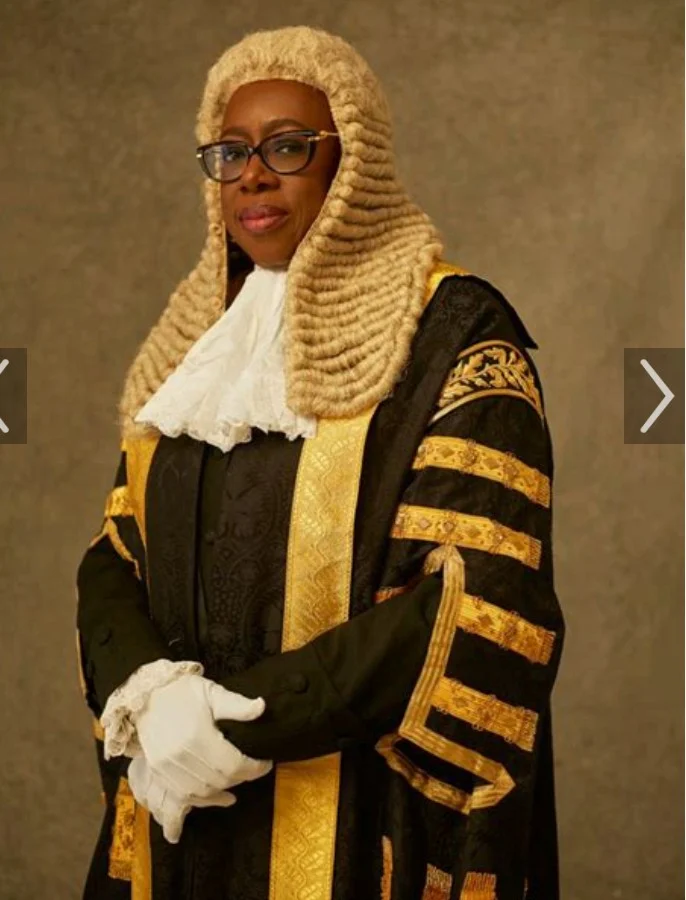

The Chief Justice of Nigeria (CJN), Justice Kudirat Kekere-Ekun has advised senior judges to imbibe the habit of mentoring junior judicial officers to allow for seamless transfer of knowledge.
Justice Kekere-Ekun gave the administration while speaking at the Commonwealth Magistrates and Judges Annual Conference in Kingston, Jamaica.
The statement was made available to newsmen on Sunday in Abuja by her spokesman, Tobi Soniyi.
The CJN noted that senior judicial officers have a legitimate role in mentoring, supervising and correcting junior colleagues.
Kekere-Ekun, who was part of a panel session on the topic: “Judicial bullying and harassment,” said senior judges possessed institutional knowledge that could not be acquired from books.
She was quoted as saying: “They have a responsibility to guide younger colleagues, share experience and help them understand the demands of the Bench.”
According to her, mentorship should give a junior judge greater confidence, not less, adding that a judge should be able to ask a question without embarrassment and acknowledge uncertainty without fearing that the admission would later be used against him or her.
She stated that a newly appointed judge should be able to disagree with a senior colleague without fear, noting that a junior judicial officer should be able to raise a concern about administrative practice without being regarded as difficult.
Justice Kekere-Ekun was of the view that a judge should be able to express an independent view without worrying about personal consequences.
She said: “The Judiciary is an institution founded upon feasoned disagreement. Judging at the appellate level, in particular, depends upon the ability of judges to consider different perspectives and, where necessary, to disagree. If seniority becomes a substitute for persuasion, the quality of judicial reasoning suffers.”
While stressing the importance of respect for seniority, she warned that submission to seniority should not be sacrificed for independent judgment.
The CJN reminded judges of the importance of accountability, stressing that judges must also be accountable for their conduct, productivity and adherence to professional standards.
She however, noted that judicial independence did not mean freedom from accountability.