Mr Festus Okoye, former National Commissioner for Information and Voter Education, Independent National Electoral Commission (INEC), on Friday urged Nigerians to move beyond voting and embrace active citizenship, integrity and accountability as essential steps towards national development.
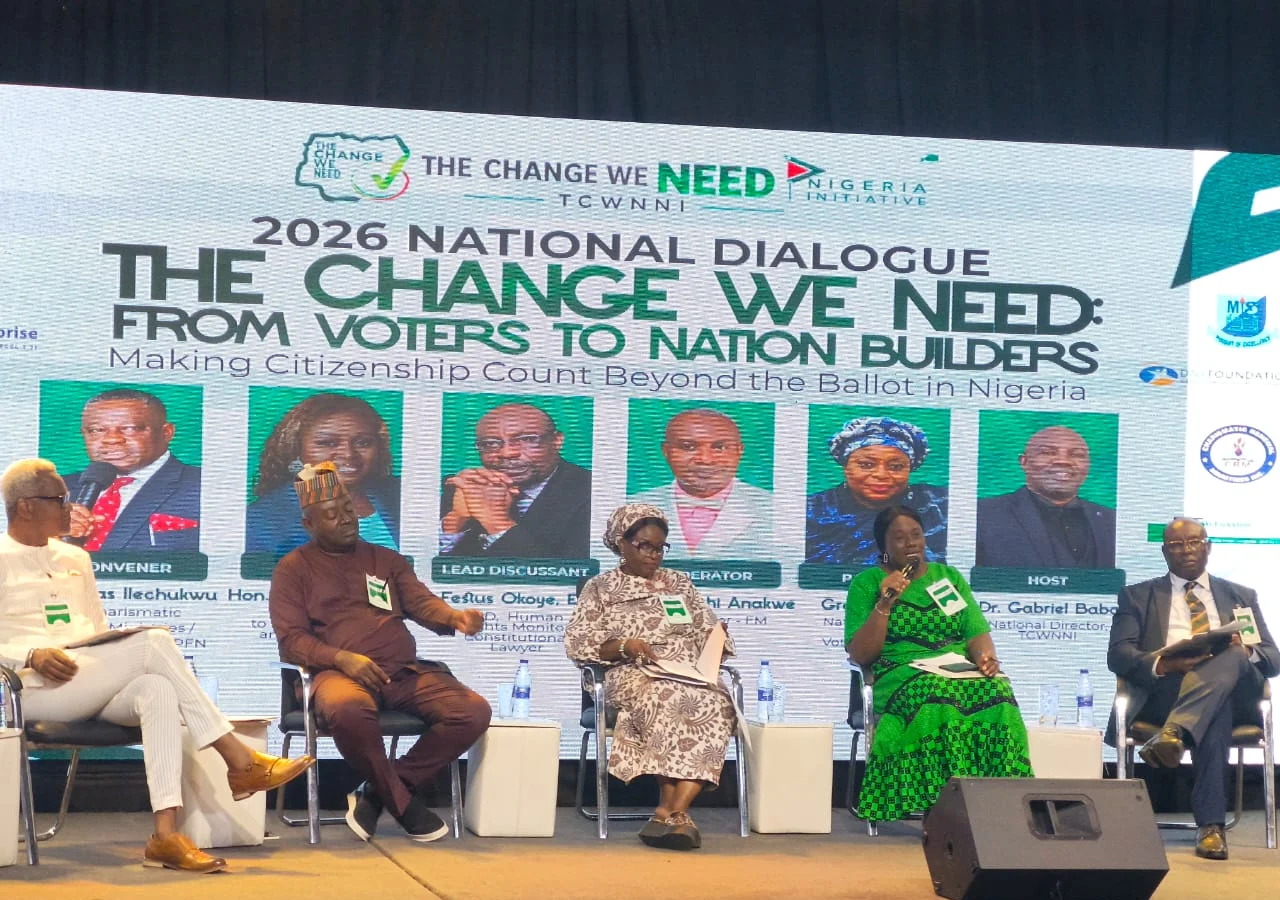
Okoye, the Executive Director of Rights Monitor, made the call at the 2026 national dialogue organised by The Change We Need Nigeria Initiative (TCWNNI) in Abuja.
The News Agency of Nigeria (NAN) reports that the theme of the event was “The Change We Need: From Voters to Nation Builders, Making Citizenship Count Beyond the Ballot in Nigeria.”
Okoye, who delivered the keynote address, said nation-building was a collective responsibility that required citizens to participate actively in democratic processes, protect their votes, monitor government policies and hold public officials accountable.
He urged Nigerians to exercise their democratic rights and take greater responsibility for the country’s political and developmental direction as the nation prepares for the 2027 general elections.
He identified different categories of citizens to include “constitutional citizens; complainant citizens, who merely complain about the state of the nation; social media citizens; those who have become disillusioned with Nigeria and those who believe that only revolutionary change can transform the country.”
He, however, advocated a more engaged citizenry, arguing that sustainable change could be achieved through consistent participation, lawful advocacy and collective action.
“We cannot build democracy on cynicism. We can only build democracy based on an engaged and active citizenry,” he said.
He expressed concern that some Nigerian youths were more inclined to complaining about governance than participating in elections.
He said others had withdrawn from the electoral process and limited their political involvement to online discussions.
Okoye, therefore, warned against vote-buying, saying the practice weakened democracy and enabled political actors to compromise the people’s mandate.
He rejected the argument that voters could collect money from politicians and subsequently vote according to their conscience.
He described such a position as one that could encourage electoral bribery and corruption.
He urged citizens to reject electoral inducements and remain vigilant before, during and after elections.
Besides, he cautioned against allowing ethnicity and religion to determine electoral choices, arguing that competence, accountability and the ability to deliver public services should take precedence over religious or ethnic affiliations.
The constitutional lawyer maintained that citizens had a responsibility to monitor government budgets, track constituency projects and assess whether public funds were being used for their intended purposes.
He, however, warned that “accountability must not become defamation.”
According to him, advocacy must not become incitement and dissent must not become a justification for violence.
He called on government institutions to create meaningful channels for public participation, stressing that public service and the provision of essential infrastructure were constitutional responsibilities rather than acts of charity.
Earlier, the Convener of TCWNNI, Dr Cosmas Ilechukwu, in his remarks via zoom, said Nigeria’s transformation required shared responsibility between government and citizens.
He challenged Nigerians to reflect on the kind of citizens they were becoming, arguing that, national development depended not only on those occupying political offices but also on the character and conduct of people in workplaces, markets, schools, religious institutions and homes.
Ilechukwu, who is the General Overseer of Charismatic Renewal Ministries and Deputy President of Pentecostal Fellowship of Nigeria (PFN), urged Nigerians to be patriotic in their endeavours.
According to him, citizens must move beyond asking what government can provide and begin considering what they can contribute to the country’s development.
He warned against a culture that celebrates dishonesty while demanding accountability from political leaders.
He argued that citizens could not credibly condemn corruption in government while engaging in similar practices in their private and professional lives.
Ilechukwu added that the change Nigeria needed was moral, cultural, spiritual and generational, urging citizens to reject practices that undermined national progress.
In his welcome address, the National Director of TCWNNI, Dr Gabriel Baba, said the dialogue was designed to encourage Nigerians to look beyond elections and examine the responsibilities required to build the country they desired.
He said voting remained essential to democracy but emphasised that citizenship also required integrity, respect for the rule of law, accountability, productive engagement and a commitment to the common good.
“We cannot demand a better nation while remaining indifferent to the responsibilities of building one,” Baba said.
He said that TCWNNI had spent 16 years providing a non-partisan platform for civic education, values reorientation, youth leadership development and constructive national dialogue.