
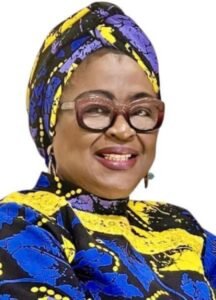
Dr Felicia Mogo – Member, United Nations Committee on Marine Ecosystems and Socio-Economics, and President, African Maritime Environment and Sustainability Initiative (AFMESI)
Maritime
Expert warns Africa on maritime investment
Lagos, Aug. 5, 2026, Africa’s maritime future depends on investment-ready, environmentally responsible projects rather than abundant ocean resources alone, says Dr Felicia Mogo, President, African Maritime Environment and Sustainability Initiative.
Mogo spoke on Wednesday during an international webinar held ahead of the Executive Management Training on Maritime Sustainability for African Development scheduled for October in Accra.
Addressing policymakers, investors, regulators and maritime professionals, she urged governments and businesses to embed Environmental, Social and Governance (ESG) principles in maritime development strategies.
“ESG frameworks are no longer optional; they are the language of investment,” Mogo said during the webinar, the second in a pre-workshop series.
The marine governance expert warned that countries neglecting ESG considerations in maritime planning risk exclusion from emerging opportunities within the global Blue Economy.
She said investors increasingly require strong governance, environmental responsibility and measurable social impact before financing maritime and ocean-based projects.
According to Mogo, sectors affected include ports, fisheries, shipping, coastal infrastructure, marine tourism and other industries linked to sustainable ocean resources.
Mogo is also a member, United Nations Committee on Marine Ecosystems and Socio-Economics,
She described the Blue Economy as an integrated platform connecting environmental stewardship, innovation, investment and economic prosperity across African countries.
Mogo stressed that sustainable growth would require collaboration among governments, private investors, development institutions and coastal communities.
She urged African nations to move beyond isolated infrastructure projects and adopt integrated business models capable of generating jobs and multiple revenue streams.
Drawing lessons from Seychelles and Indonesia, Mogo said credible governance and ESG-aligned financing had supported Blue Bonds and strengthened ocean resilience.
She added that Africa must improve project preparation, coordination and implementation to unlock similar financing opportunities and attract long-term investment.
“A key outcome was a proposal to dedicate an October workshop session to transforming marine resources into bankable business models,” she said.
She explained that participants would work with an international consortium to identify investment opportunities and develop financing strategies for commercially viable projects.
Earlier, United Nations-accredited expert, Prof. Chidi Onuoha, described the Blue Economy as Africa’s next frontier for inclusive growth, employment and industrial development.
Onuoha said sustainable management of marine resources could unlock significant economic opportunities while supporting environmental protection and social development.
The webinar followed an inaugural session on July 28 led by Dr Dakuku Peterside, who presented Green Maritime as a competitive business advantage.
Convener of the series, Mr Sam Nwosu, said the programme was designed to move maritime sustainability discussions from thought leadership to practical implementation.
Nwosu said stakeholders would be equipped with tools, partnerships and frameworks needed to structure bankable projects and deliver measurable outcomes6
He added that the October workshop would bring together policymakers, regulators, investors and business leaders to accelerate sustainable maritime transformation across Africa.