

Courtesy: Global Times
Sorocaba, São Paulo, the year 1849. At the most famous slave market in the province, a white man carefully observed the captives displayed for sale. He was the Viscount of Cunha Bueno, one of the wealthiest farmers in the region.
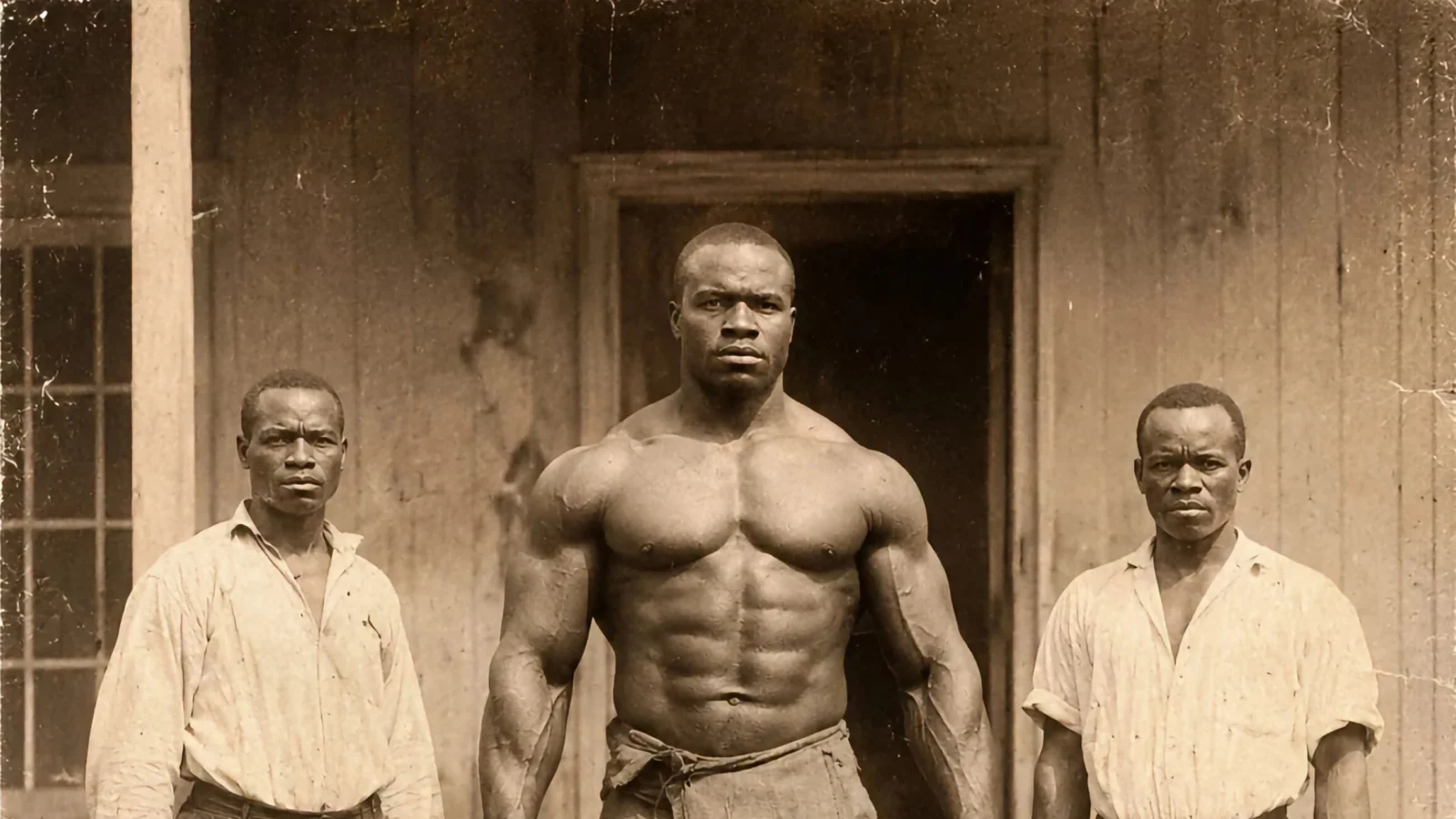
He was looking for something very specific, wanting a young, strong, and exceptionally tall slave. His gaze stopped when he saw a 22-year-old black man who stood out from all the rest. The young man was over two meters tall with broad shoulders and muscles defined by heavy labor, but something else caught the viscount’s attention.
His shins were thin, disproportionately slender compared to the rest of his massive body. The viscount smiled, knowing he had found exactly what he was looking for. That man would become his most valuable acquisition, not for working in the fields, but for another much more lucrative purpose.
His name was Roque José Florêncio, but he would go down in history with a nickname that revealed his most striking physical trait, Pata Seca, meaning “Dry Paw”. The story of Pata Seca began decades earlier, around 1827 in Sorocaba. There are no precise records regarding his origins, though it is believed he was born right there or brought as a child from some farm in the countryside of São Paulo.
What is known for certain is that he grew up as a slave in a region where the human trade was intense. Sorocaba was one of the largest slave trading centers in the province of São Paulo during the 19th century. It was rivaled only by the Valongo market in Rio de Janeiro.
Muleteers, farmers, and merchants converged there in search of the human merchandise that fueled the coffee economy. Even as a boy, Roque drew attention because of his height. By the time he was 15, he was already 1.80 meters tall.
At 20, he surpassed the two-meter mark. This was a genetic rarity in an era when the average height of Brazilian men barely reached 1.65 meters, but it wasn’t just his height that made him special in the eyes of the slave masters. He possessed a physical trait that seemed insignificant at first glance, yet it would become the defining factor of his destiny.
His shins were thin and almost fragile in appearance, sharply contrasting with the powerful musculature of his thighs and torso. In the pseudoscientific and superstitious mindset of 19th-century farmers, this combination carried a very specific meaning. People back then believed that tall men with thin legs predominantly fathered male children.
Male children were worth significantly more than female children in the slave market. A boy would grow up strong to work in the heaviest crops, commanding a higher price at the time of sale and serving as a better investment. This widespread belief had absolutely no scientific basis.
It was pure superstition mixed with the sheer greed of farmers who desperately wanted to maximize their profits, yet it was a belief that was widely spread and taken seriously. That was the exact reason why the Viscount of Cunha spent a fortune on Roque in 1849. While an average slave cost between 500 and 800 thousand réis, the viscount paid a much higher amount that historical records don’t specify, but which was considered entirely exceptional.
He took Roque to his Santa Eudóxia farm, an immense property of thousands of acres located in what is now the city of São Carlos, in the countryside of São Paulo. There, he revealed to Roque what his role would be for the coming years. ….. To be continued in comment 👇👇👇👇