








In Nigeria’s long history of encounters between ordinary citizens and powerful figures, few cases are as unusual as that of Inspector Henry Ale, a police officer who took former military Head of State General Olusegun Obasanjo to court over an alleged assault.
The case, formally recorded as Inspector Henry Ale v. Gen. Olusegun Obasanjo (M/T/1/89), emerged in 1989 and became an important episode in the early Nigerian jurisprudence surrounding fundamental human rights.
The story began on 1 December 1988.
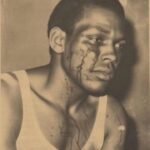
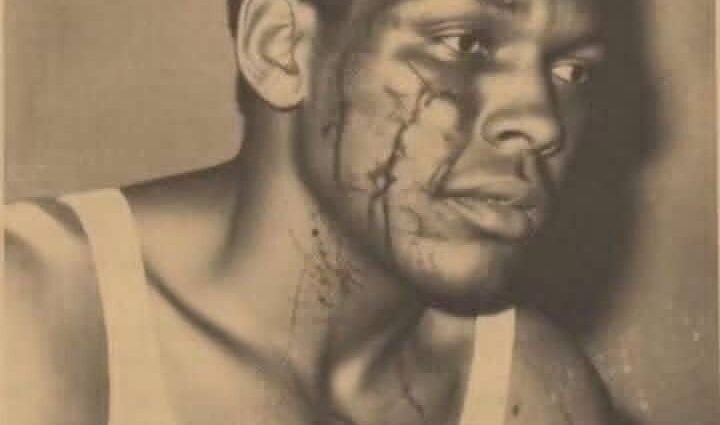
According to Ale’s account before the Ota High Court, he was performing his duties at a police roadblock when he stopped Obasanjo’s vehicle for a routine search. The former Head of State allegedly reacted angrily, after which Ale claimed that he was taken to Obasanjo’s farm in Ota, Ogun State, where he was assaulted and battered.
Ale alleged that the incident left him injured, including the loss of two teeth.
Rather than allow the matter to disappear, the police inspector decided to pursue legal action.
He engaged the services of the renowned lawyer and human-rights campaigner Chief Gani Fawehinmi, who represented him in his attempt to obtain redress.
On 15 December 1988, Ale reportedly demanded ₦250,000 in compensation and an apology, giving Obasanjo a deadline of 31 December to respond. When the demand was not met, Ale proceeded to court.
On 19 January 1989, he instituted an action seeking ₦600,000 in damages for the alleged violation of his fundamental rights. A contemporary edition of The Republic newspaper dated 20 January 1989 reported the lawsuit, describing it as an action against Obasanjo over the alleged assault of the police inspector.
The case soon became legally significant.
Ale’s argument was that the alleged treatment violated constitutional protections relating to the dignity of the human person and personal liberty. Obasanjo’s lawyers, however, challenged the procedure under which the case had been brought.
Their central argument was that the constitutional procedure for enforcing fundamental rights was intended to protect citizens against violations by the State, its agencies or officials, rather than to provide a direct constitutional remedy against another private individual.
After several adjournments, Justice Adewale Oduntan delivered his ruling on 6 July 1989.
The judge rescinded the leave previously granted to Ale to proceed with the fundamental-rights application. He held, in effect, that the action was not maintainable under the Fundamental Rights (Enforcement Procedure) Rules because the alleged wrong had been committed by an individual rather than by the state or one of its agencies.
The court indicated that Ale should instead have pursued an ordinary civil action based on allegations such as assault, battery and false imprisonment. The fundamental-rights claim was consequently struck out.
The decision attracted criticism from legal commentators.
The case raised an important constitutional question: Can a person’s fundamental rights be violated only by the State, or can one private citizen violate another person’s constitutionally protected rights?

Legal scholarship later described Ale v. Obasanjo as an early and controversial Nigerian decision on this question. Subsequent judicial developments contributed to a broader understanding of fundamental-rights protection, and the case continued to be discussed in Nigerian constitutional-law literature.
What makes the story particularly remarkable is the position of the man who brought the case.
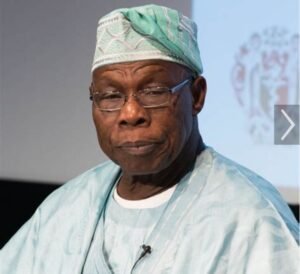
Henry Ale was a police inspector. Obasanjo was not an ordinary defendant. He had previously been Nigeria’s military Head of State and was one of the country’s most influential former military officers.
Yet Ale, through his lawyer Gani Fawehinmi, challenged him in court.
The case did not end with the compensation or apology Ale had sought. Nevertheless, the lawsuit survived in Nigeria’s legal history because it placed an unusual question before the courts and illustrated the willingness of one police officer to challenge a powerful former national leader through the law.
The surviving newspaper record is therefore more than a vintage piece of Nigerian journalism. It captures a moment when a police officer’s personal complaint became part of a much wider debate about power, accountability and the meaning of fundamental rights in Nigeria.
Photo caption: Inspector Henry Ale, the police officer who instituted the 1989 fundamental-rights action against former Nigerian Head of State General Olusegun Obasanjo.