
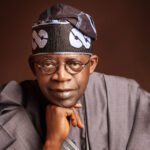
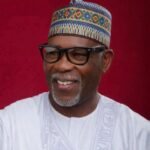

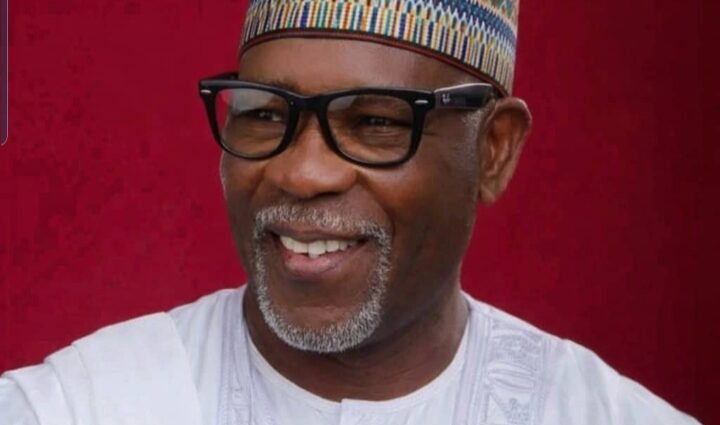
A People’s Redemption Party (PRP) presidential aspirant, Engr. (Dr) Yakubu Mohammed Kingsley (YMK), has said that Nigeria deserves an inclusive government that represents all interests.
Kingsley, who is currently awaiting the Federal High Court November 2, 2026 judgment on the party’s presidential primary election dispute, said the country’s diversity should not be a basis for exclusion, domination or discrimination.
According to him, rather, it should be transformed into a source of national strength, unity, creativity and shared prosperity.
He spoke on Wednesday in a statement he made available to newsmen in Abuja.
“Nigeria belongs to us all, therefore the government must reflect that reality.
The country is a nation of remarkable ethnic, cultural, religious, professional, political and regional diversity.
“My vision under the YMK Nigeria Project is to build an inclusive government in which legitimate interests have voices and Nigerians will have fair opportunity to contribute to the development of the nation,” he said.
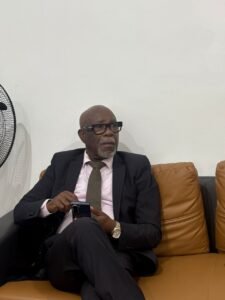
He stated that public offices should not be used for political rewards nor appointments be based on ethnicity, religion, political affiliation or personal loyalty.
“The new direction shall mean combining competence with equitable representation, integrity and accountability.
“The guiding principle will be simple: Merit, Integrity, Representation, Transparency and Accountability.
“Appointments must be based on the competence required for the office, while ensuring that no region, state, community, gender or generation is systematically excluded from national participation.
“Federal character must therefore become more than a constitutional principle invoked during political arguments; it must become a transparent and measurable instrument of governance,” he said.
Kingsley, who is challenging the declaration of Donald Duke as winner of the May 25 presidential poll in court, said he would work towards a transparent public appointments framework through which Nigerians can assess the geographical, professional and other relevant dimensions of representation.
According to him, the reason is to replace political accusations and counter-accusations that has existed in the system.
“Inclusion has to go beyond appointments.
“Political parties, professional bodies, religious organisations, traditional institutions, civil society organisations, academia, labour, the private sector, women and youth organisations, people living with disabilities, Nigerians in the Diaspora and community groups all have legitimate contributions to make to the national development.
“While government must remain constitutionally neutral, particularly in matters of religion and partisan politics, it must maintain structured channels for consultation with these constituencies and draw from their knowledge, experience and reach.
“The YMK administration will promote a broad-based national consultation mechanism through which these interests can contribute to policymaking, monitor implementation and provide constructive feedback.
“Governance must not be confined to Abuja or to the political class.
“Government must listen to the people they serve, who experience the consequences of its decisions,” he added.
Kingsley said attention should be given to minority and indigenous communities whose voices are sometimes lost in Nigeria’s larger ethnic and regional politics.
“From the Berom, Gbagyi, Tiv, Idoma, Igala, Ebira, Nupe, Jukun, Tangale, Waja, Bachama and Kanuri communities in different parts of the North to the Ijaw, Efik, Ibibio, Annang, Ogoni, Itsekiri, Urhobo, Isoko, Esan and hundreds of other communities across the country, every Nigerian community is an integral part of the Nigerian federation.
“No Nigerian is too small to matter, and no community is too small to be heard.
“The agenda is that the structure of governance must prevent exclusion but create genuine opportunities for Nigerians from all parts of the country to serve.
“Women, young Nigerians, Diaspora Community and persons with disabilities must equally have meaningful opportunities to participate in leadership and national development,” he said.
He said the same philosophy should apply to Nigeria’s natural resources.
“It is unacceptable that communities where petroleum, gas and solid minerals are extracted should continue to experience poverty, environmental degradation and inadequate infrastructure.
“Resource-producing communities must become genuine stakeholders in development through transparent community obligations, employment and skills opportunities, infrastructure, environmental protection, effective grievance mechanisms and accountable development programmes.
“Nigeria must also move from an economy that largely extracts and exports raw materials to one that creates industries and prosperity from those resources,” he said.
He said oil and gas should increasingly support domestic refining, power generation, fertiliser, methanol, petrochemicals and other industrial value chains, while solid minerals should support processing, manufacturing and technology-based industries making them economically and environmentally viable.