Category: Foreign

  • Civil Society and Migration Policy Implementation in Nigeria

    Civil Society and Migration Policy Implementation in Nigeria


    By Jide OLATUYI

    Flowerbudnews:   Migration has become a critical aspect of Nigeria’s socio-economic landscape, influencing its development, security dynamics, and international relations. Nigeria is an important destination, origin, and transit country for international migration.

    Besides emigration (regular, irregular, refugees and asylum seekers), the country attracts many immigrants (mixed migrants) with diverse backgrounds, goals, and expectations who enter Nigeria to stay or transit to other destinations.

    The Nigerian government has recognized the importance of effective migration management and has developed a comprehensive framework of policies, including the National Migration Policy, the 2015 Immigration Act, and the Labour Migration Policy.

    Despite these efforts, challenges such as institutional weaknesses, corruption, resource constraints, and inadequate data management continue to impede effective policy implementation.

    These challenges have significant implications for good governance, transparency, and the protection of migrants’ rights.

    While the Nigerian government has established comprehensive migration policies, effective implementation remains a challenge. Civil society organizations (CSOs) play a crucial role in bridging the gap between policy and practice by advocating for migrants’ rights, providing essential services, and holding the government accountable.

    However, the current environment in Nigeria presents several obstacles to the full participation of CSOs in migration governance.

    These include restrictive operating environment of the migration governance structure, malicious ethnic civil societies’ profiling, nepotism and cronyism, limited funding, and bureaucratic inefficiencies.

    Addressing these challenges is essential for enhancing the role of CSOs in migration policy implementation. Strengthening institutional frameworks, ensuring financial independence, promoting transparency, and fostering collaboration are key strategies to empower CSOs.

    This analysis aims to critically examine the current state of migration policy implementation in Nigeria, identifying the key issues that hinder effective management and governance.

    It further provides realistic strategies to address these challenges, focusing on strengthening institutional capacity, combating corruption, enhancing resource allocation, improving data collection and management, promoting migrants’ rights and welfare, fostering regional and international cooperation, and addressing security concerns.

    It also demonstrates how Nigeria can create a more enabling environment for civil society advocacy in migration management and governance. It shows how the genuine commitment to empowering CSOs will enhance the protection of migrants’ rights, improve policy implementation, and contribute to more effective, transparent, and accountable migration governance.

    By enhancing the roles of CSOs, Nigeria can achieve more effective and transparent migration management. This will not only improve the protection and welfare of migrants but also contribute to overall good governance and socio-economic development.

    This analysis explores these strategies in detail, highlighting the importance of a vibrant civil society in the successful implementation of migration policies in Nigeria.Current State of Migration Policy Implementation:

    Policy Framework: Nigeria has developed several policies to manage migration, including the National Migration Policy (NMP), the 2015 Immigration Act, the 2014 Labour Migration Policy and 2021 Diaspora Policy.

    These policies aim to address various aspects of migration, such as labor migration, irregular migration, and diaspora engagement.

    Challenges: Institutional Weaknesses: There are gaps in coordination and capacity among the various agencies responsible for implementing migration policies.

    These include the Nigeria Immigration Service (NIS), Ministry of Labour and Employment (FMLE), and the National Commission for Refugees, Migrants, and Internally Displaced Persons (NCFRMI).Corruption and Bureaucracy: Corruption and bureaucratic inefficiencies hinder effective policy implementation.

    These issues affect the processing of visas, work permits, and the enforcement of migration laws.Resource Constraints: Limited financial and human resources impede the ability of agencies to carry out their mandates effectively.Data Deficiency: Inadequate data collection and management systems result in poor planning and policy formulation. Reliable data on migration flows, demographics, and labor market needs are essential for effective governance.Security Concerns: The securitization of migration, particularly in response to irregular migration and human trafficking, often prioritizes security over the rights and welfare of migrants.Strengths:Policy Framework: The existence of comprehensive policies indicates a strong foundation for managing migration.Regional and International Cooperation: Nigeria’s commitment to international frameworks, such as the ECOWAS Free Movement Protocol and the Global Compact for Migration (GCM), reflects its willingness to align with global standards.Realistic Strategies for Enhanced Migration Management and Governance1. Strengthening Institutional Capacity:Training and Development: Invest in regular (collaborative) development-focused training programs for officials from key agencies such as the NIS, Ministry of Labour, and NCFRMI.

    This training should focus on best practices in migration management, human rights, and customer service.Strengthen Inter-Agency Coordination: There is the need to sustain the strengthening of central (inter-agency) coordination body. Another way is to establish a migration task force to oversee the implementation of migration policies. This body should facilitate communication and cooperation among various government departments and agencies involved in migration management.2. Combating Corruption and Reducing Bureaucratic Hurdles / meddlesomeness:Transparent Processes: Implement transparent processes for visa and work permit applications, including the use of digital platforms to reduce face-to-face interactions and opportunities for corruption.Accountability Mechanisms: Establish strong accountability mechanisms to monitor and address corruption within migration-related agencies.

    This could include independent oersight bodies and regular audits.3. Enhancing Resource Allocation:Budget Allocation: Advocate for increased budgetary allocations to migration-related agencies to ensure they have the necessary resources to fulfill their mandates.Public-Private Partnerships: Encourage partnerships with the private sector and international organizations to fund and support migration management initiatives.4. Improving Data Collection and Management:Integrated Data Systems: Develop integrated data management systems that allow for the collection, analysis, and sharing of migration-related data across different agencies. This should include data on migration flows, labor market needs, and migrant demographics.Research and Evaluation: Conduct regular research and evaluations to inform policy decisions and track the effectiveness of migration policies and programs.5. Promoting Migrants’ Rights and Welfare:Legal Framework: Ensure that national laws and policies align with international human rights standards to protect the rights of migrants. This includes providing legal aid and support services for migrants.Awareness Campaigns: Conduct public awareness campaigns to educate migrants about their rights and available services. This can help prevent exploitation and abuse.6. Fostering Regional and International Cooperation:Regional Integration: Strengthen cooperation with ECOWAS member states to enhance the implementation of the Free Movement Protocol.

    This includes harmonizing visa regimes and border management practices.International Partnerships: Leverage partnerships with international organizations, such as the International Organization for Migration (IOM) and the United Nations, to access technical assistance, funding, and best practices in migration management.7.

    Addressing Security Concerns:Balanced Approach: Adopt a balanced approach that addresses security concerns without compromising the rights and welfare of migrants. This includes training security personnel on human rights and migration issues.Community Engagement: Engage local communities in border areas to support migration management efforts and enhance security. Community-based monitoring can provide valuable insights and early warnings about irregular migration activities.

    8. Increased Civil Society equality and Visibility: Open the civil society space for equity and equal participation on critical issues of migration governance and aligning with constructive criticisms.Strategies to Open More Space for Civil Society Advocacy in Migration Management and Governance in Nigeria1. Policy and Governance Reforms:Amend Restrictive migration governance structure: Review and amend the restrictive migration governance structure, that conspicuously excludes the NGO and CSO pillar, which limit the activities of civil society organizations (CSOs). Ensure that addressing these exclusions comply with international human rights standards.Simplify and liberalize civil society participation processes: Streamline the politics of selective favoritism and consideration processes for CSOs to make it easier for them to focus more on the immediate needs and concerns of migrants and operate without unnecessary bureaucratic hurdles or government actors’ influence.2. Strengthening Institutional Frameworks:Inclusive Policy Development: Establish formal mechanisms that include CSOs in the development, implementation, and evaluation of migration policies. This can be achieved by creating advisory councils or working groups that have CSO representatives. Such inclusivity ensures that policies reflect diverse perspectives and address real-world challenges.Regular Consultations: Institutionalize regular consultations between government agencies and CSOs to discuss migration issues, share insights, and collaborate on solutions. Regular dialogue fosters mutual understanding and cooperation.3. Ensuring Financial Independence:Diversified Funding Sources: Encourage a diverse range of funding sources for CSOs, including international donors, private sector contributions, and community-based funding, to reduce dependence on government funding.Grant Programs: Grant Programs: Develop grant programs specifically aimed at supporting CSOs working on migration issues. Ensuring transparent and fair allocation of funds will help build trust and encourage innovation in addressing migration challenges.4. Enhancing Capacity Building:Training and Workshops: Provide capacity-building opportunities for CSOs to enhance their skills in advocacy, policy analysis, and project management. Training workshops, seminars, and exchange programs can equip CSOs with the knowledge and tools needed to effectively advocate for migrants’ rights.Technical Assistance: Offer technical assistance to CSOs to help them develop robust organizational structures, financial management systems, and effective communication strategies. Strengthening the institutional capacity of CSOs will enable them to operate more efficiently and effectively.5. Promoting Transparency and Accountability:Transparent Government Processes: Increase transparency in government processes related to migration management. This includes making data, policy decisions, and implementation plans publicly accessible.Public Accountability Mechanisms: Establish public accountability mechanisms where CSOs can monitor and report on government activities related to migration. This could involve creating independent oversight bodies or utilizing digital platforms for public feedback.6. Fostering Collaboration and Partnerships:Public-Private Partnerships: Encourage partnerships between the government, private sector, and CSOs to collaboratively address migration challenges. Public-private partnerships can leverage resources and expertise from different sectors to find innovative solutions.Joint Initiatives: Promote joint initiatives and projects between CSOs and government agencies to address specific migration issues. Ensuring shared ownership and collaborative problem-solving will enhance the effectiveness of migration management efforts.7. Advocating for Human Rights and Social Inclusion:Human Rights Training: Conduct human rights training for both government officials and CSO members to ensure a shared understanding and commitment to protecting migrants’ rights. Training sessions can raise awareness and promote a culture of respect for human rights.Community Outreach: Enhance community outreach and education programs to raise awareness about migrants’ rights and the role of CSOs in advocating for these rights. Effective outreach can mobilize community support and foster social inclusion.8. Leveraging Technology and Media:Digital Advocacy: Utilize digital platforms and social media to amplify the voices of CSOs and raise awareness about migration issues. This can also facilitate greater engagement with the public and policymakers.Media Collaboration: Partner with media organizations to highlight the work of CSOs and the challenges faced by migrants, fostering a more informed and engaged public discourse.9. International Support and Solidarity:International Networks: Connect Nigerian CSOs with international networks and coalitions working on migration issues. Sharing best practices, receiving support, and amplifying advocacy efforts on a global stage can enhance the impact of local CSOs.Advocacy for International Pressure: Encourage international bodies and foreign governments to apply pressure on the Nigerian government to respect and expand the operational space for CSOs. International advocacy can support local efforts to open more space for civil society.By implementing these strategies, Nigeria can create a more enabling environment for civil society advocacy in migration management and governance. This will not only enhance the protection of migrants’ rights but also contribute to more effective, transparent, and accountable migration policies and practices.ConclusionEnhancing migration management and governance in Nigeria requires a multifaceted approach that addresses institutional weaknesses, combats corruption, improves resource allocation, and promotes the rights and welfare of migrants. By implementing these realistic strategies, Nigeria can create a more effective and transparent migration system that aligns with both national interests and international standards. Collaboration among government agencies, civil society, the private sector, and international partners is crucial for achieving these goals and ensuring that migration contributes positively to Nigeria’s development.Jide OLATUYI is a Senior International Development Policy Specialist and a Migration Governance Expert

  • Shun Irregular Migration to Foreign Lands, Envoy Warns Nigerians

    Shun Irregular Migration to Foreign Lands, Envoy Warns Nigerians


    By Biola Lawal

    Tripoli (Flowerbudnews):  Nigeria’s newly-posted Charge’ d’Affaires en-titre to Libya,Amb.Mohammed Mohammed has warned Nigerians against irregular migrations to foreign lands without documents.

    Amb. Mohammed disclosed that most of such illegal migrations usually end up in slavery and sexual exploitations in Europe, a statement by Musa Abubakar from Tripoli said.

    The Envoy gave the warning on Tuesday in Tripoli, Libya during the repatriation of 122 Nigerians stranded in that country.

    He noted that migrations that follow due process were allowed, but advised Nigerians to ”always ponder well before embarking on the risk of the ill-advised journey across the desert.”

    Amb. Mohammed who recently assumed duty following his appointment by President Tinubu, thanked the Libyan authorities and the International Organization for Migration (IOM) for helping to facilitate the release of some of the Nigerian migrants in detention facilities in Libya.

    He also thanked them for aiding Tuesday’s repatriation to Nigeria.

    The 122 evacuees, comprising 52 males, 39 females (7 of whom were rescued victims of human trafficking), 21 children as well as 10 infants, were at about 1.30pm, Libyan local time, airlifted from Mitiga International Airport aboard chartered flight No.uz 189.

    They were expected to land at the Murtala Mohammed International Airport, Lagos,at 5 pm, Nigerian Time,from where they would be handed over to the appropriate government agencies that will re-unite them with their families.

    According to official sources, Tuesday’s evacuation,conducted in collaboration with the IOM in Libya was part of its Voluntary Humanitarian Repatriation (VHR) programme.

    It was the ninth carried out by the Nigerian Mission in the country this year.

    It was part of the 4-D foreign policy thrust of the Tinubu Administration, which came from the directives of the Honourable Minister of Foreign Affairs, Amb. Yusuf Maitama Tuggar.

    It will be recalled that, in 2023, a total of 2,041 stranded Nigerian migrants were assisted to return home by the IOM. Within this year alone,about 1,350 stranded Nigerian nationals have also safely been assisted to return home. (Flowerbudnews)

    )

  • ECOWAS @49 STRUGGLING, BUT HOPEFUL

    ECOWAS @49 STRUGGLING, BUT HOPEFUL


    By Paul Ejime

    At 49, the Economic Community of West African States (ECOWAS) should be celebrating based on its past achievements as the foremost among Africa’s eight Regional Economic Community (RECs).

    However, the 15-nation regional economic bloc, once acclaimed as a trailblazer, is now fighting for survival and under serious threat of disintegration.
    Since its establishment on *28 May 1975,* through the *Treaty of Lagos,* only Mauritania has pulled out of ECOWAS (in 2000) but is now seeking re-admission, while other countries, even outside the region, are also applying to join.

    However, rather than building on its solid foundation, things seem to be falling apart for ECOWAS. Four of its member States – Guinea, Mali, Burkina Faso, and Niger, are under military rule, while the last three have served notice of their intention to withdraw from the regional organization, altogether.

    Granted the times and circumstances are different between 1975 and the ecosystem/dynamics of the World today.

    There have been life-changing geopolitical and strategic shifts, characterized by emerging threats such as terrorism, violent extremism, economic recession, global pandemics, flaws of experimentation of democracy, environmental changes, high rates of unemployment, youth bulge, and technological advancements, particularly the invasion of social media, dis/misinformation, and fake news.

    But effective performance under challenging circumstances is what sets individuals and organisations apart.

    At a time when ECOWAS is expected to demonstrate visionary and dynamic leadership, it has been found wanting.

    Ironically, the leadership deficit has been most pronounced in the peace and security, conflict prevention, management, and resolution domain, where ECOWAS had been most effective.

    Whether by default or experimentation, ECOWAS leaders, mostly military officers at that time, could fashion effective tools such as the *ECOWAS Ceasefire Monitoring Group (ECOMOG)* created in 1990 that facilitated the end of the civil wars in Liberia and Sierra Leone.

    The strict application of regional instruments, such as the Authority’s Declaration on Political Principles in 1991, the *ECOWAS Revised Treaty of 1993,* the *1999 Protocol relating to the Mechanism for Conflict Prevention, Management, Resolution, Peacekeeping and Security* (or *The Mechanism),* and the *Supplementary Protocol on Democracy and Good Governance* adopted in 2001 as an integral part of *The Mechanism,* guided the construction of regional peace and security architecture.

    The 1999 instrument inspired the adoption of a similar Mechanism by the African Union several years later.

    Also, apart from an *Early Warning System,* which facilitated collaboration with state and non-state actors and civil society to monitor and report threats to peace and security in the region, ECOWAS utilized its *Mediation and Security Council* and the *Council of the Elders/Wise* as additional tools for conflict prevention, mediation, and resolution towards consolidating peace and security.

    The *Supplementary Protocol on Democracy and Good Governance* set minimum constitutional convergence criteria for ECOWAS membership based on shared values of democracy and free market, separation of powers, popular participation, the democratic control of the armed forces, guarantees of fundamental freedoms, and especially *’zero tolerance’* for power obtained or maintained by unconstitutional means.

    The *ECOWAS Conflict Prevention Framework (ECPF),* adopted in 2008, and the *Monrovia Declaration of 2010,* are other instruments adopted to strengthen the ECOWAS peace and security architecture, with emphasis on preventive diplomacy and proactive mediation responses.

    The organization has used a combination of the above-named instruments to resolve conflicts in member States including in Cote d’Ivoire, Mali, Niger, Guinea Bissau, and The Gambia.

    The applied measures included suspension, imposition of sanctions on erring member States or the refusal to send observers to Gambia’s 2011 presidential election, for lack of transparency under the regime of then-President Yahya Jammeh’s regime, now exiled in Equatorial Guinea.

    However, the political will and/or capacity to make tough decisions based on principles are now lacking at the national and regional levels of ECOWAS leadership.

    Political leaders/heads of State have hijacked control of ECOWAS institutions, particularly the Commission, thereby rendering the overstretched and capacity-challenged technocrats ineffective.

    Critics now see ECOWAS more as a “toothless organization,” where political leaders hold sway for their selfish interests, including by unilaterally changing their countries’ constitutions and electoral laws, rigging elections, suppressing opposition, and trampling on citizens’ human rights in clear violation of ECOWAS texts and instruments with impunity and without consequences.

    Meanwhile, the same leaders only become powerful in the condemnation and imposition of sanctions whenever the military seizes power from civilians.

    The military juntas in Mali, Burkina Faso and Niger cite this inconsistency by ECOWAS leaders as one of the reasons for their decision to pull out of the Organization.

    Even so, military rule is not the solution to the myriad problems facing ECOWAS member states. If anything, the disposition of the juntas, especially their political transition programmes, may have revealed their real intentions, as opportunistic power grabbers on tenure elongation adventure, the same allegations they levelled against the civilian leaders.

    The global decline in multilateralism, compounded by the geopolitical games being played by the superpowers, reminiscent of the Cold War era, is also present in the ECOWAS and Sahel region.

    Centuries of imperialism and exploitation of Africa, especially by France in its former colonies, have combined with corruption and mismanagement by post-independence leaders to unleash poverty, inhumane conditions, deprivation, and bad governance on the long-suffering citizens.

    The anti-French sentiment expressed by the population in the Francophone countries is justified, but with the long periods of transition and a provision that junta leaders are eligible to participate in the post-transition elections in respective countries, the soldiers would appear to be riding on the wave of sentiment and a false sense of popularity to want to perpetuate themselves in power.

    Similarly, while sovereign States reserve the right to choose their bilateral partners, the juntas in Mali, Guinea, Burkina Faso, and Niger, are not helping their case by replacing one foreign power with another, and at the same time accusing ECOWAS of being tele-guided by external powers.

    ECOWAS faces existential threats due to acts of omission/commission by its leaders. Even so, the community of an estimated 400 million people can only achieve more in unity.

    Dr Omar Alieu Touray, President of the ECOWAS Commission, acknowledged this much in his message to mark ECOWAS’ 49th Anniversary.

    “As we celebrate our 49th anniversary, insecurity continues to threaten our region. Some of our member States are battling terrorist groups on a daily basis, and a large number of our population faces displacement and food insecurity,” he said.

    In the two-and-half-page message, where “unity” or “united” is mentioned seven times, Touray said: “It is clear that we must stay united if we want to be successful in the fight against insecurity. But it is our unity which now stands threatened.”

    Quoting Nigeria’s former Head of State, Gen. Yakubu Gowon, one of the founding fathers of ECOWAS, the Commission President said: “Neither the generation of our founding fathers, ‘nor the present or future generations can understand or will be forgiving for the breakup of our community.’”

    In an interview that coincided with the ECOWAS anniversary, Ambassador Abdel-Fatau Musah, the Commissioner for Political Affairs, Peace, and Security, quoting data from a survey by a non-profit *Afrobarometer* group, noted that despite the military incursions, and the weaknesses in the democratic practices, ECOWAS Community citizens were still positively disposed toward democracy.

    While Liberia and Senegal have shown some prospects following their recent transparent elections and successful transfer of power from sitting governments to the opposition, Togo has thrown up another challenge with its divisive and controversial legislative vote held under dubious constitutional changes in clear violation of the ECOWAS protocol.

    Other potential crisis points could be Guinea Bissau and Sierra Leone, with lingering post-election rumblings, and then the Gambia, Cote d’Ivoire, and Ghana with forthcoming elections.

    ECOWAS can still redeem itself. But it is all down to the courage in upholding its standard, the sincerity of regional leaders to stop corruption, respect national constitutions and the rule of law, stop rigging elections and providing citizens with the benefits of good governance.

    **Ejime is a Global Affairs Analyst and Consultant on Peace & Security and Governance Communications*

  • Mideast in Pictures: Rafah after Israeli airstrike

    Mideast in Pictures: Rafah after Israeli airstrike


    Xinhua

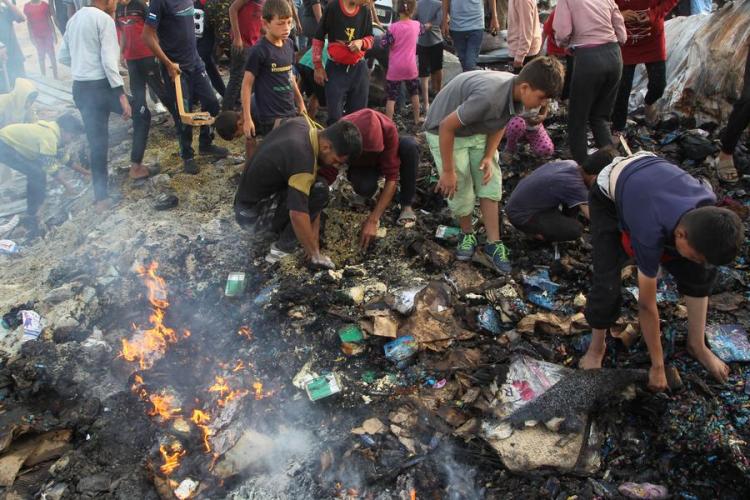
    People are seen at the site of an Israeli strike on a camp for displaced people in Rafah in the southern Gaza Strip, May 27, 2024. (Photo by Khaled Omar/Xinhua)

    GAZA, (Xinhua)/Flowerbudnews:  — At least 40 people were killed in Israeli airstrikes on camp tents sheltering displaced Palestinians Sunday night in the southern Gazan city of Rafah.

    A person looks on at the site of an Israeli strike on a camp for displaced people in Rafah in the southern Gaza Strip, May 27, 2024. (Photo by Khaled Omar/Xinhua)
    People are seen at the site of an Israeli strike on a camp for displaced people in Rafah in the southern Gaza Strip, May 27, 2024. (Photo by Khaled Omar/Xinhua)
    People are seen at the site of an Israeli strike on a camp for displaced people in Rafah in the southern Gaza Strip, May 27, 2024. (Photo by Khaled Omar/Xinhua)
    People look on at the site of an Israeli strike on a camp for displaced people in Rafah in the southern Gaza Strip, May 27, 2024. (Photo by Khaled Omar/Xinhua)
    A person reacts at the site of an Israeli strike on a camp for displaced people in Rafah in the southern Gaza Strip, May 27, 2024. (Photo by Khaled Omar/Xinhua)
    A person is seen at the site of an Israeli strike on a camp for displaced people in Rafah in the southern Gaza Strip, May 27, 2024. (Photo by Khaled Omar/Xinhua)
    People look on at the site of an Israeli strike on a camp for displaced people in Rafah in the southern Gaza Strip, May 27, 2024. (Photo by Khaled Omar/Xinhua)
  • Policy Analyses of  Pres. Tinubu’s Initial Decision to Enforce ECOWAS’ Zero Tolerance for Coups and Unconstitutional Change of Govt. In Niger Republic

    Policy Analyses of Pres. Tinubu’s Initial Decision to Enforce ECOWAS’ Zero Tolerance for Coups and Unconstitutional Change of Govt. In Niger Republic


    By Jide  Olatuyi

    Flowerbudnews:  President Bola Tinubu’s initial decision to enforce ECOWAS’ zero tolerance for coup d’états and unconstitutional change of government in Niger Republic marks a significant stance in West African regional politics.

    This analysis will examine the context, implications, and potential outcomes of Tinubu’s decision from various angles.

    Context and Background

    In July 2023, Niger Republic experienced a military coup, with President Mohamed Bazoum being ousted by the military. This event followed a troubling pattern in West Africa, where several countries, including Mali, Guinea, and Burkina Faso, have experienced coups in recent years. The Economic Community of West African States (ECOWAS) has a longstanding principle of zero tolerance for unconstitutional changes of government, aiming to promote democracy and stability in the region.

    As the newly inaugurated President of Nigeria, Tinubu assumed the Chairmanship of ECOWAS, placing him at the forefront of regional responses to the coup in Niger.

    His decision to enforce ECOWAS’ stance reflects both his commitment to regional stability and the expectations placed upon Nigeria as a key player in West African politics.

    Strategic and Political Implications

    1. Regional Stability and Security: Tinubu’s enforcement of ECOWAS’ policy underscores Nigeria’s leadership role in promoting democratic norms and stability in West Africa. Niger is a strategic partner in the fight against terrorism, particularly against groups like Boko Haram and ISIS-West Africa. Political instability in Niger could exacerbate security challenges in the region, potentially spilling over into neighboring countries, including Nigeria.

    2. Nigeria’s Diplomatic Leadership: By taking a firm stance, Tinubu aims to reassert Nigeria’s influence within ECOWAS and on the African continent. This move is critical for Nigeria to maintain its status as a regional hegemon and a proponent of democratic governance. It also serves to strengthen ECOWAS as a collective body capable of decisive action, enhancing its credibility and authority.

    3. Domestic Political Considerations: Tinubu’s decision also has domestic implications. Demonstrating a commitment to democratic principles abroad can bolster his image at home, where issues of governance, security, and economic stability are pressing. This stance might help consolidate his support among Nigerians who favor strong leadership and adherence to democratic norms.

    4. International Relations: Enforcing ECOWAS’ zero tolerance for coups aligns with broader international expectations from the United Nations, African Union, and other international bodies that advocate for democratic governance. This alignment could attract international support and assistance in dealing with the broader implications of instability in Niger and the Sahel region.

    Challenges and Risks

    1. Military Intervention: One of the primary tools at ECOWAS’ disposal is military intervention. However, this option is fraught with risks, including the potential for prolonged conflict, humanitarian crises, and regional destabilization. Tinubu must navigate these complexities, weighing the costs and benefits of such an intervention.

    2. Diplomatic and Economic Measures: Sanctions and diplomatic isolation are other mechanisms ECOWAS might employ. While these can pressure the coup leaders, they also risk harming the civilian population and could potentially drive Niger closer to non-Western allies, complicating the geopolitical landscape. Though, some of these sanctions have been lifted to ease life for the population in Niger republic, it remains to be seen how the move have impacted the resolve of the coup leaders to reconsider the genuine steps towards democratic transition and to alter the shift in regional alliances.

    3. Regional Unity: Enforcing a hardline stance requires the unanimous support of ECOWAS member states, which might have differing views on intervention and the prioritization of stability versus democracy. Maintaining unity within ECOWAS is crucial for the effectiveness of any collective action.

    Potential Outcomes

    1. Restoration of Democratic Governance: The ideal outcome is the restoration of President Bazoum or the establishment of a legitimate, civilian-led government. This would reinforce the norm against unconstitutional changes of government and stabilize the region.

    2. Protracted Conflict: If ECOWAS’ measures, including potential military intervention, fail to resolve the situation quickly, the region could face prolonged conflict. This outcome would strain ECOWAS’ resources and could have severe humanitarian and security consequences.

    3. Shift in Regional Alliances: The crisis in Niger might prompt a realignment of regional alliances, with countries in the Sahel seeking new partnerships outside traditional Western influence. This could alter the strategic dynamics in West Africa.

    Conclusion

    President Bola Tinubu’s decision to enforce ECOWAS’ zero tolerance for coups in Niger Republic is a bold assertion of Nigeria’s leadership and commitment to regional stability. While the move underscores Nigeria’s role as a promoter of democracy, it also entails significant risks and challenges. The success of this initiative depends on ECOWAS’ ability to implement effective measures, maintain regional unity, and navigate the complex geopolitical landscape. Ultimately, Tinubu’s approach will significantly impact the future of democratic governance and stability in West Africa.

    (Jide OLATUYI is an International Development Policy Analyst.)

  • ‘No one can act with impunity’: ICC arrest warrants in Israel-Hamas war are a major test for int’l justice

    ‘No one can act with impunity’: ICC arrest warrants in Israel-Hamas war are a major test for int’l justice

    Children, young adults taking to weight loss drugs

    WASHINGTON, D.C.: The use of weight-loss drugs like Wegovy is soaring among adolescents and young adults, according to new research. …

    UMass graduates given $1,000 each, told half for charity

    MEREDITH, New Hampshire: Graduates at the University of Massachusetts Dartmouth received a surprise last week when billionaire philanthropist Rob Hale …

    Screen built to stop tourists from clicking pictures of Mount Fuji

    TOKYO, Japan: A popular photo spot in Fujikawaguchiko, Japan, known for its picturesque views of Mount Fuji, has been altered …

    Wall Street has mixed day Friday, Nasdaq gains 185 points

    NEW YORK, New York – Wall Street was divided on Friday with the Dow Jones flat, in its first weekly …

    Target to drop prices of many items as inflation squeezes budgets

    MINNEAPOLIS, Minnesota: Target plans to cut prices on thousands of consumer basics this summer, from diapers to milk, as inflation …

    Africa

    Section

    I miss you, Baba: Sachin Tendulkar pens down heartfelt note on his father’s 25th death anniversary

    Mumbai (Maharashtra) [India], May 26 (ANI): Legendary cricketer Sachin Tendulkar wrote down a heartfelt note and remembered his father, Ramesh …

    South Africa election: How Mandela’s once-revered ANC lost its way

    CAPE TOWN, South Africa – For years, the African National Congress rose above politics in South Africa. It was a …

    47 killed in Sudan’s el Fasher region as conflict rages

    Khartoum [Sudan], May 26 (ANI): At least 30 civilians and 17 soldiers were killed in attacks in the Sudanese city …

    Clothed pig carcasses are revealing the secrets of mummification – South African study provides insights for forensic scientists

    It was the kind of task any competent seamstress has completed hundreds of times before: altering denim jeans and jerseys. …

    Cricket West Indies launches initiative to inspire young cricket enthusiasts

    Kingston [Jamaica], May 26 (ANI): Cricket West Indies proudly announces its latest initiative aimed at fostering a deeper appreciation for …

    At least 10 people, including children killed in drone strike in Gaza: Report

    Gaza City [Israel], May 26 (ANI): At least 10 people, including children, were killed in Gaza on Sunday after a …

    Movie Review

  • China building smart ports to bolster export-oriented economy

    China building smart ports to bolster export-oriented economy


    Xinhua

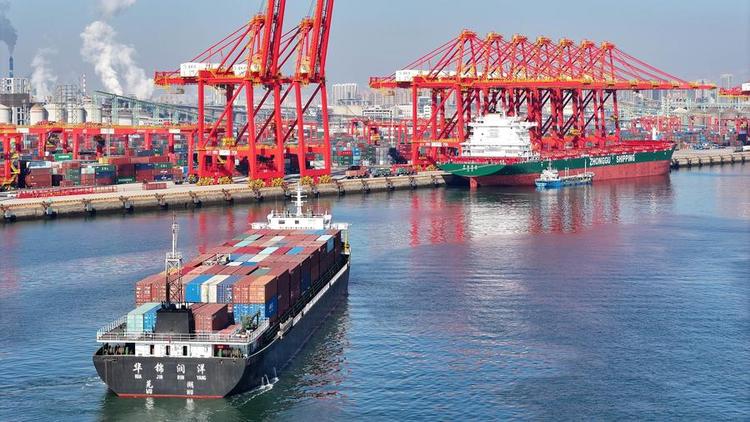
    BEIJING:   (Xinhua) /Flowerbudnews: — Automated container cranes and driverless transport vehicles are busy unloading and carrying containers at Tianjin Port in Tianjin Municipality, north China.

    Smart port construction, which utilizes an array of technologies such as 5G, AI, autonomous driving, and cloud computing, has transformed Tianjin Port, which has built the world’s first intelligent zero-carbon terminal.

    The intelligent container terminal involved an investment of 5.2 billion yuan (about 731 million U.S. dollars). The investment in smart container terminals is at the same level as that for traditional ones, but smart ports have higher efficiency, said Yang Jiemin, vice president of Tianjin Port Group.

    The smart terminal increases the operating efficiency of a single gantry crane by more than 40 percent and reduces labor costs by 60 percent.

    Tianjin Port is striving to become an upgraded green, smart, and hub port to help enhance the overall competitiveness of the Beijing-Tianjin-Hebei city cluster, said Chu Bin, chairman of Tianjin Port Group.

    To help inland cities expand trade, Tianjin Port has launched rail-sea intermodal services and opened over 120 marketing outlets across the country, Chu said. Its shipping routes can reach more than 500 ports in over 180 countries and regions.

    Over the past decade, Tianjin Port’s container throughput has increased from 13 million 20-foot equivalent units (TEUs) to 22 million TEUs, making it one of the world’s ten busiest container ports.

    Ningbo-Zhoushan Port, the world’s busiest port in terms of cargo throughput, has also ridden on the wave of intelligent port building. The second phase project of the Meishan port area has increased the container handling capacity of the port’s Meidong Container Terminal to 10 million TEUs.

    The Meishan port area, particularly the second phase project, is a perfect model of how a traditional terminal has been upgraded to an automated one, said Peng Jie, deputy general manager of Ningbo Meidong Container Terminal Co., Ltd.

    Ningbo-Zhoushan Port has served as a bridge between traders in its home province of Zhejiang and other parts of China and markets worldwide. By the end of 2023, it had over 250 international container routes, including 130 routes to Belt and Road partner countries.

    Its rail-sea intermodal services cover 65 prefecture-level cities nationwide. A new railway service has more closely connected the port with the city of Yiwu, known as the “world’s supermarket” for its enormous exports of small commodities.

    The three major tech-intensive green products, namely, new energy vehicles, lithium-ion batteries, and photovoltaic products, are taking a larger share among the exported goods via Ningbo-Zhoushan Port.

    The smart port construction has also steered Rizhao Port in Shandong Province, east China, to become the world’s youngest port to have an annual cargo throughput of more than 500 million tonnes.

    Rizhao Port, which opened in 1986, has a smart dry bulk terminal and a fully automated container terminal. It aims to transform itself from a single-function port operator to an integrated supply chain service provider and play a bigger role in supporting the country’s development, said Huo Gaoyuan, chairman of Shandong Port Group Co., Ltd.

    Rizhao Port has been developing its customer base in inland cities along the Yellow River and in central China regions and northwest China’s Shaanxi Province, offering to serve as their sea gate and help them expand in overseas markets.

    In recent years, China has been vigorously developing smart transport and logistics as it pushes to build world-class smart and green ports.

    China has eight of the world’s top 10 busiest ports in terms of cargo throughput and seven of the world’s top 10 ports in terms of container throughput, according to the Ministry of Transport.

    The country has 18 automated container terminals and 27 automated terminals under construction or renovation, Zheng Qingxiu, an official with the Ministry of Transport, said early this year.

    China has been the world’s largest trading country in goods for seven consecutive years. Ports are a key support for economic growth and connect a huge number of exporters with the markets, which is critical to China’s economic vitality and resilience.

    Intelligent port construction is a crucial guarantee for a safe and stable global supply chain and offers key support for the country’s high-level opening-up, said Liu Zhanshan, vice president of the China Waterborne Transport Research Institute.

  • MURIC CONDOLES WITH IRAN EMBASSY, ELZAKZAKY, OVER RAISI’S DEATH

    MURIC CONDOLES WITH IRAN EMBASSY, ELZAKZAKY, OVER RAISI’S DEATH

    By Biola Lawal
    Flowerbudnews:  Islamic human rights organization, the Muslim Rights Concern (MURIC), has expressed sympathy with the government and people of Iran over the death of President I Rahim Raisi.

    MURIC expressed the condolence in message of sympathy to the government and people of Iran as well as the leader of the Islamic Movement in Nigeria, Shaykh El-Zakzaky, over the demise of President Raisi.

    In the statement issued on Tuesday, the Executive Director of the group, Professor Ishaq Akintola, described President Raisi as a friend of the oppressed and the champion of liberty.

    The statement reads in full:

    “The world held its breath yesterday as news of the death of the president of Iran spread like the dark clouds of a storm.

    “President Raisi left a vacuum that will be difficult to fill. His death broke the heart of more than one and a half billion Muslims and shattered the hopes of millions of progressive citizens of the world. It also spread gloom among the poor and weak nations of the Third World.

    “But we are consoled by the great moral heritage left behind by Raisi. We are equally strengthened by the divine promise of Allah to keep the souls of martyrs fresh, undying and enduring.

    “MURIC stands in solidarity with the government and the good people of Iran at this moment of trial. We are with Shaykh El-Zakzaky at this hour of grief.

    “May Allah grant President Raisi forgiveness and may He in His Infinite Mercy grant him aljannah firdaus.”
    #PresidentRaisi  (Flowerbudnews)

  • At least 1 died, 30 injured after Singapore airliner hits severe turbulence

    At least 1 died, 30 injured after Singapore airliner hits severe turbulence


    Xinhua

    BANGKOK,  (Xinhua) — Severe turbulence on the Singapore Airlines flight SQ321 from London to Singapore has left at least one passenger dead and 30 injured, forcing an emergency landing at Suvarnabhumi Airport in Bangkok, Thailand on Tuesday, local media reported.

    The Boeing 777-300ER jet experienced severe turbulence en route and was forced to divert to Bangkok, where it landed safely at 3:45 p.m. local time, Singapore Airlines said in a statement.

    There were a total of 211 passengers and 18 crew members on the flight, according to a social media post by the airline.