Category: Foreign

  • Tinubu Receives Letter of Credence from Tunisia, Zambia and Korean Envoys 

    Tinubu Receives Letter of Credence from Tunisia, Zambia and Korean Envoys 


    Flowerbudnews

    Abuja: President Tinubu on Friday received the letters of credence from three new ambassadors to Nigeria.

    They are the Tunisia Ambassador, Mr. Antit Mohsen, Zambia’s High commissioner , Mr. George Muhalli Imbuwa and Korea Ambassador to Nigeria, Vice Admiral Kim Pan Kyu rtd. (Flowerbudnews)

  • China’s development of rural e-commerce boosts rural revitalization

    China’s development of rural e-commerce boosts rural revitalization


    Xinhua

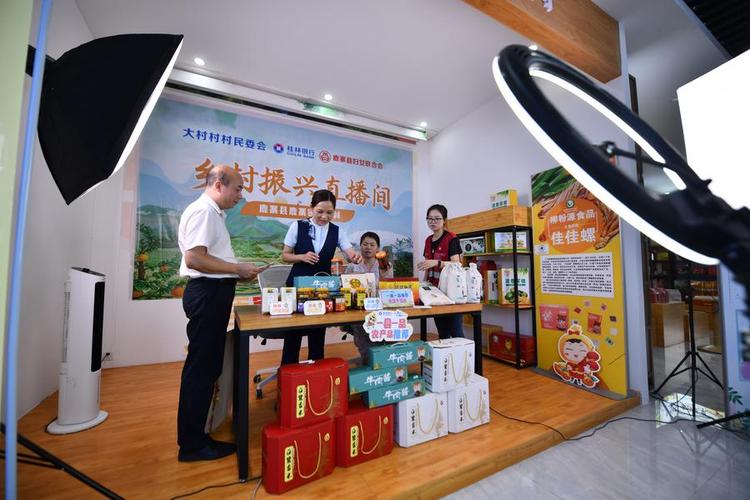
    BEIJING,  (Xinhua)/Flowerbudnews :– Lu Zhankai, 35, has filmed and posted over 3,000 video clips of villagers picking edible mountain products in the deep mountains of China’s northernmost Heilongjiang Province.His clips not only present the bountiful resources in the forest areas of northeast China but also promote the local specialties to customers across the country.

    Located in the core area of Sanjiang Plain, Lu’s hometown, Raohe County, boasts fertile land. Its mountain products, such as black bee honey and pine nuts, are of high quality at a reasonable price. However, the remote mountainous location hinders the products’ sales.

    “I want to take agricultural products from my hometown out of the mountain with the help of the internet,” said Lu.

    At the end of 2018, he started sharing video clips on the media platform by the name of “Lu Xiaokai.” The real and vivid content soon garnered considerable attention from netizens.

    To date, he has amassed more than seven million followers on Douyin, the Chinese equivalent of TikTok.

    Equipped with popularity and internet experience, Lu signed contracts with more than 300 farmers to procure honey, wild vegetables and mushrooms, among other agricultural products, and started selling them through e-commerce.

    Since 2021, he has founded two local companies specializing in agricultural products procurement and e-commerce sales, with the total sales volume so far topping 70 million yuan (about 9.86 million U.S. dollars).

    Lu’s booming e-commerce business is attributable to Raohe County’s efforts to develop its e-commerce industry. By adopting measures such as market cultivation and building regional brands, the county saw its e-commerce transaction volume reach 1.03 billion yuan in 2023, a 297 percent year-on-year increase.

    Raohe County is not alone. With a population of just 143,000 in central China’s Hunan Province, Guzhang County has boasted a number of rural influencers with more than one million followers on the internet, thanks to the local efforts to improve e-commerce continuously.

    In 2023, Guzhang County’s e-commerce transaction volume was about 1.93 billion yuan, with the e-commerce sales of agricultural products reaching 225.3 million yuan.

    Regarding the province, data shows that in 2023, its rural online retail sales rose 16.9 percent year on year, while its online retail sales of agricultural products increased by 14.48 percent year on year.

    In recent years, China’s rural e-commerce has gradually embraced high-quality development, thanks to the efforts of people from all walks of life across the country. As a new engine for economic development, rural e-commerce is playing a key role in promoting the country’s rural revitalization.

    In March, China rolled out a guideline to advance the high-quality development of e-commerce in its rural areas, aiming to ride the emerging digital economy wave to establish a new development pattern and improve rural consumption and the income of rural residents.

    The guideline proposes 14 detailed policies in six aspects, including building a multi-level rural e-commerce comprehensive service platform, accelerating the construction of a modern logistics and distribution system, and fostering diversified new e-commerce entities in rural areas.

    According to Sun Haojin, director of the economic research institute with the Heilongjiang Provincial Academy of Social Sciences, the imbalance between urban and rural areas in China has decided the high-quality development of its rural e-commerce, and the guidelines have tried to tackle the issues such as constraints of brands, logistics, and talent in a targeted manner.

  • IBB MAKES A STRONG CASE FOR ECOMOG JOURNALISTS

    IBB MAKES A STRONG CASE FOR ECOMOG JOURNALISTS


    By Paul Ejime

    Nigeria’s former Head of State, General Ibrahim Babangida, who was instrumental in the formation of ECOMOG, the regional Ceasefire Monitoring Group set up by the Economic Community of West African States (ECOWAS) to end the civil war in Liberia, has made a strong case for the national recognition of journalists who risked their lives in reporting that conflict.

    “With a look back into history, I think one thing that the government needed to do for journalists who risked their lives to cover the highly volatile Liberian civil war, but which was not done, was to decorate them with requisite national medals.

    That patriotic act, I believe, could still be considered, and rewarded by the government of the day,” declared Gen. Babangida, represented by Ambassador Tunde Adeniran, Nigeria’s former envoy to Germany at a recent book presentation and the 70th Anniversary celebration of one of the ECOMOG journalists, Dr. Olusegun Aderiye.

    By the nature of their professional training and practice, journalists report the news. They are not always the newsmakers or the subject of the news.

    This metaphor aptly sums up the story of the ten Nigerian journalists who were embedded in the maiden Mission of the ECOWAS Ceasefire Monitoring Group (ECOMOG) deployed to Liberia in August 1990.

    In the official letter of their deployment from Dodan Barracks, the then seat of the Federal Military Government, the journalists then working for Federal Government-owned media Organizations, including this writer, as a Diplomatic Correspondent of the News Agency of Nigeria (NAN), were on “a National Assignment.”

    They could neither turn down a patriotic duty nor disobey a “marching order” by the usually media-savvy Military Government of President Babangida to serve their country or the region.

    However, before the journalists joined the Nigerian Military contingent by air to the Port Elizabeth Harbour in Freetown, Sierra Leone, ECOMOG’s point of departure to the Freeport in Monrovia, the whereabouts of two of their professional colleagues who had left Nigeria much earlier to cover the Liberian civil war, was unknown and they were presumed dead.

    It later emerged that Tayo Awotunsin of the Champion newspapers and Kris Imodibe from the Guardian stable were killed by the rebel National Patriotic Front of Liberia (NPFL) led by Charles Taylor, who launched the rebellion against then President Samuel Doe on Christmas Eve of 1989. Doe was executed by Taylor’s ally-turned-enemy Prince Yormie Johnson of the Independent National Patriotic Front of Liberia (INPFL), who captured him at the ECOMOG Freeport base.

    The INPFL was a breakaway faction of the NPFL. Taylor was vehemently opposed to ECOWAS’ intervention in Liberia and vowed reprisal attacks against Nigerians, including journalists.

    Established on the 10th of August 1990 with an initial strength of 3,000 troops, ECOMOG as the first of its kind in the region and the African continent, was the product of the first session of the ECOWAS Standing Mediation Committee held in Banjul, the Gambia, under the chairmanship of the then-President Dauda Jawara. The Heads of State of Ghana, Guinea, Nigeria, Sierra Leone, Mali, and Togo, and the then Organization of African Unity (OAU), also attended that meeting with members of the Interfaith Mediation Committee as observers.

    After noting the wanton destruction of human life and property and the displacement of persons caused by the armed conflict, the meeting called on all parties involved in the conflict to observe an immediate ceasefire and surrender all arms and ammunition to the custody of ECOMOG.

    Against all odds, Operation Liberty as the Mission was called, was launched on Thursday, 23rd of August 1990 from the Freetown Port, under the command of Ghanaian Lt-Gen. Arnold Quainoo, with the ECOMOG troops sailing to Monrovia in a convoy of two main vessels, Nigeria’s Naval ship NNS Ambe and Ghanaian merchant ship MV Tano River.

    There were also support gunboats contributed by Ghana – GNS Yogaga and GNS Achimota – and two attack crafts NNS Ekpe, and NNS Damisa, contributed by Nigeria, with a tugboat, Dolphin Mira. All the vessels berthed at the Monrovia Freeport by 1700hrs on the 24th of August 1990 with the ten journalists on NNS Ambe and amid fierce fighting between Taylor’s NPFL rebels and Johnson’s INPFL forces. Heavy gun fires rent the air, punctuated by mortar bombings lasting until late evening.

    The peacekeepers were received by Prince Johnson, who narrated how his INPFL forces fought and dislodged Taylor’s NPFL rebels from the Freeport area for ECOMOG vessels to land.

    Some of the ten Nigerian journalists might not have experienced war before their deployment to Liberia, but they were fired by patriotism, and the palpable courage and enthusiasm demonstrated by the ECOMOG military contingents contributed by Nigeria, Ghana, Guinea, Sierra Leone, and the Gambia for the maiden Peacekeeping Mission.

    Telecommunications technology had only developed to the level of Satellite phones, which Taylor used to great effect, but mobile phones and the internet were not available then, so most journalists in developing countries, who could not afford the luxury of satellite phones, relied mainly on telex and fax for the transmission of their stories.

    While Western journalists such as Elizabeth Blunt of the British Broadcasting Corporation (BBC), also travelled to Liberia with their satellite phones to facilitate their coverage of the war, Nigerian journalists like the Biblical disciples of Jesus Christ, went “without a purse, a sack or sandals.”

    They had their pens, writing materials, tape recorders, and cameras. It was an emergency military operation and time was too short for them to take the advance payment of their eligible subsistence allowance.

    Food and where to sleep were no big issues. The journalists and troops shared the available rations and slept at different military bases or inside the vessels.

    The journalists knew they were not in Liberia on holiday or a picnic, but to provide factual and timely information from the war front to the public.

    But it was wartime. The National Telecommunications offices, like most businesses in Liberia, were closed or inaccessible. For more than three weeks, the journalists were sitting on a goldmine of war stories, including from interviews and their close shaves with death.

    Out of frustration, they joined an oil tanker from Monrovia to Freetown, Sierra Leone, where officials of the Nigerian High Commission, particularly Ambassador Joe Keshi, then Deputy High Commissioner at the High Commission, assisted the journalists in couriering their first news reports back to Nigeria.

    Apart from the ten journalists from the government-owned media, some private Nigerian media organizations also dispatched their reporters to cover the Liberian civil war, even as Imodibe and Awotunsin became part of the estimated 250,000 souls lost in the two-phased civil war, which ended in 2003.

    BBC’s Elizabeth Blunt was awarded Member of the Order of the British Empire (MBE) by the British Government for her reportage of the Liberian civil war. However, the contributions of the Nigerian journalists who kept the public informed on the war, sometimes at the risk of their own lives, have remained unacknowledged even by the Federal Government, which sent them on that national assignment.

    The records of service of the ten journalists, including the two who have passed on to glory, and could be honoured posthumously, are available. Also deserving of the honour are journalists who served as Press Secretaries to ECOMOG Field Commanders. One of them, Frank Akinola, formerly of the Daily Times, passed on recently, almost unsung.
    The ten journalists and their other colleagues took symbolic military ranks and integrated very well into the environment under which they served during the ECOMOG Mission as illustrated by the attached picture.

    L-R: WO II Samuel Ajakaiye (regular soldier photographer, GHQ Dodan Barracks, Pius Iyaniwura (ADC to Commander, ECOMOG Press Corps), Tony Verrisimo, GHQ Dodan Barracks (Pay Master General), Pius Akpan, cameraman, GHQ (Director, Welfare Service & Supply), the late Odafe Othihiwa, Daily Times (Commander ECOMOG Press Corps), Ibrahim Yakassai, New Nigerian Newspapers (Chief of Logistics), Kayode Komolafe Guardian Newspapers (Adjutant-General), Olusegun Aderiye, Nigerian Television Authority NTA (Quarter Master General), the late Yemi Fakayejo, Voice of Nigeria (Provost Mashall), and Paul Ejime, News Agency of Nigeria (Chief of Staff).

    Long before General Babangida’s advocacy, Dr. Aderiye and this writer had wondered aloud why journalists are so treated by successful governments. But with the recommendation now coming from high quarters, the President Bola Tinubu administration is unlikely to miss the opportunity of doing the needful.

    It is also unclear if ECOMOG soldiers have been sufficiently acknowledged for their valour in Liberia and Sierra Leone. Consistent with the standard practice, cenotaphs/tombs ought to be erected in Nigeria, Liberia, and Sierra Leone in honour of fallen ECOMOG soldiers for history and posterity.

    Such recognition/acknowledgment of national service will serve as an incentive to engender patriotism in other citizens going forward.

    **Ejime, a former War Correspondent, is a Global Affairs Analyst and Consultant on Peace & Security and Governance*

  • Drive Sales With Google Ads

    Drive Sales With Google Ads


    Drive sales, Stand out, Be found, Show up, with Google Ads

    with Google Ads


    A rotating animation flips through ad types. Example of Shopping ad type displayed here.
    A rotating animation flips through ad types. Example of YouTube ad type displayed here.
    A rotating animation flips through ad types. Example of Search ad type displayed here.
    A rotating animation flips through ad types. Example of Display ad type displayed here.

    For whatever matters most, make it easier for potential customers to find your business with Google Ads.

    Google Ads gives you many ways to be seen

     
    Illustration that shows a Google search query for home decor that results in a relevant furniture Search Ad.

    Start with search

    Help drive sales, leads or site traffic by getting your business in front of people who are actively searching Google for products or services you offer.

    Achieve all your goals in one place

    Maximise leads and conversions

    Get better quality leads and enhance conversions.

    Increase online sales

    Show up where shoppers are and increase site traffic and sales.

    Drive in-store foot traffic

    Bring people through your doors and increase offline sales.

    Show your brand to more people

    Put your brand out there to increase reach and engagement.

    Market your app to new users

    Put your app in front of the right users to drive downloads and engagement.

    The power of Google,for your business

    • A man using a laptop is surrounded by an illustrated ecosystem of Google Ad format types

      Reach customers wherever they are

      Show up at the right time and place across the vast Google Ads ecosystem. Let Google’s AI find your best performing ad formats across Youtube, Discover, Search, and more to maximise conversions.

    • A line graph tracks conversion growth reaching 100k

      Track, learn, and optimise for ROI

      Track conversions to get unmatched audience insights. Google’s budget-optimising automation helps you capture new customer opportunities with the highest ROI.

    • Illustration of UI shows a monthly budget being adjusted

      Stay in full control of your budget

      Get recommendations, decide your monthly budget, and adjust at any time. Google technology helps you measure results and make the most of your ad spend.

  • Israel wants temporary ceasefire agreement in Gaza: Hamas official

    Israel wants temporary ceasefire agreement in Gaza: Hamas official


    Xinhua

    GAZA,  (Xinhua)/Flowerbudnews: — Israel is seeking a ceasefire agreement with Hamas to secure the release of its hostages before resuming military operations in the Gaza Strip, Ezzat al-Rishq, a member of Hamas’ political bureau, said on Monday.

    In a statement sent to Xinhua, al-Rishq said that Israel wanted “a temporary agreement to release its prisoners, in order to resume war and extermination thereafter.”

    Noting that the attempts by Israel to release its hostages “by force have failed,” the Hamas official stressed that “there is no alternative to a real deal with the resistance.”

    He emphasized that a permanent cessation of firing is the only guarantee to protect the Palestinian people “and to stop the bloodshed and massacres,” adding that Hamas adheres to its position represented by the complete withdrawal of the Israeli army and the return of displaced persons to their homes freely.

    Qatar and Egypt, along with the United States, are mediating a deal between Hamas and Israel to exchange prisoners and achieve a ceasefire in Gaza.

    Israel estimated that there were still about 134 Israelis held hostage in Gaza, whereas Hamas announced that 70 of them had been killed in Israeli airstrikes.

    More than 9,000 Palestinians were held in Israeli prisons, with some having died since the onset of the conflict in Gaza on Oct. 7, 2023, according to HaMoked, an Israeli human rights group.

  • IMF upgrades 2024 global growth forecast to 3.2 pct

    IMF upgrades 2024 global growth forecast to 3.2 pct

    Xinhua

    WASHINGTON,  (Xinhua) /Flowerbudnews: — The International Monetary Fund (IMF) on Tuesday upgraded its forecast of global growth in 2024 to 3.2 percent,

    This is 0.1 percentage points higher than its projection in January, according to its newly released World Economic Outlook.

  • China, Germany aim for steady progress in economic cooperation

    China, Germany aim for steady progress in economic cooperation


    * Thirty-one years on, the Chinese “hometown of German enterprises” has growingly been the epitome of the economic and trade cooperation between China and Germany, witnessing a more open Chinese market sharing development dividends with the world.
    * A report from the German Economic Institute shows that the total direct investment by German companies in China reached a record high of 11.9 billion euros (about 12.7 billion U.S. dollars) in 2023, a year-on-year increase of 4.3 percent. The value accounted for over 10 percent of Germany’s total overseas investment, the highest level since 2014.
    * A recent business confidence survey released by the German Chamber of Commerce in China reveals confidence in the prospects of Sino-German economic and trade cooperation. Among the 566 member companies surveyed, 91 percent expressed their intentions to continue their operations in China, and more than half said they plan to increase investments in the Chinese market.


    by Xinhua writers Che Yunlong, Chu Yi

    BERLIN,  (Xinhua)/Flowerbudnews: — In January, German company Beumer Group settled in Taicang, Jiangsu Province, marking the arrival of the 500th German enterprise in this eastern Chinese city.

    At the inauguration ceremony held in the German state of North Rhine-Westphalia, Beumer CEO Rudolf Hausladen said the company has conducted very positive dialogues with Taicang and the local government is always responsive to their needs and supportive. “We are full of expectations for our development in the Chinese market, which possesses many growth opportunities,” said Hausladen.

    The strip and wire provider Kern-Liebers, one of the first German businesses settled in Taicang, recalled its entry in 1993 with an investment of 500,000 German marks, only six employees, and a 400-square-meter factory house. Now it possesses 70,000 square meters of factories with an annual output value of 1.5 billion yuan (about 207.3 million U.S. dollars), accounting for the largest proportion of its global footprint.

    Thirty-one years on, the Chinese “hometown of German enterprises” has growingly been the epitome of the economic and trade cooperation between China and Germany, witnessing a more open Chinese market sharing development dividends with the world.


    JOINING HANDS

    A report from the German Economic Institute shows that the total direct investment by German companies in China reached a record high of 11.9 billion euros (about 12.7 billion U.S. dollars) in 2023, a year-on-year increase of 4.3 percent. The value accounted for over 10 percent of Germany’s total overseas investment, the highest level since 2014.

    More than 5,000 German enterprises have taken root in China and the Chinese market is of great significance to them, said Maximilian Butek, chief representative of the Delegation of German Industry and Commerce Shanghai.

    Taicang is home to one-tenth of German companies in China, whose investments, totally valued at 6 billion U.S. dollars, account for almost half of all foreign capital in the city. High-tech enterprises in the fields of automotive core parts, industrial aircraft, as well as aerospace are the main industries deployed in Taicang.

    Chiron Group, a century-old German machine tool manufacturer, invested and founded its sales office in Taicang in 2012, and has localized its entire value chain, ranging from production and research and development to sales and services. In the past decade, the company’s business volume has quadrupled.

    The diverse services and a supportive business environment provided by the local government have helped foreign companies develop in China, said Willi Riester, chief technology officer of Chiron Machine Tool (Taicang) Co., Ltd. “We have a big trust in China and especially in Taicang to continue our business. Our forecast looks quite stable for 2024; we want to have around 20 to 30 percent growth,” he said.

    The average return on investments made by foreign companies in China is about 9 percent, a relatively high level across the globe. Therefore, China continues to be particularly attractive to foreign investment, said Huang Shouhong, director of the Research Office of China’s State Council.

    German sportswear manufacturer Adidas saw a full-year revenue in Greater China of 3.19 billion euros in 2023, up 8.2 percent compared to a year earlier, according to its latest financial report.

    Bjorn Gulden, CEO of Adidas, believes that China will steadily play an important strategic role in the future global development of the company, noting that “needless to say, China is a very important market for us where we hope that we will grow, take market share and be successful.”

    TIGHT BONDS

    This year marks the 10th anniversary of the China-Germany comprehensive strategic partnership. Federal Chancellor of Germany Olaf Scholz is paying his second official visit to China since taking office. He arrived in southwestern Chongqing Municipality to kick off the three-day visit on Sunday.

    Bilateral trade volume stood at 253.1 billion euros in 2023, in which China maintained its position as Germany’s leading trading partner for the eighth consecutive year.

    Europe’s largest economy has also been the foremost trading partner of the world’s second-largest economy within the European Union for years. In 2002, China surpassed Japan to claim the title of Germany’s largest trading partner in Asia.

    The German city of Duisburg, once reliant on coal and steel for prosperity, has now emerged as a key gateway for trade with Asia.

    This year marks the 10th anniversary of Duisburg’s inauguration of the China-Europe freight train services, which, as one of the most representative projects of the China-proposed Belt and Road Initiative, have remained a cornerstone of economic collaboration and cultural exchanges between the two countries.

    Statistics from the Consulate General of China in Dusseldorf show that the past decade has witnessed the launch of 85,000 China-Europe freight trains, serving 219 cities across 25 European countries. In 2023 alone, a total of 382 China-Europe freight trains made their journey westward to Duisburg, with 117 returning eastward.

    Soren Link, mayor of Duisburg, said that the demand for logistics between China and Europe is still high, and Duisburg is willing to maintain and strengthen ties with China while endeavoring to foster greater connectivity between the two sides.

    BRIGHT PROSPECTS

    Butek sees Scholz’s visit as a chance for open and honest discussions between Germany and China to pave the way for strengthened mutual trust between the two sides. He said investment by German companies will bring momentum to the Chinese economy, while China’s further openness will allow German businesses to engage in and reap the rewards of the country’s high-quality endeavors to boost economic development.

    A recent business confidence survey released by the German Chamber of Commerce in China reveals confidence in the prospects of Sino-German economic and trade cooperation. Among the 566 member companies surveyed, 91 percent expressed their intentions to continue their operations in China, and more than half said they plan to increase investments in the Chinese market.

    Large German companies continue to regard China as a burgeoning market and intend to expand their presence there, aiming to mitigate the risks associated with escalating global trade tensions, said Jurgen Matthes, an expert at the German Economic Institute.

    The automotive industry, especially the emerging new energy vehicle (NEV) industry, is one prime example of successful collaboration between the two sides.

    The German carmaker BMW Group said it is accelerating the layout in the NEV field and has invested some 105 billion yuan (14.5 billion U.S. dollars) in the northeastern Chinese Shenyang base, one of its biggest production bases and most important NEV centers globally, since 2010. For its part, Mercedes-Benz said its passenger car sales in the Chinese market last year accounted for more than 35 percent of its global sales.

    On April 10, Volkswagen Group announced that it saw the deliveries in the first quarter of this year rise by 3 percent to 2.10 million vehicles, with China being one of the main growth drivers. Among them, the group’s NEV deliveries increase by 91.2 percent year on year in the Chinese market.

    Later, Volkswagen Group China announced an investment of 2.5 billion euros for its innovation hub expansion in the eastern Chinese city of Hefei to increase the pace of innovation in the country and the production of its new NEVs.

    During an interview with Xinhua last year, Volkswagen Group CEO Oliver Blume said cooperation with China upholds Volkswagen’s business all around the world and “makes the company even stronger.”

  • SENEGAL, ECOWAS AND DEMOCRACY

    SENEGAL, ECOWAS AND DEMOCRACY


    By Paul Ejime

    When former President Macky Sall shook hands and handed the mantle of leadership to his successor President Bassirou Diomaye Faye, Senegal’s 5th, and youngest, on the 2nd of April 2024, he might have wondered what could have been, the “what ifs” and “if onlys.”

    After serving as Prime Minister and Speaker/President of the National Assembly under former President Abdoulaye Wade, and then president of the Republic for 12 years, Sall had the golden opportunity to exit power with dignity. But like most politicians, he became blinded by greed and the trappings of office such that he could not resist the bait of tenure elongation or “third-term syndrome,” which has destabilized some African countries and put ECOWAS, the regional economic bloc in a reputational quagmire.

    Before 2021, Senegal held the hope as an anchor of stability in politically restive West Africa, which has acquired the dubious reputation as a “military coup zone.”

    With an estimated 18 million predominantly Muslim population (more than 95% of Senegalese are Muslims), the country enjoys exemplary religious tolerance. It remains one of the two countries in West Africa yet to experience a military coup since its independence from France in 1960. The other exception is Cabo Verde.

    To its credit, Senegal has also enjoyed relatively long periods of peaceful transfer of power from one government to another with Faye as its fifth and youngest president at age 44. Independent President Sedar Senghor and his successor Abdou Diouf, both served 20 years each, while the third and fourth presidents Wade and Sall were in power for 12 years each and both had attempted but failed to prolong their mandate.

    Sall, who was at the forefront of the opposition against Wade’s third-term botched plan, must have been encouraged by ECOWAS’ weakness to rein in leaders who got away with impunity, changing national constitutions, vote rigging, or other forms of manipulations, considered as “political or constitutional coups,” which are as deadly as military putsches now on the increase in the region.

    The change of Cote d’Ivoire’s constitution in 2016 by President Alassane Ouattara followed by the referendum and the 2020 national election which President Alpha Conde rushed through during the Covid-19 pandemic period in Guinea readily come to mind.

    These undemocratic practices were usually followed by deadly violent street protests; devastating political divisions and served as triggers or drivers of political conflicts and instability in the countries involved and by extension, the region.

    Senegal was not spared by Sall’s political misadventures. After three years of a political rollercoaster, he reluctantly announced that he would not be on the ballot for the 2024 presidential election originally fixed for 25 February. Meanwhile, the nation for the first time in its history, recorded more than 1,500 political detainees, including political opponents.

    Faye himself was in jail awaiting trial on charges including contempt of court and defamation. The Sall government also proscribed the main opposition Coalition PASTEF led by popular opposition leader Ousmane Sonko, who was also tried and convicted for radicalising the youth, in what many observers considered as political persecution and a ploy to stop him from running for the presidency.

    Sall’s authoritarianism and intolerance of opposition grew by the day. Contrary to the provisions of regional protocols, he sacked members of the electoral commission of Senegal a few months before the national election, and at least 20 Senegalese were killed in clashes with security forces during street protests against the government.

    A day before the commencement of campaigns for the presidential election, Sall unleashed a presidential decree on his country, postponed the vote indefinitely, and instead, called for a so-called national dialogue.

    Acting at the behest of the government, the National Assembly wadded into the political fray, and in a move similar to the invasion of the American Congress on 6 January 2021, paramilitary Gendarmes stormed Senegal’s National Assembly to evict opposition MPs to pave the way for the passage of a controversial law postponing the presidential election from February to December 2024.

    The Constitutional Council, which has the final say on elections stepped in to nullify Sall’s decree and the controversial law passed by the Parliament. The Council also insisted that the election must be held before the 2nd of April, the end of Sall’s second term mandate.

    This forced the Sall government to move the presidential vote from 25 February to 24 March 2024. Thanks to the resilience, commitment, and determination of the Senegalese population, especially the vibrant civil society groups, the Sonko-Faye opposition alliance prevailed with Faye beating Sall’s ruling APR party candidate, former Prime Minister Amadou Ba by 54% to 35% vote at the poll.

    Balloting was generally peaceful on polling Day, with local and international observers describing the electoral process as transparent and all of Faye’s rivals conceding defeat before the announcement of poll results.

    A humiliated Sall also congratulated Faye and wasted no time in flying out of the country as the new president and his political mentor Sonko, who has been appointed Prime Minister, settled down to the task of governance.

    Some of the immediate challenges facing the new administration include healing a politically divided nation, empowering and gainfully engaging Senegal’s largely unemployed youthful population, fighting corruption, and growing the national economy, by optimizing the benefits from new sources of revenue – oil and gas.

    It remains to be seen what the Faye-Sonko pair will make of political power, but the positive end to the political crisis in Senegal should be a turning point for the country to rediscover its democratic ethos.

    Also, coming after another successful and transparent election in Liberia last June, ECOWAS should capitalize on this opportunity to convince four of its member States under military dictatorships that democracy and constitutional order are the way to go.

    The retreat of democracy and growing instability in West Africa and the wider African continent today is within the context of the global landscape characterized by the decline of multilateralism, and the convergence of multiple threats and opportunistic vectors, such as terrorism and insecurity, geopolitical shifts, economic downturns, climate and environmental ecosystem changes, sociocultural dynamics, and digital advancements, especially the “invasion” of social media.

    Even so, the erosion of freedom, deterioration of the state of the rule of law, and threats to democracy, after the euphoria that greeted the wave of multiparty democracy of the late 1990s and early 2000s in the ECOWAS region, had been encouraged largely by ineptitude, insincerity, sit-tight disposition of the political leaders and their refusal or inability to check political excesses among themselves.

    As a trailblazer among the eight African Regional Economic Communities (RECs), ECOWAS’ achievements in conflict prevention, management, and resolution in Member States such as Liberia, Sierra Leone, Guinea, Cote d’Ivoire, Niger, and The Gambia, are well-documented.

    The relevant, tested, and tried instruments and protocols are there, but political will and resolve to act are lacking. To whip military-ruled Mali, Guinea, Burkina Faso, and Niger back on the democratic line, ECOWAS leaders, the Commission, and other Institutions must demonstrate renewed commitment to upholding the regional integration principles.

    For instance, provisions of the 2001 regional Supplementary Protocol on Democracy and Good Governance which emphasizes “zero tolerance” for unconstitutional change of government should apply to all “coups” whether political, constitutional, or ballot box coups.

    Beyond the successes in Liberia and Senegal, warning signs are already ominously palpable in Togo, where the government is forcing through a dubious change from a presidential to a parliamentary system in a manner, that critics see as a ploy for tenure elongation, amid reported clamp down on the opposition and voices of dissent.

    ECOWAS should not stand by and watch until situations deteriorate before it intervenes. At a time when the region should be consolidating on democracy, four of the 15 ECOWAS member States are ruled by soldiers, while three of the four have served notice of their intention to quit the regional organization.

    Two other member States -The Gambia and Guinea Bissau, are hosting ECOWAS military stabilization Missions, due to instability, while regional leaders recently agreed that a similar Mission be dispatched to a third country, Sierra Leone.

    Instead of propping up sitting governments with military missions, which some leaders are known to have misused against the opposition, ECOWAS should encourage Member States to eschew bad governance, and violations of citizens’ rights, but respect national constitutions, the rule of law, and also stop rigging elections.

    Also, to avoid the growing criticism of foreign interference, ECOWAS should assert its independence with pro-West African critical thinking and strategic policy thrusts consistent with its vision of an ECOWAS of the People instead of an ECOWAS of State or Leaders.

    Nigeria, the regional powerhouse, should also lead by example to reposition the organization, which it hosts and remains the biggest financial contributor, toward fulfilling its mandate and the objectives of its founding fathers. (Flowerbudnews)

    *Ejime is a Global Affairs Analyst and Consultant on Peace & Security and Governance Communications*

  • Senegal: President- Elect Faye, Visits Outgoing Pres. Sall at the Presidential Palace

    Senegal: President- Elect Faye, Visits Outgoing Pres. Sall at the Presidential Palace


    Flowerbudnews

    Dakar: At Senegal’s Presidential Palace in Dakar, outgoing President Macky Sall receives President-elect Bassirou Diomaye Faye.

    Faye’s opposition comrade Ousmane Sonko was waiting for his turn to shake hands with the man under whose watch both opposition leaders were jailed.

    They were only released through general amnesty a week to the March 24 presidential election which Faye won to end Sall’s 12-year rule.

    As the saying goes, life is a revolving door!