Blog

  • NAFDAC Boss Lauds Nigerian Coy for Producing Medical Devices for Early Diagnosis and Mgt of Diabetes etc

    NAFDAC Boss Lauds Nigerian Coy for Producing Medical Devices for Early Diagnosis and Mgt of Diabetes etc


    By Biola Lawal
    Abuja (Flowerbudnews): NAFDAC DG, Prof Mojisola Adeyeye has commended Colexa Biosensor Limited for being the first indigenous company to manufacture blood glucose metres and strips for early diagnosis and management of diabetes, HIV and Malaria.

    Prof Adeyeye, who gave the commendation during a tour of the company’s production facilities in Lagos, said that the product would revolutionise healthcare and make a significant impact in the lives of people living with diabetes in Africa and beyond.

    This was disclosed in a statement by Sayo Akintola, NAFDAC Resident Media Consultant, a copy of which was made available to Flowerbudnews on Sunday in Abuja.

    The NAFDAC Boss stressed the need for continuous availability of the products and other high-quality ones that met world-class standards to compete favouably with products from Europe and the United States at relatively affordable prices.

    The ostensibly excited DG said that as a regulatory body, NAFDAC would continue to monitor the progress of the company and ensure that it remains compliant with good manufacturing practice (GMP) and other global best practices.

    ”We will, in addition be looking at FDA standards because Its accepted anywhere in the world, she said, adding that the Agency would with the company for the necessary assistance in their regulatory compliance., as it does with others to provide the needed guidance.

    ”For an African medical device company, she said the feat would go a long way in improving the health of nations through access to quality, innovative, technology-enabled healthcare solutions for the prevention, early diagnosis, and management of diseases,She noted.

    Prof Adeyeye, however, advised the company to focus more attention on the local market by making quality products that are readily available to Nigerians before venturing into the global market with its 12 locations in Africa, including UAE and UK. NAFDAC will only allow export of quality products with proven safety and efficacy.

    According to the company, the introduction of a new plant in Shagamu, things will be a lot easier when that plant becomes operational in October next year.

    Regarding procurement by international partners, it is quality that is going to sell the product. NAFDAC has the tiered categorization scheme where the Agency has risk-categorized companies into Low, Medium, and High categories.

    The Agency is working with international partners such as UNICEF to understand and use this approach for procurement of some medical products and ready-to-use-therapeutic foods from our local manufacturers, the DG remarked.

    The NAFDAC boss, however, urged the company to constitute a research team that will go all out to monitor the selectivity and sensitivity rate once it enters the market in Nigeria, adding that this should go hand in hand with the marketing.

    The results of this study must be guided by and shared with NAFDAC.
    According to her, it will be a lot easier when NAFDAC attains WHO Maturity Level 4, adding that at that point, there will little time spent for pre-qualification for applications submitted post attainment.

    As a leading manufacturer of medical devices and in-vitro diagnostics in Sub-Saharan Africa,

    she commended the company for achieving firsts in several endeavors of its operations, being the first to introduce Malaria Rapid Diagnostic Test (RDT) kits to the national malaria elimination program, which has accelerated the ability to test and treat malaria in a timely manner.

    Earlier in his speech, the Chairman of Colexa Biosensor Limited, Mr. Samson Ogunjimi disclosed that the company had provided over 5 million tests of HIV/Syphilis Combo test to the HIV program, helping to increase testing in pregnant women and saving lives.

    He added that the company was also the first to introduce the COVID-19 rapid antigen test in Nigeria and provided various platforms for Point-of-Care (POC) COVID testing. Over 15 million test kits were distributed in Nigeria.

    Mr. Ogunjimi explained further that the factory is equipped with cutting-edge technology following a technology transfer from a reputable global health organization with an estimated production capacity of 60 million tests of RDTs to be distributed across Africa.

    Striving for equitable access to its diagnostics in Nigeria and across Africa, the chairman said the company has an installed capacity (1 line 3 shifts) of 3.6m packs of strips and can be scaled up to 3 lines to enable a maximum total capacity of 10.8m packs of strips per annum.

    He noted that this can serve the countrys needs for strips i.e. 10.75 m packs at 5% prevalence of the total population should each obtain 1 pack (50 tests) of strips in 1 year with job opportunities for over 1,000 Nigerians from the manufacture and sales of Blood Glucose Monitoring System (BGMS).

    Mr Ogunjimi pointed out that Nigeria could be a hub in Sub-Sahara Africa for the supply of BGMS and related consumables like Lancets, Alcohol swabs, lancet devices, packaging, etc. with opportunities for Research and Development of other tests using the same technology.

    He added that exports of up to 50% factory capacity can net-off the companys dollar needs for production.

    Global Market size for Onpoint® BGMS stands at $6.4bn and estimated to grow at a Compound Annual Growth Rate CAGR of 8.2%, adding that the Nigerian current market size is estimated at $12m to $18m based on the 2021Clinton Health Access Initiative CHAI report, he said

    , stating that available data estimates the total verifiable market volume at 1.25m to 1.5m packs in 2022 which is valued at $7.5m to $9m.
    Mr. Ogunjimi however, expressed delight in the fact that many investors have started putting machinery in place to begin similar ventures, stressing that the economy would be the biggest gainer for it.

    Without us starting this one they wouldnt have started thinking about their own, he said, adding that we are open for Contract Manufacturing under the supervision of NAFDAC.

    He explained that the second factory – Codix Bio Ltd located at Ilisan-Ikene Junction, Shagamu, Ogun State would participate in the WHO Prequalification of their products adding that it is a jointventure between Codix Pharma Limited and SD Biosensor (the global leader in RDT manufacture) with the hope to have WHO Prequalified products by 2025.

    A glucometer, also known as a blood glucose meter or blood sugar meter is a medical device (In-vitro diagnostic) used to measure the approximate concentration of glucose in the blood.

    It is a key element for home blood glucose monitoring. A persistent elevation in blood glucose leads to glucose toxicity, which contributes to cell dysfunction and the pathology grouped together as complications of diabetes.

    Diabetes mellitus is characterized by persistent hyperglycemia from a variety of causes, and it is the most prominent disease related to the failure of blood sugar regulation.

    There are different methods of testing and measuring blood sugar levels, one of which is the use of blood glucose meters.

    WHO prequalification or attainment of Maturity Level 4 and World Listed Authority by NAFDAC is a trusted and reputed symbol for safety, quality and efficacy across stakeholders. Gaining prequalification for a product can therefore increase the eligibility for donor-sponsored tenders for such products. (Flowerbudnews)

  • NAN MD decries bad state of Kaduna Zonal office

    NAN MD decries bad state of Kaduna Zonal office


    By Moses Kolo

    Kaduna:    Malam Ali Muhammed Ali, the newly appointed Managing Director of the News Agency of Nigeria (NAN), has decried the poor state of the Kaduna Zonal Office of the agency.

    Ali, who visited the office on Saturday, regretted that facilities there had become an eyesore and promised to revamp the office “immediately”.

    “The Kaduna office is very important to NAN operations, especially with the centrality of Kaduna in Northern Nigeria.

    “This dilapidated ambience is unacceptable; the environment stinks. “There is an urgent need for action towards reversing the trend.

    “The Kaduna Office plays a vital role in the Agency inspite of the obvious challenges.

    “It is not enough to work hard; we shall also work smart and, God willing, we shall provide a conducive and smart working environment,” he added.

    The managing director challenged the editorial staff to up their game in the discharge of their duties so as to place the Zone at the top, after Abuja and Lagos.

    “Kaduna must be up and doing. It must give us the edge as a news agency,” he said.

    He advised reporters to channel efforts towards human angle stories as well as reports that had commercial value.

    Ali encouraged marketing staff to work hard and assured them that the agency would soon roll out new products.

    He urged reporters to maintain high professional standards in their reportage, and cautioned them against speculative stories.

    Mr Ephraim Sheyin, Director, Editorial Services, in a remark, charged editorial staff to redouble their efforts to meet up their responsibilities, saying that it would not be business as usual.

    He urged the Zonal Manager to supervise reporters, especially those at the rural areas, to ensure adequate coverage.

    “The rural areas are sensitive areas where you can always get exclusive and human agle stories from.

    “The idea is to always place NAN ahead of others,” Sheyin added.

    He recalled that Kaduna Zone had always been at the forefront, noting that it had produced two Managing Directors, four Acting Managing Directors and eight Editors-in-Chief.

    “Kaduna zone is a recruiting ground for NAN leaders,” he added.

    Mr Aaron Miller, Head of Technical Services, expressed optimism that immediate changes would soon be experienced in the agency, especially in Kaduna.

    “The new Managing Director is passionate about the Kaduna zonal office; expect urgent changes very soon,” he said.

    Malam Khalil Abdulhadi, Director, Administration and Human Resources, in his remark, said that staffers had been put on their toes by the new boss.

    He assured Ali that he would not be disappointed.

    Malam Abubakar Ahmed, the Kaduna outgoing Zonal Manager, said that the office was faced with structural challenges and hoped that the managing director would positively respond to written submissions already forwarded to his office.

    Earlier in a remark, Malam Bashir Rabe-Mani, the new Kaduna Zonal Manager, had applauded the managing director for visiting Kaduna so soon after assuming office.

    Rabe-Mani, who, amongst other requests, harped on better remuneration for casual and security staff, assured management that the zone would work hard toward a better NAN.

    “We will not let NAN down. God willing, we will not fail. We will work toward ensuring that the new managing director succeeds,” he added. (NAN) (www.nannews.ng) / (Flowerbudnews)

  • Ibeanu Urges West African EMBs to Prioritise Post-election Lessons to Deepen Democracy

    Ibeanu Urges West African EMBs to Prioritise Post-election Lessons to Deepen Democracy


    By Paul Ejime

    (Ejime is a Global Affairs Analyst and pioneer Senior Advisor, Communications and Advocacy to ECONEC

    With elections increasingly becoming triggers and drivers of political conflicts and instability in West Africa, Okechukwu Ibeanu, a Professor of Political Science and expert on election management and administration has charged Election Management Bodies (EMBs) in the region to prioritise electoral reforms and lessons learnt to improve the quality and outcome of elections.

    “EMBs in West Africa should take seriously the implementation of the important lessons offered by PEARL (Post-election Audit, Review and Learning), he said, adding that the “hard-won democracy” in the region should not be taken for granted.

    In a Keynote to a Symposium themed: “Institutionalising Lesson-Learning Processes for Improved Electoral Processes,” which preceded the just-concluded 9th Biennial General Assembly of the ECOWAS Network of Electoral Commissions (ECONEC) in Abidjan, Cote d’Ivoire, Ibeanu, a former National Commissioner with Nigeria’s Independent National Electoral Commission (INEC), explained that “the purpose of all these lessons is to improve our elections and democracy through electoral reform.”

    “However, we need to rethink how we understand electoral reform,” he told the gathering of members of EMBs, election specialists and representatives of development partners that support elections in Africa.

    “Presently, there is too much emphasis on changing the law, bringing in new regulations and altering procedures. But it seems to me that we need to shift emphasis more to democratic reforms. This will call for mechanisms necessary to ensure compliance with the law and empowering citizens more to defend democracy,” he observed.

    Four of the 15-nation Economic Community of West African States (ECOWAS) are currently under military rule coupled with perennial election-related violence, polarising contestations and disruptive legal disputes raising concerns that democracy is on the decline in the region.

    According to the keynote speaker, “There are indeed persistent threats lurking everywhere. These, ironically, include agencies and individuals put in charge of nurturing democracy. As important as election is, it is not sufficient to guarantee democracy. Popular support is always needed and that is not unrelated to the ability of democratic governments to deliver the basic needs of their citizens.”

    He said that election managers “have a responsibility to first deliver those governments in the right way. Consequently, constant reforms and improvements through information and experience sharing and peer-learning are needed to save both elections and democracy generally. If we fail to do so, we might lose this epoch of democracy as we did the immediate post-independence one.”

    Ibeanu identified ten transformational post-election lessons, which could be leveraged fix future elections and save democracy in the region.

    “The first lesson is that there is a persistent trust deficit. We, almost at the drop of a hat talk down on our processes, make unsubstantiated accusations against our EMBs and thereby erode public confidence in the process and outcome of elections. Yet, trust is at the very heart of elections,” he affirmed.

    According to him: “electoral process is to politics or democracy what the market is to the economy,” adding: …if the big political players, especially political parties and candidates continue to question the integrity of the EMB, the voters, who use their votes to invest in these candidates and parties, will soon lose confidence in the process and the value of the ballot will decline.”

    Ibeanu further noted that the “quality of an election cannot be divorced from the state of infrastructure, structure and culture of the country in which it is conducted.”

    Similarly, “the quality of rules affects the quality of elections – how and when they are made, their clarity, how they are interpreted and whether they hamstring the EMB,” he said.

    “Consequently, for good elections to happen,” he said: “rules must be made in advance and in good time; they must be publicly known, and all individuals and agencies must adhere strictly to them,” also adding that the “quality of elections depends on availing a level playing field for all” as well as “the existence of real, impartial opportunities for redressing grievances.”

    “Adequate and timely funding are at the heart of quality elections,” Ibeanu said, noting: “Paradoxically, Africa is poor, but its elections are becoming excessively expensive,” citing the 2017 elections in Liberia which cost about US$38.3 million, or almost 1.8% of the country’s Gross Domestic Product (GDP) that year.

    On technology, he explained that “digital technologies generally, and particularly as applied to election management, is a terrain of global power in which Africa is disadvantaged. This is so because Africa is essentially a consumer of digital technologies produced elsewhere. “

    Describing election as “a multistakeholder responsibility,” the professor said “what other agencies do or fail to do may be as important in determining the quality of elections as what the EMB does. Indeed, we deceive ourselves if we believe that what the election management body does or fails to do is necessarily the most critical thing in an election.”

    He further harped on the “moral responsibility of ruling parties and governments to make the electoral process free and fair for all players,” adding: …if they (ruling parties and governments) decide to muzzle the electoral process, who can really stand in their way? They control funds, security, the media and can buy or extract favourable court judgements.

    Therefore, it is an emerging consensus that ruling parties and governments must always recognize this moral burden and consciously act in the right manner,” Ibeanu stressed.

    In addition to effective implementation of post-election lessons, he also recommended an annual or biennial ECONEC Colloquium for Knowledge Sharing (ECKS), as a “basis for establishing a resource centre on election management for West Africa under ECONEC.”

    He also suggests that an electronic register of needs by EMBs and a separate register of skills available in EMBs in the region should be developed and circulated among ECONEC members to facilitate technical exchanges and support.

    A highlight of the Abidjan General Assembly was the election of Mohamed Kenewui Konneh, Chief Electoral Commissioner and Chair of the Electoral Commission for Sierra Leone (ECSL) as President of the ECONEC Steering Committee for the next two years.

    He replaced Cote d’Ivoire’s Ibrahime Coulibaly-Kuibiert who has served out his two-year term on the ECONEC role.

    Other members of the new Steering Committee are the heads of Electoral Commissions of Benin Republic (1st vice President), Cabo Verde (2nd vice President), Burkina Faso (Treasurer) and the Gambia (deputy Treasurer), while Serigne Mamadou Ka, the acting Head the ECOWAS Electoral Assistance Division (EAD), is to serve as Permanent Secretary of the Abuja-based ECONEC Secretariat.

    Konneh was 1st vice President on the Coulibaly-Kuibiert-led Steering Committee.

    One of his major assignments since assuming the ECSL chair in January 2020, was the conduct of Sierria Leone’s Presidential and legislative elections last July, with Commission declaring sitting President Julius Maada Bio re-elected for a second term.

    However, Sierra Leone’s major opposition party has rejected the official results alleging electoral malpractices.

    Also, some local and international observer Missions in their separate reports said the electoral process, particularly the results management lacked transparency.

    ECONEC was set up in 2008 to foster cooperation as well as knowledge, information and experience sharing among member States and to support ECOWAS in the realisation of its mandate on the promotion of electoral processes with integrity for the consolidation of democracy in the region. (Flowerbudnews)

    Ejime is a Global Affairs Analyst and pioneer Senior Advisor, Communications and Advocacy to ECONEC

  • Breaking: As Truce Holds, Hamas Leader Issues Official Statement

    Breaking: As Truce Holds, Hamas Leader Issues Official Statement


    Khaled Meshaal:

    If the Algerians, Afghans, and Vietnamese listened to the advocates of defeatism who demanded that we surrender, Algeria, Afghanistan, and Vietnam would not have been liberated from colonialism and occupation.

    The Al-Aqsa flood inflicted on the occupation psychologically, militarily, and intelligence-wise, and this defeat will be complete soon, God willing.

    Oct 7th proved that the terrorist Zionist occupation can be defeated, and it has awakened awareness throughout the world about the justice of the Palestine issue.

    The occupation appeared for its barbaric nature when turned into a raging bull that brutalized innocent people and targeted schools, hospitals, mosques, churches, and all aspects of life in our beloved Strip, Gaza.

    Why does the Arab & Islamic nation not unite around the resistance? Western countries also rallied to support the Zionist occupation.

    After 49 years of terrorist Zionist aggression, the resistance is fine, despite the martyrs among the fighters and some leaders, but our tunnels, ammunition, and weapons are still intact, and we are still able to maneuver, launch missiles, and target invading tanks.

    We follow the example of our noble Messenger when he was besieged in the Battle of the Trench and heralding the conquest of the lands of the Romans and Persia.

    Our heroic fighters turned tanks that cost millions and are equipped with the latest technology into a “farce,” with a small package attached to their back door and killing the cowards inside.

    Hamas leaders lost dozens of their families during the aggression, and we bid farewell to the acting Speaker of the Legislative Council, Dr. Habib, the martyr Ahmed Bahr, and the representative in the Legislative Council, the martyred sister, Jamila Al-Shanti.

    The terrorist Zionist occupation failed to achieve its declared goals of eliminating Hamas and displacing the entire population of the Gaza Strip, and the majority of the population of the north remained in the north despite everything that our great steadfast north is exposed to.

    Some Western politicians are discussing Gaza after Hamas, and I say to them, save your time, your imagination, and your dreams, and within years, God willing, you will discuss the situation of the region after “Israel.”

    We reject the participation of any international or Arab forces in the administration of Gaza, and all these plans will be trampled upon by our heroes in the resistance, led by our victorious Al-Qassam Brigades.

    On the first day, we expressed readiness to release detained civilians. Because the objectives of the battle did not include taking them; the circumstances of the battle, after the collapse of the occupation’s Gaza division, led to this, and we released some detainees.

    When we saw the brutality of the terrorist aggression, we said we must run this card; And serve the civilians in Gaza and relieve them.

    The truce achieved the release of children and women from Zionist occupation prisons, a temporary cessation of aggression, and humanitarian relief for Gaza.

    The temporary truce sparked controversy within the entity about the controversy of war that wanted to eliminate Hamas, and then they were forced to negotiate with it indirectly to exchange detained children and women.

    Gaza must be supported militarily, and the nation must not be spectators and must contribute to the outcome of the battle.

    We thank everyone who participated in supporting Gaza militarily, and everyone who asked us about the extent of our satisfaction with the participation of some parties, we answer the question: What did you participate in?

    Gaza must be supported financially and humanitarian, and the political, popular, and public pressure movement must be escalated to stop the aggression.

    We showed Israel as it is, weak as a spider’s web, in need of someone to protect it, in addition to its illusory ability to protect others or fight wars on their behalf (Flowerbudnews (

  • SSDO sensitizes 200 women in Enugu community on standing for rights, against SGBV

    SSDO sensitizes 200 women in Enugu community on standing for rights, against SGBV


    By Flowerbudnews
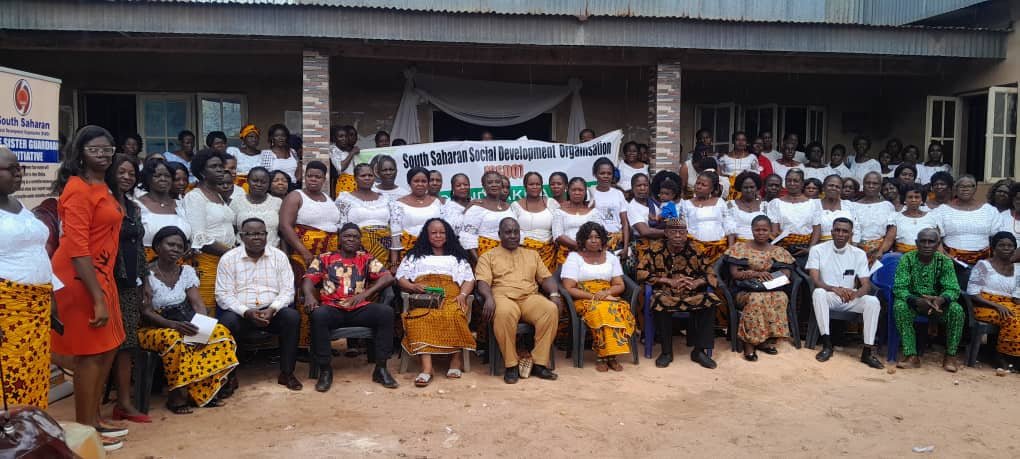
    Enugu: The South Sahara Social Development Organization (SSDO) has sensitised over 200 married women in Amankwo Eke community on the need for them to stand up for their rights and against Sexual and Gender Based Violence (SGBV) during the 2023 commemoration of 16 Days of Activism.

    This activity was carried out under the organization’s gender focused project called Sister Guardian Initiative (SGI).

    The women, who were introduced to no interest soft credit scheme, were encouraged to work as a team and “be their sister’s keeper to kick out SGBV in their community.

    Mrs Blessing Uchendu, SSDO’s Gender and Protection Programme Lead, said on Saturday that the sensitisation was part of the 16 days activism meant to correct some ills in the society.

    Uchendu said that it is also the International Day for the Elimination of Violence Against Women being celebrated from Nov. 25 to Dec.10 worldwide, annually.

    According to her, the Sister Guardian Initiative is aimed at assisting women suffering abuse to report their cases be it physical, economical, harmful traditional practices, emotional,. . . etc for the issue to be handled in best professional and dignifying manner by the trained SGI executives in their community.

    “We are always here training and enlightening them on the need to speak out over SGBV violence in any form and the need for them pick up courage to deal with every case of gender abuse.

    “The SGI executives deliver by giving the following services: mediation and counseling, referral to the police or health centers, provision of safe houses etc.


    “We are also involving men in the fight against these abuses to make it a holistic family affair in order to properly deal with it.


    “The organization have also inaugurated 10 women executive to champion the initiative in the fight against SGBV in Amankwo Eke community in Udi LGA.

    “SSDO work with the executives in the areas were they encounter difficulty. We do not want maltreatment of women in our communities any longer,” she said.


    On empowerment for the women, SSDO introduced the Jacob’s Well Project to the women in order to enable those doing something (like petty trade) to have access to soft loans to expand their businesses and contribute to their families’ welfare and wellbeing.


    Mrs Stella Ani, Coordinator of the Jacob’s Well Project, said that empowering women would make their families financially stable to reduce all forms of abuse against women.


    According to Ani, being financially independent will make them to start doing something and also contribute to the family, while their value, worth and respect in the family will increase as well.

    “This will go a long way in reducing financial stress and pressure on the family, which is the remote cause of violence and disagreements at home,” she said.


    Mrs Geraldine Uzor, President of Catholic Women’s Organisation of St. Paul Catholic Church, Eke, thanked SSDO for the sensitisation and enlightenment.


    Uzor said that the women in the community had resolved to work together and with SSDO to stand up for their rights and stop all forms intimidation against women.


    “We encourage our women and sisters to speak out and not die in silence over issues of inhuman treatment they are subjected to as well as maltreatment by their husbands,” she said.


    A community leader, Elder Slyvester Mgbo, said that the community had tried over the years to abolish cultural practices against women and their freedom.


    “However, on the issue of SGBV; they have our support and backing as community leaders and elder.


    *No one will be happy to hear that his daughter married out in any community is being maltreated by her husband,” Mgbo said. (Flowerbudnews)

  • Electioneering promise delivered: Mbah inaugurates 120m litres per day water supply to Enugu

    Electioneering promise delivered: Mbah inaugurates 120m litres per day water supply to Enugu


    By Flowerbudnews

    Enugu: Gov. Peter Mbah of Enugu State has inaugurated a 120 million litres of water per day scheme for Enugu residents, which was part of electioneering campaign promises to the people.

    Inaugurating 24/7 9th-Mile Corner Ultra-Modern Water Scheme on Saturday in Enugu, Mbah said that the gigantic water scheme and it’s reticulation put an end to the 20-year water scarcity in Enugu metropolis.

    The News Agency of Nigeria (NAN) reports that following the acute water scarcity in Enugu, Mbah during his electioneering campaign promised to deliver water within 180 days in office to Enugu people to end water challenge in the state.

    According to him, the state now has capacity to deliver enough water to Enugu metropolis and in few weeks new pumps in Oji Water Scheme will commence to enable them deliver another 50 million litres of water daily.

    “Today in Enugu, our daily consumption volume of water is less than 100 million litres and those connected to our pipeline network consume only 70 million litres per day.

    “And by the time we have all the new layout connected to our pipeline network, our consumption volume will be 100 million litres of water daily.

    “As it stand now, we can comfortably deliver 120 million litres daily without stopping on the first phase,” Mbah said.


    He added that they would increase the production to 200 million litres per day in few months.

    He noted that the state had embarked on second phase of increasing capacity of 9th mile water scheme from 70 million to additional 80 million bringing the production capacity to 150 million litres daily.

    The governor said the government had built 96 water galleries across Enugu metropolis to make water supply accessible and affordable to Enugu people in their homes and public areas.
    Mbah said government embarked on the project considering the suffering of Enugu people in getting water.

    He said, “We identified provision of water as one of our first targets in the drive to execute our mandate and social contract with citizens of Enugu.


    “When we communicated this promise, it triggered disbelief in most quarters and that is perhaps understandable. After all, Enugu people have seen before now countless successive but unsuccessful attempts to address this problem.

    “Today, families on the grid will have access to water in their homes, while those still outside the grid for the time being, can go to the water galleries nearest to them to fetch clean water.

    “For our brothers and sisters who have been engaged in the business of operating water tankers for the water supply business, it will be come necessary to remodel your businesses in this new era by supplying water to construction sites,” he advised.

    The governor, however, urged the residents to report anyone they see attempting to steal or vandalize water assets, warning that any persons caught vandalizing or stealing any components of the system would face the wrath of the law.


    “We have put in place sufficient buffer to ensure we have constant electricity and the water will be far less expensive than what you are spending today on water tanker supply, but there is no way the water will be free.

    “Finally, while the water is indeed plentiful right now, we must resist the urge to become wasteful in its use,” he appealed.

    On how the project was funded, Mbah said the state had Water Fund from French Development Bank but did not relying on it for the project but built the water scheme through Internally Generated Revenue.


    Speaking on sustainability and maintenance, the governor said the government was embarking on institutions building through training of its workforce capacity to sustain the project.

    In a remark, the state Commissioner for Water Resources, Mr Felix Nnamani, while expressing happiness, thanked Mbah fulfilling his campaign promises to Enugu people and keeping his word for 180 days.


    He urged everyone to support Mbah government to deliver more dividend of democracy to the people of the state.(Flowerbudnews)
  • FG sets to commence student loan scheme January 2024

    FG sets to commence student loan scheme January 2024

    Chief of Staff to the President, Honourable Femi Gbajabiamila, has said that efforts are underway to ensure the take-off of the Federal Government’s student loan scheme in January 2024 to ensure that Nigerian students can access the loans “to fund their educational aspirations.”


    He spoke in Lagos on Friday while delivering a lecture titled ‘Empowering Nigerian Youths in the Present-Day Economy’ at the 35th convocation ceremony of Yaba College of Technology (YABATECH).


    Gbajabiamila stated that to make the process seamless, “applicants will apply online, be verified online, and be credited based on the verifiable documents and credentials they have submitted.”

    He said: “Earlier this year, His Excellency, President Bola Ahmed Tinubu, signed the Students’ Loan (Access to Higher Education) Act, establishing the Education Loan Fund and creating a new legal framework to provide education financing through interest-free loans to Nigerian students. Efforts are underway to ensure that by January 2024, Nigerian students can access these loans to fund their educational aspirations.


    “The application system for the student loan programme is being designed so that there is no interface between the loan administrators and the beneficiaries. Applicants will apply online, be verified online, and be credited based on the verifiable documents and credentials they have submitted. Nobody will need to know anybody to qualify for these loans, so that access to this financing will be genuinely egalitarian.


    “The student loan system answers part of the question of how to fund a quality public tertiary education but doesn’t answer all of it. Any serious conversation about the future of tertiary education in Nigeria must include a thorough consideration of the ways and means of addressing the funding needs of public tertiary institutions beyond government subvention.


    Tribune Online

    FG sets to commence student loan scheme January 2024

    by Saheed Salawu November 25, 2023 Reading Time: 5 mins read

    A A

    FG sets to commence student loan scheme January 2024

    Chief of Staff to the President, Honourable Femi Gbajabiamila, has said that efforts are underway to ensure the take-off of the Federal Government’s student loan scheme in January 2024 to ensure that Nigerian students can access the loans “to fund their educational aspirations.”


    He spoke in Lagos on Friday while delivering a lecture titled ‘Empowering Nigerian Youths in the Present-Day Economy’ at the 35th convocation ceremony of Yaba College of Technology (YABATECH).


    Gbajabiamila stated that to make the process seamless, “applicants will apply online, be verified online, and be credited based on the verifiable documents and credentials they have submitted.”


    The Patagonia Desert- A 4k Aerial Film of Argentina


    00:32 / 03:03


    Copy video url

    Play / Pause

    Mute / Unmute

    Report a problem

    Language

    Share

    Vidverto Player

    Related Posts

    Leadership crisis: CCII calls for calm among Oyo traders

    Zulum, others meet over rising challenges in North East

    Gov Sani doles out prizes to winners of Qur’anic recitation competition


    He said: “Earlier this year, His Excellency, President Bola Ahmed Tinubu, signed the Students’ Loan (Access to Higher Education) Act, establishing the Education Loan Fund and creating a new legal framework to provide education financing through interest-free loans to Nigerian students. Efforts are underway to ensure that by January 2024, Nigerian students can access these loans to fund their educational aspirations.


    “The application system for the student loan programme is being designed so that there is no interface between the loan administrators and the beneficiaries. Applicants will apply online, be verified online, and be credited based on the verifiable documents and credentials they have submitted. Nobody will need to know anybody to qualify for these loans, so that access to this financing will be genuinely egalitarian.


    “The student loan system answers part of the question of how to fund a quality public tertiary education but doesn’t answer all of it. Any serious conversation about the future of tertiary education in Nigeria must include a thorough consideration of the ways and means of addressing the funding needs of public tertiary institutions beyond government subvention.


    Report Ad

    Report Ad

    “In this regard, we cannot for much longer avoid the simple truth that tertiary education costs money, and the best institutions worldwide succeed, amongst other things, because they can generate significant sums through fees, investments and other means.


    “The simple truth is that for our institutions to compete favourably, we need more resources than are currently available to address the dangerous decline in the quality of scholarship and academic output and the graduates we produce from many of our institutions.”


    He stated that In a perfect world, access to education would be a fundamental benefit afforded to every individual from basic through tertiary. And our learning centres will be majestic citadels of research and innovation, open to all who seek knowledge, regardless of means. But this is not a perfect world. In this real world, education is a commodity and a quality education even more so. Therefore, the central public policy challenge is the conflict between the competing objectives of access and quality. How do we fund a quality tertiary education without imposing costs that make access to quality education impossible for most people?


    “We require a programme of aggressive and sustained investment in education. Not only in the physical infrastructure of classrooms and lecture halls but in technology hardware and software to facilitate information exchange and innovation.


    “In this new world, we have found ourselves in, nothing has changed as drastically as the nature of work and how we measure productivity. Today, many skills that guarantee employment and a healthy income for previous generations have been made redundant by technological advances.


    “This generation will not only be competing with one another for opportunities, but they will also be competing in a global marketplace, against students from all over the world, and against technology, including Artificial Intelligence (AI) tools, blockchain and financial technology tools that are increasingly replacing the human function in the workplace. We must prepare them with these realities in mind.


    “To do this effectively, we need to develop a new understanding of the changing nature of work and the future of employment. The limits of our knowledge hinder us from effectively addressing the challenges of this new age and adapting to the changing realities we cannot escape. Collaboration between our higher institutions and the organised private sector is vital to carry out the essential work of engagement, research and review required to bridge the gaps in our knowledge. We need to do this as a necessary precursor to focusing national attention on these issues so that we can jointly rise to the demands of the moment. This is an objective that we cannot, for the sake of our future, leave to the government alone to pursue.”


    Rector of the college, Dr Ibraheem Abdul, said the institution had focused on youth empowerment through its various programmes.


    “Furthermore, to show how committed we are to the empowering of our youths, the management established Industry Advisory Committee to enhance her dynamic role of producing technical manpower for the economic and social development of Nigeria,” Dr Abdul said.


    According to him, when it comes to manpower development, technological advancement and youth empowerment, the college has been at the forefront.


    Some of the initiatives targeted at youth empowerment put in place by the school, as highlighted by the rector, include the Quadruple Helix Collaboration Scheme for Youth Empowerment; the establishment of a centre for technology marketing and product development; the YCT Industry Alliance Group (YIAG) Programme; and the Students Work and Study Scheme.


    “The Academic Board of the college, on this basis, carefully selected the theme of the lecture title, ‘Empowering Nigerian Youths in the Present Day Economy’. This topic holds significant relevance to our nation as we face the various challenges and opportunities that come with a rapidly evolving global economy. It is imperative that we equip our youth with the knowledge, skills and resources needed to navigate these dynamic economic landscapes and emerge as successful contributors to our society.


    “This topic cannot be better handled by anyone other than the chief engineer in charge of the engine room that drives and coordinates all national activities and development. The man who has been actively and practically involved in youth empowerment for several years and perfectly understands the workings and directions of the Renewed Hope Agenda of our dear president and Commander-in-Chief of the Armed Forces, His Excellency, Asiwaju Bola Ahmed Tinubu. We have the privilege of hosting a distinguished speaker who will share his expertise and experiences in this field. It is my hope that this lecture will not only inspire our graduates but also ignite passion within them to pursue their dreams, overcome obstacles and contribute meaningfully to the development of our nation,” he said

  • Ondo crisis: Remain as Deputy Gov, Tinubu tells Aiyedatiwa

    Ondo crisis: Remain as Deputy Gov, Tinubu tells Aiyedatiwa

    The over six months political logjam in Ondo state has been resolved by President Bola Tinubu.

    President Tinubu met with all the gladiators behind closed doors for over six hours at the villa, Abuja.


    Those who attended the meeting included the National Chairman of the APC, Umar Gbanduje; embattled deputy Governor, Lucky Aiyedatiwa; APC state Chairman, Ade Adetimehin; Speaker of the House of Assembly; Hon. Olamide Oladiji and Senator Jimoh Ibrahim.


    Other include members of the House of Assembly; the Secretary to the Ondo State Government; Princess Oladunni Odu; the Governor’s aides including Dare Aragbaiye; Aminu Raimi; and the Governor’s son, Babajide Akeredolu.


    Sources at the meeting told Vanguard in Akure that the president directed that the status quo should be maintained.


    According to the source, “the President frowned at the move to declare Aiyedatiwa as acting Governor and warned that such must never happen in the state.


    “President Tinubu directed that the deputy governor should go and resume work as deputy governor and not as acting governor.


    “He also directed that the state executive council should remain intact ditto for the party exco, contrary to threats.

    The President went further to ask Aiyedatiwa to do a letter of undertaking and maintain peace in the state.

    Mr. President also appointed the SSG, Princess Oladunni, Party Chairman, Adetimehin and the Speaker of the House, Oladiji to monitor and report the deputy governor if he deviated from the resolution reached at the meeting.”


    ” The President also gave a matching order to the deputy governor to withdraw all cases instituted by him and his group in the court with immediate effect.


    Recall that 11 members of the House of Assembly had planned to hold plenary in the state to declare the deputy governor as acting governor until it was scuttled following the intervention of the President.


    The lawmakers were alleged to have been infiltrated by some powerful forces outside the state who were pushing for Aiyedatiwa to be declared as the acting governor.


    It was also learnt that the National chairman of the party, Ganduje, bought into the agreement until the intervention of the President.


    The move was said to have been instigated by the deputy governor in the company of the national chairman of the party, Ganduje.


    Meanwhile, a group, the Progressives Mandate Renewal (PMR) has hailed President Bola Tinubu over his intervention in the political crisis in the state.


    The group said Tinubu has again proved himself as the leader of the people and a compassionate leader who appreciates loyalty.


    Its coordinator, Samson Ogunyemi said Tinubu had humbled the arrogance and pride displayed by the Deputy Governor, Lucky Aiyedatiwa’s group.

    Ogunyemi in a statement, in Akure, said:” The target of the deputy governor’s group is to declare the governor incapacitated and oust the governor. They were fervently rooting for the governor to be disgraced out of office.


    “While the meeting was going on, the deputy governor’s group was already jubilating on social media. They thought the outcome of the meeting would be in their Favour.


    “This is a defeated expectation for the deputy governor and his group. Their wishes and expectations have been dashed and defeated. The people of the state can now see the true nature of the deputy governor.


    “We are particularly happy that the President has ordered that the status quo must remain. This is the right step towards ensuring peace and understanding in the state.


    “The resolution passed and the request by the President that Aiyedatiwa should sign a resignation letter undated, will tame his excesses and guide him into behaving proper.

    We will continue to appreciate President Tinubu and assure him of our commitment and undying support.

  • 28 sacked Ede poly staff reinstated

    28 sacked Ede poly staff reinstated

    Court orders payment of five years salary

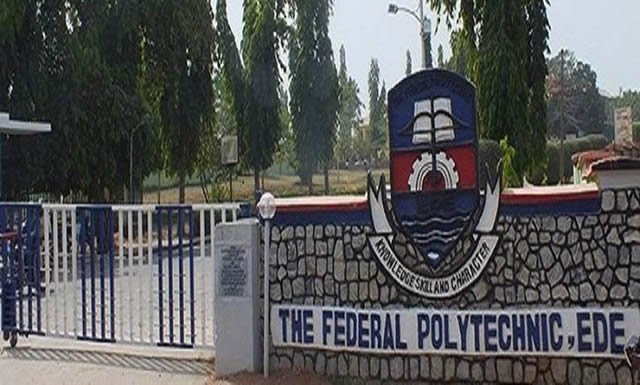
    The National Industrial Court, Ibadan division, Oyo State, has ordered the reinstatement of twenty-eight staff of Federal Polytechnic Ede, Osun State sacked illegally by the management in 2018 as a result of directive of Federal government.

    Delivery the judgment in suit number, NICN/OS/04/2018, Justice Opeloye Ogunbowale ordered that the management of Federal Polytechnic Ede ordered that Federal Polythecnic Ede to pay the 28 staff all their due entitlements for the work done and to do from January 2018 till date.


    The Court refused the claim of damages of N28m filed by the staff through their counsel, Barrister Yemi Abiona, however awarded a cost of N500,000 against the Federal Polythecnic Ede in favour of the dismissed staff.


    Read Also: Tinubu charges APC governors to remain servants to their people

    Justice Ogunbowale said “the disengagement of the claimants from the service of the defendants is ultra vires of it’s authorities and a breach of Section 17 of the Federal Polythecnic Act, 2004, provision of the Federal Polythecnic Ede Staff Manual, 2018, violation of the claimants’ fundamental human rights to fear hearing and rights of employment until mandatory retirement age of 65″.


    He noted that from the preponderance of evidence including documentary evidence before the court, it was established that the contract between the claimants; Mr Cornelius Nwokoro, Mr Ayodele Oni, Thomas Aborowa, Fatai Adeeyo and 24 others and defendant was that with statutory flavour, therefore “subsequent termination and disengagement of their contract of employment is subject to their respective letters of employment, confirmation of employment, provisions of the Federal Polythecnic Act, 2004 and regulated by the Federal Government of Nigeria public service rules”


    The Court discontenanced the submission of the Counsel to the Polythecnic, Mr Oluremi Ojo that the dismissal of the claimants from service was based on a Federal Government policy issued in 2007 to MDAs to outsource security personnel, saying such directive can not be applicable to the claimants whose appointments are based on statutory provisions.