
Year: 2026

  • Obi heralds ADC in Abuja, energises residents

    Obi heralds ADC in Abuja, energises residents


    Peter Obi, the Labour Party presidential candidate in the 2023 elections and African Democratic Congress (ADC) presidential frontrunner for the 2027 polls, made a decisive impact on January 21, 2026 in the Federal Capital Territory (FCT), Abuja with his strong presence and energising the residents.

    The rallying cry of: “Obi Kerereke,” echoed throughout the nation’s capital as he visited several key locations in the city.

    His presence significantly boosted the campaigns of Dr. Moses Paul, the ADC chairmanship candidate for the February 21, 2026 local council elections in Abuja Municipal Area Council (AMAC), and Hon. Josiah Musa Kuche of Bwari Local Council.

    Demonstrating genuine compassion, Obi’s first stop was the Kugbo Furniture Market, where traders faced immense losses from a recent fire.

    Writing on his X handle, he stated: “My visit to Abuja began with a strong show of solidarity at the Kugbo Furniture Market in the Abuja Municipal Area Council (AMAC), where traders experienced devastating losses due to this catastrophic event.

    “In a time when many Nigerians are grappling with severe hardship, this loss is particularly distressing.

    “The traders I met expressed profound gratitude for my choice to stand with them.

    “I assured them that they would not only recover but thrive once more.

    “Their resilience is crucial, and such incidents must be preventable through credible political leadership grounded in character, competence, capacity, and compassion.

    “At the palace of the District Head, Chief Philip Jezhi, I received a warm welcome, with the royal father acknowledging the significance of my visit.

    “I have consistently advocated for robust reforms in our emergency services to mandate timely responses to incidents of this nature.

    “Accompanied by the ADC AMAC Chairmanship candidate, we prepared to energize support for the upcoming council elections on February 21, 2026.

    “I made it clear that in Nigeria, we expect to prevent such catastrophic incidents.”

    A poignant moment came at the Kugbo market when a nursing mother pushed through the crowd for Obi to touch her child, a wish fulfilled as Obi joyfully lifted the child, much to the delight of the gathering.

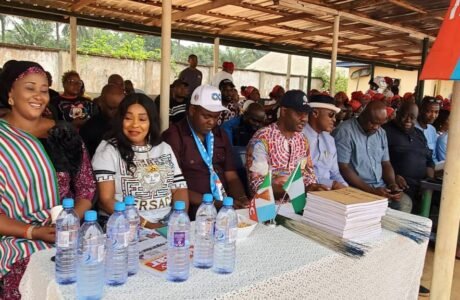
    From Kugbo, the train moved to Bwari, where Hon. Josiah Musa Kuche officially launched his campaign in the local market square of Kubwa.

    The rally was a vibrant display of community support.

    Together with Dr. Moses Paul, the ADC AMAC local government candidate, Obi engaged directly with traders while the party faithful celebrated with exuberant dance and song.

    In his discussions, he pointed out the vital reasons to support the ADC, emphasising its commitment to genuine candidates and sincere change that will reset the nation.

    The community’s solidarity was palpable, their enthusiasm evident in their joyous expressions.

    One man, Hon. Abdullahi Musa, a former PDP member now with the ADC, stated: “This man is a true leader who comes to the people.

    “I will follow him wherever he goes.”

    The third stop was Gui, a remote village along the Airport Road in the AMAC local council area, where Obi was met by an eager crowd radiating hope and unity, reinforcing ADC’s solidarity messages.

    During a courtesy call to the District Head, Alhaji Alhassan Yusuf, he listened to their stories and requests, which included an invitation to their village.

    The former Anambra State governor expressed deep appreciation for the opportunity to connect with rural communities, which he described as “a priority for me—gaining firsthand insight into their concerns”.

    He assured them that their steadfast support for the ADC AMAC chairmanship candidate would lead to improved infrastructure, including healthcare, water supply, and roads that have long been neglected in their community.

    Obi said: “I emphasised the importance of their participation in shaping a new Nigeria, achievable through harnessing their voting power in the local council elections on February 21, 2026.

    “Together, we will forge the change they undeniably deserve.”

  • RAMPANT POLITICAL DEFECTIONS IN NIGERIA: A SYMPTOM OF DEEP LEGAL AND INSTITUTIONAL FRAGILITY AND SYSTEMIC FAILURE

    RAMPANT POLITICAL DEFECTIONS IN NIGERIA: A SYMPTOM OF DEEP LEGAL AND INSTITUTIONAL FRAGILITY AND SYSTEMIC FAILURE


    By Sylvester Udemezue

    Political defection has become one of the most visible and troubling features of Nigeria’s democratic experience. Elected officials routinely abandon the political platforms on which they were voted into office, often without ideological justification and with little or no consequence. While this phenomenon is frequently explained as the product of personal ambition, greed, or political immorality, such explanations are ultimately superficial. They describe what is happening, but fail to explain why it persists.

    This article advances a more fundamental thesis: rampant political defections in Nigeria are not primarily a moral failure of politicians, but a structural failure of the legal and institutional system. Until Nigeria builds strong, credible, and impregnable systems capable of restraining ambition and enforcing political discipline, defections will remain rational, frequent, and inevitable, regardless of individual intentions. Rampant defections from political parties in Nigeria are therefore not merely acts of political opportunism; they are symptoms of a much deeper malaise, the absence of strong, predictable, and incorruptible legal and institutional frameworks.

    Indeed, the only major Nigerian politician I can readily recall who has not personally engaged in defection is the current President of Nigeria, President Bola Ahmed Tinubu.

    In saner climes, political defections are rare and usually driven by principled ideological disagreements. In Nigeria, however, defection has become routine, strategic, transactional, and often defensive. Several interrelated factors account for this disturbing and persistent trend.

    1. *Absence of Ideology within Political Parties:* Political parties in Nigeria are largely devoid of coherent ideology. They are, in most cases, mere assemblages of individuals pursuing personal, sectional, or momentary interests. Nothing substantial binds party members together beyond convenience. Even within the same party, factions constantly battle one another. These internal conflicts are rarely about ideas, policy direction, or national development; rather, they revolve around struggles for dominance, access to power, and control of party machinery. Where ideology is absent, loyalty is fragile. Defection therefore becomes not an aberration, but a predictable outcome.

    2. *Self-Interest as a Major Motivation for Party Membership:* For many politicians, party membership is not about advancing party ideals or serving the nation. It is often about securing a platform to contest elections, gaining access to power, evading accountability, attracting patronage, or protecting narrow personal interests. When these expectations are threatened or frustrated, defection becomes a convenient escape route. Political parties thus function less as vehicles for collective purpose and more as instruments for personal survival and advancement.

    3. *Weak Internal Party Democracy and Procedural Injustice:* Beyond ideology, even basic internal party democracy is largely absent. Party primaries are frequently manipulated; candidates are imposed; party constitutions are disregarded; and internal dispute-resolution mechanisms are either weak or non-existent. Many defections are therefore reactions to procedural injustice within parties. Where a party cannot guarantee fairness in its own internal processes, exit becomes a rational response rather than a moral failure.

    4. *Scarcity of Genuine Commitment:* A party member who genuinely joins a political party to build it, reform it, and advance national development is unlikely to defect at the slightest inconvenience. If everyone abandons a party at the first sign of adversity, who remains to nurture, reform, and grow it? Rampant defection therefore exposes not only weak institutions, but also the scarcity of genuine ideological and civic commitment within Nigeria’s political class.

    5. *The Pull of the Ruling Party and Institutional Failure:* One of the most powerful drivers of defection is the overwhelming urge to align with the ruling party. This impulse is rooted in the dysfunctionality of Nigeria’s institutions and the winner-takes-all character of the Nigerian state:

    (A) *Weaponisation of Anti-Corruption Agencies:* If institutions such as the EFCC and ICPC were truly independent and insulated from executive influence (if they investigated and prosecuted wrongdoing without fear or favour) opposition politics would be safer and defections would significantly reduce. One undeniable reason for defection is fear of selective persecution. The now-infamous political maxim attributed to Adams Oshiomhole (“your sins will be forgiven if you join our party”) captures this reality with disturbing accuracy. Where anti-corruption agencies are perceived as tools of political coercion, opposition becomes a dangerous enterprise.

    (B) *Electoral Insecurity and Lack of Confidence in INEC:* If the Independent National Electoral Commission (INEC) were truly independent, impartial, and immune from political manipulation, opposition politicians would have greater confidence in remaining outside the ruling party. However, there is a widespread belief (rightly or wrongly) that the ruling party, particularly at the federal level, possesses both the capacity and the willingness to influence electoral outcomes.

    Recent developments underscore this concern: some politicians reportedly defect after being promised automatic tickets and assured electoral success. In saner climes, flying the flag of the ruling party guarantees nothing. In Nigeria, such assurances raise a troubling question: how can anyone confidently promise victory in a general election unless they possess the power to influence the process? Even the perception that this is possible is enough to drive defections.

    6. *Fear of Post-Tenure Vulnerability:* Closely related is the fear of life after office. Nigeria lacks a dignified and secure political retirement culture. Once a politician leaves power, protection evaporates, influence fades, and exposure increases. Defection therefore functions as post-tenure insurance. Politicians align with power not merely to win elections, but to survive politically (and sometimes physically) after office.

    7. *Godfatherism and Patron-Client Politics:* Nigeria’s politics is not institution-driven; it is person-driven. Loyalty is often vertical (to godfathers and patrons), not horizontal (to parties or institutions). When a godfather defects, falls out with power, or relocates politically, followers migrate en masse. This reinforces the uncomfortable reality that individuals are stronger than institutions: a condition fundamentally incompatible with stable democracy.

    8. *Absence of Consequences for Defection:* Nigeria effectively rewards defection and punishes loyalty. Constitutional provisions meant to deter defection are easily circumvented through contrived claims of factionalisation. There are no meaningful voter sanctions, moral stigma, or enforceable legal consequences. Once defection carries no cost, it becomes a rational political strategy rather than a deviant act.

    9. *Weak Systems as the Root Cause: Self-Interest as Symptom, Not Cause:* It is often argued that political defection in Nigeria is driven primarily by selfishness, ambition, and sectional interests. While this is true at a surface level, it mistakes symptoms for causes. Self-interest thrives not because Nigerian politicians are uniquely selfish, but because Nigeria’s legal and institutional systems are weak, elastic, and easily manipulable. Where systems are strong and impregnable, personal ambition (whether noble or selfish) is compelled to submit to institutional discipline.

    A powerful illustration is *section 285 of the Constitution of the Federal Republic of Nigeria, 1999.* Despite the well-known selfishness and ambition of lawyers, politicians, judges, and litigants in election matters, the rigid constitutional timelines have successfully tamed all actors. The desire to delay proceedings exists; the incentive to manipulate timelines is real. Yet no one succeeds: not because human nature has changed, but because the system does not permit it.
    Section 285 leaves no room for discretion, sentiment, influence, or manipulation. Personal interest suffocates where institutional design is firm. This demonstrates a crucial truth: human nature has not changed; the system has constrained it. Accordingly, Nigeria suffers rampant political defections not because politicians are uniquely selfish, but because the system permits selfishness to flourish. Where laws are weak, self-interest breathes freely; where laws are firm, clear, and self-enforcing, self-interest is disciplined.

    10. *Judicial Uncertainty and Electoral Litigation Chaos:* Prolonged election petitions, unpredictable judgments, and perceived political influence over the judiciary further weaken confidence in the system. Rather than trust courts to resolve disputes fairly and promptly, politicians often prefer to defect pre-emptively and avoid litigation uncertainty altogether.

    *SUGGESTED SOLUTION*

    Reform the system. Make it fair. Make it impregnable.
    Consider the United States: defections are rare not because politicians are morally superior, but because the system is strong. Institutions are stronger than individuals. Being in the ruling party does not guarantee undue advantage, and leaders cannot easily bend institutions to personal will. In Nigeria, the reverse is true. Leaders dominate institutions, and institutions are routinely manipulated for personal and political ends. Under such conditions, the logic of “if you can’t beat them, join them” becomes dominant rather than exceptional.

    *CONCLUSION*

    Political defection in Nigeria is not merely a moral failure of individual politicians; it is a structural and institutional failure. Our laws and institutions are too weak and too manipulable to guarantee fairness, protect dissent, or ensure a level playing field. As a result, politicians increasingly seek safety under powerful individuals rather than protection under impartial institutions. The painful reality is that Nigeria is governed more by persons than by laws. Until this dangerous imbalance is reversed (until institutions become stronger than individuals) political defections will persist, democratic stability will remain fragile, and genuine national progress will continue to elude us.
    Respectfully,
    *Sylvester Udemezue (Udems)*
    lawmentorng@gmail.com.
    (22 January 2026)

  • Oborevwori Bags Most Local Government Friendly Governor Award

    Oborevwori Bags Most Local Government Friendly Governor Award


    Delta State Governor, Rt. Hon. Sheriff Oborevwori has on Thursday, bagged the Most Local Government Friendly Governor Award.

    The award was presented to him by the President-General, Nigeria Union of Local Government Employees (NULGE), Comrade Aliyu Haruna during during the 2025 NULGE Day celebration in Asaba.

    Comrade Haruna listed what made Governor Oborevwori to bag the award to include but not limited to his administration’s exceptional support and uncommon commitment to the welfare of local government workers and retirees.

    “We sincerely commend Your Excellency for
    outstanding arrears of gratuity owed to local government retirees, through the release
    the historic payment of six (6) years of an unprecedented N40 billion.

    ‘This singular intervention restored hope, dignity,
    and peace of mind to thousands of retirees who had served the state and local government system diligently.

    “Even more commendable is Your Excellency’s further approval and release of
    additional N3.55 billion, which has ensured the payment of gratuities.

    “This is not only a demonstration of responsive leadership but also testament to your administration’s belief that retirees deserve honour, not hardship,” he said, amidst applause from members of NULGE who came from all the local government areas of Delta State.

    Governor Oborevwori at the occasion, thanked NULGE for the award asserting that his administration promised to do more for Deltans which he is already doing as Governor.

    Represented at the colourful ceremony by his Deputy, Sir Monday Onyeme, Ph.D., the Governor said, “I am profoundly honoured and deeply grateful for the unanimous nomination and award conferred upon me by the National Body of the Nigeria Union of Local Government Employees, recognizing me as a Local Government and NULGE-Friendly Governor.

    “I accept this recognition with profound sense of responsibility, humility, and an unwavering commitment to serve.”

    “This recognition, particularly for our efforts in addressing long-standing arrears of gratuities and pensions of local government workers in Delta State, is deeply meaningful to us.

    “From the outset of our administration, we made a conscious decision to confront these challenges head-on, guided by the belief that a government must honour its obligations to its workers if it is to earn trust and inspire excellence.

    “By prioritising the welfare of serving and retired local government employees, we have sought to restore dignity, strengthen morale, and reinforce the moral foundation of public service.

    “When workers are secured and respected, service delivery improves, communities thrive, and democracy is strengthened.

    “Let me assure you that this recognition will only spur us to do more, we remain committed to prompt payment of salaries, sustained settlement of pension obligations, capacity building, and reforms that will further enhance local government administration in Delta State.

    “I sincerely thank the national leadership of NULGE for this honour and for recognising Delta State as a model of labour-friendly governance.

    “I dedicate this award to the men and women of the local government system in Delta State and across Nigeria.

    “May this recognition strengthen our collective resolve to build a system where labour is respected, service is valued, and governance truly serves the people.

    ‘Let it inspire all of us, government, labour, and citizens alike to work together for a more accountable and people-centred local government system.

    “I am delighted to be in the company of the Nigeria Union of Local Government Employees (NULGE), a union I hold in very high esteem, because of its critical role in strengthening governance at the grassroots.

    “Local government administration remain the closest tier of government to the people, and their effectiveness largely depends on the commitment, welfare, and motivation of the workforce.

    ‘This is why our administration continues to place premium value on the local government system as a vital instrument for touching lives and deepening development at the grassroots.

    “Let me also emphasise that local government councils should strive to improve their internally generated revenue while entrenching transparency and accountability in their management structures.

    “The notion that local government resources are for the personal use of those in authority undermines the dignity and integrity of the third tier of government.

    “Practices such as exploiting environmental or administrative interventions as avenues for misappropriating council funds are deeply unacceptable.

    “Local government Chairmen should resist the temptation to use intermediaries or any pretext to divert public resources.

    “Actively involving citizens in the planning and execution of projects will foster trust, enhance transparency, and reinforce accountability and good governance.

    The Chairman Nigeria Labour Congress NLC, Delta State, Comrade Goodluck Ofobruku in a goodwill message, commended the state government for the support and uncommon commitment to the welfare of workers.

    The Chairman, Trade Union Congress Of Nigeria, Delta State Council, Comrade Wilson Asekutu said, NULGE members are the heartbeat of that connection.

    “Whether it is in primary healthcare, rural infrastructure, or administrative excellence, the work you do directly impacts the lives of every Deltan in our 25 Local Government Areas,” he said.

    Earlier, in an address, the President, NULGE Delta State, Comrade Ogberetitinor Obatarhe said the the NULGE Day Celebration of the Nigeria Union of Local Government Employees, Delta State Chapter, is a cherished annual tradition that brings local government workers together as one united family.

    According to him, “NULGE Day gives us the opportunity to reconnect, renew old friendships, share experiences, reflect on our journey so far, and take a well-deserved break from the demands of service. More importantly, it reinforces the spirit of unity, solidarity, and brotherhood that defines our great Union.

    “We sincerely appreciate the approval of the Governor and timely release of funds for our annual NULGE Day celebrations.

    “This clearly reflects your strong belief in workers’ welfare and your understanding that a motivated workforce is vital for effective service delivery.

    “Since assuming office, Governor Oborevwori has approved and disbursed over N43,000,000,000 (Forty-Three Billion Naira) towards the settlement of outstanding pensions and gratuities owed to Local Government retirees.

    “As at today, pension and gratuity arrears have been fully cleared up to April 2025.

    “This represents a significant milestone, particularly when contrasted with the period prior to His Excellency’s assumption of office, during which retirees were owed arrears spanning up to six years.

    “This remarkable achievement unquestionably merits the highest commendation.”

  • Alleged cyberstalking: DSS plays video evidence in charge against Sowore

    Alleged cyberstalking: DSS plays video evidence in charge against Sowore


    The Department of State Services (DSS), on Thursday, played the video evidence of President Bola Tinubu’s speech made on Aug. 26, 2025, during his state visit to Brazil, in establishing its cyberstalking charge against Omoyele Sowore.

    The video recording was played while DSS lawyer, Akinlolu Kehinde, SAN, led Cyril Nosike, the 1st prosecution witness (PW-1) and an operative of the service, in evidence before Justice Mohammed Umar of the Federal High Court in Abuja.

    The prosecution also tendered Sowore’s message which he posted through his X handle and Meta, formerly known as Facebook, where he referred to the president as “criminal” and the reactions that followed, including a certificate of compliance.

    Justice Umar admitted them in evidence and marked them as exhibits after counsel for the defendant, Marshal Abubakar, reserved his objection until final written addresses stage.

    After the evidence-in-chief of the PW-1, Abubakar sought an adjournment to enable them study the witness’ statement and other documents front-loaded to them.

    The judge adjourned the matter until Jan. 27 for cross-examination of the PW-1 and continuation hearing.

    The News Agency of Nigeria (NAN) reports that, in the amended charge, marked: FHC/ABJ/CR/484/2025 and filed on Dec. 5, Sowore is named as sole defendant.

    Although Sowore, X Incorp (formerly Twitter) and Meta (Facebook) Incorp were named in the earlier charge as 1st, 2nd and 3rd defendants respectively, in the amended charge, the names of 2nd and 3rd defendants were dropped.


  • Gov Adeleke Pledges Support for NAFDAC, Encourages Whistleblowing Against Fake Drugs

    Gov Adeleke Pledges Support for NAFDAC, Encourages Whistleblowing Against Fake Drugs


    By Biola Lawal

    The Executive Governor of Osun State, Sen. Ademola Adeleke has reaffirmed his commitment to working closely with the National Agency for Food and Drug Administration and Control (NAFDAC) to protect public health and eliminate counterfeit and substandard products across the state.

    Speaking at the Government House, Oke-fia, Osogbo, while receiving the State Coordinator of NAFDAC, Osun State Chapter, and members of the management team, the Governor congratulated the new coordinator on the appointment and described the visit as timely.

    He stressed the importance of collaboration between federal agencies and state governments, a statement by Mallam Olawale Rasheed, Spokesperson to the Osun State Governor disclosed.

    The Governor noted that the activities of NAFDAC remain critical to public health, consumer protection and economic stability, particularly in addressing the growing menace of fake drugs, substandard food items and unregulated consumables that pose serious risks to lives and undermine confidence in the healthcare system.

    Commending NAFDAC’s ongoing efforts in enforcement, regulation and public sensitisation, the Governor emphasised that effective regulation cannot be achieved in isolation, but through strong cooperation, intelligence sharing and engagement with security agencies and local communities.

    Assuring NAFDAC of full support, Governor Adeleke said Osun State would continue to partner with the agency to strengthen enforcement, improve public awareness and ensure compliance with regulatory standards in markets and healthcare facilities across the state.

    On NAFDAC’s request for inclusion in the State Security Council, the Governor acknowledged the relevance of regulatory agencies to broader security and public safety concerns, noting that the request would be carefully examined within the existing framework to enhance coordination and effectiveness.

    Governor Adeleke further urged NAFDAC to intensify engagement with traders, manufacturers and residents, while calling on members of the public to act as whistleblowers by promptly reporting any outlet involved in the sale of fake drugs, stressing that the agency must carry out its duties diligently and transparently without compromise or inducement, in order to rid Osun State of fake drug dealers and safeguard lives.

    Speaking earlier, the State Coordinator of NAFDAC, Mr Stephen Aina, appreciated the state governor for its support and partnership with NAFDAC.

    He explained that NAFDAC remains committed to ensuring that people consume only standard and safe products, including drugs and other regulated items, while also commending the state for the prevailing atmosphere of peace that has aided the agency’s activities.

    Mr Aina further disclosed that the agency has been engaging in outreach programmes to educate and encourage young people to embrace entrepreneurship, advising them to always register their businesses as required by law.

    He, however, appealed to the government to further support the agency through the provision of logistics such as operational vehicles, staff quarters, and other essential needs to improve efficiency.


  • MARIS LECTURE 2026: MTC Closes Nominations For Keynote Speaker

    MARIS LECTURE 2026: MTC Closes Nominations For Keynote Speaker


    ​The Maris Trust Council (MTC) on Thursday thanked regular participants, prospective attendees, and the general public for their preparations for this year’s edition of the Maris Annual Public Service Lecture, scheduled for Wednesday, April 1, 2026.

    ​In a statement signed by its Secretary, Comrade Fidelis Egugbo, the MTC stated that the reactions following the announcement for public nominations for a Keynote Speaker and suggested topics were a clear indication of how the public is preparing for this year’s lecture.

    ​”As of the close of nominations on Wednesday night, we received a total of 33 names for potential Keynote Speakers and 64 suggested topics for discussion.

    ​”This clearly shows that more people will attend this year’s edition of the Maris Public Service Lecture, scheduled to take place on its traditional date, the Wednesday before Easter Sunday (Holy Wednesday), and for this year’s edition, April 1, 2026.

    ​”We thank all those who made suggestions via phone calls, SMS, or WhatsApp messages.

    “The sacrifice made toward achieving an egalitarian society through collective commitment was truly displayed over the last three weeks.

    ​”In line with the Maris Lecture calendar, the public was invited to nominate potential Keynote Speakers and suggest topics starting December 28, 2025; this process ended on Wednesday, January 21, 2026.

    ​”By the grace of God, the Maris Trust Council will painstakingly review the topics and select three to be presented to the Keynote Speaker, who will also be chosen from the names suggested by the public.

    “The Maris Lecture is inclusive, serving as a platform to proffer solutions to societal challenges.

    ​”We are grateful to the Governor of Delta State, Rt. Hon. Sheriff Oborevwori, for supporting the Maris Lecture by making Delta conducive for international discourse.

    ​”As we move into the selection stage, we rely on your prayers for God’s guidance to provide a speaker who will do justice to the topic, especially bearing in mind the many political activities taking place this year.

    “In the next few days, we shall unveil the Keynote Speaker and the chosen topic.

    ​”Once again, thank you, we look forward to your active participation at the lecture on Wednesday, April 1, 2026, at 12:00 PM prompt.”

  • Suspect tells court how he joined Al-Barnawi’s terror group, Ansaru

    Suspect tells court how he joined Al-Barnawi’s terror group, Ansaru


    Mohammed Bashir Saleh, one of the suspects standing trial on alleged terrorism, on Wednesday, told the Federal High Court in Abuja how he joined the Ansaru terrorist group led by Khalid Al-Barnawi.

    Saleh, in a video recording played before Justice Emeka Nwite, said he joined the terrorist organisation in Bauchi shortly before the attack on the United Nations (UN) Building in Abuja.

    The News Agency of Nigeria (NAN) reports that the Abuja UN Building was bombed on Aug. 26, 2011, by the group where over 20 persons died and several others sustained varying degree of injuries.

    Mohammed Usman, also known as Al-Barnawi, along with other suspected members of his group, were alleged to have carried out the attack.

    Al-Barnawi, the alleged leader of Boko Haram dissident splinter group, Ansaru, and Mohammed Bashir Saleh; Umar Mohammed Bello, a.k.a Datti; Mohammmed Salisu and Yakubu Nuhu, a.k.a Bello Maishayi, are being prosecuted by the Department of State Services (DSS).

    They are among others, accused of being members of Ansaru, also known as Jama’atu Ansarul Muslimina Fi Biladis Sudan.

    The defendants are also alleged to have conspired among themselves to carry out acts of terrorism between 2011 and 2013 in Sokoto, Kebbi, Bauchi, Borno, Gombe and other states in the northern part of the country.

    At the resumed trial-within-trial on Wednesday, Saleh, in the video, told the court that during the time he joined the group, he had a blossomed relationship with his members.

    After the video recording of the interview session involving Saleh was played in open court, the defence counsel cross-examined the 3rd prosecution witness (PW-3), simply identified as “TSR-3.”

    Under cross-examination by lawyer to the first defendant (Al-Barnawi), F. K. Kaigama, the witness said he works in the Technical Department of the DSS and that part of his functions include setting up of audio/video recording machine in the interview room.

    The PW-3 said he also engages in audio/video record of suspects during interview sessions.

    On what are his other functions, the witness said: “in addition to the stated functions, I also undertake computer forensic examinations, mobile phones forensic examination, crime scene investigation, like fingerprint collection from the crime scene and analysis at the laboratory.”

    He said he did more than setting up of the forensic audio/video recording machine in relation to the 1st defendant.

    He added that he did the audio video recording of the interview session of the 1st defendant in real time (that is, as it was happening).

    He said the third thing he did in relation to the 1st defendant was the audio/visual recording of the statement taking session and the audio/visual recording of the translation of the statement of the 1st defendant.

    On whether there is a person known as James in the Technical Department where he works, the witness said there are several James in the Technical Department of the DSS.

    At that point, Justice Nwite directed the postponement of further proceedings on the grounds that he had other engagements.

    The case was consequently adjourned until March 2 for continuation of the cross-examination of PW-3 in trial-within-trial.

    Al- Barnawi was arrested by DSS in April 2016 in Lokoja, Kogi, five years after the attack on the Abuja UN Building.

  • Alleged N3b Fraud: EFCC  Cautioned me Before I Wrote my Statements-Oyo-Ita 

    Alleged N3b Fraud: EFCC  Cautioned me Before I Wrote my Statements-Oyo-Ita 


    EFCC PRESS STA


    The first defence witness, DW1, Winifred Oyo-Ita, former Head of Service of the Federation, on Wednesday, January 21, 2026, while testifying in the trial-within-trial involving her, admitted before Justice James Omotosho of the Federal High Court, Maitama, that she was cautioned by investigators of the Economic and Financial Crimes Commission, EFCC before writing her statements in the Commission’s office.

    Oyo-Ita is standing trial alongside her special assistants Garba Umar (4th defendant), Ugbong Okon Effiok (7th defendant) and six companies: Frontline Ace Global Services Limited, Asanaya Projects Limited, Slopes International Limited, U and U Global Services Ltd, Prince Mega Logistics Ltd, and Good Deal Investments.

    They are facing an 18-count charge bordering on misappropriation of funds, official corruption, money laundering, and criminal diversion of funds to the tune of over ₦3 billion, a statement by EFCC Spokesman  Dele Oyewale disclosed.


    The defendant midstream into her trial, swung round and claimed that her statements were obtained under duress in the Commission, prompting the trial-within-trial to determine their admissibility.


    At Thursday’s  proceedings, Oyo-Ita,  while being cross-examined by prosecution counsel, H. M Mohammed confirmed that the “words of caution” was read to her which she signed before taking her statements.


    According to her statement of August 10, 2019,  “I Winifred Oyo-Ita having been duly cautioned in English Language that I am not obliged to say anything unless I wish to do so but what I say shall be taken down in writing and may be given as evidence. I have been reminded of my right to have a counsel present but I chose to continue without counsel.”


    Even with this, she claimed in court that though she wrote out of her free will, she was forced to sign her statements.  She pleaded with the court to reject the three different statements she wrote, claiming that they were not written voluntarily.


    She stated that Professor Tahir Mamman, a former Vice Chancellor of Baze University, who was her surety when she was granted administrative bail witnessed her writing of another statement on September 15, 2019.


    It could be recalled that in the trial of Tuesday, January 20, 2026, the prosecution,  with the permission of the court, played the video recording of Oyo-Ita’s statement-taking process in court, in which the First Prosecution Witness, PW1, Hamma Adama Bello, an investigator with the EFCC identified himself, another EFCC officer, Rukkayya, and Oyo-Ita, the first defendant in the video.

    Oyo-Ita in the video, was seen to be calm and relaxed, and showing no signs of stress, while writing her statements. The prosecution witness further told the court that before the defendant wrote her statement, she was duly cautioned and informed of her right to have her lawyer present and was also told that she could stop writing until her lawyer arrived or invite her lawyer to witness the process.


    The video evidence was admitted as exhibit without objection from the defence counsel.


    Justice Omotosho adjourned the matter till March 4, 2026 for adoption of addresses in the trial-within-trial.


    Dele Oyewale

    Head, Media & Publicity

    January 21, 2026


  • NANTA Releases Zonal Election Timetable Ahead Golden Jubilee AGM

    NANTA Releases Zonal Election Timetable Ahead Golden Jubilee AGM

    The National Association of Nigeria Travel Agencies (NANTA) has announced the timetable for its zonal elections across the country, as part of preparations for its forthcoming Annual General Meeting (AGM) and national elections scheduled to hold later in the year.
    The association said the zonal elections, conducted in line with its constitution, will serve as a prerequisite for members aspiring to contest positions at the national level. Successful candidates at both zonal and national levels are eligible to serve a maximum of two terms of two years each, subject to the approval of the Board of Trustees.
    This year’s electoral process carries added significance as NANTA prepares to mark its golden jubilee, celebrating 50 years of existence. The milestone AGM and national elections are slated for Ibadan, Oyo State.
    Chairman of the NANTA Elections Committee and Second National Deputy President, Dr. Dagunduro Tukumbo, disclosed that the zonal elections will commence in Lagos State on February 12, 2026. According to him, the Eastern Zone, with headquarters in Port Harcourt, will conduct its election on February 19, followed by the Kano Zone on February 24, and the Abuja (Federal Capital Territory) Zone on February 25, 2026.
    Dr. Tukumbo added that the Western Zone will conclude the zonal exercise on February 26, 2026, with the validation of its new zonal leadership. The Western Zone will also host the national elections and AGM.
    He assured members of a transparent, credible and fair electoral process, urging all aspirants at zonal and national levels to familiarize themselves with, and strictly adhere to, the association’s electoral code of conduct.
    “NANTA has grown beyond electoral irregularities and remains committed to placing the association above all primordial interests,” he said.
    Ibadan, Oyo State, will also host NANTA’s golden jubilee celebration, expected to be a landmark event at the International Conference Centre.
    In his remarks, President of NANTA, Dr. Yinka Folami, expressed excitement over the forthcoming AGM and jubilee celebrations, promising to unveil new initiatives and leadership visions for the association’s future. He called on members nationwide to participate actively in the electoral process and ensure that credible representatives are elected to serve their collective interests.