Blog

  • Army tasks troops on sensitivity to emerging threats, use of social media

    Army tasks troops on sensitivity to emerging threats, use of social media


    By Flowerbudnews

    Enugu:   The Nigerian Army has tasked officers and troops on sensitivity to emerging threats within their operating environment and acceptable use of social media.

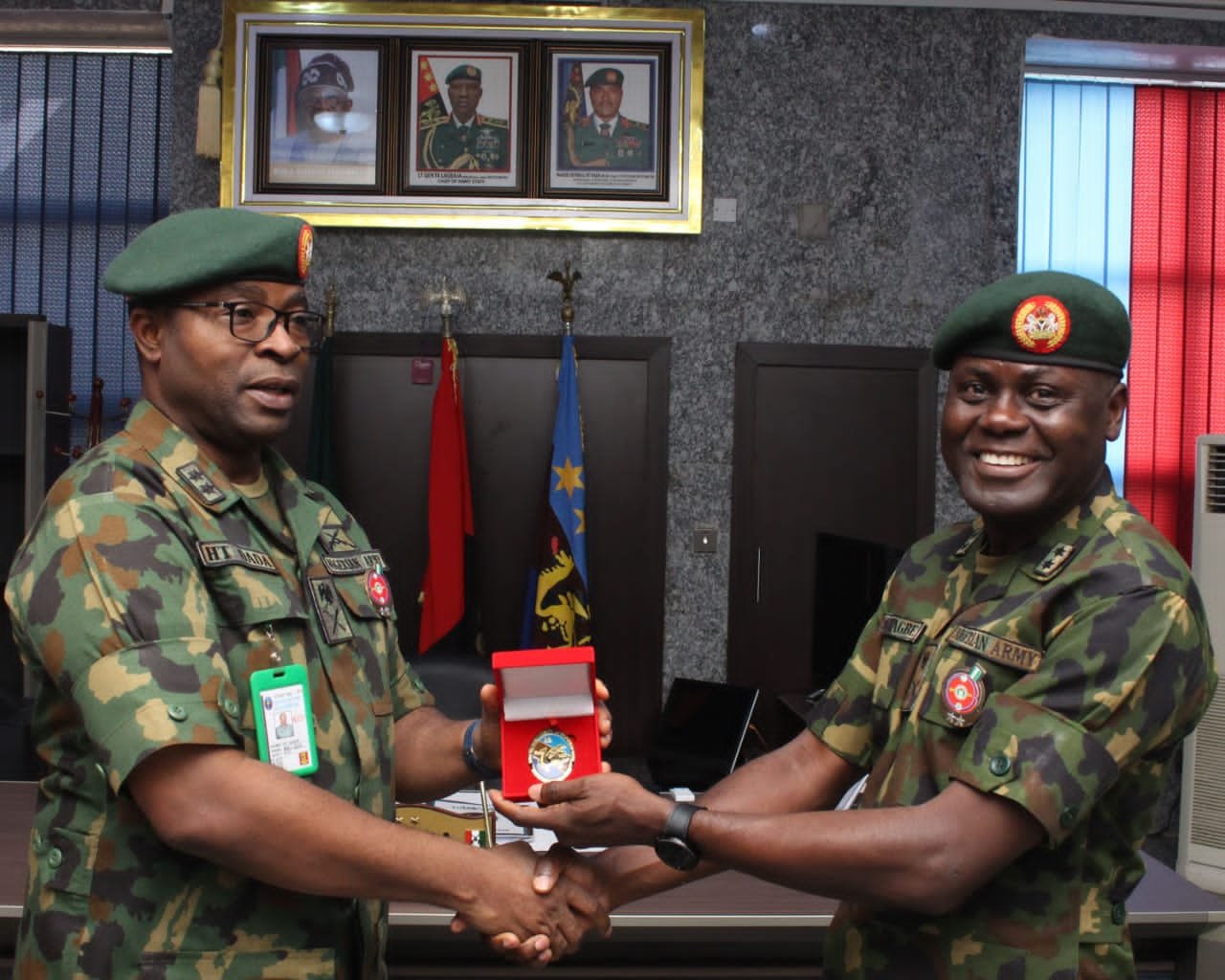
    Maj.-Gen. Hassan Dada, the General Officer Commanding (GOC) 82 Division, Nigerian Army, gave the task on Saturday while declaring open a Security Sensitisation Lecture for Officers and Soldiers at the Headquarters 82 Division, Enugu.

    Dada said that the lecture was aimed at educating the troops on emergent security issues, threats and how best army personnel could respond to them.

    He said that it was expedient to brainstorm from time to time and to share updates on emerging security threats and strategies to counter such threats.

    The GOC further emphasised the Nigerian Army’s commitment to training of personnel to improve operational effectiveness in line with international best practices.

    He added that the significant successes recorded by the Division would be attributable to adequate training.

    The GOC also advised troops to be vigilant in observing and identifying security threats in their respective areas of responsibility/operation and promptly responsive to such threats.


    This, he said, would proactively prevent security breaches.

    Dada commended the Chief of Military Intelligence (Army), Maj.- Gen. Thompson Ugiagbe, for dedicating time to deliver the lecture to officers and troops of the Division.

    Delivering the lecture, Maj.- Gen. Ugiagbe clarified that the sensitisation lecture became necessary considering some significant international and national developments in contemporary security threats.

    He stressed the need for troops to be loyal, disciplined and ensures personnel, material and information security, adding: “If compromised, could jeopardize national security”.

    The Chief of Military Intelligence charged the officers and soldiers to show a high level of discipline and professionalism in their daily operational tasks and engagements.

    He further noted that the Nigerian Army had a sacred obligation to ensure that personnel perform their duties within the ambit of the law.

    “To this end, all personnel must take security awareness seriously,” he said.

    Ugiagbe also stressed on the need for compliance with extant regulations for acceptable use of Social Media in order not to run contrary to the provisions of the Armed Forces Policy on Abuse of Social Media.

    High points of the lecture were interactive session as well as questions and answer sessions between officers/troops and the special lecturer, the Chief of Military Intelligence (Army). (Flowerbudnews)

  • Poet decries neglect of book, publishing industry  

    Poet decries neglect of book, publishing industry  

    By Taiye Olayemi

    Mr Denja Abdullahi, former President, Association of Nigerian Authors (ANA), on Friday urged government at all levels and African leaders to focus on grooming the book and publishing industry for economic diversification and growth.
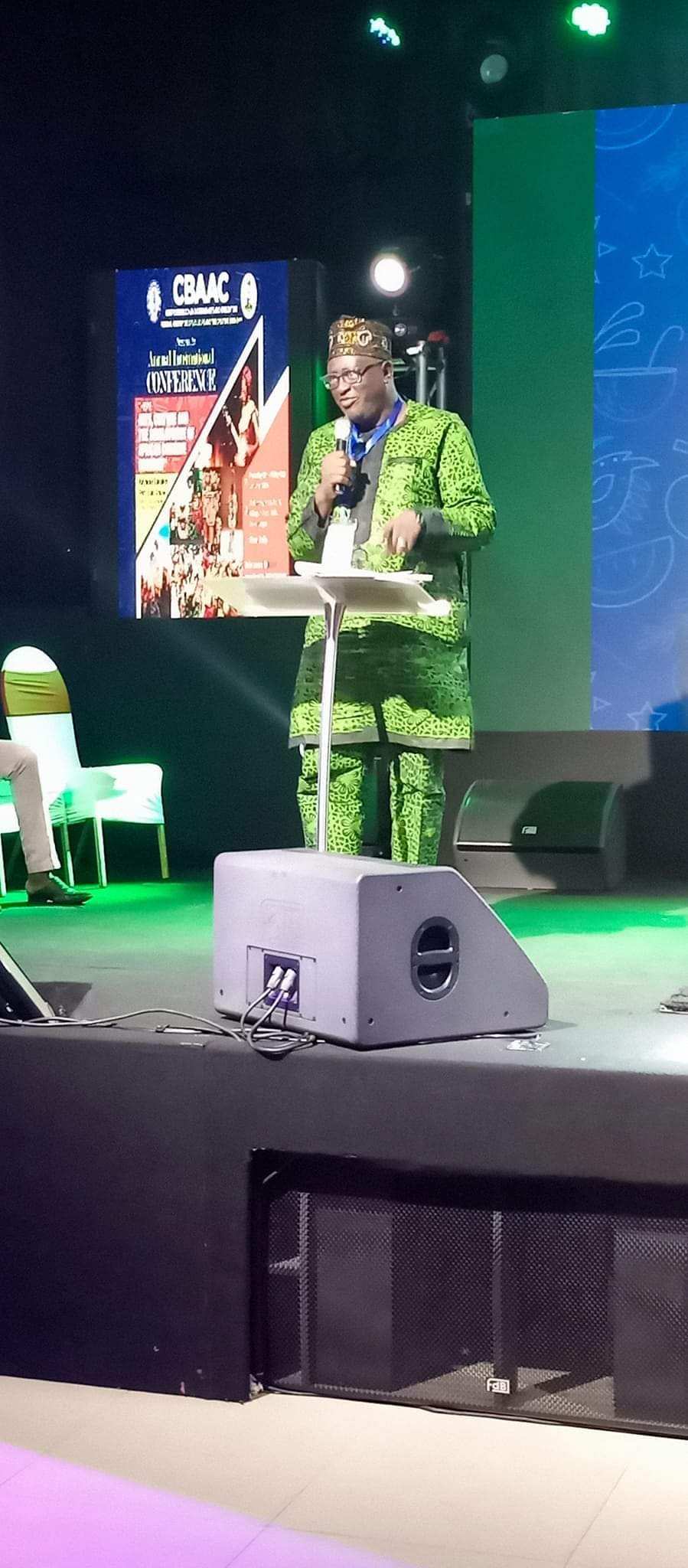
    Abdullahi, a poet, made the call during a  day-two international conference, organised by the Centre for Black and African Arts and Civilisation (CBAAC), held in Lagos.
    The News Agency of Nigeria (NAN) reports that theme is, “Literature and the Creative Economy: Finding Relevance and Overcoming Misconceptions on the Book Industry’s Contributions to a Nation’s Economic Wellbeing”.
    He said that Africans must begin to take the book industry seriously like the film and music sectors, to be able to tap the full potential in the creative industry and grow the economy.
    According to Abdullahi, the book and publishing industry has not enjoyed attention compared with music, film and fashion aspects of the creative industry, which are known as the glamorous aspects.
    He said that the book sector was the most resilient in the creative economy as it is tied to educational development and the knowledge society.
    He noted that the book sector’s real contributions to a nation’s economic growth had been taken for granted because of the lack of empirical data.
    He, however, called for the need to constantly generate data around the growth of the sector annually.
    “Most African governments have a lukewarm attitude to the book sector. The  sector is essentially a builder of cultural and educational capital and indispensable to building a knowledge-based creative economy.
    “There must be research-based mapping of the book sector’s real contributions to African nations’ economies with the maintenance of updated national bibliographies.
    “Functional book development policies must be enacted to enhance the economic potentials of the sector.
    “The African Union should pay attention to national associations of writers across the continent and support their activities, which keep alive the vibrancy of the book sector.
    “The book sector also has to prove its relevance to the nation in real economic terms. Facts and figures have to be collated to prove the contributions of the sector to the nation’s GDP,” he said.
    Abdullahi noted that the book sector was in need of a thorough self-appraisal toward tracking its economic potential and enhancing its capabilities to contribute substantially to national economy.
    He explained that the book sector operated mainly without significant state support and within the lack of a functional book development policy as well as specialised government intervention measures.
    He said that the book sector needed lots of interventions as it remains over dependent on imported raw materials and bedeviled by piracy.
    According to him, this is because the sector is not strategically linked to the other sectors of the creative industry such as the film and music industries.
    “The African Union should establish continental-wide literary prizes to encourage literary creativity and publishing in the continent.
    “Continental-wide distribution of books should be established and sustained to encourage dialogue and understanding across countries in the spirit of Pan-Africanism.
    “Organisation of major book fairs and literary festivals in each of the regions of Africa should be encouraged and sustained by AU and other regional groupings as they are platforms through which the book sector contributes to the economic growth of African nations.
    “The residual income accruable in the book sector to practitioners should be protected with the advent of e-book and e-publishing through the protection of intellectual property and the establishment of collecting societies,” he said.
    Also, Dr Osedebamen Oamen of the Department of Theatre and Media Arts, Ambrose Alli  University, Epkoma, Edo, said that for Nigerians to yield bountifully from the creative industry, the nation’s cultural policies must be adhered to.
    Oamen said that the policy was the most favourably compared to other nations.
    “The gap that exists between the cultural policy and creative economy in Africa should be closed to enhance cultural policy drive of the creative economy,” he said. (NAN) (nannews.ng)

  • Taiwan Elects Lai Ching-te, 64, New President

    Taiwan Elects Lai Ching-te, 64, New President

    Culled from NewsNav


    KUALA LUMPUR – The ruling Democratic Progressive Party candidate Lai Ching-te, 64, is Taiwan’s new president after polling 41.6% of the ballots cast.

    The island’s Central Election Commission added that nearest rival Hou Yu-ih of the opposition Kuomintang polled 33.2% after the results from more than 60% of the polling stations.

    Hou and Taiwan People’s Party founder Ko Wen-je also conceded defeat on television.

    Lai’s win marks a third term in power for the DPP, which won the presidency in 2016 with the election of Tsai Ing-wen.

    In May, Tsai will step down after completing her second consecutive term as president.

    Lai, who was vice-president in Tsai’s administration, is expected to continue his predecessor’s policies and rejection of China’s claims over Taiwan. Beijing had branded Lai a threat to peace ahead of the election.

    Lai’s running mate is Hsiao Bi-khim, who was previously Taiwan’s representative to the United States.

    In his speech at the DPP’s campaign headquarters, Lai hailed the win as “a victory for the community of democracies”.

    He also vowed to “to safeguard Taiwan from continuing threat and intimidation from China” and was determined to maintain peace and stability across the Taiwan Strait.

    Lai added that his government would use dialogue and not confrontation when dealing with Beijing.

    “Through our actions, the Taiwanese people have successfully resisted efforts from external forces to influence our elections. We trust that only the people of Taiwan have the right to choose their own president.

    “I want to thank the Taiwanese people for writing a new chapter in our democracy. We have shown the world how much we cherish our democracy. This is our unwavering commitment.”

    Regional media have reported Lai’s win and the DPP’s continued governance of Taiwan as a development that is likely to inflame ongoing tensions with China.

    This morning at the start of polling, China’s microblogging platform Weibo blocked the “Taiwan election” hashtag, which had become a trending topic amid Beijing’s “unification” propaganda campaign in the run up to voting.

    Some 19.5 million Taiwanese were eligible to vote today, and also cast ballots to elect representatives to the country’s 113-seat legislature. – January 13, 2024


  • Consider integrated education system – ex-NUT secretary advises gov’t

    Consider integrated education system – ex-NUT secretary advises gov’t


    By Ibukun Emiola (09029014468)

    Ibadan:   A former Secretary of the Nigerian Union of Teachers (NUT), Mr Olu Abiala, has called for an integrated educational system to reposition the sector.

    Abiala told the News Agency of Nigeria (NAN) in Ibadan on Saturday, that the system would ensure the integration of affective, cognitive, and psychomotor aspects of education.

    According to him, the integration will go a long way in helping the development of Nigeria as a whole.

    “We are talking about 6, 3, 3, 4 in which the first six years were expected to develop the literacy ability of the pupils.

    “At the end of the 6 years, the educational policy says anyone who passed through the six years must have been permanently literate.

    “The third year is to give the students the choice to choose between pursuing intellectualism or vocational development.

    “But where is that aspect of vocational development in our current practice of educational system?

    “We must believe in education and an integrated one that believes both in the affective, cognitive and psychomotor aspects of education. Without these three, we are going nowhere,” Abiala said.

    He described the nation’s education as a reflection of the value placed on it by the society as regards global technological, intellectual, moral, and ethical development.

    “What we need in Nigeria today is a regenerated national and political leadership, who espouses value, continuity, growth as well as contemporary development in the world.

    “We need to bring educational philosophy and policies into play, not by what they script in paper but by what they demonstrate practically,” Abiala said.

    On modern infrastructure, Abiala asked, “How many schools today have such gadgets that impact the current information technology to convey teaching and learning?”

    He, therefore, urged the government to rank education as highly important and to ensure that those selected to run its affairs were individuals with convictions to turn the sector around positively.

    “But sincerely, some of them belong to the class of my colleague, who, when the government said it had budgeted the lion’s share of the national budget for education, kicked against it.

    “This is because the lion will never allow its share of the budget to be given to education. Give whatever education deserves to education; don’t give the lion’s share to education.

    “The lion’s share has always gone into the bowels of lions and who are the lions but the political elites,” he said. (NAN)(www.nannews.ng) /Flowerbudnews

  • Benefits: Gov. Buni approves N708m for 461 retirees

    Benefits: Gov. Buni approves N708m for 461 retirees


    By Nabilu Balarabe

    Damaturu:. Gov. Mai Mala Buni of Yobe has approved over N708 million for payment of benefits to 461 retirees across the state.

    Buni’s Director-General of Press and Media Affairs, Alhaji Mamman Mohammed, said this in an interview with the News Agency of Nigeria (NAN) in Damaturu on Saturday.

    He said the approval was granted following the successful screening of the third batch of pensioners in the 17 local government councils of the state.

    Mohammed said payment of the benefits would be made directly into the beneficiaries’ accounts, while deceased retirees would be paid through their next-of-kin.

    “The payment would no doubt support the livelihood of the retirees, especially for a decent life in retirement.

    “It would be recalled that Gov. Buni had in November 2023 approved an upward review of the monthly standing payment of gratuities from N100 million to N200 million.

    “The governor said the review of gratuity payments was aimed at covering more beneficiaries every month.

    “The review also provides an opportunity to ensure timely payment of benefits to retired workers in the state to support their lives in retirement,” he said. (NAN) (www.nannews.ng/ Flowerbudnews

  • Tinubu condoles with Zulum over death of media aide, Isa Gusau

    Tinubu condoles with Zulum over death of media aide, Isa Gusau


    By Ismail Abdulaziz
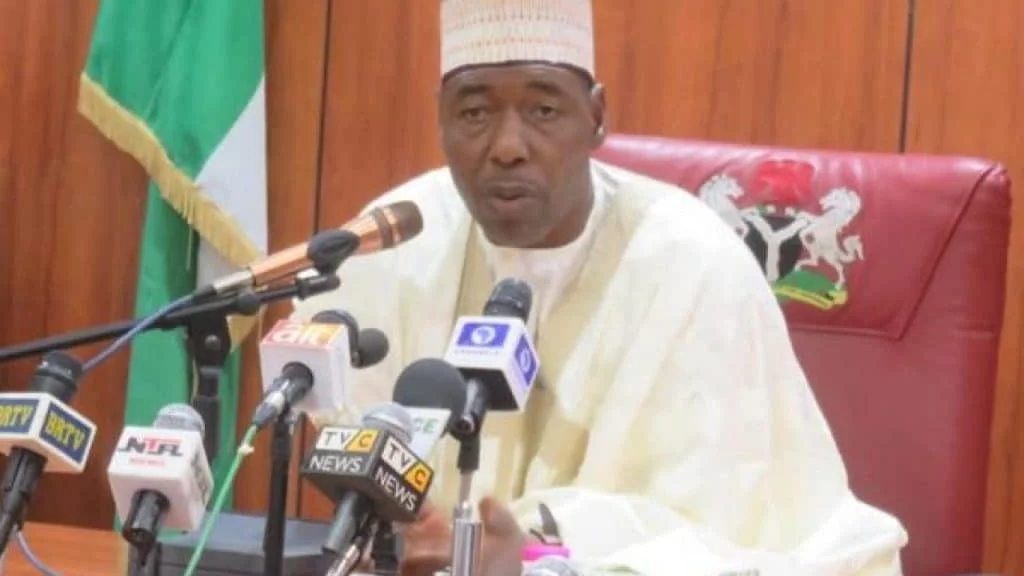
    Abuja:  President Bola Tinubu has received the death of Gov. Babagana Zulum of Borno’s media aide, Isa Gusau with deep grief.

    The News Agency of Nigeria (NAN) reports that Gusau was Zulum’s Special Adviser on Public Relations and Strategy until his death.

    The president condoled with the Gusau family, his professional colleagues, government and people of Borno over the loss.

    “The late Gusau was a diligent professional who was uncompromising on his virtuous principles,” he said.

    Gusau was a member of the Chartered Institute of Public Relations, UK; the Nigerian Institute of Public Relations; the Public Relations and Communications Association (PRCA) UK; the International Public Relations Association, UK, and the African Public Relations Association.

    The president prayed for the repose of the soul of the departed and comfort for all those who mourn this painful loss.(NAN) (www.nannews.ng) / Flowerbudnews

  • Rest on Isa; Tribute to a Fallen Colleague

    Rest on Isa; Tribute to a Fallen Colleague


    By Paul Ejime

    In its usual stealthy but deadly manner, death has again struck, leaving a huge vacuum and an irreparable loss in its trail.

    I trust that in his gentlemanly, unassuming character, Alhaji Isa Husseini would accommodate this humble tribute. I had been processing the news of his sudden passing since the 7th of January 2024 and the essence of life.

    There was no warning only the announcement of his demise from a short illness and then notice about his burial according to Islamic rites all within 24 hours.

    This homage is hardly sufficient to a colleague, who was always welcoming with a warm smile, planted on his shining “baby face” with a unique gap tooth, trademark spectacles and cap to match.

    Isa and I met for the first time in the ancient northern city of Kano, during British “Iron Lady” Prime Minister Margaret Thatcher’s visit to Nigeria on the 7th of January 1988, exactly 36 years before his death.

    It was at the peak of the anti-apartheid struggle and many Nigerians were angry with the August visitor for opposing sanctions against the Apartheid regime in South Africa.

    But in agreeing to the visit, then Nigerian President Ibrahim Babangida must have weighed the importance of Anglo-Nigerian relations which both countries, can never take for granted.

    The Nigerian Labour Congress (NLC) and various youth and student groups had mobilized for mass protests, but Nigeria was under a military dictatorship, and public protests were outlawed by the authorities.

    Even so, some flag-burning in defiance of the general ban on protests took place in Lagos in front of the Yaba headquarters of the NLC, the nation’s umbrella trade union movement.

    A small group of demonstrators also displayed anti-Thatcher banners outside the Murtala Mohammed International Airport, in Ikeja, Lagos when Thatcher flew in.

    Fortunately, no violence was reported.

    That visit was also significant because it coincided with the implementation of the Thatcher administration’s new visa restrictions announced in September 1986 for India, Pakistan, Bangladesh, Nigeria, and Ghana, which further eroded the visa-free advantages once enjoyed by many Commonwealth countries that shared colonial and historical ties with Britain.

    Mrs. Thatcher, the no-nonsense British longest-serving Prime Minister was on her first visit to Africa since the 1979 Commonwealth Conference in Zambia.

    She came prepared, telling reporters traveling with her from Nairobi, Kenya: “I can cope with a few demonstrations… that won’t upset things.”

    As part of her two-day Nigeria visit, she met with her chief host President Babangida his government officials, and the Emir of Kano, and was also scheduled to address a Press Conference in Kano.

    The Press Conference was for selected senior editors and I had the privilege of representing the Editor-In-Chief of News Agency of Nigeria (NAN), Malam Wada Maida, now of blessed memory.

    There were no mobile phones and other digital technology devices then, but NAN had a reliable wire/radio system for the transmission of news services to its various clients.

    With other senior journalists and officials of Nigeria’s Ministry of Foreign Affairs, we flew from Lagos to Kano to await the Prime Minister’s arrival.

    But before the meeting at the Emir’s Palace, I had to search for and identify Isa, the NAN Kano Correspondent, with whom I quickly bonded.

    We arranged how to file our stories to the Lagos NAN headquarters for dissemination to waiting clients.

    Isa and I were meeting for the first time, but you would think we had known each other for years.

    Security and movements are usually a challenge during such high-profile visits, so the arrangement that Isa and I quickly put together to effectively cover the Prime Minister’s activities in Kano included how to dash to the NAN Kano office to file our stories.

    Luckily, after the Emir’s Palace visit, the planned Press Conference was whittled down to a few Q & A followed by a mad rush to catch the flight back to Lagos.

    I quickly handed Isa my handwritten draft to be consolidated with his notes into a story to be wired to our colleagues in the NAN Lagos Newsroom for editing and onward transmission.

    With no social media, News Agencies served as the “Mother of Journalism,” which serviced the print and electronic media. Nigeria had a vibrant press, but broadcasting stations were mainly Federal and State government-owned, the space for private broadcasting had not opened up then.

    Isa made sure that “our copy” from Kano reached Lagos satisfying the major attributes of top-flight journalism – Accuracy, Simplicity, and Speed/Immediacy.

    Our relationship grew in leaps and bounds and we occasionally reminisced on “our Kano coverage” experience, which incidentally, marked my elevation to the position of NAN Diplomatic Correspondent, and later War Correspondent in Liberia, Sierra Leone; coverage of the Nigeria-Cameroon Bakassi duspute, and subsequently, the West Africa Bureau Chief of the Senegal-based Pan-African News Agency (PANAPRESS).

    The rest, they often say is history, but Prime Minister Thatcher’s visit to Nigeria in 1988 and the collegiate, professional collaboration it ignited between Isa and me, will remain an indelible spotlight on my career.

    I know that not a few colleagues at NAN and other media organizations have similar positive stories to share about Isa Husseini, a thorough-bred professional, whom I nicknamed “Gentleman
    Journalist.”

    Isa, who passed on to eternal at 72, retired from NAN as a Marketing Director.

    His remains have since been laid to rest in Tudun Wada, Kaduna South Local Government Area of Kaduna State.

    He left behind his widow, seven children, and grandchildren.

    *Adieu, dear Isa. May your humble soul rest in perfect peace. Amen!*
  • Betta Edu: You Can’t Generate a Memo, Sign it and Pay Yourself, It has to Come from the System

    Betta Edu: You Can’t Generate a Memo, Sign it and Pay Yourself, It has to Come from the System


    Henry Shield, the Head of Mission for Leadership and Accountability Initiative, has responded to the investigation involving Halima Shehu, Betta Edu, and Sadiya Umar-Farouk.

    He said that moving a significant sum like 44 billion or 37.1 billion Naira requires the active connivance of the civil service, emphasizing that such transactions cannot occur without their knowledge.

    In an interview with AIT, Shield argued that the civil service should also be subject to investigation in this matter.

    Shield stressed the impossibility of moving such large amounts without the involvement of the civil service, suggesting that anyone found guilty in the investigation should be blacklisted.

    He proposed that their pictures should be prominently displayed across Nigeria to ensure public awareness and emphasize the betrayal of the trust placed in them by Nigerians.

    During the interview, Shield expressed his view on Betta Edu, highlighting her apparent lack of understanding of the operating environment in which she found herself.

    He pointed out that as a minister, generating a memo, signing it, and paying oneself requires collaboration from the system. Shield cautioned against falling for what he deemed a serious game, urging both the Nigerian government and the citizens not to be deceived by the unfolding events.

    Hear him: “Betta Edu came, a young girl; she didn’t study the environment she was about to operate in; she needed to have studied the environment where she was going to operate.

    There is nobody that can move 44 billion or 37.1 billion Naira without the active connivance of the civil service; it is not possible. As a minister, you cannot generate a memo, sign it, and pay yourself; it has to come from the system.

    What is going on now is a serious game, and I do not want the Nigerian government to fall for it, and I also don’t want Nigerians to fall for it.”

    From Opera News


  • The Battle for the Juicy Ministry and Why Betta Edu is the Target

    The Battle for the Juicy Ministry and Why Betta Edu is the Target


    By Temidayo Farinu-Kingheart
    (A Youth, A Nigerian.)

    This writeup is intended not to bore you. But we must understand the hands behind the scene and why we need to stand firm.

    Last administration created the Humanitarian Ministry with the *_intention_* to help the poor, eradicate poverty and provide timely intervention in the form of palliatives and reliefs for disasters.

    These mandates require huge subvention, fiscal votes and peculiar attention, as a result, it attracts Billions upon Billions to support all the programs, projects and Initiatives geared towards achieving these mandates.

    This made the Humanitarian Ministry a highly coveted Ministry as it had and is tagged a *JUICY MINISTRY*.

    The import of the statement above is that it doesn’t matter who occupies as a Minister, eyes are always on such individual not for good reasons but a battle of interests.

    Dr. Betta Edu, even though had the pedigree, character, competence and heart to function well as the Minister of Humanitarian Affairs was not expected to be handed such “Huge” Ministry. It shocked some camps.

    On few occasions, I have the rare privilege of being in a location where many believe that she’s too “_Young and New to Politics_” to occupy such position and should have been given a rather modest Ministry or Agency, at best. These set of people are behind her present battle.

    Secondly, she came into a Ministry where the rank and file enjoyed some largesse under the last administration and would resist any change of such fortune, even when they are clear mis-appropriation and unscrupulous in nature. They hate change and the change maker.

    The Transfer saga is just a front, it was fueled by deep-rooted, long-nursed disdain. It’s like a group waiting for an opportunity to strike. As a matter of pattern, if it were not the issue of transfer, they were going to use anything else anyways, they’ll plot and justify their actions by anything other than the truth to cause disaffection between the president and the Honourable Minister because to them, Betta is too “Young and new” to occupy such Ministerial position.

    By Now, His Excellency, President Tinubu would have understood the truth. She was a great asset to His Campaign as she combed the nooks and crannies of Nigeria, touching bases with women, youths and the rural communities to appeal for vote for the president. They hated her gut and her ability to get results.

    These and many more are the reasons she was a target. I strongly believe she’ll come out of this better and bolder. To me, the issue of transfer is no issue. It is a pattern to disburse through project accountant, a ranking officer with the Ministry and the Accountant General understands this.


    Let’s understand the Battle. Let’s understand the weapon. Let’s understand how to win against all of these. Let’s stand firm for what we know as the truth. Let’s make statements as youths through several of our platforms and channels to raise healthy advocacy for fairness on our principal. (Flowerbudnews)