

Year: 2026

  • Lawyer files contempt charges against Minister, MD for refusal to reinstate Prof. Igwe

    Lawyer files contempt charges against Minister, MD for refusal to reinstate Prof. Igwe

    Lawyer files contempt charges against Minister, MD for refusal to reinstate Prof. Igwe


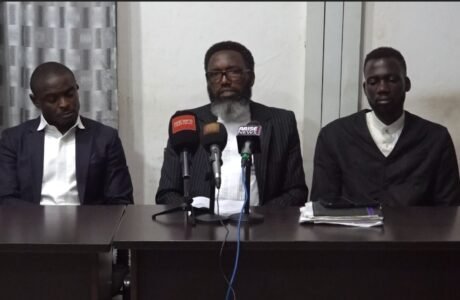
    An Abuja-based lawyer, Mr Michael Okorie, has filed contempt of court charges against Minister of State for Heath and Social Welfare and Dr. Unaogu Ngozichukwu Nneka, Medical Director, Federal Neuropsychiatric Hospital, Enugu in Enugu State.


    Okorie, who is the counsel to Prof. Monday Igwe, told newsmen in Enugu that contempt proceedings have commenced against the minister and Dr Unaogu for allegedly disobey orders of the National Industrial Court, Abuja Division.


    He noted that the National Industrial Court, Abuja Division on Dec. 11, 2025 nullified the appointment of Dr. Unaogu as the Medical Director of the Hospital and ordered the reinstatement of Prof. Igwe as the Medical Director following the declaration that the earlier termination of his (Igwe) appointment null and void.


    “Recall that Justice E. D. Subilim of the National Industrial Court, Abuja, had Dec. 11, 2025, delivered a judgment in which he ordered the reinstatement of Prof. Monday Igwe to office as the Medical Director of the FEDERAL NEUROPSYCHIATRIC HOSPITAL, ENUGU, ENUGU STATE after he declared the earlier termination of his appointment as null and void and also nullified the later appointment of Dr Unaogu.


    “The court found that the termination of appointment of Prof. Monday Igwe did not follow laid down disciplinary procedure.


    “And, also that the appointment of Dr. Unaogu Ngozi during the pendency of the suit in which she was a party rendered it a nullity.


    “However, several months after the judgement was served on the Defendants, they have refused to comply with the judgment orders,” he said.


    The lawyer said that Dr. Unaogu had continued to perform function of the managing director in the hospital, including awarding contracts, bank transactions, staff appointments and other official functions despite her appointment having been declared a nullity.


    “This is with the legal effect that the contractors and bankers dealing with her are doing such at their own peril as the said judgment has not been stayed by any order for stay of execution.


    “Consequent upon the above, Mr. Michael O. Okorie, Esq, Counsel to Prof. Monday Igwe, filed and served Form 48 – Notice of consequence of disobedience of court – against the Minister of State, Federal Ministry of Health and Social Welfare and DR. UNAOGU NGOZICHUKWU NNEKA as the MEDICAL DIRECTOR, FEDERAL NEUROPSYCHIATRIC HOSPITAL, ENUGU, ENUGU STATE.


    “The Minister of State is the supervising minister who issues/conveys/signs appointment letters to the Medical Director of the Hospital on behalf of the President.


    “It is time for the Minister of State to reassess his legal team at the ministry so that they do not end up misleading him into running foul of the law which he has sworn to protect as public servant,” he added.

  • FG’s release of terrorism sponsors list, yet another sign of renewed commitment to national security-Group


    The Tinubu Media Volunteers have described the release of the list of terrorism sponsors in Nigeria as a demonstration of the federal government’s commitment to dealing with the menace of terrorism and insecurity in the country.

    In a statement signed by its Chairman Chukwudi Enekwechi and Secretary Segun Ogedengbe, it noted that by naming and putting sanctions in place, Nigeria is sending clear signals to the international community about its zero tolerance for terrorists and their financiers.

    The statement read in part, “It is noted that in a bid to curb insecurity, the Nigerian Sanctions Committee had released a list of individuals and organisations they had determined were involved in terrorism-related activities.

    “According to the government body, the publication is aimed at strengthening the enforcement process against terrorism financing networks.

    “Also authorities are expected to monitor financial transactions and restrict activities connected to the listed groups and individuals.

    “We see this as a direct response to the clarion call by Nigerians for the release of names of terrorism sponsors in Nigeria.

    We also urge the authorities to go a step further by constantly updating the general public on similar issues so that terrorism can be uprooted from all corners of the country.

    “It is regrettable that some parts of Nigeria especially Borno, Kwara, Ondo, Kogi, Kebbi and Katsina, have been bedevilled with terrorist attacks while the federal government is on record to have intensified efforts towards eradicating the scourge.

    “We also note that the United States government had commended the federal government for its commitment in the fight against terrorism. Mr Massad Fares Boulos, US Senior Advisor for Arab and African affairs had noted the accelerated commitment to terrorism-related trials and addressing long-standing delays in the courts.

    “He also highlighted the importance of timely and transparent processes in combating extremism and reinforcing public confidence in judicial institutions.”

    TMV urged Nigerians from all walks of life to provide the authorities with useful information that can lead to the apprehension of the evil perpetrators and their prosecution.


  • Marines describe ordeals aboard U.S. warships in Middle East


    Marines describe


    “They’re hungry all the time” — U.S. Marines describe ordeals aboard warships deployed to the Middle East:


    – “Tasteless” & poor quality food, supplies rationed, fresh produce nowhere to be found

    – Hygiene products running low

    – Mail delivery suspended all-out, thousands of packages stuck in limbo

    – USS GeraldFord plagued with plumbing problems, a laundry fire erupted

    (Source: USA Today)

    Produced by Xinhua Global Service


  • OmoBarca Congratulates David Mark, Rauf Aregbesola, Pledges Loyalty to New ADC Leadership

    OmoBarca Congratulates David Mark, Rauf Aregbesola, Pledges Loyalty to New ADC Leadership


    Flowerbud News/ Hon. Francis Barthlomew Chima, a grassroots politician, popularly known as Omobarca and House of Representative Aspirants for Ajeromi Ifelodun constituency congratulates the newly constitued National Working Committee ( NWC) of the National Democratic Congress (NDC) after the successful conclusion of its National Convention held in Abuja.

    In a statement made available to journalists, OmoBarca specifically commended prominent party leaders, including former Senate President David Mark and former Osun State governor Rauf Aregbesola, for their roles in steering the party toward a successful convention and the emergence of a new leadership team.

    He described the convention as a significant milestone for the ADC, noting that it reflects the party’s growing internal cohesion and commitment to democratic principles. According to him, the peaceful conduct of the exercise and the emergence of a credible NWC signal a renewed direction for the party ahead of future electoral contests.

    OmoBarca pledged his “unalloyed loyalty” to the newly elected leadership, assuring them of his readiness to support their vision and programmes at all levels. He emphasized that as a grassroots politician, he remains committed to mobilising support for the party and strengthening its presence among ordinary Nigerians.

    “I am fully aligned with the new leadership and ready to contribute my quota to the growth and success of our great party,” he said. “The ADC represents a credible alternative for Nigerians, and I am confident that under the new NWC, the party will continue to expand its influence nationwide.”

    Reaffirming his political ambition, OmoBarca stated that his aspiration to represent the people of Ajeromi Ifelodun Federal Constituency in the House of Representatives remains firmly on course. He described his ambition as a “call to service,” driven by a desire to provide effective representation and bring development closer to the people.

    He further stressed that his ambition would be pursued on the platform of the ADC, expressing confidence in the party’s ideology and capacity to deliver good governance.

    “My aspiration is rooted in service to the people. I remain committed to contesting under the ADC platform to represent the good people of Ajeromi Ifelodun, and by the grace of God and the support of the people, this vision will be realised,” he added.

    OmoBarca also used the opportunity to extend his best wishes to the newly inaugurated NWC, expressing optimism that their tenure would usher in a new era of progress for both the party and the country.

    He urged the leadership to remain focused, inclusive, and people oriented in their approach to governance within the party, noting that Nigerians are increasingly looking for credible alternatives capable of addressing the nation’s socio-economic challenges.

    “I wish the new NWC a fruitful and successful tenure,” he said. “I believe their leadership will not only strengthen the ADC but also contribute to building a new Nigeria that works for all.”

    The ADC National Convention, which attracted party delegates and stakeholders from across the country, is seen as a crucial step in repositioning the party ahead of upcoming political engagements. Analysts say the emergence of a new leadership structure could enhance the party’s competitiveness in Nigeria’s evolving political landscape.

    With renewed commitments from party members like OmoBarca, observers note that the ADC may be positioning itself to play a more prominent role in national politics in the coming years.


  • 76-year-old grandpa bags 40 years imprisonment for drug offences

    76-year-old grandpa bags 40 years imprisonment for drug offences


    A 76-year-old grandpa, Mr Francis Omofe, has been sentenced to a 40-year jail term for drug-related offences.

    Justice James Omotosho, in a judgment, held that the prosecution had been able to prove the two-count charge preferred against Omofe beyond reasonable doubt.

    “Consequently, he is hereby convicted as charged,” he ruled.

    Justice Omotosho held that despite the plea for mercy, a punishment must be imposed to serve as a deterrent in national interest.

    The judge held that he took judicial notice that the defendant’s action of transporting huge and commercial quantity of cannabis sativa with a vehicle, using police number plate to northern region, particularly Kaduna State, where terrorists and bandits had killed a number of innocents Nigerians under the influence of such substance, was unacceptable.

    The judge, therefore, sentenced Omofe to a 15 year-imprisonment in count one without option of fine.

    Considering the defendant’s age, Justice Omotosho reduced the life imprisonment for count two to 25 years jail term, without option of fine.

    The judge also ordered that the sentencing shall run concurrently from June 18, 2024, the date of his arrest, making a total of 25 years imprisonment.

    The News Agency of Nigeria (NAN) reports that the National Drug Law Enforcement Agency (NDLEA) had, in the charge marked: FHC/ABJ/CR/286/2024, named Omofe as sole defendant.

    The septuagenarian was said to have been arrested in Abuja on June 18, 2024, in a Nissan Frontier Vehicle with police force number plate: NPF 558D, while transporting the substance from Edo to Kaduna State.

    In count one, Mr Omofe of Goni Gora, Kaduna State was accused of possessing 340.8 kilogrammes of cannabis sativa, a narcotic substance on or about June 18, 2024, along Kuje Road in Abuja.

    The offence is said to be contrary to and punishable under Section 19 of the National Drug Law Enforcement Agency Act CAP N30, Laws of the Federation of Nigeria, 2004.

    The NDLEA, in count two, accused him of transporting 340.38 kilogrammes of cannabis sativa, a narcotic substance in a Nissan Frontier, with Registration No: NPF 558D on or about June 18, 2024, along Kuje Road in Abuja.

    The prosecution said the offence is contrary to and punishable under Section 11(p) of the National Drug Law Enforcement Agency Act CAP N30, Laws of the Federation of Nigeria, 2004.

  • The Muje Maha Moment: A Test of Loyalty, Leadership, and the Future of Nasarawa Politics

    The Muje Maha Moment: A Test of Loyalty, Leadership, and the Future of Nasarawa Politics

    By Sam Israel JP

    There are moments in political history that quietly redefine the rules of engagement, not through noise or confrontation, but through discipline, restraint, and clarity of purpose. What has unfolded in Nasarawa State is one of such moments—subtle in execution, yet profound in implication.

    Governor Abdullahi Sule’s handling of succession is not just a political move; it is a case study in leadership maturity. In an environment where ambition often overrides structure, and where succession battles frequently fracture parties beyond repair, this process stands apart. It was deliberate, patient, and—most importantly—predictable to those who paid attention.

    For over a year, the governor did something rare in Nigerian politics: he observed more than he spoke. Rather than impose a candidate abruptly, he created a living laboratory of governance, exposing aspirants to the inner workings of leadership. This was not symbolic inclusion; it was strategic grooming.

    By doing so, he achieved two critical objectives. First, he tested competence under real conditions. Second, he removed the usual excuse of exclusion. Every serious aspirant had access, visibility, and voice. That alone neutralized the kind of grievances that typically destabilize parties after such decisions.

    The eventual emergence of Senator Ahmed Aliyu Wadada as the Muje Maha, therefore, was not an accident. It was the logical conclusion of a structured evaluation process. Those who followed closely could see the trajectory long before the declaration was made public.

    What makes this moment even more significant is the governor’s adherence to the zoning understanding. While not codified in law, zoning has served as a stabilizing mechanism in Nasarawa State. Respecting it is not merely political correctness—it is conflict prevention. By aligning his decision with this principle, the governor reinforced a system that sustains balance across the state’s diverse interests.

    Equally important is how the governor managed dissent. He did not suppress ambition; he accommodated it. Aspirants from all zones were engaged thoroughly, not perfunctorily. This approach transformed what could have been a battlefield into a competitive but controlled process.

    Now, the spotlight shifts to Senator Wadada. His political journey suggests resilience, adaptability, and grassroots credibility. His past contests, victories, and even setbacks have collectively shaped a figure who understands both the mechanics of power and the patience required to attain it.

    His acceptance posture is telling. In politics, tone often reveals more than intention. By choosing humility over triumphalism, and unity over division, he signaled awareness of the fragile coalition he must now lead. Winning endorsement is one thing; consolidating it is another.

    However, this moment is not solely about the governor or the anointed candidate. It is equally about the other aspirants. Their next steps will determine whether this process becomes a model or a missed opportunity. Political maturity is most visible not in victory, but in how defeat—or near victory—is managed.

    If they choose alignment, the party emerges stronger, more cohesive, and better positioned for the general election. If they choose fragmentation, they risk undoing the very process that gave them relevance and visibility in the first place.

    There is also a broader lesson here for Nigerian politics. Succession does not have to be chaotic. Leadership transition can be managed through consultation, transparency, and respect for stakeholders. What is often lacking is not the framework, but the will to follow it.

    Nasarawa State now stands at a strategic crossroads. The groundwork has been laid, but groundwork alone does not win elections. Mobilization, reconciliation, and message discipline will determine whether this moment translates into electoral success.

    For the electorate, this is also a defining period. Beyond party dynamics, voters will ultimately assess credibility, track record, and vision. The process that produced a candidate is important, but the capacity of that candidate to deliver remains the decisive factor.

    The declaration of a Muje Maha is not the end of a journey—it is the beginning of a more demanding phase. Expectations will rise. Scrutiny will intensify. Alliances will be tested.

    In the end, what Governor Sule has done is to hand over not just a candidate, but a responsibility—a responsibility to sustain unity, deepen trust, and deliver results. Whether that responsibility is upheld will define the next chapter of Nasarawa’s political story.

    The moment has been created. What happens next will determine whether it becomes a legacy or just another episode in the long narrative of Nigerian politics.

    Sam Israel is the Senior Special Assistant SSA on media to Senator Ahmed Wadada Aliyu.

  • NANTA @ 50: Pinheiro Urges Legal Reforms, Ethical AI Adoption in Travel Industry

    NANTA @ 50: Pinheiro Urges Legal Reforms, Ethical AI Adoption in Travel Industry

    A Senior Advocate of Nigeria, Kemi Pinheiro, has called for constitutional reforms and stronger regulatory compliance within the travel sector as the National Association of Nigeria Travel Agencies marked its 50th Conference, Exhibition and Annual General Meeting in Ibadan.
    Delivering a goodwill message at the golden jubilee event on Thursday, Pinheiro described the milestone as not just a celebration of longevity but a testament to resilience, institutional growth, and the evolving relevance of travel agencies in Nigeria’s economy.
    He noted that the conference theme, “Embracing Our Diverse Cultural Heritage from the City of Firsts: Redefining Our Role as Global Travel Ambassadors,” reflects a shift in the role of travel professionals from mere intermediaries to strategic players in global tourism and mobility.
    Pinheiro highlighted NANTA’s contributions over the past five decades, particularly in formalizing and standardizing travel agency practice in Nigeria. He said the association has also functioned as a quasi-regulatory body, promoting ethical standards and best practices in the industry.
    According to him, increasing regulatory oversight by agencies such as the Nigerian Civil Aviation Authority, Federal Airports Authority of Nigeria, and Nigerian Tourism Development Authority has made compliance, transparency, and operational discipline more critical for travel agencies.
    He further stressed that digital transformation has introduced complex legal challenges, including consumer protection, data privacy, electronic transactions, and cross-border payments, urging travel professionals to align with the Nigerian Data Protection Act and other regulatory frameworks.
    On emerging technologies, Pinheiro cautioned against the unchecked replacement of human expertise with Artificial Intelligence, advocating instead for its use as a complementary tool. He referenced global bodies such as the World Travel & Tourism Council and the International Air Transport Association, which promote AI as a means to enhance efficiency while preserving professional judgment and accountability.
    The senior lawyer also underscored the importance of safeguarding Nigeria’s cultural heritage, noting that tourism promotion must be aligned with intellectual property laws to ensure authenticity and proper commercialization of indigenous assets.
    Describing Ibadan as a fitting host city, he said its rich historical and cultural heritage provides an ideal backdrop for discussions on repositioning Nigeria in the global tourism ecosystem.
    Pinheiro urged NANTA members to adopt a more strategic approach to

  • Cleric bags life imprisonment for raping church member’s daughter

    Cleric bags life imprisonment for raping church member’s daughter


    By Adenike Ayodele:

    Ikeja:   An Ikeja Sexual Offences and Domestic Violence Court on Thursday sentensed a 63-year-old pastor, Chris Mcdouglas to life imprisonment for raping his 18-year-old church member’s daughter, (name withheld).

    Justice Rahman Oshodi sentenced Mcdouglas, a pastor at the Peculiar Generation Assembly Church, Lagos,  to life imprisonment after he found him guilty of rape.

    The judge, however, discharged him of six-count-charge out of the nine-count-charge, bothering on defilement, sexual assault, indescent treatment of a child brought against him by the Lagos State Government.

    Oshodi, in his judgment on Thursday, held that the prosecution had successfully proved the charge of rape against the pastor.

    Oshodi described the offence as a grave betrayal of trust that left the survivor with lasting psychological trauma.

    The court found that the cleric, regarded within his congregation as a “spiritual father” exploited his position of authority to sexually abuse the survivor.

    According to the court, the abuse is not an isolated incident but part of a pattern of manipulation and coercion.

    Evidence before the court showed that the survivor reported the incident to the police shortly after it occurred, leading to an investigation and eventual prosecution.

    “The impact on the victim has been devastating, particularly given the trust reposed in you as a religious leader.

    “This court reject any suggestion that the relationship was consensual as the victim was a minor at the time the incident happened and she can not give valid consent.

    “Testimony also revealed that the victim’s mother confronted the cleric at the church after learning of the abuse, further underscoring the breach of moral and spiritual responsibility,” Oshodi said.

    During the trial, the court heard evidence of the devastating impact the abuse had on the victim.

    She reportedly suffered depression and experienced recurring suicidal thoughts, pointing to the lasting emotional damage caused by the incident.

    The court scrutinised testimonial, medical and electronic evidence presented by the prosecution, alongside objections raised by the defence under the Evidence Act 2011.

    The defence had urged the court to reject a medical report and related police referral documents, arguing non-compliance with statutory provisions.

    The court agreed in part, holding that certain documents were improperly admitted and should be discountenanced.

    However, it ruled that the oral testimony of the medical expert remained admissible and could stand independently.

    Citing precedent, the judge held that expert testimony may still carry weight even where accompanying documentation is flawed.

    The court found credible and corroborated evidence supporting allegations of abuse at a family residence and a hotel between September and December 2017.

    “The victim gave a detailed account of an initial incident in September 2017, describing how she was a drugged and raped by the defendant and her testimony was corroborated with her mother’s, who observed physical distress shortly after the incident.

    “The defendant also confirmed to the court that he took the survivor to hotels on several occasions,” Oshodi said.

    The court consequently convicted the pastor on the charge of rape and sentenced him to life imprisonment.

    The court also ordered that the convict’s name should be written in Lagos State Sexual Offences Register.

    The News Agency of Nigeria (NAN) reports that the prosecution, led by the Director of Public Prosecution (DPP), Dr Babajide Martins, called five witnesses while Defence Counsel, Mr Yusuf Nurudeen also called five witnesses during trial. (NAN) www.nannews.ng

  • Group Raises Concern Over INEC’s Moves in Osun

    Group Raises Concern Over INEC’s Moves in Osun


    By Waliu Adetokun, Osogbo

    The Coalition for Civic and National Consciousness (CCNC) has raised concerns over the transfer of the Resident Electoral Commissioner (REC) in Osun State, Dr. Mutiu Agboke, to Ondo State, warning that the development could have serious implications for the credibility of the forthcoming elections.

    In a statement issued on Wednesday, and signed by its spokesperson, Comrade Raufu Sodiq (Oluomo Success), alongside Secretary Comrade Tobest and Chairman Comrade Musa Akinkunmi, the group described the action as one that calls for public scrutiny.

    “The transfer of the Osun Resident Electoral Commissioner, Dr. Mutiu Agboke, to Ondo State, alongside the reported plan to redeploy technical staff across local government offices in Osun State, is an administrative action with significant political consequences,” the statement said.

    While acknowledging the powers of the Independent National Electoral Commission (INEC) to redeploy its personnel, the group maintained that such powers must be exercised with caution.

    “Administrative discretion does not exist in a vacuum.

    When timing, context, and precedent converge, such discretion inevitably becomes a matter for public scrutiny within a democratic system,” it stated.

    The group expressed concern over the timing of the transfer, describing it as “late-hour” and capable of undermining institutional neutrality. It warned that the reported redeployment of technical staff across the state further heightens fears about the integrity of the electoral process.

    According to the statement, reports suggest that the transfer of the REC may have been triggered by a petition. The group, however, questioned whether due process was followed.

    “If this is the case, then due process demands answers,” it said, asking whether any investigative panel was set up, its composition, and the outcome of its findings.

    “To act on an allegation without proper investigation is to convert petition into policy,” the group added, warning that such a move could open the door for undue influence on electoral management.

    The CCNC emphasised the critical role of the REC in election planning and execution, noting that the office serves as the “operational anchor” for activities such as BVAS configuration, polling unit mapping, training of ad-hoc staff, and custody of sensitive materials. It stressed that removing key officials at a crucial period could destabilise the process.

    “To remove both the operational anchor and institutional memory at such a critical period is to risk destabilising the electoral process,” the statement read.

    The group also questioned the urgency of the decision, suggesting that if the allegations against the REC were weighty, suspension pending investigation would have been more appropriate.

    “If they are not, then any administrative action could reasonably have been deferred until after the election to preserve neutrality,” it added.

    Concerns were also raised about the newly deployed REC to Osun State.
    The group noted that there have been “reported concerns and controversies in past assignments,” urging INEC to exercise caution in appointments that could affect public confidence.

    Citing relevant provisions of the Constitution, the group acknowledged INEC’s legal authority to manage its personnel but insisted that legitimacy must be tied to transparency and fairness.

    “While this power is legal, its legitimacy depends on transparent, impartial, and publicly defensible exercise,” the statement said.

    The group further warned that the development could set a dangerous precedent if not properly addressed.

    “If a petition without transparent investigation can trigger the transfer of a Resident Electoral Commissioner today, it raises a troubling precedent,” it said, adding that such actions could lead to arbitrary changes in key electoral personnel close to elections.

    The CCNC called for the immediate publication of the petition against Dr. Agboke and any investigative findings, as well as the suspension of the transfer and redeployment of technical staff until after the elections.

    It also demanded full disclosure of the service record of the newly posted REC and the establishment of clear guidelines to prevent last minute transfers of key electoral officials.
    The group warned that failure to address its concerns could lead to further action.

    “If our demands are not met, we will have no choice than to use the last C of aluta, which is confrontation,” it stated.

    Reaffirming its position, the group noted that “INEC does not own elections; it holds them in trust on behalf of the Nigerian people,” urging the commission to act in a manner that strengthens public confidence in the electoral process.

    (Courtesy: Osun Spring)