







Year: 2026

  • The Embarrassing Crisis of Judicial Pensions in Nigeria


    By Chidi Anselm Odinkalu

    *“The term of office of judges, their independence, security, adequate remuneration, conditions of service, pensions and the age of retirement shall be adequately secured by law.” – Principle 11, United Nations Basic Principles on the Independence of the Judiciary, (1985)*

    Babajide Candide-Johnson became a judge of the High Court of Lagos State at 45. He is the son of the third Chief Judge of Lagos State, and when his tenure ended after 20 years on 27 June 2021, he became the head of the family court in the High Court of Lagos State.

    At his retirement, the Chief Judge of Lagos State, Kazeem Alogba, described Babajide Candide-Johnson as “a brilliant, hardworking, meticulous and fearless judge, an intellectual who delivered judgments without fear or favour.”

    Those words describe a model judge. However, nine months later, in March 2022, Candide-Johnason was back in court, this time, to sue the government of Lagos State, which he had served without blemish for two decades, for “his pension, severance gratuity, and other entitlements.”

    The government initially demurred, disingenuously arguing that responsibility for judicial pensions under the Pension Right of Lagos State Judicial Officers Law of 2015 lay with the state Judicial Service Commission. The state government later saved itself from an embarrassing position, and the parties agreed to an amicable settlement.

    In 2022 alone, at least five other former judges of the High Court of Lagos also sued the State government over the same issue.

    The year before Justice Candide-Johnson’s retirement, 22 retired judges of the High Court of Abia, the self-described “God’s own State” in south-east Nigeria, had similarly sued the state government before the National Industrial Court of Nigeria, (NICN), claiming to have been shafted by a succession of three governors going back nearly a decade and a half, who claimed mandates from God to ruin the state. It appears that in response to that case, the then state government “reportedly promised to pay 10 million Naira to the retired judges every month, but only did so for one month.”

    Three years later, the case was still stuck in the NICN, with little progress. Meanwhile, five of the retired judges had died in penury, while waiting for the case to rescue them. In May 2023, Abia State installed a newly elected governor. Two months later, he and the retired judges reached an agreement to clear the backlog of 16 years of judicial pensions liability.

    Across Nigeria, retired judges are increasingly resorting to judicial proceedings to call attention to a crippling and chronic crisis of judicial pensions for judges who retired before June 2023. In Western Ondo State, retired judges sued in April 2016 for similar issues. Their peers in Imo, Ogun, and Oyo have as well.

    For long, the constitution provided for how to compute judicial pensions, but not necessarily for how to finance or administer them effectively. Effective from June 2023, a new constitutional amendment transferred responsibility for the administration of judicial pensions to the National Judicial Council (NJC). This has not, however, alleviated or addressed the crisis of judicial pension obligations, which arose before then and may, indeed, have created new problems of their own.

    In the central state of Kogi, eight retired judges of the state High Court have recently served notice on the state government of their intention to return to court as litigants to enforce their pension rights. They include a former Chief Judge of the State, John Bayo Olowosegun; a former President of the Customary Court of Appeal, Hon. Justice Yunusa Musa; and a former senior judge, Professor Andrew Alaba-Ajileye.

    The NJC has to accept some responsibility for the historical liabilities. It has been an indifferent and perfunctory advocate for retired judges. On his way out of office as then chairman of the NJC and Chief Justice of Nigeria, after much hand-wringing, Olukayode Ariwoola, finally tabled the issue before the Council at its 100th meeting in January 2023.

    In a statement at the end of the meeting, the Council described as “worrisome, the situation whereby many Judicial Officers of the States are being owed their retirement benefits, including severance pay/gratuity and pensions” and warned that this undermined the rule of law without clearly saying how so.

    Even worse, the Council failed to disclose which states were involved, for how long or by how much. Instead, it directed State Chief Judges from across the country to report on compliance with the resolution without indicating what it had previously done to compute the quantum of liabilities involved.

    On the whole, the NJC lost an opportunity to show that it cared about the subject matter; that it had bothered to do its homework, or that this was an issue on which it desired to enlist any support or reinforcement for the affected retired judges. Since then, the Council does not appear to have seriously monitored or re-engaged with this issue.

    The consequences of the chronic accumulation of pension arrears in the public service are quite corrosive of both the morale of existing personnel and the effectiveness of service delivery. Serving officers need to consider such a situation to appreciate the urgent need to take their own destinies into their own hands, while they have the opportunity to do so.

    The judiciary presents a special case because the average age of intake into the Bench of the superior courts of record is higher than in any other branch of pensionable service in Nigeria. The consequences of deliberate neglect to fulfill pension obligations can therefore be quite dire. In States like Taraba in the north-east, for instance, many judges who retired before 2023 have died waiting endlessly for their pensions and terminal benefits.

    The uncertainties about judicial benefits have also created other problems of their own, with crooks cashing in on the vulnerabilities of retired judges. In March 2024, the NJC went public with the complaint that “fraudsters had been bombarding retired judges with phone calls demanding various sums of money to help them fast-track the payment of their retirement benefits.” The Council explained that it “would never demand money from any judicial officer to fast-track the payment of (his/her) retirement benefits.” The jury is, at best, still out on this lingering issue.

    This crisis of judicial pensions and terminal benefits fosters a system of perverse incentives conducive to bartering judicial outcomes for material benefit.

    Some may view as uncharitable, a strand of public opinion that suggests that there is a Law of Karma at work and that the destitution of retired judges in this way is the natural consequence of a deepening crisis of judicial integrity and politicisation of the judiciary. Others have gone as far as to indiscriminately accuse judges of feeding up-front in the service of the political lion with the menu of their pensions.

    Even if the conduct of some judges in service could conceivably deserve the attentions of a hypothetical Karma, many judges do their best not to fall into that category. Such points of view should, however, demonstrate to all involved the urgency of addressing this issue with finality.

    For the judiciary, it is existential at both personal and institutional levels. For the citizens and court users, it is the only way to guarantee the possibility of minimal credibility to the work of the courts. For the country, it should ensure that the promise of an independent judiciary does not disintegrate into a constitutional hoax. The distinction between judges who retired before June 2023 and those retiring thereafter is artificial and unnecessary. The NJC can work constructively with the government at the federal and state levels to address all cases on their merit.


    (A lawyer and a teacher, Odinkalu can be reached at chidi.odinkalu@tufts.edu)

  • The Embarrassing Crisis of Judicial Pensions in Nigeria

    The Embarrassing Crisis of Judicial Pensions in Nigeria


    By Chidi Anselm Odinkalu

    *“The term of office of judges, their independence, security, adequate remuneration, conditions of service, pensions and the age of retirement shall be adequately secured by law.” – Principle 11, United Nations Basic Principles on the Independence of the Judiciary, (1985)*

    Babajide Candide-Johnson became a judge of the High Court of Lagos State at 45. He is the son of the third Chief Judge of Lagos State, and when his tenure ended after 20 years on 27 June 2021, he became the head of the family court in the High Court of Lagos State.

    At his retirement, the Chief Judge of Lagos State, Kazeem Alogba, described Babajide Candide-Johnson as “a brilliant, hardworking, meticulous and fearless judge, an intellectual who delivered judgments without fear or favour.”

    Those words describe a model judge. However, nine months later, in March 2022, Candide-Johnason was back in court, this time, to sue the government of Lagos State, which he had served without blemish for two decades, for “his pension, severance gratuity, and other entitlements.”

    The government initially demurred, disingenuously arguing that responsibility for judicial pensions under the Pension Right of Lagos State Judicial Officers Law of 2015 lay with the state Judicial Service Commission. The state government later saved itself from an embarrassing position, and the parties agreed to an amicable settlement.

    In 2022 alone, at least five other former judges of the High Court of Lagos also sued the State government over the same issue.

    The year before Justice Candide-Johnson’s retirement, 22 retired judges of the High Court of Abia, the self-described “God’s own State” in south-east Nigeria, had similarly sued the state government before the National Industrial Court of Nigeria, (NICN), claiming to have been shafted by a succession of three governors going back nearly a decade and a half, who claimed mandates from God to ruin the state. It appears that in response to that case, the then state government “reportedly promised to pay 10 million Naira to the retired judges every month, but only did so for one month.”

    Three years later, the case was still stuck in the NICN, with little progress. Meanwhile, five of the retired judges had died in penury, while waiting for the case to rescue them. In May 2023, Abia State installed a newly elected governor. Two months later, he and the retired judges reached an agreement to clear the backlog of 16 years of judicial pensions liability.

    Across Nigeria, retired judges are increasingly resorting to judicial proceedings to call attention to a crippling and chronic crisis of judicial pensions for judges who retired before June 2023. In Western Ondo State, retired judges sued in April 2016 for similar issues. Their peers in Imo, Ogun, and Oyo have as well.

    For long, the constitution provided for how to compute judicial pensions, but not necessarily for how to finance or administer them effectively. Effective from June 2023, a new constitutional amendment transferred responsibility for the administration of judicial pensions to the National Judicial Council (NJC). This has not, however, alleviated or addressed the crisis of judicial pension obligations, which arose before then and may, indeed, have created new problems of their own.

    In the central state of Kogi, eight retired judges of the state High Court have recently served notice on the state government of their intention to return to court as litigants to enforce their pension rights. They include a former Chief Judge of the State, John Bayo Olowosegun; a former President of the Customary Court of Appeal, Hon. Justice Yunusa Musa; and a former senior judge, Professor Andrew Alaba-Ajileye.

    The NJC has to accept some responsibility for the historical liabilities. It has been an indifferent and perfunctory advocate for retired judges. On his way out of office as then chairman of the NJC and Chief Justice of Nigeria, after much hand-wringing, Olukayode Ariwoola, finally tabled the issue before the Council at its 100th meeting in January 2023.

    In a statement at the end of the meeting, the Council described as “worrisome, the situation whereby many Judicial Officers of the States are being owed their retirement benefits, including severance pay/gratuity and pensions” and warned that this undermined the rule of law without clearly saying how so.

    Even worse, the Council failed to disclose which states were involved, for how long or by how much. Instead, it directed State Chief Judges from across the country to report on compliance with the resolution without indicating what it had previously done to compute the quantum of liabilities involved.

    On the whole, the NJC lost an opportunity to show that it cared about the subject matter; that it had bothered to do its homework, or that this was an issue on which it desired to enlist any support or reinforcement for the affected retired judges. Since then, the Council does not appear to have seriously monitored or re-engaged with this issue.

    The consequences of the chronic accumulation of pension arrears in the public service are quite corrosive of both the morale of existing personnel and the effectiveness of service delivery. Serving officers need to consider such a situation to appreciate the urgent need to take their own destinies into their own hands, while they have the opportunity to do so.

    The judiciary presents a special case because the average age of intake into the Bench of the superior courts of record is higher than in any other branch of pensionable service in Nigeria. The consequences of deliberate neglect to fulfill pension obligations can therefore be quite dire. In States like Taraba in the north-east, for instance, many judges who retired before 2023 have died waiting endlessly for their pensions and terminal benefits.

    The uncertainties about judicial benefits have also created other problems of their own, with crooks cashing in on the vulnerabilities of retired judges. In March 2024, the NJC went public with the complaint that “fraudsters had been bombarding retired judges with phone calls demanding various sums of money to help them fast-track the payment of their retirement benefits.” The Council explained that it “would never demand money from any judicial officer to fast-track the payment of (his/her) retirement benefits.” The jury is, at best, still out on this lingering issue.

    This crisis of judicial pensions and terminal benefits fosters a system of perverse incentives conducive to bartering judicial outcomes for material benefit.

    Some may view as uncharitable, a strand of public opinion that suggests that there is a Law of Karma at work and that the destitution of retired judges in this way is the natural consequence of a deepening crisis of judicial integrity and politicisation of the judiciary. Others have gone as far as to indiscriminately accuse judges of feeding up-front in the service of the political lion with the menu of their pensions.

    Even if the conduct of some judges in service could conceivably deserve the attentions of a hypothetical Karma, many judges do their best not to fall into that category. Such points of view should, however, demonstrate to all involved the urgency of addressing this issue with finality.

    For the judiciary, it is existential at both personal and institutional levels. For the citizens and court users, it is the only way to guarantee the possibility of minimal credibility to the work of the courts. For the country, it should ensure that the promise of an independent judiciary does not disintegrate into a constitutional hoax. The distinction between judges who retired before June 2023 and those retiring thereafter is artificial and unnecessary. The NJC can work constructively with the government at the federal and state levels to address all cases on their merit.


    (A lawyer and a teacher, Odinkalu can be reached at chidi.odinkalu@tufts.edu)

  • Newlywed wife kills husband with rat poison


    A newlywed wife has been arrested by the Jigawa State Police Command over the alleged poisoning of her husband, who died after consuming a meal prepared by her.

    The incident occurred on January 23, 2026, at about 1700hrs at Gauza village in Jahun Local Government Area of Jigawa State.

    Confirming the incident in a statement made available to journalists in Dutse, the state capital, on Saturday, the Police Public Relations Officer of the Jigawa State Command, SP Shi’isu Adam, said the deceased reportedly took his lunch at home before he suddenly fell seriously ill.

    According to the police spokesperson, the man was rushed to the hospital for medical attention but was pronounced dead while receiving treatment.

    Following the incident, detectives from the Jahun Division swung into action and arrested the wife of the deceased as the principal suspect.

    SP Shi’isu Adam said that “during interrogation, the suspect confessed to poisoning her husband’s food with rat poison.”

    He added that the “suspect claimed she sent her cousin to purchase the rat poison used in committing the act.”

    According to the PPRO, the suspect reportedly stated that she was forced into the marriage by her parents, a situation she claimed led to her actions.

    However, the police spokesperson said the Jigawa State Commissioner of Police has directed that the case be thoroughly investigated at the State Criminal Investigation Department in Dutse.

    He said upon the conclusion of the investigation, the suspect would be charged to court for prosecution.

    Meanwhile, the police command urged members of the public to remain calm and law-abiding and to seek lawful means of resolving family and marital disputes.

    The statement further “advised against taking laws into one’s hands, noting that such actions often result in irreversible consequences.”

    Accordingly, the police assured the public of the command’s commitment to justice and the protection of lives and property across the state.

    “The police will ensure that justice is served in this case,” the PPRO said, adding that “the suspect is currently in police custody, awaiting trial.”

  • Newlywed wife kills husband with rat poison

    Newlywed wife kills husband with rat poison


    A newlywed wife has been arrested by the Jigawa State Police Command over the alleged poisoning of her husband, who died after consuming a meal prepared by her.

    The incident occurred on January 23, 2026, at about 1700hrs at Gauza village in Jahun Local Government Area of Jigawa State.

    Confirming the incident in a statement made available to journalists in Dutse, the state capital, on Saturday, the Police Public Relations Officer of the Jigawa State Command, SP Shi’isu Adam, said the deceased reportedly took his lunch at home before he suddenly fell seriously ill.

    According to the police spokesperson, the man was rushed to the hospital for medical attention but was pronounced dead while receiving treatment.

    Following the incident, detectives from the Jahun Division swung into action and arrested the wife of the deceased as the principal suspect.

    SP Shi’isu Adam said that “during interrogation, the suspect confessed to poisoning her husband’s food with rat poison.”

    He added that the “suspect claimed she sent her cousin to purchase the rat poison used in committing the act.”

    According to the PPRO, the suspect reportedly stated that she was forced into the marriage by her parents, a situation she claimed led to her actions.

    However, the police spokesperson said the Jigawa State Commissioner of Police has directed that the case be thoroughly investigated at the State Criminal Investigation Department in Dutse.

    He said upon the conclusion of the investigation, the suspect would be charged to court for prosecution.

    Meanwhile, the police command urged members of the public to remain calm and law-abiding and to seek lawful means of resolving family and marital disputes.

    The statement further “advised against taking laws into one’s hands, noting that such actions often result in irreversible consequences.”

    Accordingly, the police assured the public of the command’s commitment to justice and the protection of lives and property across the state.

    “The police will ensure that justice is served in this case,” the PPRO said, adding that “the suspect is currently in police custody, awaiting trial.”

  • Women maritime associations endorse CVFF Portal for indigenous shipping

    Women maritime associations endorse CVFF Portal for indigenous shipping

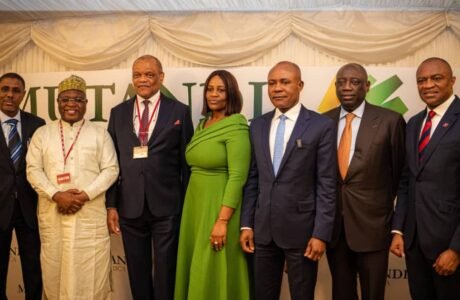
    L-R: President, WISTA Nig. Dr Odunayo Ani, also  Director in NIMASA, member of NIMASA Governing Board, Iroghama Ogbeifun , the Chairman, Nigerian Maritime Administration and Safety Agency (NIMASA) Governing Board, Hon. Yusuf Hamisu Abubakar; Managing Director, Nigerian Ports Authority, Dr Abubakar Dantsoho; Director General, Nigerian Maritime Administration and Safety Agency (NIMASA), Dr Dayo Mobereola; Honourable Minister of Marine and Blue Economy, Dr Adegboyega Oyetola; Chairman, Senate Committee on Marine Transport, Senator Wasiu Eshinlokun; Permanent Secretary, Federal Ministry of Marine and Blue Economy, Mrs Fatima Mahmood and Chairman, House Committee on Maritime Safety, Education, and Administration, Hon. Khadija Bukar Abba Ibrahim, and President, WIMAfrica (NIG), Mrs Theodora Nwaeze,during the launch of the Cabotage Vessel Financing Fund (CVFF) Application Portal


    Women maritime associations endorse CVFF Portal for indigenous shipping


    Lagos, January. 24, 2026, The Women Associations in the Maritime industry, have commended the Federal Government, for unveiling the Cabotage Vessel Financing Fund (CVFF) Application Portal to enhance ship owners to compete with their foreign counterpart.


    The women association made the commendations in a statement signed by the President Women International Shipping and Trading Association (WISTA) Nigeria, Dr Odunayo Ani in Lagos on Saturday.

    A maritime expert, Mrs Bilkis Lawal, Vice President WIMAFRICA Mrs Temilade Ogunniyi, Vice President, President WIMAfrica Nig. Mrs Theodora Nwaeze, Nigeria Chamber of Shipping and former President, WISTA Nig. Ify Akerele, WISTA President, Dr Odunayo Ani and other members of the association during the unveiling of the CVFF application portal held in Eko Hotel in Lagos on Thursday


    The association comprises of Women International Shipping and Trading Association (WISTA), Women in Maritime Africa (WIMAFRICA) and Women in Maritime West and Central Africa (WIMOCA).


    President, Women International Shipping and Trading Association (WISTA) Nigeria, Dr Odunayo Ani

    Ani commended the Minister of Marine and Blue Economy, Dr Adegboyega Oyetola, and the Director-General, Nigeria Maritime Administration and Safety Agency (NIMASA), Dr Dayo Mobereola, for their strategic vision and commitment to modernising processes within the industry.


    She noted that the portal represents a forward-looking initiative designed to enhance efficiency, inclusiveness, and sustainable growth across Nigeria’s marine and blue economy landscape.


    “The commissioning of this portal is a testament to deliberate efforts to deepen stakeholder engagement and unlock new opportunities for operators and investors alike.


    “We are urging the ship owners and other beneficiaries to purchase the loan and channel it positively to boost indegenous shipping in Nigeria,”Ani said.


    She advised ship owners to build standard ocean going vessel to enable the trained cadets have access to sea time training to enhance manpower.

    WISTA Nigeria boss reaffirmed support for initiatives that promote equity, professionalism, and innovation, emphasizing the role of women in advancing a resilient and competitive maritime ecosystem.

    The associations pledged continued collaboration with the Ministry, NIMASA, and other sector partners to strengthen the industry’s global standing.


    The CVFF Application Portal was expected to streamline access to financing for vessel operators, addressing longstanding challenges in the cabotage regime and boosting investor confidence in Nigeria’s maritime sector.


    Recalled that the portal, established under the Coastal and Inland Shipping (Cabotage) Act of 2003, was designed to address the financing gap faced by Nigerian shipowners.

  • Women maritime associations endorse CVFF Portal for indigenous shipping

    Women maritime associations endorse CVFF Portal for indigenous shipping

    L-R: President, WISTA Nig. Dr Odunayo Ani, also  Director in NIMASA, member of NIMASA Governing Board, Iroghama Ogbeifun , the Chairman, Nigerian Maritime Administration and Safety Agency (NIMASA) Governing Board, Hon. Yusuf Hamisu Abubakar; Managing Director, Nigerian Ports Authority, Dr Abubakar Dantsoho; Director General, Nigerian Maritime Administration and Safety Agency (NIMASA), Dr Dayo Mobereola; Honourable Minister of Marine and Blue Economy, Dr Adegboyega Oyetola; Chairman, Senate Committee on Marine Transport, Senator Wasiu Eshinlokun; Permanent Secretary, Federal Ministry of Marine and Blue Economy, Mrs Fatima Mahmood and Chairman, House Committee on Maritime Safety, Education, and Administration, Hon. Khadija Bukar Abba Ibrahim, and President, WIMAfrica (NIG), Mrs Theodora Nwaeze,during the launch of the Cabotage Vessel Financing Fund (CVFF) Application Portal


    Women maritime associations endorse CVFF Portal for indigenous shipping


    Lagos, January. 24, 2026, The Women Associations in the Maritime industry, have commended the Federal Government, for unveiling the Cabotage Vessel Financing Fund (CVFF) Application Portal to enhance ship owners to compete with their foreign counterpart.


    The women association made the commendations in a statement signed by the President Women International Shipping and Trading Association (WISTA) Nigeria, Dr Odunayo Ani in Lagos on Saturday.

    A maritime expert, Mrs Bilkis Lawal, Vice President WIMAFRICA Mrs Temilade Ogunniyi, Vice President, President WIMAfrica Nig. Mrs Theodora Nwaeze, Nigeria Chamber of Shipping and former President, WISTA Nig. Ify Akerele, WISTA President, Dr Odunayo Ani and other members of the association during the unveiling of the CVFF application portal held in Eko Hotel in Lagos on Thursday


    The association comprises of Women International Shipping and Trading Association (WISTA), Women in Maritime Africa (WIMAFRICA) and Women in Maritime West and Central Africa (WIMOCA).


    President, Women International Shipping and Trading Association (WISTA) Nigeria, Dr Odunayo Ani

    Ani commended the Minister of Marine and Blue Economy, Dr Adegboyega Oyetola, and the Director-General, Nigeria Maritime Administration and Safety Agency (NIMASA), Dr Dayo Mobereola, for their strategic vision and commitment to modernising processes within the industry.


    She noted that the portal represents a forward-looking initiative designed to enhance efficiency, inclusiveness, and sustainable growth across Nigeria’s marine and blue economy landscape.


    “The commissioning of this portal is a testament to deliberate efforts to deepen stakeholder engagement and unlock new opportunities for operators and investors alike.


    “We are urging the ship owners and other beneficiaries to purchase the loan and channel it positively to boost indegenous shipping in Nigeria,”Ani said.


    She advised ship owners to build standard ocean going vessel to enable the trained cadets have access to sea time training to enhance manpower.

    WISTA Nigeria boss reaffirmed support for initiatives that promote equity, professionalism, and innovation, emphasizing the role of women in advancing a resilient and competitive maritime ecosystem.

    The associations pledged continued collaboration with the Ministry, NIMASA, and other sector partners to strengthen the industry’s global standing.


    The CVFF Application Portal was expected to streamline access to financing for vessel operators, addressing longstanding challenges in the cabotage regime and boosting investor confidence in Nigeria’s maritime sector.


    Recalled that the portal, established under the Coastal and Inland Shipping (Cabotage) Act of 2003, was designed to address the financing gap faced by Nigerian shipowners.

  • BACSAAN Leader Expresses Artisans’ Support for Fed. Govt. Mass Housing Projects

    BACSAAN Leader Expresses Artisans’ Support for Fed. Govt. Mass Housing Projects


    (Honourable Minister of Housing and Urban Development, Alhaji Ahmed Dangiwa and BACSAAN National President Haj Fasasi Mohammed Jamiu exchanging pleasantries at the venue of the 14th meeting of the National Council on Lands Housing and Urban Development in Ilorin)


    (Haj Fasasi Mohammed Jamiu, BACSAAN National Leader at the 14th Meeting of the National Council on Lands Housing and Urban Development in Ilorin)


    (Haj Fasasi with BACSAAN National Director of Operations Haj Isiaq Robiu and Hon. Biola Lawal BACSAAN National Director of Communications Strategy and Media at the 14th meeting of the National Council on Lands Housing and Urban Development in Ilorin)


    -Artisans would help ensure high qualities are maintained in the project – Fasasi


    By Biola Lawal
    Ilorin (Flowerbudnews) The National President of the Builders, Construction and Skilled Artisans Association of Nigeria (BACSAAN), Haj Fasasi Mohammed Jamiu has expressed the support of the teeming artisans in the country for President Bola Ahmed Tinubu’s ongoing mass housing projects.

    Fasasi gave the assurance in Ilorin while addressing artisans who attended the just; concluded 14th Meeting of the National Council on Lands Housing and Urban Development at the Innovation Hub where the council meeting held.

    Fasasi described the housing projects as ”unprecedented” noting that the renewed hope housing projects deserved the support of all well-meaning Nigerians, including BACSAAN members across the country.

    The Artisan leader particularly commended ”the dedication and commitment with which the Federal Ministry of Housing and Urban Development is executing the project,” saying; ‘:we were so impressed with the level of work done on the mass housing projects as shown in the imagery displayed during the council meeting”.

    The BACSAAN Leader commended the government ”for the reasonable prices attached to the different categories of the buildings,” noting that such action was necessary to make the houses affordable to the less privileged across the country.

    He assured the artisans that BACSAAN would intensify interactions with the Federal Ministry of Housing and Urban Development to explore how members of the Association can key-in and benefit from the projects.

    ”On the sideline of the Council Meeting, we interacted with the Honourable Minister for Housing and Urban Development, Alhaji Ahmed Dangiwa, the Permanent Secretary, and several Directors on issues of empowerment of artisans,” the BACSAAN leader disclosed.

    He said that the Minister and the Permanent Secretary were very enthusiastic and encouraging on the need to boost economic empowerment of Nigerian artisans. adding that the the Ministry’s Director in charge of artisan matters was also very compassionate to the BACSAAN leaders when they met and discussed with her at the council meeting.

    Fasasi disclosed that BACSAAN members include bricklayers, Electricians, Plumbers, welders, Capenters, POP makers. Tilers. Mechanics, Rewires,Tailors, Vulcanisers, Blockmolders, etc

    ,” Our plan and wish is to fully harness the active and potential numerical strength of the Nigerian Artisans for a dedicated, loyal and committed support for the a rapid and sustainable economic and infrastructural growth of Nigeria ” the BACSAAN Leader stated.


    About Flowerbudnews
    Established by Hon.  Biola Lawal, a former Acting Managing Director of the News Agency of Nigeria (NAN), FLOWERBUDNEWS is a consortium of active veteran journalists, experienced Multimedia broadcast experts and image makers.

    We are drawn from both public and private  sectors of Nigeria’s media Industry with a common  determination to enhance the practice of responsible journalism..

    Lawal, on his part, is also a former Honourable Commissioner for Information,Youth, Sports and Culture of Osun state, his home state.

    Biola Lawal had also successfully served two tenures as Press Secretary to the ECOMOG Force Commander in Liberia during the Liberian and Sierra Leone Civil wars. He was an outstanding NAN Defence and War Correspondent for many years.

    The retired NAN Acting Boss holds the honour of being the only journalist that served two terms on the ECOMOG international assignment due to his high professionalism and decency.

    He is a Co-Author of the book; ECOMOG, A BOLD ATTEMPT AT REGIONAL PEACEKEEPING! Edited Mrs Magaret Voght.  The book remains the most. factual, detailed and authentic book on the ECOWAS sponsored ECOMOG Military operation.

  • Who’s Afraid of Madam Governor?

    Who’s Afraid of Madam Governor?


    By  Prof. Tunde Akanni


    The question is no longer whether Nigerian women are interested in power. The more honest question is whether Nigeria’s political architecture is genuinely prepared for women to exercise power without apology, patronage, or pity. The renewed campaign for increased women’s seats in the legislature has once again exposed the fault lines in our democratic imagination. Obviously on account of its strong appeal, many citizens across gender divides freely support the idea. Some others, on the other hand, including some women, dismiss it as defeatist likening it to a charity-driven shortcut that undermines merit.

    Yet, beneath this argument lies a deeper fear: the discomfort with women not just participating in politics, but leading it.Nigeria’s politics, noisy and competitive as it is, remains robustly masculine. From party structures to campaign financing, from godfatherism to violent primaries, politics is designed as a system that rewards brute endurance rather than broad-based inclusion. In such a terrain, women are routinely advised to “work harder,” “wait longer,” or “learn the ropes,” even when the ropes themselves are deliberately knotted against them.

    The agitation for reserved seats or affirmative quotas must therefore be understood not as a plea for pity, but as a strategic intervention in a structurally skewed system.Critics of the campaign argue that conceding seats to women amounts to lowering the bar.

    They insist that politics should remain a free contest where only the strongest survive. But this argument conveniently ignores the fact that the contest has never been free. It ignores the historical disadvantages women face in access to funding, party tickets, political networks, and even physical safety. To demand “equal competition” in an unequal field is not principled neutrality. Rather, it presents moral indifference disguised as fairness.Globally, affirmative action has never been about replacing merit with mediocrity. Rather, it is about widening the gate so that merit, long suppressed by structural exclusion, can finally walk in.

    The Sustainable Development Goals (SDGs), which Nigeria endorsed with fanfare, are anchored on a simple but powerful philosophy: leave no one behind. Political parties that mouth this slogan in development conferences but ignore it in their internal power-sharing arrangements are guilty of selective idealism. If parties are sincere about inclusive growth and governance, then propping up more women should not be an afterthought; it should be a core democratic obligation.

    Women, however, must also recognise that no liberation is handed down ready made. Beyond advocacy, there is a compelling need for collectivisation. Nigerian women constitute a very significant percentage of the population, yet this numerical strength rarely translates into coordinated political muscle. Too often, women’s political engagement is fragmented by party loyalties, ethnic considerations, and elite patronage.

    The challenge before women is to build cross-party, cross-regional solidarities that can sway progressives and pragmatists alike—not with emotional appeals alone, but with disciplined organisation and ideological clarity.The recent political journey of Senator Aisha “Binani” Dahiru in Adamawa State offers both inspiration and caution.

    Her near-emergence as Nigeria’s first elected female governor was a moment of collective pride for many women. Yet, the confusion, controversy, and ultimate frustration that followed her candidacy also exposed the perils of weak political anchorage. Critics argue that her alignment with powerful but controversial political figures, including Atiku Abubakar, burdened by the infallible stamp of corruption by his own former boss, President Obasanjo, easily diminished here rating.

    Atiku is also notorious for frequent party switching, thus blurring her ideological compass and deepened uncertainty around her political project. Whether one agrees with these criticisms or not, the lesson is clear: women’s political advancement cannot rest solely on proximity to imagined male political titans whose interests may not align with long-term feminist or democratic goals.

    This is why patience and political tutelage matter. Power is not only seized; it is also learned. Women aspiring to executive leadership must demonstrate readiness to understudy political colossi endowed with uncommon wits, strategic depth, and ideological consistency. Leadership, after all, is not a spontaneous performance; it is a cultivated craft. As I once argued, enduring professionalism including political longevity and effectiveness are products of mentorship, intellectual discipline, and moral clarity. Women should not be ashamed to learn; neither should they be content with perpetual apprenticeship.The international landscape offers both cautionary and encouraging examples.

    In the United States, Vice President Kamala Harris came close to history. Her journey to the threshold of the presidency underscores both the possibilities and the limits of representation within entrenched political systems. That she did not emerge president does not diminish her achievement; it highlights the persistence required to crack the highest glass ceilings. Before Harris however, Ellen Johnson Sirleaf defied sceptics to become Liberia’s president, steering her country through post-conflict recovery and earning global respect.

    Her story remains a powerful rebuke to those who ask, often with thinly veiled cynicism, whether African women can lead nations.So, who says Nigerian women cannot become governors—and ultimately president? Certainly not history. Certainly not logic. And certainly not competence. What stands in the way is not capacity, but courage: the courage of parties to institutionalise inclusion, the courage of men to relinquish monopolies of power, and the courage of women to insist on space without apology.

    Reserved legislative seats, therefore, should be seen as transitional instruments, not permanent crutches. Their purpose is to normalise women’s presence in power, to break the myth that leadership is inherently male, and to create role models that can inspire younger generations.

    Once the terrain becomes less hostile and more inclusive, such measures may no longer be necessary. But to reject them now, in the name of abstract meritocracy, is to perpetuate a system that has already failed too many.Ultimately, democracy thrives not when everyone competes under the same illusion of fairness, but when institutions consciously correct historical imbalances. A Nigeria that is afraid of a Madam Governor is a Nigeria afraid of its own potential.

    The campaign for increased women’s seats is not about charity. It is indeed about justice, strategy, and the unfinished business of nation-building.

    The real question, then, is not whether women are ready for power. It is whether Nigeria is ready to stop pretending that exclusion is excellence. In line with the thesis of SDGs, for Nigeria, now is the time to start building a democracy that truly leaves no one behind.

    (Professor Tunde Akanni teaches Journalism at the Lagos State University.)

  • Nigeria treats religious violence as attack on the state — NSA Nuhu Ribadu

    Nigeria treats religious violence as attack on the state — NSA Nuhu Ribadu


    By

    The Federal Government has declared that any violence framed along religious lines will be treated as a direct attack on the Nigerian state, reaffirming that the protection of all citizens—Christians, Muslims, and adherents of other faiths—is non-negotiable.

    The National Security Adviser, Nuhu Ribadu, made the statement at the conclusion of the first session of the U.S.–Nigeria Joint Working Group held in Abuja to address concerns around religious freedom and insecurity.

    “Nigeria is a deeply plural society, and the protection of all citizens—Christians, Muslims, and those of other beliefs—is non-negotiable,” Mr Ribadu said.

    “Violence framed along religious lines is treated as an attack on the Nigerian state itself.”

    He said the government’s response to insecurity goes beyond military action, combining security operations with the rule of law, humanitarian safeguards, and strategic communication to ensure that operational successes translate into public confidence and stronger social cohesion.

    “Our response integrates security operations, rule of law, humanitarian safeguards, and strategic communication, ensuring that operational successes translate into public confidence and strengthened social cohesion,” he added.

    The meeting, held on January 22, followed the United States’ designation of Nigeria as a Country of Particular Concern under the International Religious Freedom Act. The Joint Working Group was established to deepen bilateral cooperation aimed at reducing violence against vulnerable communities, particularly Christians, strengthening accountability for attacks, and improving the protection of civilians.

    Nigeria’s delegation to the meeting was led by Mr Ribadu and included officials from multiple ministries and security agencies. The United States delegation was headed by the Under Secretary of State for Political Affairs, Allison Hooker, alongside representatives of several U.S. federal agencies.

    Ms Hooker said the United States recognises Nigeria’s diversity and the complexity of its security challenges, stressing that sustained cooperation is essential to protecting civilians and upholding freedom of religion.
    She said the Working Group provides a platform for both countries to move beyond expressions of concern to practical actions that deter violence, strengthen investigations, and ensure perpetrators are held accountable.

    Mr Ribadu said Nigeria’s partnership with international allies, including the United States, is already yielding tangible results, pointing to improved coordination among security agencies and increased pressure on terrorist and criminal groups operating across the country.

    “We want Nigerians to know that this partnership is working, that it is delivering tangible gains, and that our collective efforts will continue to yield positive gains,” he said.

    Security analysts say the government’s framing of religiously motivated violence as an attack on the state reflects growing concern over attempts by extremist and criminal groups to exploit religious identities to fuel division and undermine national unity.

    Both delegations agreed that engagements under the Joint Working Group would continue, with the next meeting expected to hold in the United States at a date to be agreed through diplomatic channels.