

Year: 2026

  • NAFDAC’s 5+5 Policy Initiative Boosts Nigeria’s Economy, Attracts Foreign Investments, Spurs Local Drug Production

    NAFDAC’s 5+5 Policy Initiative Boosts Nigeria’s Economy, Attracts Foreign Investments, Spurs Local Drug Production

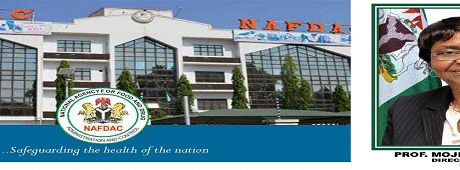
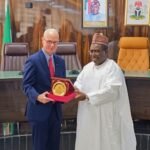
    (NAFDAC DIRECTOR GENERAL, Prof. Mojisola Adeyeye and Ambassador Suharto in a group photograph)

    By Biola Lawal
    Abuja (Flowerbudnews): The strategic 5+5 Policy initiative, introduced by the National Agency for Food and Drug Administration and Control (NAFDAC) to promote local production of medicines, is already attracting tremendous foreign investment into Nigeria’s pharmaceutical sector.

    The good news of the positive impact of the policy on the nation’s pharmaceutical landscape ,was announced by the NAFDAC Director General, Prof. Mojisola Adeyeye, while speaking during a courtesy visit by the Indonesian Ambassador to Nigeria, His Excellency, Amb. Bambang Suharto in Abuja.

    The policy, introduced in 2018 by the Director-General of NAFDAC, Prof. Mojisola Christianah Adeyeye, has begun to yield significant results, with an increasing number of foreign investors establishing manufacturing plants in Nigeria, or entering into partnerships with indigenous pharmaceutical companies to produce medicines locally.

    She noted that Nigeria’s attainment of the World Health Organization (WHO) Maturity Level 3, and i its recertification in 2025 for the regulation of medicines and vaccines, had positioned the country as an attractive destination for pharmaceutical investment.

    Prrof. Adeyeye disclosed that NAFDAC also operates a state-of-the-art Biologics and Vaccines Laboratory in Yaba, Lagos, an achievement that has further strengthened Nigeria’s regulatory and production capabilities within Sub-Saharan Africa.

    Reaffirming the Agency’s commitment to the 5+5 Policy, Prof. Adeyeye assured the Ambassador of NAFDAC’s readiness to support prospective investors seeking to establish pharmaceutical manufacturing facilities in Nigeria.

    She explained that the policy ” is aimed at boosting local production, enhancing drug security, and reducing dependence on imported pharmaceuticals.”

    ”The 5+5 Policy, also known as the Five Plus Five-Year Validity Policy, is an import-to-local production migration strategy. Under the framework, product registration licenses are valid for five years. By the fourth year, companies are required to submit detailed plans either through partnerships with Nigerian pharmaceutical firms, or by establishing local manufacturing facilities for transitioning to domestic production.

    ”Upon meeting these requirements, licenses may be renewed for an additional five years, during which NAFDAC closely monitors compliance with the migration plan,” the NAFDAC Boss stated.

    Prof. Adeyeye emphasized that, beyond strengthening the pharmaceutical industry, ”the policy is also designed to stimulate economic growth, expand access to quality medicines, build local manufacturing capacity, and ultimately ensure national drug security.’:

    In his remarks, Ambassador Bambang Suharto commended the leadership of Prof. Adeyeye, describing her as pragmatic and committed to advancing Nigeria’s healthcare and regulatory systems.

    He noted that Nigeria’s large population and growing market make it an attractive destination for Indonesian pharmaceutical companies.

    The Ambassador further expressed his country’s interest in formalizing collaboration with NAFDAC through the signing of a Memorandum of Understanding (MoU) to enhance trade, technical exchange, and capacity building between both nations. (Flowerbudnews)

  • L-R Commander, Materials Clearing and Inspection Office (MCIO), Nigerian Navy Apapa,Captain U.S. Akoh and Customs Area Controller, Kirikiri Lighter Terminal Command, Bolaji Adigun when the Navy visited Kirikiri customs command in Thursday in Lagos

    By reporter

    Lagos, March 27, 2026, The Nigerian Navy and the Nigeria Customs Service (NCS) have reaffirmed their commitment to enhanced inter-agency collaboration aimed at improving port operations and safeguarding national economic interests.


    This was highlighted on Thursday as the Commander, Materials Clearing and Inspection Office (MCIO), Nigerian Navy Apapa, Captain U.S. Akoh, led a delegation on a courtesy visit to the NCS Kirikiri Lighter Terminal (KLT) Area Command in Lagos.


    The Controller, Kirikiri Lighter Terminal Command (KLT) of the Nigeria Customs Service (NCS), Bolaji Adigun, disclosed this in a statement through the Public Relations Officer, Victor Ogagbor, on Friday in Lagos.


    Adigun as is that the visit served as a platform for both agencies to deliberate on strategies to boost cooperation in critical areas such as port security, cargo monitoring, information sharing, and overall maritime operations.


    He noted that the engagement underscored the importance of synergy among government institutions in facilitating seamless trade and strengthening national security.


    Speaking during the visit, Captain Akoh stressed the need for sustained collaboration among security agencies, likening government institutions to parts of a single body that should function collectively to achieve optimal results.


    He commended the NCS for its professionalism and dedication to trade facilitation and revenue generation, noting that joint efforts remain vital to achieving national development goals.


    In his response, the Customs Area Controller of the KLT command welcomed the Navy delegation and expressed appreciation for the enduring partnership between both agencies.


    He reaffirmed the Command’s commitment to deepening cooperation with relevant stakeholders to enhance compliance, improve operational efficiency, and strengthen security within the port environment.

    The visit concluded with the exchange of plaques, symbolising mutual respect and a renewed resolve by both organisations to foster closer ties in pursuit of safer and more efficient maritime operations.

    The engagement marks another step in ongoing efforts by security and regulatory agencies to promote collaboration and ensure the smooth functioning of Nigeria’s maritime sector.

    A cross session of Customs management at Kirikiri Lighter Terminal command and the Nigeria Navy led by Nigerian Navy Apapa,Captain U.S. Akoh on a courtesy visit to Customs Area Controller, Bolaji Adigun in charged of Kirikiri Lighter Terminal command on Thursday


  • Akpabio. Abaribe, Selective Justice and the Dual-party Registration Bill 

    Akpabio. Abaribe, Selective Justice and the Dual-party Registration Bill 


    By Taiwo Adisa, (PhD)

    Something happened on the floor of the Senate on March 13, 2026, which, until today, leaves a sour taste in the mouth, as far as the practice of the nation’s democracy is concerned.

    On that day, nine Senators announced their decision to switch their allegiance to the Africa Democratic Congress (ADC). Some of them belonged to the Peoples Democratic Party (PDP), some to the Labour Party (LP), and the All Progressives Grand Alliance (APGA). Senate President Godswill Akpabio read the letters written by the individual Senators but dropped a caveat when it got to the turn of Senator Enyinnaya Abaribe of APGA. He told the Abia South Senator to produce evidence of division within APGA or risk his seat being declared vacant. For the record, those who defected on that day include Senator Aminu Waziri Tambuwal, representing Sokoto South, Ogoshi Onawo (Nasarawa South), Austin Akobundu (Abia Central), and Lawal Usman Adamu (Kaduna Central). While Senators Ireti Kingibe (Federal Capital Territory) and Victor Umeh (Anambra Central) defected from the LP to the ADC, Senator Abaribe, a former Minority Leader, announced his defection from APGA to the ADC. The defection gale also caught the former governor of Bayelsa State, Senator Seriake Dickson, who dropped the PDP for the newly formed National Democratic Congress (NDC). The announcement of the defections tilted the structure in the Senate in favour of the ADC, which became the main opposition party in the chamber, as it now has 10 senators, while the PDP has eight. The SDP, the NDC, and the New Nigeria People’s Party (NNPP) have one Senator each, with the ruling APC having 85 Senators, more than the two-thirds majority needed for the control of the chamber.

    While Akpabio raised his objection to Abaribe’s move, he told the five term-Abia lawmaker that he cannot join the defection crew because his political party, the APGA, has not experienced a division, in line with the provisions of the 1999 Constitution. Akpabio threatened to act on the side of the constitution if Abaribe fails to produce evidence of the cracks in his party, but Abaribe told the Senate that he had been expelled from the party way back in September 2025. The Abia Senator argued that his decision to defect was premised on expulsion from Abia APGA, while Akpabio and Senate Leader, Opeyemi Bamidele, further warned that defection without party crisis violates Section 68(1)(b) and (g) of the 1999 Constitution. Though that was not the first clash between Akpabio and Abaribe on the floor of the Senate, the clash in mid-March had a tinge of mischief in it, as it was the first time a senator’s defection move was being questioned by the Senate President. We have heard the saying that if you join the APC, your sins are forgiven, credited to the former Labour leader, who is now a chieftain of the APC, Senator Adams Oshiomhole Perhaps Abaribe’s sins are being visited on him because he chose to stand in the way of a one-party Senate and perpetually spoke for the people.

    For instance, Akpabio had once accused Abaribe of being a “social media senator” during the debate on the 2026 Electoral Act. Abaribe had obviously caught the eyes as an opposition lawmaker, who says his mind, no matter whose ox is gored. He led opposition senators to oppose the removal of a clause that would have made real-time transmission of election results compulsory. He equally called for division on the floor of the Senate when a contrary clause was passed. The passed section gave the Independent National Electoral Commission (INEC) the latitude to manually collate results through Form EC8A, where networks are not available. So, in a sense, Abaribe had been a thorn in the flesh of the leadership of the Senate. He played a similar role during the administration of the late President Muhammadu Buhari.

    As much as defection by a lawmaker is forbidden by the 1999 Constitution, it also provides a proviso that makes defection acceptable when there is division in the ranks of the party being jettisoned. In the case of Abaribe, members of the party on whose ticket he was elected chose to play some theatrics by announcing his expulsion.

    The decision itself begs for reason. A party with a single senator in the 109 -member Senate decided to expel that lone senator because some forces believed he was playing populist politics by speaking out against the ills in the polity. Where else would that happen except in the murky waters of Nigerian politics? Abaribe had chosen to take his time to settle the uprising against him, but he saw himself persistently being lured into the ruling party. Before it became too late, he decided to pitch his tent with the emerging opposition ADC, and then, Akpabio remembered that Section 68(1g) exists in the 1999 Constitution.

    Pray, was Section 68(1g) not in existence when 16 senators defected to the ruling party from the PDP, SDP, and the Young Progressives Party (YPP), even when there was no scent of division in those parties? It has been said that betrayal is a politician’s raison de ’ter, maybe mischief and selective justice are joining in. Available records have shown that 16 senators defected to the ruling party early in the life of the Senate before the recent festival of divisions in the parties. All of those senators were welcomed with open arms. If Abaribe had announced his decision to join the APC, I am sure no inquiry would have been necessary. So, what manner of inconsistency are we seeing?

    In June 2023, the APC started the current with 59 senators, with the PDP coming a distant second with 36 senators. LP had 8, NNPP and SDP had two each, and APGA had one Senator. But by mid-October 2025, the APC had gained 16 senators, and as of the last count in March 2026, the ruling party had secured 27 senators, all through defections.

    Thus, the APC now has 85 senators, far more than the required two-thirds majority needed to control the chamber. Examples of early defection that were accepted without question include Senator Ifeanyi Ubah (YPP to APC in 2023), Senator Ezenwa Onyewuchi (LP to APC), Senator Ned Nwoko (PDP to APC), Senator Kawu Sumaila (NNPP to APC), and Senator Benson Konbowei (PDP to APC). There were no questions as to the nature of division in their parties whatsoever. Then, you had additional defection in late 2025. Senator Kelvin Chukwu defected from LP to APC, while a couple of others also defected up to early 2026. They include Senators Ipalibo Banigo, Amos Yohanna, Aminu Iya Abbas, Ikra Aliyu Bilbis, James Barka, and Midala Balami, among others.

    As stated earlier, these defections have pushed the number of APC senators to an unprecedented figure never achieved by any party in Nigerian history. But it looks like that much is not enough haul for Akpabio, as he probably would wish all the 108 senators were converted to broom-bearing politicians.

    That brings us to the bid by the National Assembly to criminalise dual-party membership by imposing fines of up to N10 million and two-year prison terms. This is, in a way, linked to the Akpabio/Abaribe imbroglio, because the APC is apparently calculating that in case an opposition lawmaker refuses to join the defection craze, he or she could land in the hot soup of dual-party registration. Besides that, the trap could also capture any aggrieved member of the ruling party who might get dissatisfied with the primary process and seek to better his political fortunes elsewhere.

    The 2026 Electoral Act has already mandated the submission of digital registers by the political parties before the primaries, so any politician caught migrating to another party late in the day could be guilty of double registration and made to face the law.

    Though the House of Representatives has passed the bill into law, it is awaiting the buy-in of the Senate. I would, however, advise the Senate not to waste taxpayers’ money dwelling on such a bill. This is because the constitution already forbids anyone from contesting on the platform of two parties, which means that no one can belong to two parties at the same time. But the constitution also guarantees freedom of association, so I can be long to party Z while associating with people in party W. The right to associate is incumbent on the person and cannot be decreed out of existence.

    I will offer to tell our senators that even when the law is passed, human beings will always find ways around it. Since the constitution guarantees the right to associate and determine one’s associates at every point, one can also switch parties at any point in time ahead of the party primaries. As far as the switch is within the timeframe allowed by INEC, in accordance with the Electoral Act and the 1999 Constitution. No one can hamper anyone who chooses to bolt from either a sinking or a floating boat. I so, submit, distinguished Senators.

    Source

  • Financing Infrastructure or Foreign Industry? A Policy and Legal Analysis of the £746 Million Nigeria-UK Ports MoU

    Financing Infrastructure or Foreign Industry? A Policy and Legal Analysis of the £746 Million Nigeria-UK Ports MoU

    Financing Infrastructure or Foreign Industry? A Policy and Legal Analysis of the £746 Million Nigeria-UK Ports MoU


    By Prof. Chiwuike Uba is a Development Economist and Chairman of the Board, ACUF Initiative for Policy and Governance.


    The landmark £746 million Nigeria-UK MoU presents a historic opportunity for port modernization, but its success hinges on strategic deployment, inclusive industrial participation, legal compliance, and the adoption of a multimodal, regionally balanced logistics approach.


    Nigeria faces a critical juncture in infrastructure and industrial development with this export finance agreement aimed at modernizing the Lagos Port Complex, Apapa Quays, and Tin Can Island Port Complex.


    The Tinubu administration, under its Renewed Hope Agenda, has demonstrated political will for major infrastructure projects; however, success depends on extending focus beyond Lagos to other strategic ports such as Onne, and inland waterways including the Burutu, Onitsha, Lokoja, and Niger corridor, which remain largely underutilized.


    Nigeria possesses a vast network of approximately 10,000 kilometers of navigable waterways, of which around 3,800 kilometers are operational at varying periods throughout the year, according to the National Inland Waterways Authority.


    These waterways provide critical connectivity to 28 of the country’s 36 states and establish strategic trade links with five neighboring nations: Equatorial Guinea, Cameroon, Chad, Niger Republic, and Benin Republic, specifically Port Novo.


    Beyond domestic significance, these routes position Nigeria as a potential hub in the West and Central African maritime landscape.


    Globally, over 80 per cent of trade is conducted via sea, with Africa relying on maritime transport for roughly 90 per cent of its imports and exports. This underscores the immense untapped potential of Nigeria’s inland and coastal waterways to enhance trade efficiency, reduce logistics costs, and integrate domestic and regional markets.


    Effectively leveraging these corridors could stimulate industrial growth, improve supply chain resilience, and enable Nigeria and Africa more broadly to capture a larger share of the global maritime economy while advancing regional economic integration and sustainable transport solutions.


    Nigeria’s ports have long suffered from congestion, inadequate infrastructure, and high operational inefficiencies.


    According to the Nigerian Ports Authority, turnaround delays at Apapa Ports average 7 to 10 days, while container dwell times often exceed 14 days, inflating logistics costs by up to 40 per cent.


    The MoU promises modernisation, but concentrating all investment in Lagos risks reinforcing geographic economic imbalances, while other strategic ports, including Onne, Calabar, and Onitsha, remain underutilized despite lower operational costs and potential to reduce logistics expenses for northern, south-southern and eastern states, improve trade flows, and stimulate regional economic activity.


    Prioritising investment in these alternative ports could immediately reduce logistics costs, relieve congestion in Lagos, and stimulate inclusive regional economic growth.


    Port inefficiencies, including procedural bottlenecks, poor hinterland connections, and fragmented regulatory frameworks, drive logistics costs up to 40 per cent of product prices, among the highest globally.


    This structural challenge has contributed to inflation and deterred investment across logistics value chains.


    Infrastructure investment is therefore a legitimate public policy goal, but success depends on strategic allocation, integrated logistics planning, and regulatory compliance.


    Export credit financing, like UKEF, primarily supports the exporting country’s industrial base. Procurement tied to foreign suppliers can weaken local economic impact and limit technology transfer.


    The Nigeria-UK MoU includes such clauses, raising questions about value retention and alignment with domestic industrial policy.


    A significant portion of the financing, at least £236 million, is tied to British suppliers, including a £70 million contract with British Steel for steel billets. This raises potential tension between foreign industrial interests and Nigeria’s strategic goal of building domestic capacity.


    Beyond procurement concerns, concentrating resources in Lagos risks neglecting ports such as Onne, Calabar, and Onitsha, which could offer lower logistics costs, improved trade facilitation, and regional economic benefits if upgraded in tandem.


    The government must therefore ensure that financing aligns with domestic industrial policy, local content mandates, and capacity-building objectives so that infrastructure investment translates into tangible economic benefits for Nigerians rather than primarily supporting foreign suppliers.


    Comparative experiences with tied export finance highlight that benefits often accrue disproportionately to lenders, emphasizing the need for rigorous parliamentary scrutiny and integration into national fiscal planning.


    In other African contexts, such arrangements catalyze industrialization only when linked with local capacity-building; conversely, weak governance and inadequate local content policies can suppress domestic participation.


    The MoU reflects asymmetric power dynamics favoring UKEF and British firms, while Nigeria assumes execution risk and debt obligations.


    Tied financing channels funds back to UK suppliers, raising concerns about domestic industrial multipliers. Infrastructure improvements are necessary, but value retention in Nigeria’s economy is diluted, particularly in sectors like steel and construction, where domestic capacity could be leveraged.


    Past projects, such as Ajaokuta Steel, illustrate how foreign-tied financing can suppress domestic industrial participation, limit technology transfer, and constrain local capacity development.


    Without transparent procurement evaluations and explicit local content targets, the MoU risks undermining Nigeria’s industrialization agenda.


    Stakeholders, including federal ministries, politically connected contractors, and foreign suppliers, create potential for rent-seeking, elite capture, and opaque allocation of public resources.


    Lessons from prior projects, such as the Lekki Port concessions and Ajaokuta Steel, underscore the necessity of robust oversight mechanisms to mitigate governance and corruption risks.


    Identifying which Nigerian ministries and parastatals, including the Ministries of Transportation and Finance, Nigerian Ports Authority, and Federal Inland Waterways Authority, will benefit or be exposed is critical, alongside anticipating resistance from entrenched Lagos-based logistics interests if Onne Port is prioritised.


    Community and labour implications, including employment opportunities, skills development, and local content compliance, also require careful consideration. Civil society and academic advocacy for equitable port investment and transparency remain essential to accountability.


    Inclusivity is a key determinant of success. Project execution that privileges foreign inputs without mechanisms for domestic participation risks concentrating socio-economic benefits in a narrow elite, undermining equitable development.


    Effective governance must align with public financial management principles, open government standards, and transparency mandates.


    Geographic concentration of the £746 million in Lagos risks reinforcing regional imbalances and neglects strategic seaports, such as Onne in Rivers State, Calabar in Cross River State, and inland facilities like Onitsha.


    Empirical data underscores the potential gains from diversified investment.


    According to the Nigerian Ports Authority Operational Performance Report 2025, total cargo throughput rose 24.8 per cent, from 103.6 million metric tonnes in 2024 to 129.3 million metric tonnes.


    While Apapa and Tin Can Island Ports remain significant, Lekki Deep Sea Port accounted for 40.6 per cent of container throughput, Onne 19.1 per cent, and Apapa 16.7 per cent, highlighting the latent potential of eastern ports.


    Logistics cost comparisons further reinforce this: for a 30 MT shipment, costs outside Lagos can be 30 to 60 per cent lower, demonstrating the economic suboptimality of Lagos concentration.


    Investment across multiple ports could reduce bottlenecks, lower consumer prices, and stimulate trade in under-served regions.


    Operational metrics also favour Onne Port, which demonstrates lower ship turnaround and container dwell times than Apapa.


    International cases reinforce this: South Africa’s Durban port leveraged regional logistics planning to reduce congestion and promote industrial linkages; Kenya’s Mombasa port optimised hinterland corridors and inland container depots; and India’s Jawaharlal Nehru Port expanded via public-private partnerships while integrating local suppliers.


    These examples illustrate that strategic planning, multimodal integration, and inclusive financing can transform port performance.


    The success of the Nigeria-UK financing agreement depends not merely on capital size, but on deployment effectiveness, adherence to project timelines, transparency, and accountability.


    UK funding can be quicker to disburse and ensures high-quality inputs, but it emphasizes British contractors and technology exports, aligning with UK trade priorities.


    It focuses on project delivery and repayment guarantees, with moderate oversight and limited enforcement of anti-corruption measures.


    In contrast, the European Union Global Gateway Initiative, EU GGI, offers bureaucratic and slower but more sustainable financing.


    It prioritises capacity-building, local ownership, long-term sustainability, and good governance, providing grants, concessional loans, and blended finance.


    It encourages public-private partnerships, ESG compliance, regional integration, and SDG alignment. Green port practices at Onne, including electrification, solar power, and ISO 14001/IFC compliance, could reduce CO₂ emissions by up to 25 per cent compared with trucking-dependent Lagos operations, embedding climate resilience against sea-level rise, flooding, and storm impacts.


    EU GGI financing ensures domestic firms can participate, enhancing value retention and reducing tied procurement distortions.


    Onne Port offers a natural logistics bridge to North-Central and Northern regions via the Onitsha-Lokoja axis. Diverting 20 to 30 per cent of cargo from Lagos to Onne could reduce national haulage costs by 15 to 25 per cent, lowering consumer prices and inflationary pressures.


    Underutilisation reflects policy neglect and underinvestment in complementary infrastructure, including inland waterways, intermodal freight systems, and last-mile connectivity.


    The Burutu, Onitsha, Lokoja, and Niger inland waterway corridor could transform Nigeria’s logistics into a multimodal network for bulk goods, agricultural produce, and construction materials, requiring relatively modest investments in dredging, navigation aids, barges, and terminals.


    Strategic investment here represents an opportunity for the Tinubu administration to leave a lasting legacy.


    A competitive port system requires hinterland connectivity. Integrated investment in ports, rail, and roads ensures seamless cargo evacuation and distribution.


    Rail links from Onne, Lagos, and Calabar to industrial and consumption centers in the South-East, North-Central, and Northern regions reduce reliance on road haulage, lower freight costs, and improve turnaround times.


    Upgraded road corridors supporting heavy-duty freight prevent infrastructure deterioration and congestion.


    A coordinated framework unlocks economies of scale, enhances supply chain reliability, and positions Nigeria competitively under frameworks such as the African Continental Free Trade Area.


    Financing transformation need not rely exclusively on tied export credits. The EU GGI provides blended finance, grants, concessional loans, equity investments, and public-private partnership structures for sustainable port modernization.


    Onne Port could become Africa’s first green port, with renewable energy operations, electrified cargo handling, low-emission logistics chains, and climate-resilient infrastructure.


    EU-backed technical assistance, regulatory reforms, and capacity-building ensure investment aligns with governance, climate resilience, and sustainability frameworks.


    Integrating Onne Port with the Burutu, Onitsha, Lokoja, and Niger corridor aligns with EU priorities of sustainable transport, regional connectivity, and green infrastructure. Public-private partnerships with EU guarantees encourage private sector participation while ensuring fiscal prudence and compliance with the Fiscal Responsibility Act and Public Procurement Act.


    This approach rebalances investment away from Lagos, addresses regional inequities, and fosters inclusive growth, shifting from centralised, congestion-prone logistics to a distributed, efficiency-driven national network.


    Prioritising Onne Port and its multimodal linkages, along with operationalization of the Burutu, Onitsha, Lokoja, and Niger waterways, could deliver three outcomes: immediate reductions in logistics costs, medium-term stimulation of regional industrial and agricultural value chains, and long-term transformation of Nigeria’s trade infrastructure into a globally competitive, sustainable, and resilient system.


    Emerging port nodes, such as the Oguta-Orashi seaport, could further diversify logistics and provide additional gateways for trade.


    Legal compliance and national benefit require tabling the MoU for National Assembly ratification, with clear reporting timelines, independent audits, and alignment with national logistics and port master-plans.


    Diversified port investment, including Onne, Calabar, and Onitsha, reduces congestion and stimulates regional economic activity. Procurement should enforce minimum Nigerian supplier participation, phased local content integration, technology transfer, and capacity-building programs.


    Debt sustainability must be transparently assessed and disclosed to comply with FRA obligations. ESG integration, including environmental impact assessments and community engagement, is essential for long-term viability.


    The Nigeria-UK MoU promises modernised infrastructure and improved trade efficiency, but Lagos-centric investment, tied procurement, limited local content, and incomplete legal compliance present governance, fiscal, and industrial risks.


    Comparative analysis of Lagos, Onne, Calabar, and Onitsha illustrates potential efficiency gains and cost savings foregone by neglecting other strategic nodes.


    Inclusive, sustainable, and legally compliant outcomes require legislative ratification, transparent procurement, diversified investment, robust oversight, local content enforcement, ESG integration, and multimodal connectivity.


    Without these measures, the MoU risks serving foreign industrial interests at Nigeria’s expense. Coordinated execution with EU GGI support could instead herald a new era of port modernization, regional trade facilitation, and sustainable infrastructure development.


    Scenario analysis highlights potential outcomes: under a best-case scenario, Lagos and Onne ports could operate with integrated multimodal corridors, reducing logistics costs by up to 25 per cent nationally, boosting industrial competitiveness, and generating thousands of jobs.


    A worst-case scenario, with Lagos-centric investment and tied procurement, risks congestion, inflated costs, and suppressed domestic industrial participation.


    Policy alternatives include blending UKEF funding for rapid port modernisation with EU GGI financing to enhance local content, implement green port standards, and strengthen multimodal logistics.


    Recommendations extend to the National Assembly for ratification, the Ministries of Transportation and Finance for coordinated planning, and the Nigerian Ports Authority and National Inland Waterways Authority for operational oversight.


    PPP or blended finance structures could include private sector participation in inland waterways, electrified port operations, and rail cargo handling concessions.


    Engaging narratives illustrate human impact: a trader moving goods from Onne to Aba experiences a 40 per cent reduction in transport costs compared with Lagos routes, while northern small-holder farmers gain faster, cheaper access to coastal export markets.


    Such contrasts underscore the potential real-world benefits of strategic, regionally balanced, and sustainable port development. ####


    About the Author

    Prof. Chiwuike Uba is a Development Economist and Chairman of the Board, ACUF Initiative for Policy and Governance. With extensive experience in infrastructure finance, public sector policy, and industrial development.


    Uba provides expert analysis on national and international economic planning. His work bridges research, policy, and advocacy, with a particular focus on sustainable growth, inclusive development, and strategic investments in transport, logistics, and industrialization across Nigeria, Africa, and global markets.

  • Gov Mbah Celebrates Tinubu at 74, Hails His Courage in Leadership, Selflessness

    Gov Mbah Celebrates Tinubu at 74, Hails His Courage in Leadership, Selflessness

    Gov Mbah Celebrates Tinubu at 74, Hails His Courage in Leadership, Selflessness


    The Governor of Enugu State, Dr. Peter Mbah, has paid a glowing tribute to President Bola Tinubu as he clocks 74 today, March 29, 2026.


    Mbah, in a statement issued by his media aide, Mr Uche Anichukwu, on Sunday in Enugu, described Tinubu as a visionary and courageous leader whose love for the country had been demonstrated beyond any shred of doubt.


    He said that at 74, Tinubu’s life’s journey had continued to stand as a testament to an enduring dedication to the development of Nigeria, while “his leadership continues to reflect resilience and a bold commitment to reform, inclusivity, and national renewal.”


    According to him, President Tinubu has always risen to the occasion at the toughest times in the nation’s history, recalling also his days in the trenches to restore democratic rule and his tough decisions to rescue and reboot the nation’s economy.


    “President Bola Ahmed Tinubu’s 74th birthday is an important moment to reflect on the life of a man whose journey has been deeply intertwined with Nigeria’s democratic evolution and economic transformation.


    “Courage in the face of adversity is a defining feature of leadership. The President’s life’s journey boldly encapsulates this quality.


    “From his role in the pro-democracy struggle to his stewardship in public office, there has never been anything convoluted about his vision.


    “He has consistently demonstrated courage, resilience, and a firm belief in the Nigerian project. His selflessness and love for country are not performative. Neither are his actions driven by a quest for validation.


    “So, we are celebrating not just the man, but what he has done for us – how he has deftly pulled our nation’s economy from the precipice,” he said.


    Mbah noted that the impacts of his policies are not mere abstractions; they are all around us, adding that the reforms we are witnessing today are not easy choices, but they are necessary steps towards building a more resilient and competitive economy.


    “We have seen macro-pressures ease, a huge rise in our foreign reserves, and unprecedented unification of our exchange rates.


    “At moments of great national reform, leadership requires vision and resolve. President Tinubu has shown both, and history often vindicates leaders who have the courage to confront long-standing structural challenges.


    “When the results of his reforms fully crystallise, there can be no doubt that the president is indeed a man made for this moment – a man for all seasons!” Mbah said.


    Mbah said that the milestones remained an opportunity for reflection, adding: “We owe him a measure of gratitude for the sacrifices and responsibilities he has taken upon himself in steering the country through a critical phase.”


    The governor called on Nigerians to continue to support the President, noting that nation-building calls for collective action and responsibility.


    “But beyond celebrating the man, the most meaningful gesture Nigerians can make is to support the difficult but necessary journey of national renewal that his administration has embarked upon.


    “Nation-building is never the task of one individual. It requires collective belief, shared sacrifice, and sustained support from citizens.


    “So, as we celebrate President Tinubu at 74, my prayer is that he continues to be guided by wisdom and strength, and that Nigerians across all divides rally behind the vision of building a stronger, more prosperous nation,” he concluded.

  • AIG ARIEKPERE psc ANNOUNCES COMMENCEMENT OF POLICE NATIONAL DAY 2026 CELEBRATION – FCID ANNEX, ENUGU

    AIG ARIEKPERE psc ANNOUNCES COMMENCEMENT OF POLICE NATIONAL DAY 2026 CELEBRATION – FCID ANNEX, ENUGU

    AIG CHUKWUDI C. ARIEKPERE psc ANNOUNCES COMMENCEMENT OF POLICE NATIONAL DAY 2026 CELEBRATION – FCID ANNEX, ENUGU

    The Force Criminal Investigation Department (FCID) Annex, Enugu, wishes to inform the general public of its readiness and participation in the forthcoming National Police Day 2026 celebration.

    The Department also uses this medium to announce the commencement of activities marking this year’s event themed: “Community Partnership: Building Trust.”

    In line with the theme: “Community Partnership: Building Trust.” the AIG FCID Annex, AIG Chukwudi C. Ariekpere psc has outlined a series of activities  to strengthen police-community relations and promote public safety.

    Activities lined up to commemorate the event will include:

    (i) Monday, 30th March, 2026  -Environmental Sanitation and Cleaning Exercise within the Annex and its surroundings.

    (ii) Tuesday, 31st March, 2026  -Walkathon for mental alertness, peace and Community Safety.

    (iii) Wednesday, 1st April, 2026  -Community Engagement and sensitization on public safety within the domain of the FCID Annex Enugu.

    (iv) Thursday, 2nd April, 2026  –            AIG FCID Annex Enugu, lectures on Human Rights, Professionalism and Discipline.

    (v) Tuesday, 7th APRIL, 2026  –
    Grand Finale at Eagle Square, Abuja, with a ceremonial parade and tactical display.

    The AIG FCID Annex, Enugu, AIG Chukwudi C. Ariekpere, psc, cordially invites members of the public to join the Service in celebrating these landmark events.

    “While reiterating the immense benefits derived from the existing cordial relationship with members of the public, the AIG assures all and sundry that justice will remain the watchword in the handing of all matters referred to the Annex.”

    CSP Arum Godisgreat Chijindu, Esq,
    Police Public Relations Officer, Force CID Annex, Enugu.

  • True Sokoto PDP Stakeholders arrives Abuja for National Convention — Chieftain

    True Sokoto PDP Stakeholders arrives Abuja for National Convention — Chieftain

    True Sokoto PDP Stakeholders arrives Abuja for National Convention — Chieftain

    A Chieftain of People Democratic Party (PDP) in Sokoto state, Barrister Hassan Isma’ila, has confirmed that bonafide party loyalists and members have arrived Abuja for the National Convention as scheduled.

    In an interview with the newsmen of Saturday, Isma’ila denied that Sokoto contingents were not part of the convention stressing that the information was completely false.

    He explained that the present PDP executives might not be party of the exercise in recognition that most of them have diluted into the fulk of the African.Democratic Congress (ADC).

    He alleged the that some executives were only in PDP as shadows as their roots were in ADC, however, didn’t make public announcements.

    According to him, the new electoral act as amended has nothing to do with Delegate it’s all about party member, therefore it’s shameful for those dancing on a dead rat to cry for help.

    Isma’ila further argued that they should have concentrate on developing their new party rather than crying on matters that they have no business with at all.

    ” I enjoined the PDP national leadership and other loyalists to disregard the notion saying that non members from Sokoto state have participated in the national convention.

    ” We are on ground, associating and partaking in all arrangements and procedures along with other members,” Isma’ila declared.

    He further assured continue loyalty to party leadership and pledged to working for party’s progress in future engagements.

  • BREAKING: White House insiders admit Trump has “grown bored” with his illegal Iran war


    –   while aides cringe at constant hyperbolic lies, meme-level messaging – and fear being fired for speaking out

    Multiple White House officials, including two still employed there, just spilled to journalist Jake Traylor on Morning Joe about the growing internal chaos and frustration over Trump’s handling of the Iran war.

    One official said Trump’s messaging has become increasingly “hyperbolic” and that the president has “essentially grown bored with the war in Iran and is looking to round things up” while shifting focus back to domestic issues and his narcissistic building projects.

    Another described Trump’s long-time strategy of “essentially lying to the American people” and slowly getting them on board, but admitted it’s “not hitting the same way” this time, with a war spiraling out of control and the economy and entire world order shuddering ready to explode.

    Officials also expressed deep frustration with the White House social media team for its meme-style videos and compilations of attacks – including ones that have killed Americans and innocent civilians the Middle East – treating the war like entertainment.

    One staffer said he was “upset to be working at the White House right now” and called the videos “cringe, disrespectful, and gross.”

    Yet they are all too afraid to voice any disagreement inside the White House because they know that speaking out could mean losing their jobs.

    This paints a picture of a chaotic, dysfunctional administration: a bored president winging a war, cringe propaganda memes, and terrified staff too scared to push back.

  • NGO unveils project for women participation in politics, decision-making in Sokoto 

    NGO unveils project for women participation in politics, decision-making in Sokoto 

    NGO unveils project for women participation in politics, decision-making in Sokoto

    A Non Governmental Organisation (NGO),
    Productive Community for Sustainable Development Initiatives (PCSDI), has unveiled a project toward advancing women’s participation in political and decision-making processes in Sokoto state.
    The project was formally launched by Hajia Hauwa’u Jabo, the Director Women in the Sokoto State Ministry of Women and Children Affairs among other stakeholders in Sokoto.
    The Executive Director of PCSDI, Mr Nura Bello, said the project was tagged “Enhancing Women Participation in Politics and Decision-Making in Sokoto State” aimed at encouraging women engagements.
    Nura said the project gears toward creating awareness, sensitisations and  promoting gender friendly political spaces as well community dialogue on women participation in politics.
    He added that the project also aimed at strengthening partnerships, strong collaborations, engaging traditional, religious leaders, politicians and media to advocate for achieving the goals.
    The Executive Director highlighted that training and capacity building initiatives, mentorship programme, leadership skills and public speaking strategies were designed to harness their potentialities.
    According to him, overall objective was to create enabling environment respectful and safe for women politicians and adopt national and state gender policy in their political affairs.
    He said all the programme were designed to suit cultural, religious and traditional norms toward addressing socio-cultural and institutional barriers, and promote inclusive governance across Sokoto State.
    In her address, the Director Women, Jabo assured maximum support to the initiative adding that the ministry would partner with relevant agencies and bodies in order to achieve the desired result.
    Hajia Jamila Gatawa, the Deputy Director from the Ministry of Budget and Planing described the project a landmark achievement toward advancing women’s empowerment and urged relevant stakeholders to support the initiative.
    In a separate speech,, a two times aspirant for Wurno/Raba Federal Constituency, Hajia Inno Attahiru, encouraged women not to be distracted with men dominance in political spaces.
    Attahiru urged stakeholders to recognize women allocated spaces on governance and political spaces to ensure smooth growth and progress in the system.
    A retired Permanently Secretary in Sokoto state civil service and politician at present, Hajia A’ishatu Hassan urged women to educate their husbands, parents and community members on the initiative which would broaden women chances.
    The event witnessed contributions from Community Based Organisations (CBOs) leaders, representatives of state and federal electoral bodies, Police, NSCDC representatives and Women Journalists on ways, challenges and solutions to active women participation in political and decision making processes.