






Tag: India

  • Indian Army showcases humanitarian, rescue capabilities

    Indian Army showcases humanitarian, rescue capabilities


    By Sumaila Ogbaje

    Agra (India):   The Indian Army on Sunday showcased its advanced Humanitarian Assistance and Disaster Relief  (HADR) capabilities, emphassing on self-reliance and rapid response mechanisms through recent initiatives in Agra, Uttar Pradesh.

    The delegation comprised 28 defence journalists from 25 countries, observed the Army’s rapid-response mechanisms for humanitarian assistance and disaster relief operations across diverse and challenging environments.

    Officials provided detailed briefings on planning frameworks, preparatory protocols and execution mechanisms, enabling swift deployment of specialised HADR units during emergencies and demonstrating high operational readiness.

    The visitors were also briefed on rapid mobilisation timelines, structured coordination with civil administration and host governments, and integration of the dedicated HADR Task Force for immediate response.

    A major highlight of the visit was the display of specialised HADR equipment, including advanced rescue tools, watercraft, flood-relief systems, portable bridging assets and mass-casualty medical support kits.

    The interaction underscored the Indian Army’s evolving role as both a combat-ready force and a dependable partner in humanitarian assistance, disaster response, regional stability and international goodwill initiatives.

    According to the brief by the officers, the Indian army has earned a strong reputation as a first responder, conducting humanitarian and disaster relief operations in multiple countries worldwide, providing aid efficiently and professionally during crises.

    In South Asia, it has intervened in Nepal during earthquakes, Sri Lanka for cyclones and floods, and Bhutan for disaster and medical support, demonstrating swift deployment and effective coordination with local authorities.

    In Southeast and East Asia, Myanmar benefited from the Army’s rapid-response efforts, including flood and earthquake relief, highlighting India’s regional commitment to humanitarian assistance and operational readiness in challenging environments.

    The Middle East and West Asia have witnessed Indian interventions, including earthquake relief in Turkey and Syria, evacuations in Yemen, and operations like Kaveri in Sudan and Ganga in Ukraine, showcasing versatility.

    In Africa, Mozambique received cyclone relief support from the Indian Army, reflecting its global HADR footprint, rapid mobilisation of resources, and commitment to saving lives while restoring affected communities efficiently.

    These interventions underline the Indian Army’s dual role as a combat-ready force and dependable international partner, reinforcing India’s global goodwill, regional stability, and humanitarian commitments across continents. (NAN) (www.nannews.ng)

  • India reiterates commitment to promoting democracy, women’s empowerment

    India reiterates commitment to promoting democracy, women’s empowerment


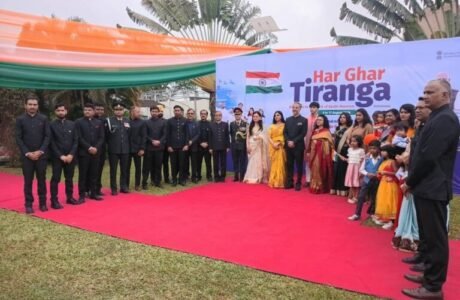
    Amb. Abhishek Singh standing alongside members of the Indian community in Nigeria


    By Sarafina Christopher

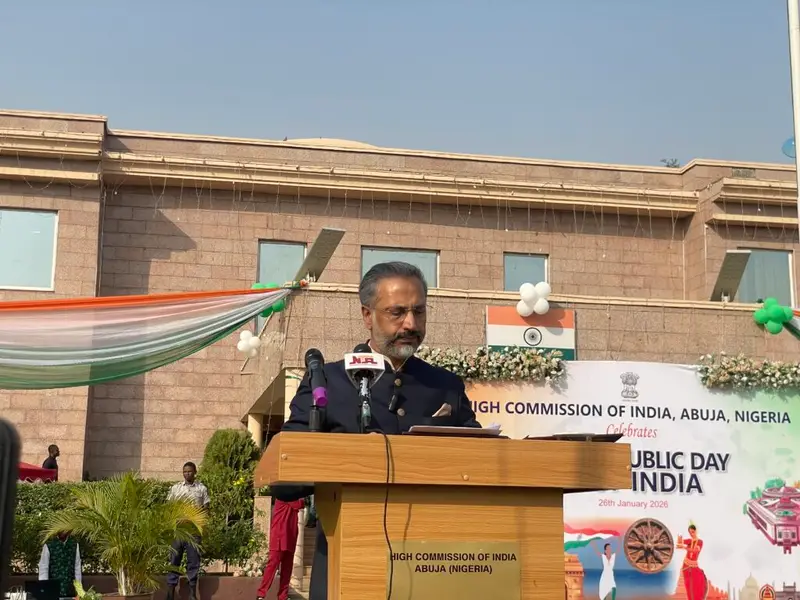
    Abuja, (NAN)/FLOWERBUDNEWS ); The Indian High Commissioner to Nigeria, Amb. Abhishek Singh, on Monday, reiterated his country’s commitment to democracy, national unity, and women’s empowerment.

    Singh reiterated this during the unfurling of the Indian national flag to mark the country’s 77th Republic Day, in Abuja.

    While delivering the Republic Day address of the President of India, Mrs Droupadi Murmu, the high commissioner reflected on the Southeast Asian country’s democratic journey since the adoption of its Constitution on January 26, 1950.

    He highlighted the ideals of justice, liberty, equality, and fraternity enshrined in the Indian Constitution, describing them as the foundation of the world’s largest democracy.

    The envoy also emphasised the role of women in nation-building, highlighting their increasing contributions across governance, the economy, science, sports, entrepreneurship, and the armed forces.

    The President’s address further acknowledged the contributions of farmers, workers, youth, security personnel, and overseas Indians in strengthening India’s democratic institutions and national development.

    Following the flag unfurling ceremony, Singh, in an interview with the News Agency of Nigeria (NAN), said that celebrating India’s Republic Day in Nigeria reflected the strong bond between both countries.

    “Celebrating our Republic Day in a friendly country like Nigeria gives me immense joy.

    “It reflects the shared democratic values between the world’s largest democracy and Africa’s largest democracy,” he said.

    The high commissioner expressed appreciation to the government and people of Nigeria for their hospitality to the Indian community.

    Singh said women’s empowerment remained a central pillar of India’s development agenda, adding that the country would continue to promote inclusive growth and women-led development.

    He reaffirmed India’s commitment to strengthening its strategic partnership with Nigeria, expressing confidence in the continued expansion of bilateral cooperation across key sectors.

    The envoy noted that India and Nigeria, as the world’s and Africa’s largest democracies respectively, shared common values and aspirations and would continue to deepen collaboration in the years ahead.

    An entrepreneur from the Indian community in Nigeria, Mr Sriram Venkateswaram, described the celebration of India’s Republic Day in Nigeria as symbolic.

    “From the world’s largest democracy to Africa’s largest democracy, it is a great feeling to celebrate Republic Day in Nigeria,” he said.

    “Nigeria has welcomed us warmly and treated us like brothers and sisters.”

    Also speaking, Mrs Ritu Pathak, President of the Indian Women Empowerment Association (IWEA) in Nigeria, described the host country as a second home for many of their families.

    “We have lived here for decades. Our children grew up here. Nigeria is home for us,” she said.

    On women’s empowerment, she said that Indian women living in Nigeria work closely with their Nigerian counterparts.

    “Nigerian women are our co-sisters. We work together, empower one another, and grow together,” Pathak said.

    The ceremony was attended by members of the Indian community n Nigeria. (NAN)/FLOWERBUDNEWS (www.nannews.ng)

    (Edited by Emmanuel Yashim)


    About Flowerbudnews
    Established by Hon.  Biola Lawal, a former Acting Managing Director of the News Agency of Nigeria (NAN), FLOWERBUDNEWS is a consortium of active veteran journalists, experienced Multimedia broadcast experts and image makers.

    We are drawn from both public and private  sectors of Nigeria’s media Industry with a common  determination to enhance the practice of responsible journalism..

    Lawal, on his part, is also a former Honourable Commissioner for Information,Youth, Sports and Culture of Osun state, his home state.

    Biola Lawal had also successfully served two tenures as Press Secretary to the ECOMOG Force Commander in Liberia during the Liberian and Sierra Leone Civil wars. He was an outstanding NAN Defence and War Correspondent for many years.

    The retired NAN Acting Boss holds the honour of being the only journalist that served two terms on the ECOMOG international assignment due to his high professionalism and decency.

    He is a Co-Author of the book; ECOMOG, A BOLD ATTEMPT AT REGIONAL PEACEKEEPING! Edited Mrs Magaret Voght.  The book remains the most. factual, detailed and authentic book on the ECOWAS sponsored ECOMOG Military operation.

  • India signs trade pact with Oman as it expands Middle East ties

    India signs trade pact with Oman as it expands Middle East ties


    India signed an economic partnership agreement with Oman on Thursday to boost bilateral trade and investment as it seeks to expand Middle East tie

    Oman’s Deputy Prime Minister for Defence Affairs Sayyid Shihab bin Tariq al-Said (R) meets with Modi in Muscat [Getty]

    India signed an economic partnership agreement with Oman on Thursday to boost bilateral trade and investment as it seeks to expand Middle East ties and diversify trade to beat steep U.S. tariffs.

    Oman has offered zero-duty access on over 98% of its tariff lines, covering nearly all Indian exports, including gems and jewellery, textiles, pharmaceuticals and automobiles, the Indian trade ministry said in a statement.

    India, in turn, will cut tariffs on about 78% of its tariff lines, covering nearly 95% of imports from Oman by value.

    India and Oman have annual trade of more than $10 billion.

    The relationship is important for New Delhi as the Gulf nation is a gateway to the narrow Strait of Hormuz between Oman and Iran, a major transit point for global oil shipments.

    “This (pact) will set a new pace of our trade, add new trust to our investments and open doors to new opportunities in many sectors,” Indian Prime Minister Narendra Modi said in an address in Oman today. The pact, India’s second after one with the United Kingdom this year, will help Indian goods enter new markets as exporters intensify diversification efforts to defy U.S. President Donald Trump’s punishing tariffs.

    This is Oman’s first bilateral agreement since its 2006 deal with the United States.

    After talks fell apart, Trump doubled duties on Indian goods to 50% in late August, the highest in the world. The hike included a 25% levy that was in retaliation for India’s purchases of Russian oil. Despite negotiations, New Delhi has been unable to close a deal with the U.S. or the European Union this year, as initially intended.

    The deal is “as much about geopolitics and regional presence as it is about tariffs,” said Ajay Srivastava, founder of the Global Trade Research Initiative.

    The pact will boost gem and jewellery exports which could rise from $35 million to about $150 million over the next three years, said Kirit Bhansali, chairman of Gems & Jewellery Export Promotion Council.

    Sensitive items including dairy, tea, coffee, rubber and tobacco have been kept out of the pact.

    The pact also offers an opportunity in Oman’s $12.5 billion services import market, in which India currently holds just a 5.3% share, the statement said.

  • Sholay, the Iconic Indian Film Clocks 50: When Gabbar Singh sold us biscuits

    Sholay, the Iconic Indian Film Clocks 50: When Gabbar Singh sold us biscuits


    Over the generations, Indians have inherited a deep and abiding love for ‘Sholay’, a film that made Hindi cinema cool in a whole new way

    A scene from Sholay (Sippy Films)

    By Van Bala

    My generation inherited the Sholay fandom; I had heard the story of the film for more than half a decade before I even watched it. I come from the Mr India generation, but my father and grandfather insisted the classics were Mackenna’s Gold, Enter The Dragon and Sholay.

    I know that my father’s actual favourite film was Zanjeer, but such was the peer pressure to call Sholay the all-time favourite that my father briefly succumbed to it.

    I keep saying “favourite” because that was the word we used back then when talking about the films we loved. We never used the word “love” itself to describe our feelings towards anything, including films — an odd hesitation that led to the word “favourite” becoming the very pinnacle of our expression of approval.

    For a while, until the age of 9 or 10, I resisted the hype, although my older cousins who had access to Sholay on VHS were already converted (yes, unfortunately, our Sholay experience came via VHS tapes, not the big screen). Maybe it was the violence in the film or the menace of Gabbar Singh (Amjad Khan) that kept them from letting us younger ones watch Sholay earlier, but when they saw I could brave Tina’s death in Mr. India — watching it multiple times to boot — they knew I was ready.
    I was ready to see Gabbar and watch “Yeh dosti..”, and brave the death of Jai (Amitabh Bachchan). We got the Sholay VHS, making sure it was a good print. I clearly remember the tape we got from the video library — it was one of the most important in their collection, with the title embossed in silver.

    Not once did I imagine that a film whose every scene, song and dialogue I was already familiar with would make my jaw drop. I cried inconsolably when Jai died — no, Tina’s death had not prepared me for this. In fact, it’s still difficult to watch Tina die on screen in Mr India, nor have I made peace with Jai’s death in Sholay or Jack’s in Titanic (okay, maybe Jack’s demise isn’t as much of an issue). Soon, I was among the “if Sholay is not your favourite film, you are not my friend” gang.

    The current generation might not give in to such bullying from the Sholay fandom, but there was a time when its status was undisputed. The denims, the motorbike with the side-car, the theme music and the bromance got us all picking our respective Jai or Veeru in childhood.

    The image of the dreaded, tobacco-spitting Gabbar was even used to sell us Parle-G — such was the extent of our love for Sholay. Orchestras exploded with songs from the film, and mimicry artists had a bumper season imitating not just Gabbar but also his henchmen Kalia (Viju Khote) and Sambha (Mac Mohan) as well as Soorma Bhopali (Jagdeep). “Chakki peesing” was probably the first and the most popular Hinglish phrase of Indian cinema.

    Thank God, we didn’t have studio executives and algorithms back then asking director Ramesh Sippy to trim scenes that were not taking the “plot” ahead. The flavour of a great film goes beyond the “hero” and “heroine”; it comes from its characters, everyone who lives in that world — no one in Sholay is a “junior artist”, everyone is an “artist”!

    It was in Sholay that we first encountered a fusion of Western cool and heartland epic. Earlier, films were defined by the coolness of Dev Anand or Shammi Kapoor, or they were Dilip Kumar or Manoj Kumar heartland epics.

    Sholay gave Indian audiences something they had never experienced before. Even 50 years after its release, it remains one of the most talked-about films, inspiring as many jibes of “you haven’t seen it yet!” as ecstatic declarations of “I have seen it more times than you”.

    Bala is the writer and director of Mard Ko Dard Nahi Hota and Monica, O My Darling

  • Nigeria -India Trade Volume Hits 7.9 Billion Dollar Mark – Acting HC

    Nigeria -India Trade Volume Hits 7.9 Billion Dollar Mark – Acting HC


    By Biola Lawal
    Abuja (FLOWERBUDNEWS): The volume of trade between Nigeria and India has now hit 7.9 billion dollars, an indicator of the increasing economic and business relation between the two countries.

    The Indian Acting High Commissioner in Nigeria, Vartika Rawat, who made the disclosure in an interview with FLOWERBUDNEWS in Abuja during a dinner with media dignitaries, said that the current high volume of economic and general business activities was beneficial to the two nations.

    (Publisher, FLOWERBUDNEWS, Hon. Biola Lawal with Acting Indian High Commissioner,  Vartika Rawat)

    Rawat said that the business and economic transactions between Nigeria and India was particularly pronounced in the areas of crude oil, peanuts and cashew nuts importation by India from Nigeria, while pharmaceutical products, tricycles (Keke Napep) among others were exportation to Nigeria from India.

    The Envoy said that areas of increasing cooperation between Nigeria and India included in Space Technology, Digital Economy, Education, Health, pharmaceutical and agriculture.

    (Indian diplomats in group photograph with feted journalists)


    ”The relationship between our two nations remain strong and robust,” Rawat told FLOWERBUDNEWS, noting that the visit of the Indian Prime Minister, Mr. Narendra Modi to Nigeria last year was an impetus for the boosted relationship.

    Tracing the history of Nigeria – India relations, Rawat said that India established diplomatic relations with Nigeria, two years before Nigeria’s independence in 1960, and had been waxing stronger since then.

    Rawat noted that Indian businessmen and inventors had been contributing heavily to the economy of Nigeria with about 200 indian companies operating in different sectors of the Nigerian economy.

    (With NTA’s Patricia Lubba)

    ”Indian companies are the largest employer of labour in Nigeria after the Federal Government,” Rawat stated, and assured that the High Commission was committed to further strengthening the cordial relationship between the two nations.

    On allegations that Nigerians are finding it very difficult to obtain Indian visa, Rawat dismissed the claim, explaining that the High Commission never deliberately deny.any Nigerian visa.

    The Envoy implored Nigerians wishing to visit India for business or any other reasons to always ensured that their documents were all in order, saying; ”we don’t deny visa”.

    Rawat disclosed that few days ago. about 100 Nigerians were issued student visas at a go to study in various Indian Universities etc. (FLOWERBUDNEWS)

  • Indian High Commission Forges Closer Relationship with Media, Fetes Journalists


    By Biola Lawal
    Abuja (FLOWERBUDNEWS) The Indian High Commission in Nigeria has intensified engagement with Nigerian journalists to further deepen the professional relationship between the media and the diplomatic mission for the overall benefits of Nigeria and India.

    FLOWERBUDNEWS reports that an exclusive dinner and interactive Parley held by the Commission on Tuesday was graced by media dignitaries and numerous journalists, especially members of the Diplomatic Correspondents Association of Nigeria (DICAN).

    Speaking at the function, the Acting High Commissioner, Vartika Rawat said that the Dinner-cum-Interaction Meeting, was held as part of the Hign Commission ‘s ongoing efforts to strengthen relationship with esteemed media professionals in Nigeria.

    She praised the cordial relationship between Nigeria and India, noting that Nigeria and India remained reliable partners in many areas of human endeavours.

    Rawat noted that the visit of the Indian Prime Minister, Mr Narendra Modi to Nigeria last year as guest of President Bola Ahmed Tinubu had added great impetus to the Nigeria -India relationship as collaboration has increased between the two nations since the visit.

    Speaking at the event, DICAN Chairman, Idehai Frederick, thanked the High Commission for organising the interactive meeting, noting that it would further help to deepen the existing relationship between the journalists and the Commission.

    Frederick assured that the journalists would continue to do their best to support and promote the cordial bilateral relationship between Nigeria and India.

    Media dignitaries at the event included, Hon. Biola Lawal, Former Acting Managing Director of the News Agency of Nigeria (NAN) and Publisher of the prestigious – FLOWERBUDNEWS, who was Specially invited by the High Commission to grace the occasion.

  • India brushes off Trump tariff threat over Russian oil

    India brushes off Trump tariff threat over Russian oil


    New Delhi:   India on Monday denounced as unfair the mounting pressure from the United States and European Union over its continued purchases of Russian oil.

    Foreign Ministry spokesman Randhir Jaiswal said the country would safeguard its economic interests amid threats of steep tariffs from President Donald Trump.

    What did New Delhi say about trade with Russia?

    “The targeting of India is unjustified and unreasonable,” said Jaiswal, asserting the country’s sovereign right to secure energy supplies in line with its needs.

    “Like any major economy, India will take all necessary measures to safeguard its national interests and economic security,” he added.

    Jaiswal also argued that India’s imports began only after Western countries diverted traditional supplies to Europe following the outbreak of the Ukraine war. He also accused both the EU and the US of hypocrisy.

    “It is revealing that the very nations criticizing India are themselves indulging in trade with Russia,” Jaiswal said.

    “Unlike our case, such trade is not even a vital national compulsion.”

    Jaiswal pointed to ongoing Europe-Russia trade involving fertilizers, chemicals, iron and steel, machinery, and transport equipment.

    He also noted that the US continues to import Russian uranium hexafluoride for its nuclear industry, palladium for electric vehicles, and other industrial goods.

    What did Trump say about India and tariffs?

    US President Donald Trump has threatened to sharply increase tariffs on Indian goods, accusing New Delhi of profiting from discounted Russian oil while failing to support efforts to end the war in Ukraine.

    While Trump did not specify the exact rate, an existing 10% tariff on Indian products is expected to rise to 25% starting Thursday.

    The move, he said, was in response to India “buying massive amounts of Russian oil” and reselling it for profit, which he claimed fuels Moscow’s war on Ukraine.

    “They don’t care how many people in Ukraine are being killed by the Russian War Machine,” Trump wrote on Truth Social.

    The move adds strain to a key trade relationship. The US is India’s largest trading partner, with Indian exports to the US totaling $87.4 billion in 2024. India recorded a nearly $46 billion trade surplus with the US the same year.   (AFP/Reuters)

  • Nigerian arrested with N1.8b drugs in India risks 20-year jail

    Nigerian arrested with N1.8b drugs in India risks 20-year jail


    A 25-year-old Nigerian, Ifeoluwa Akinwunmi, risks up to 20 years jail in India after she was allegedly caught in possession of drugs worth over N1.8 billion,

    Akinwunmi, reportedly a hairstylist and nail artist, was arrested on Tuesday by operatives of the Anti-Narcotics Wing of the Central Crime Branch in Bengaluru.

    She was apprehended at the Tarahunase village, along Rajanukunte Main Road, after arriving from Delhi with a suspicious bag.

    According to The New Indian Express, which was cited in a report by PUNCH Metro on Monday, the bag contained 5.325 kilograms of MDMA crystals, a banned party drug.

    The contraband was concealed among 11 new churidars — traditional Indian outfits.

    A police officer involved in the operation was quoted as saying: “She is a courier.

    “She had come to hand over the drugs to a group of African peddlers.

    “We noticed four men on two scooters in the area, but they did not collect the parcel.

    “Akinwunmi was arrested while standing with the bag.”

    The suspect, who claimed she travelled to India to establish a beauty salon, is now facing charges under India’s Narcotic Drugs and Psychotropic Substances Act, 1985, and the Foreigners Act, 1946.

    Section 23 of the NDPS Act stipulates severe penalties for those caught importing, exporting, or transhipping narcotic drugs and psychotropic substances.

    According to the Indian legal code reviewed by PUNCH Metro, offenders found with a commercial quantity, such as the MDMA seized from Akinwunmi, face a minimum of 10 years and up to 20 years in prison, in addition to heavy fines.

    The section reads in part: “Where the contravention involves commercial quantity, [the offender shall be punished] with rigorous imprisonment for a term which shall not be less than ten years but which may extend to twenty years and shall also be liable to a fine which shall not be less than one lakh rupees but which may extend to two lakh rupees.”

    Under the Foreigners Act of 1946, the Indian government also has the authority to prosecute and deport foreigners involved in criminal activities.

    Akinwunmi’s arrest comes just two days after another Nigerian national, Emmanuel Bediako, also known as Maxwell, was apprehended by the Telangana Anti-Narcotics Bureau for alleged drug trafficking.

  • Breaking:   Indian Universities Extend Full Scholarships to Students Across Africa

    Breaking: Indian Universities Extend Full Scholarships to Students Across Africa


    By

    –  India’s Leading Private Universities Extend Full-Tuition Scholarships to African Students for 2025 Academic Year

    14 June 2025 – In a bold and forward-thinking initiative to deepen educational cooperation and empower African youth, a network of top-tier private universities in India, facilitated by *AASGON, Business Press India* and administered by TECD Foundation —has announced a significant number of full-tuition scholarships for the 2025 academic year.

    These scholarships, open to eligible candidates across Africa, cover 100% of tuition fees for undergraduate, postgraduate, PhD, and vocational programmes.

    This landmark programme aligned with India’s Prime Minister Narendra Modi’s vision for empowering these regions, and opens a major pathway for academically qualified African students to study in one of the world’s most dynamic and affordable educational environments, India without the financial burden of tuition fees.

    Successful applicants will benefit from fully waived tuition costs for the duration of their chosen academic programmes. These opportunities span a broad range of disciplines and include undergraduate, postgraduate, doctoral (PhD), and technical or skill-based qualifications.

    Applicants must be from African countries, particularly from underserved, marginalised communities and regions. Candidates are expected to meet academic entry requirements as set by the Indian institutions and must have a functional proficiency in English, which is the medium of instruction for most courses and ability to their wellbeings.

    Applications are now open through the TECD Foundation portal: https://tecdfoundation.org/member-login/. For bulk or sponsored applications, interested institutions or individuals are advised to contact: indoafrica@tecdfoundation.org or tecdfoundation.org@gmail.com.

    Given the rising cost of overseas education, this initiative represents a considerable economic benefit. It is estimated that the total value of these tuition-free placements runs into hundreds of millions in savings for the continent; if students had otherwise paid standard international tuition fees ranging from £5,000 to £10,000 annually. For context, Nigeria alone reportedly spends over $2 billion every year on education abroad, particularly in the UK, US, Canada, and Europe. Unlike those destinations, which have become increasingly restrictive toward international students, India offers a more welcoming and development-oriented alternative.

    This India-based initiative is not only a strategic response to the growing demand for affordable higher education but also a celebration of South-South collaboration. By removing the tuition barrier and strengthening academic ties between India and Africa, this programme aims to empower students to return and contribute meaningfully to their home countries and communities.

    AASGON (Africa Asia Scholars Global Network) and Business Press India are longstanding advocates for equitable educational access.

    Their work in facilitating this opportunity exemplifies their commitment to sustainable development through education, capacity building, and international cooperation. (FLOWERBUDNEWS)

    (For further information or enquiries, please contact: indoafrica@tecdfoundation.org
    Website: https://tecdfoundation.org)