Blog

  • Kanu: Supreme Court releases  judgment CTC

    Kanu: Supreme Court releases judgment CTC

    The Supreme Court has released the Certified True Copy of the judgment on the suit between the Federal Government and the leader of the proscribed Indigenous People of Biafra, Nnamdi Kanu.


    The apex court had, on December 15, 2024, set aside a judgment by the lower court that dismissed the terrorism charges against Kanu.


    The appeal court had exonerated Kanu following an infringement on his fundamental human rights by the Federal Government.


    The Supreme Court, although berated the actions of the government, ruled that Kanu must continue his trial.


    The lead counsel for IPOB, Ifeanyi Ejiofor, in an interview with our correspondent, had lamented that 37 days after judgment was delivered on the matter, the legal team had yet to receive the certified true copy of the judgment.


    Similarly, Kanu’s family on Sunday decried the delay by the apex court in releasing the CTC of the judgment to his lawyers.


    However, in a post on X formerly known as Twitter on Monday night, a member of the IPOB leader’s legal team, Aloy Ejimakor, disclosed that the CTC of the judgment had been released to them.


    noted that the apex court also promised to transmit the case file to the Federal High Court.


    “Today, the Supreme Court released the CTC of its judgment in ‘The Federal Republic of Nigeria versus Nnamdi Kanu’. The Court also promised to transmit the case file to the Federal High Court by tomorrow. Sooner than later, we shall lock horns at the Federal High Court to #FreeMNK,” he said.


    In 2015 under the administration of former President Muhammadu Buhari, Kanu was first arrested.


    He was subsequently granted bail in April 2017 and fled the country after an invasion of his home in Afara-Ukwu, near Umuahia, Abia State, by the Nigerian military in September 2017.


    In June 2021 Kanu was re-arrested in Kenya and brought back to Nigeria.


    He was then tried at the Federal High Court in Abuja.

  • BREAKING: Police teargas 16 sacked Plateau PDP lawmakers

    BREAKING: Police teargas 16 sacked Plateau PDP lawmakers

    Armed policemen, on Tuesday, teargassed the 16 Peoples Democratic Party members of the Plateau State House of Assembly who were sacked by the Court of Appeal.


    The lawmakers had arrived at the Rayfield Old Government House in Jos on Tuesday morning alongside their supporters preparatory to their resumption of plenary when the incident happened


    The policemen and other security operatives took over the premises of the Government House and prevented the sacked lawmakers from going into the chambers of the House of Assembly but the lawmakers had vowed not to vacate the premises.


    Details later…

  • Explosion: Alake commends Oyo State Govt.’s quick response

    Explosion: Alake commends Oyo State Govt.’s quick response


    Explosion: Alake commends Oyo State Govt.’s quick response


    By Adewale Owoade


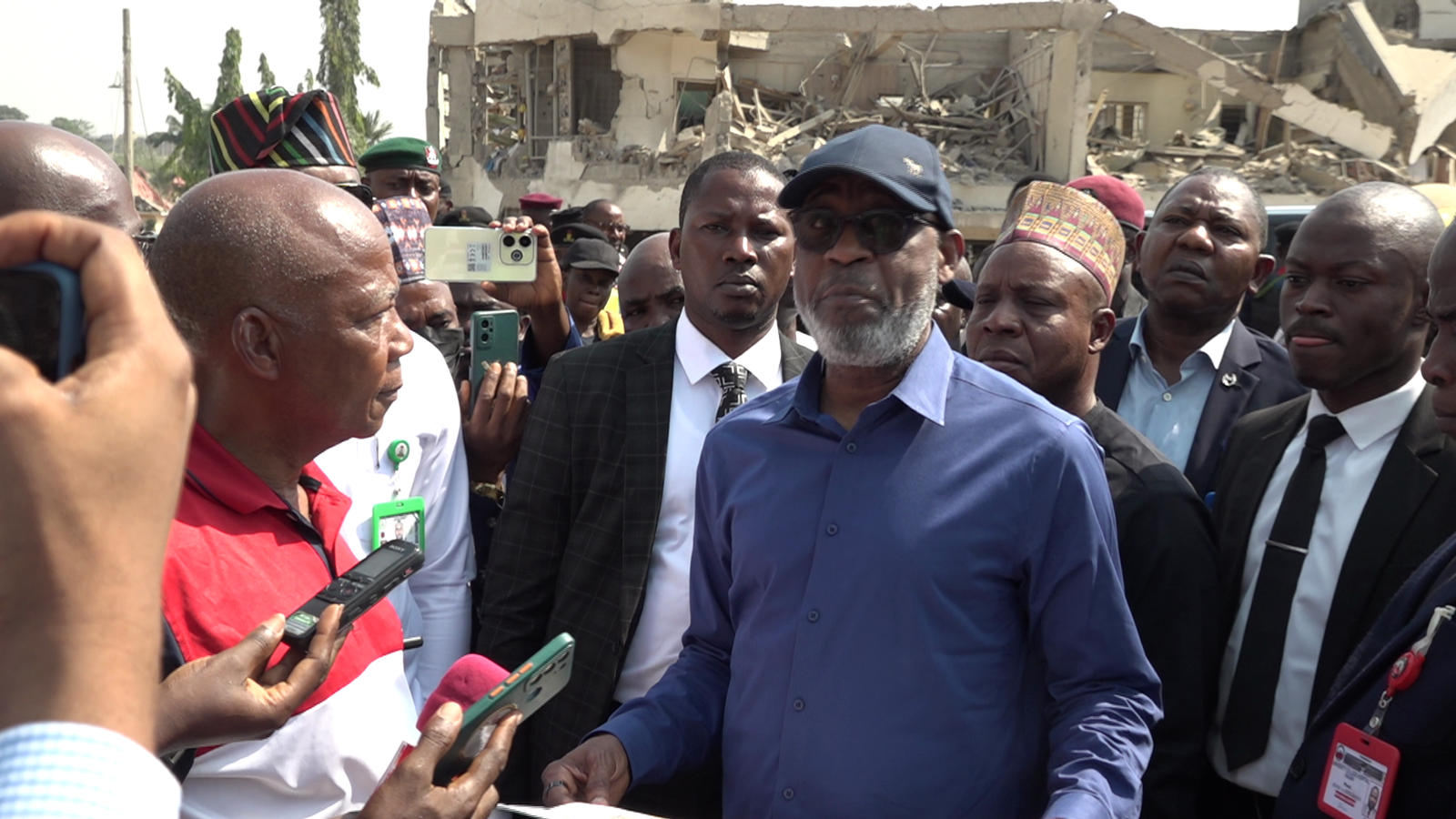
    The Minister of Solid Mineral Development, Mr Dele Alake, has commended the Oyo State Government for responding swiftly to the Bodija explosion.


    Alake, said this during a courtesy visit to Gov. Seyi Makinde of Oyo State, in his office, in Ibadan.


    He said that the Federal Government would make a formal statement on the incident that occurred on Tuesday Jan. 16 in the Bodeja area of the state, after all relevant authority had concluded forensic investigations.


    Alake who had earlier visited the site of the incident and commiserated with victims of the explosion and their families, also visited the University College Hospital, UCH, to see victims receiving treatment in the facility.


    He said that President Bola Tinubu and the Presidency were impressed with the way and manner Gov Makinde responded to the explosion incident.


    “He has done well in terms of the speed of his response to this unfortunate incident.


    “The President is very impressed and we are all impressed too. Nobody wishes for any disaster but we wish that our people will respond commendably to any situation at all. And, on our own part, we immediately swung into action.


    “We will allow the investigative agencies, various agencies including technical and intelligence agencies to conclude their forensic investigations before we make any categorical and viable statement on the issue.


    “All the corollary issues attending this, will be answered at the end of the investigations and everybody will be kept well-informed.


    “And at the end of the day justice would be done, not just to the victims but to the perpetrators and the culprits and whatever assistant that will be needed to be given to Oyo state government, the president will not hesitate to give that.


    “But my role here is to come and commiserate with the governor and commend the effective efforts he has put in place immediately after the unfortunate incident.”


    ” The president has promised to do anything in his power to give succour to the victims,” Alake said.


    On his part, Gov. Makinde, maintained that the state government is awaiting the reports of the teams carrying out structural integrity tests on 230 structures around the site of the explosion.


    He urged people affected by the incident to exercise patients as government would do all within its power to attend to their needs. (NAN)

    OWO

  • HOW TO PREVENT NEW COLD WAR IN AFRICA*

    HOW TO PREVENT NEW COLD WAR IN AFRICA*

    By Paul Ejime

    Ambassador Abdel-Fatau Musah, ECOWAS Commissioner for Political Affairs, Peace and Security has advocated urgent measures to “reconcile tensions between democracy, governance and development,” and “a new compact with external partners to prevent a new Cold War in Africa.”

    “The recent retreat from liberal democracy and growing instability in the West Africa sub-region and the wider Continent is taking place within a complex and dynamic global landscape characterized by an unprecedented convergence of multiple threat and opportunistic vectors, namely geopolitical and geostrategic shifts, economic downturn, currency fluctuations, digital. advancements, climate, and environmental concerns, and socio-cultural dynamics,” Dr Musah, a former Director, West African Division, United Nations, affirmed.

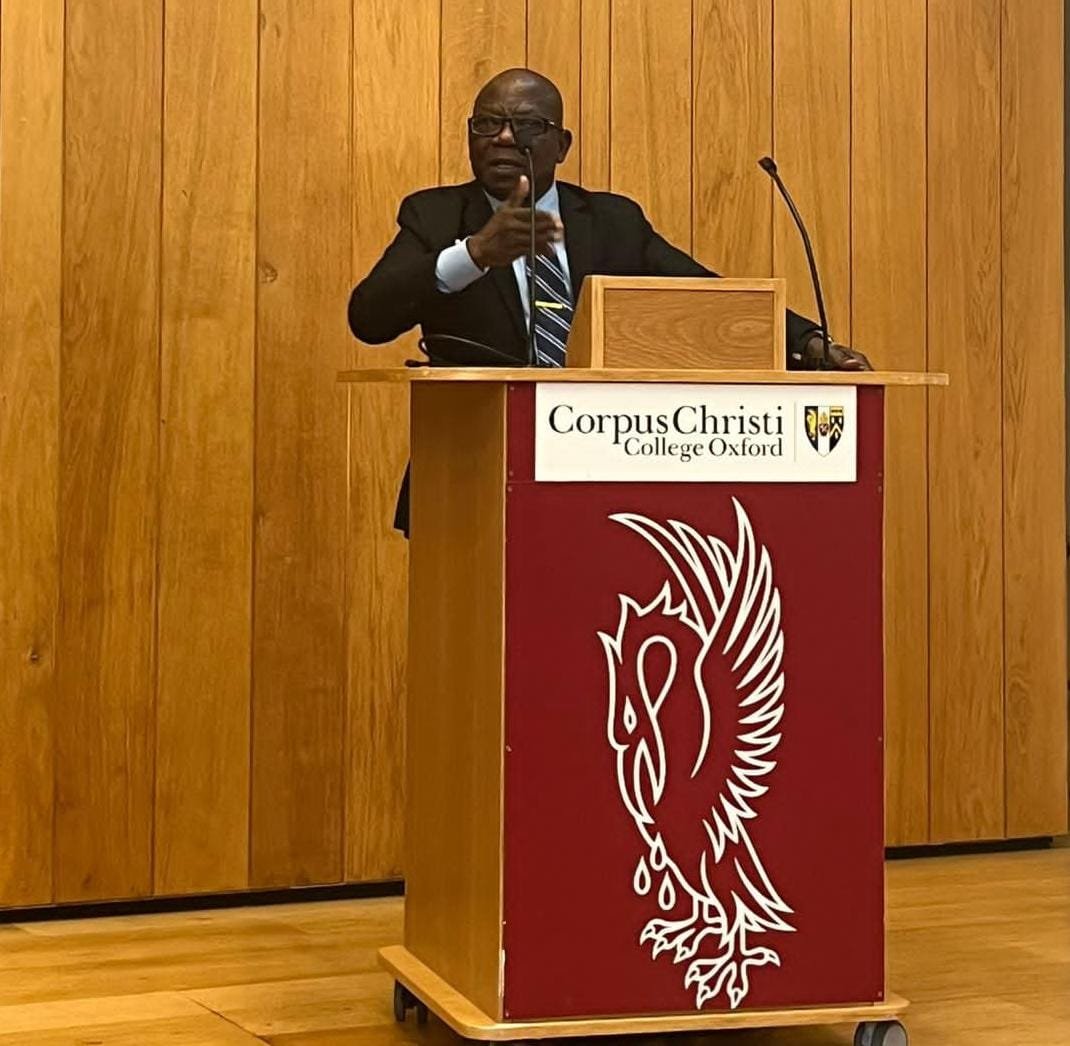
    Addressing the International Relations Society of UK’s Oxford University at its Corpus Christi College, on 19th January, under the theme “Regionalism in West Africa and Causes and Course of Recent Instability,” the ECOWAS senior official said, that while there might be no “single-factor explanation for the growing political and security malaise …the fledgling and stumbling liberal democracy in Africa requires urgent resuscitation through the infusion of local culture, traditions, and realities.”

    He posits that “Strengthening electoral democracy by promoting good governance and development requires the collective efforts of all – governments, the citizenry, their organizations, and partners.”

    Dr Musah listed major threats facing Africa and by extension, West Africa, as follows:

    · The cumulative impacts of pandemics, poor leadership, and macroeconomic mismanagement amidst a global financial, economic, and social downturn.

    · Governance and development deficits (State capture, economic mismanagement, currency instability, retreat from the periphery, marginalization, and selective provision of basic services; identity politics, youth crisis, and corruption.

    · Manipulation of constitutional and electoral norms and the weaponization of the judiciary to enable unconstitutional maintenance of power.

    · Asymmetric security crisis (terrorism, radicalization, and violent extremism, led principally by Al Qaida and Islamic State affiliates; identity-based violence (farmer-herder dynamics, inter-communal violence)

    · Climate change as a threat multiplier (dynamics in Central Sahel and worsening cyclical floods and drought).

    · Geostrategic interests and geopolitical shifts, tensions between growing interdependence amid the collapse of multilateralism and deepening multipolarity: Dynamics between the NATO Powers (Collective West); China, Russia, India (BRICS); Medium Powers (Turkey, Saudi Arabia, UAE, Qatar) threatening a return to proxy wars.

    · Emerging strategic choices by leaders of the region towards traditional and emerging powers without a clear exit strategy from the dependency syndrome.

    · Genuine changing sentiments from below towards traditional powers, the re-birth of nationalism, and the instrumentalization of insecurity and public moods by sections of the military and their associates, and

    · Explosion of new technologies the pervasive influence of social media and the manipulation of opinion through misinformation and disinformation.

    The Commissioner’s prescriptions to prevent Africa from becoming the theatre of a new Cold War, include the “need to reconcile the tensions between democracy, governance, and development through measures to enhance the production of democratic dividends.”

    Other measures include the “Restoration of constitutional order in countries in transition (Mali, Burkina Faso, Guinea, and Niger) through dialogue and pressure, combating unconstitutional changes of government and manipulation of constitutional and electoral laws through a review of the Supplementary Protocol on Democracy and Good Governance, as well as social and peer pressure on errant leaders.”

    Civil society and private sector agencies should also be empowered in favour of democratic consolidation and inclusive economic development, the Commissioner said, while also advocating: “The enhanced operationalization of the ECPF (ECOWAS Conflict Prevention Framework) and the establishment of ECOWAS ECOSOCC (ECOWAS Economic, Social & Cultural Council) to be expedited.”

    Ambassador Musah further called for the “Strengthening of counter-terrorism efforts – the activation of the ECOWAS Standby Force in its kinetic mode and the coordination of disparate counter-terrorism efforts: In this regard, the timeliness of the recent UN Security Council Resolution authorizing the use of assessed contribution to sustainably fund African-led peace support operations cannot be overemphasized.”

    Tracing the evolution of ECOWAS Post-Cold War trends, he said there was a “temporary shift towards a unipolar world under Pax-Americana amidst hopes for greater multilateralism (which) coincided with the virtual collapse of weak States and rebirth of liberal democracy in Africa due principally to pressures from below against autocratic, dictatorial, and military rule, amidst the weakening of external protection for such regimes. “

    He also cited the “civil wars in Liberia, Sierra Leone, and Cote d’Ivoire (1989-2003); and the National Conferences (which) gave birth to liberal and illiberal democracies via multi-party elections.”

    There was “ECOWAS’ pivot towards security engagements, bringing into sharp relief the obvious nexus between security and development,” Commissioner Musah said, adding that this was followed by the adoption of regional Protocols to reflect the changing dynamics.

    These include the ECOWAS leaders “Declaration of Political Principles (1991); Revised ECOWAS Treaty (1993); Protocol Relating to the Mechanism for Conflict Prevention, Management, Resolution, Peacekeeping and Security (1999); Supplementary Protocol on Democracy and Good Governance (2001), which prescribes zero-tolerance for unconstitutional change of government), and the ECOWAS Conflict Prevention Framework (2008).”

    Dr Musah noted that until 2021, all 15 ECOWAS Member States were governed by leaders chosen through multiparty elections, and “for the first time West Africa, and Africa as a whole, witnessed the defeat of incumbents at the ballot box. To compare: Only one recorded peaceful alternation of power until 1991. Since then, there have been 31 across the continent.”

    He said, “The façade of democracy was unfortunately also underpinned by serious governance and development deficits: marginalization, youth unemployment, and ethnic and religious tensions,” adding: “The end of the first Decade and the beginning of the second of the 21st Century witnessed accelerated instability characterized by the impacts of the Ebola and COVID pandemics, financial, food, and social crises, governance deficits and intensification of terrorism and violent extremism, and the re-entry of the military into politics.”

    There have been at least nine reported successful or failed military incursions into politics in West Africa since 2020, with four countries currently under military rule (Mali, Guinea, Burkina Faso and Niger).

    The Commissioner’s presentation was made against the background of worsening insecurity and disputed electoral processes in the region (Nigeria, Sierra Leone, and Liberia), with only Liberia producing a transfer of power from a ruling party to the opposition, as ECOWAS struggles to douse simmering political tensions in Sierra Leone, Guinea Bissau, and Senegal.

    The regional organization has successfully negotiated political exile in Nigeria for Sierra Leone’s former President Ernest Bai Koroma, who was slammed with treason charges by the government of his country over an alleged coup attempt last November 26th following disaffection from the June 24th presidential election.

    ECOWAS is also currently seized with developments in Guinea Bissau where President Umaro Embalo, in a recent controversial decision dissolved the opposition-controlled National parliament causing political disaffection in a country that operates a semi-presidential system that allows the party that controls the legislature to name the Prime Minister in addition to the control of the National Guards, while the President has authority over other national armed services.

    In Senegal, which has crucial elections on February 25th, 2024, the Constitutional Court on Saturday disqualified two major opposition presidential candidates following the government’s recent decision to sack members of the national electoral commission after it included the name of a controversial opposition leader on the electoral list.

    The Gambia is another ECOWAS member State under close watch amid opposition allegations that President Adama Barrow could be gunning for a controversial third-term mandate.

    Describing “citizen apathy” as “the accelerator of bad governance…,” Dr Musah acknowledged that “the political, economic, and social conditions in the region are dire but not irreversible.”

    “Restoring confidence in governance in the region requires a compelling strategic approach, as well as a multidimensional, multi-actor, and multiagency effort by all critical local, national, and regional actors in a strategic partnership with the African Union and the United Nations,” he affirmed.

    But more than ever before, elections have become triggers and drivers of divisive and deep-rooted political crises in Africa, exacerbated by the undemocratic influence of money and overbearing interference of the judiciary.

    Consequently, analysts have warned against the dangerous trend of major election outcomes being decided by the courts instead of through the ballot box, with wealthy politicians encouraged by their brazen assurance to buy court judgements after rigging elections and blatantly taunting their opponents “to go to court.” (Flowerbudnews)

    (Ejime, a former War Correspondent, is a Global Affairs Analyst and Consultant on Peace & Security and Governance Communications*)

  • Ghanaian President Visits Newly Installed Liberian President Boakai


    Flowerbudnews: Ghanaian President Nana Akuffo Ado has paid a courtesy visit to the newly inaugurated President Joe Boakai of Liberia shortly after his inauguration.


    It will be recalled that President Boakai reportedly took I’ll at the inauguration due to heat exhaustion

    President Ado visited Boakai at the latter’s residence after he left his inauguation ceremony abruptly due to heat exhaustion!( Flowerbudnews)

  • Court voids Rivers N800bn 2024 Budget passed by 5 members

    Court voids Rivers N800bn 2024 Budget passed by 5 members


    Abuja:  A Federal High Court, Abuja, on Monday, set aside the Rivers’ N800 billion 2024 budget passed by five members of the house led by its factional Speaker, Edison Ehie, and signed into law by Gov. Siminalayi Fubara on Dec. 14, 2023.

    Justice James Omotosho, in a judgment, held that the presentation of the appropriation bill by Gov. Fubara on Dec. 13, 2023, its passage by the lawmakers and subsequent signing into law by the governor amounted to a nullity following a subsisting interim order of the court.

    The News Agency of Nigeria (NAN) reports that Justice Omotosho had, on Nov. 30, 2023, made an interim order restraining Fubara and other defendants from preventing the assembly, under the leadership of Martin Amaewhule, from carrying out its statutory functions and businesses.

    The judge, among others, also restrained Fubara from removing the assembly’s clerk or its deputy and withholding funds meant for the legislative house, pending the determination of the substantive suit.

    Justice Omotosho extended the interim order on Dec. 7, 2023 when parties returned to court.
    NAN reports that the Rivers House of Assembly and Amaewhule were 1st and 2nd plaintiffs in the ex-parte motion marked: FHC/ABJ/CS/1613/2023 dated and filed Nov. 29, 2023.

    However, while the order was still pending, a budget presentation was done by the governor before the five-member house on Dec. 13, 2023 inside the Rivers Government House and signed into law on Dec. 14, 2023.

    Besides, the budget presentation also coincided with the demolition of the assembly complex by the state government, preventing Amaewhule-led faction from sitting and allegedly withholding funds meant for the legislative house.

    Meanwhile, in the amended originating summons dated Dec. 7, 2023 but filed Dec. 11, 2023 by their team of lawyers including Ken Njemanze, SAN, Ferdinand Orbih, SAN, among others, the plaintiffs sought an order directing all parties to maintain status quo as at Nov. 29, 2023.

    They sought an order of injunction restraining Fubara and other defendants from impeding or frustrating the assembly under Amaewhule’s leadership as its speaker, among others.

    Delivering judgment, Justice Omotosho held that since the reliefs sought by the plaintiffs were unchallenged by the defendants, particularly Fubara (11th defendants), having withdrew all his processes filed in the suit, the application by the plaintiffs seeking the restoration of the status quo as at Nov. 29, 2023, succeeded.

    The judge, therefore, described the passage of the bill by the lawmakers and its signing into law by Fubara as “a wilful breach of the court order.”

    He said “the order of court is valid until it is set aside.”
    According to him, the deliberation on appropriation bill presided over by the 17th defendant (Edison Ehie) amounts to a void act in the eye of the law.

    He described the act as strange and contemptuous with serious consequence.
    The judge said the court was bemused that a bill such as appropriation bill would be presented before unconstituted members.

    Justice Omotosho held that the fact that Fubara, who was 11th defendant, did not file any counter affidavit, having withdrew all his processes, made the suit to be meritorious.

    He said having withdrawn his counter affidavit and other processes in this case, it is deemed that the governor has admitted the facts in the amended originating motion since it was not challenged.

    “Therefore, no appropriation bill of Rivers State House of Assembly has been presented neither has any of such bill passed into law.

    “An order of injunction is hereby made restoring the status quo as at Nov. 29, 2023 when the suit was filed, including the presentation of the budget and the passage of the budget into law,” he declared.

    He also made an order restraining Fubara from making any budget presentation before any other person except Amaewhule.

    Justice Omotosho held that the governor had no power to stop the salaries, including the emoluments of the speaker, his deputy and other members of the house, including their staff from the Consolidated Revenue Fund of the state as an organ of government.

    “The 11th defendant has no power to tamper with the funds of the plaintiffs.

    “No governor has power to withhold funds meant for other arms of government as such act is tantamount to tyranny,” he said.

    He said the court, as a custodian of constitution, would resist any attempt to jeopardise the democratic norm.

    The judge issued an order restraining Fubara from frustrating House of Assembly under Amaewhule from sitting or interfering in its affairs.

    He described as unlawful Fubara’s redeployment of the clerk and deputy clerk out of the assembly, stating that such decision amounted to an affront on the democratic principle of separation of power.

    The judge, therefore, restrained the governor or any members of the state executive arm from appointing or reposting any person as a clerk or deputy clerk of the assembly in contravention with the 1999 Constitution and laws governing the Rivers State House of Assembly Service Commission.

    He further made an order restraining the National Assembly (NASS) from taking over the state’s assembly or accepting or treating any request from Fubara to any effect.

    Justice Omotosho, who directed Fubara to promptly release all monies standing to the credit of the House of Assembly, ordered the Inspector-General (I-G) of Police and his agents to immediately give adequate security to the assembly and the speaker as required.
    He declared that Ehie, who had sought to be joined as an interested party in the suit, lacked capacity to file the application, having withdrawn as a speaker and member of the assembly.
    Justice Omotosho held that the decision of the court was based on the earlier order made on Nov. 30, 2023 and the facts that Fubara, who was 11th defendant in the case, withdrew his processes in opposition to the plaintiffs’ originating motion.
    NAN reports that in the suit, the plaintiffs sued the NASS, Senate President, Deputy Senate President, Senate Majority Leader, Senate Minority Leader as 1st to 5th defendants respectively.
    Also joined in the suit include House of Representatives Speaker, House Deputy Speaker, House Majority Leader, House Minority Leader, Clerk to NASS as 6th to 10th defendants.
    They also sued Governor of Rivers, Attorney-General of Rivers, Commissioner of Finance, Accountant-General of Rivers, Rivers State Civil Service Commission, Inspector-General (I-G) of Police and Rt. Honourable Edison Ehie, who is also listed as Rivers Assembly’s Speaker in the suit, as 11th to 17th defendants respectively.(NAN)(www.namnews.ng) /Flowerbudnews


  • Edo ‘24: A Motley Crowd of Guber Aspirants


    By Celsus Ohain (a veteran journalist, author and historian writes from Benin City).


    Benin City: (Flowerbudnews): It’s another season of gubernatorial aspirations in Edo State and the league of aspirants is growing by the day, with each of the aspirants moving on with their own ‘Roman mob’.

    This is actually not unusual in a democracy; it is perfectly normal and accords with the tenets of the game.

    However, certain anxieties and fears are emerging in certain corners which are not unrelated to the desired ‘fairness and equity’ to a particular Senatorial zone which some think should produce the next governor having lost out for the slot for too long. There is also the perceived over dominance of another senatorial zone over the years.

    It’s indeed a very dicey situation that is already upsetting previous political permutations, calculations and strategies by contending political forces.

    The ‘emilokan’ syndrome started playing out from the Edo Central Senatorial Zone, which felt it needed to get a fair share of state’s star political prize, especially after the Appeal Court sacked the efforts of Prof (now Senator) Osarheime Osunbor in 2008. The zone’s last success was with late Prof Ambrose Alli in 1979 in the Second Republic on the platform of the defunct UPN.

    By this fact, therefore, many gubernatorial interests from the Edo South and Edo North senatorial zones had been muted for a while, apparently to test the waters but that is no more! The variables have changed as it looks now; it has become everybody’s and any body’s game.

    Politics, they say, is a game of numbers and in its practice here in this clime, moral consideration is a scarce virtue as the end justifies the means in their Machiavellian interpretation. The new godfathers, who were godsons only yesterday – are upping their game.

    The truth be told, different political parties are in contest and there really can be no uniformity in their zoning formulae as each operates its own different constitution. The generality of the people may wish a political direction but the party decision overrides, at least at the primaries level.

    It would seem that Esanland – Edo Central Senatorial Zone – has yet been unable to put its house in order to field a consensus candidate acceptable across board and this perceived’weakness’ on its part has obviously been capitalized upon by other gubernatorial gladiators from Edo South and Edo North zones who had been sheathing their swords, watching events as they unfolded. There is no stopping them now as every political bloc will always seek to maximize its inherent advantages. That’s the name of the game. Morality is for the domain of the ecclesia.

    By the last counts, at least a dozen aspirants have emerged from each of the state’s three senatorial zones and from the different political parties; we we are still counting!

    The next few weeks promises to be very interesting and eventful for all the political parties as they separately move towards their party primaries.

    Without being pessimistic, the respective parties must watch out for post-primaries acrimonies which may turn out to be their albatross, especially when many of the aspirants’ political ancestry and antecedents are foggy and murky.

    Notwithstanding all these, Edo people think that nothing but the best is good for them in these troubled times. (Flowerbudnews)

    (Celsus Ohain, a veteran journalist, author and historian writes from Benin City).

  • Halima/Edu-Gate: A litmus test for Tinubu’s anti-corruption stance – NSPF

    Halima/Edu-Gate: A litmus test for Tinubu’s anti-corruption stance – NSPF


    By Ahmed Ubandoma

    Abuja:  The National Social Protection Forum (NSPF) says Nigerians will use the outcome of investigations into the alleged mismanagement of the nation’s social investment funds to assess President Bola Tinubu’s administration’s stance on corruption.

    Dr Taiwo Benson, National Coordinator of NSPF, a Non-Governmental Organisation focusing on advancement of social protection, disclosed this at a news conference on Monday in Abuja,

    Benson urged the federal government to be thorough in the investigation of the alleged mismanagement of social investment funds by the suspended Minister of Humanitarian Affairs, Betta Edu and the National Coordinator, National Social Investment Programme Agency (NSIPA), Halima Shehu.

    While commending the President for the prompt action to suspend the top officials involved in the alleged fraud, the NSPF coordinator urged the investigative authorities to administer unbiased process in unraveling the truth.

    “We appeal to federal government to unravel the truth regarding the implementation of the National Social Investment Programme and make far reaching recommendations accordingly.

    “No public servant, no matter how highly placed, should be spared from facing the full wrath of the law if the outcome of the investigation indicts him or her“ Benson said

    According to him, the President’s action, so far had renewed the hopes of many Nigerians in his ability to fight corruption.

    He noted that suspending the minister and the chief executive of the NSIPA will allow for a fair and transparent investigation.

    Benson however appealed to the President to review his directive suspending some of the social investment programmes including, N-Power, Conditional Cash Transfer, Government Enterprise and Empowerment, and Home-Grown School Feeding.

    He urged that government should strengthen mechanism for smooth implementation of the programmes.

    According to him, this could be done through the involvement of Civil Society Organisations as third-party monitors for transparency, accountability, and efficiency.

    The News Agency of Nigeria (NAN) reports that, the Economic and Financial Crimes Commission (EFCC) had launched investigation into the alleged fraud by the minister and NSIPA coordinator.

    Edu was alleged to have transferred the sum of N585 million grants meant for vulnerable groups in four states – Akwa-Ibom, Cross River, Lagos and Ogun – to a private account of one Onyilo Bridget domiciled in United Bank for Africa.

    On her part, Shehu, the embattled Coordinator of NSIPA was suspended in connection with alleged N44 billion money laundering. (NAN) www.nannews.ng/ Flowerbudnews

  • Doctors in Enugu to begin indefinite strike over abysmal shortage of doctors, insecurity, poor sponsorship

    Doctors in Enugu to begin indefinite strike over abysmal shortage of doctors, insecurity, poor sponsorship


    By Flowerbudnews

    Enugu:  The Association of Resident Doctors (ARD) of Enugu State University of Science and Technology (ESUT) Teaching Hospital says it will embark on indefinite strike over abysmal shortage of doctors, insecurity and poor sponsorship of residency programme

    The doctors said that the indefinite strike would commence on Jan. 31, 2024 after seven weeks grace in which its earlier third series of notification of ultimatum to Enugu State Government to do the needful and meet its demands failed.

    This is contained in a communique issued on Monday after the end of the Emergency General Meeting (EGM) of ARD in ESUT Teaching Hospital, Parklane, Enugu held on Saturday, Dec. 08, 2023.

    The communique was jointly signed by the President of ARD-ESUT, Dr Chukwunonso Ofonere and its Secretary General, Dr Ikemefuna Nnamani.

    It said that the EGM observed with regret, the silence from the Management of the hospital on the 14-day ultimatum issued and another 49 days of grace following the ultimatum expiration for it to meet the demands of the association.

    The statement said the Management of ESUT Teaching Hospital, Parklane and the Enugu State Government had failed to declare a state of emergency on employment of doctors and safety and security within the hospital.


    According to the statement, the EGM observed that it is over 180 days since the Government through the Secretary to the State Government promised the ARD of employment of Medical Officers, Resident Doctors and payment of medical Residency Training Funds (MRTF), and we are yet to see the employment of new doctors.

    It said that the EGM noted that the security men placed at the gate are no longer there and direct daily assault on doctors had increased again; while safety of doctors and other health workers in the hospital cannot be guaranteed.


    “The management should declare a state of emergency on the employment of Doctors in the hospital. There should be an urgent approval for the recruitment of Medical Officers, Resident Doctors and House Officers in the hospital.


    “This recruitment should be focused especially at the Accident and Emergency Department, Surgery Department, Internal Medicine Department, Paediatrics Department, Obstetrics and Gynaecology Departments etc. Resident Doctors that have left our institution in the past four years and were never replaced.


    “Management should ensure implementation of safety policies to protect her workers against physical attacks and kidnap by restoring the daily police and other covert security personnel deployed to the hospital.


    “The 2023 Medical Residency Training Fund (MRTF) has not been paid and exam bodies are closing their adverts,” it said.

    The statement said that salary increment had not been looked into at all; even as house officers were excluded from the hardship/palliative of N25,000 given by the state governor.


    “We are still back to where we were in 2023 or even worse as plans are on the way to increase the rents of those living in the hospital quarters (one bedroom apartment) by about 375 per cent from N8,000 to N30,000 monthly.


    “This will escalate the already palpable crises and we will be left with no other alternatives but to protect the interest and welfare of our members.


    “Jan. 31, 2024 is here already and the doctors are mobilising for an indefinite, total and maybe protracted industrial action if nothing is done,” it added.

    The doctors also pleaded that the state government led by his Excellency, Barr. Peter Ndubuisi Mbah, in his charismatic way should intervene in this matter to avoid untold hardship and loss of lives that might occur if there is a disruption in the health care delivery in Enugu State. (Flowerbudnews)