Oyo Govt to partner with Poultry Association of Nigeria to regulate industry
By Adewale Owoade
The Oyo State Commissioner for Agriculture and Rural Development, Mr Olasunkanmi Olaleye, says the state government is ready to work with the Poultry Association of Nigeria, Oyo State Branch, on how to regulate the industry.
Olaleye said this when members of the association visited him in his office in Ibadan, in commemoration of the 2023 World Egg Day.
He also urged the association to create more awareness on the advantages of eating eggs.
“You need to do more, you need to organise lectures, seminars, you need to go to schools, worship centres,and talk to our people on why they need to eat eggs.
“We are set to work with the Poultry Association of Oyo State on how to regulate your industry.
“We realised that at the moment, Oyo state is the biggest producer of day old chicks in the whole country.
“And our poultry market is one of the largest in the country, meaning that if we must retain that position, we need to regulate the market.
“We need to have the register of poultry farmers, processors, those who operate hatcheries and day old chick sellers.
“We want to ensure that standards are complied with, the ministry is home of policies and regulations, and our intention now is to focus on policies and regulations for the growth of the market.
“I can assure you in collaboration with poultry association of Nigeria we are going to achieve that within the next one year,” Olaleye stated.
Earlier in his remarks, PAN Branch Chairman, Mr Oyekunle Omidokun, rolled out the importance of eggs to the body.
The News Agency of Nigeria reports that World Egg Day was established in 1996 in Australia, by International Egg Commission, IEC, since then, egg fans across the world have celebrated egg day, which creates incredible nutrient power house, with this year’s theme being “Egg For A Healthy Future” (NAN)
OWO
President Bola Tinubu announced the appointment of the new governing and management team of the Federal Roads Maintenance Agency (FERMA) for a renewable term of four years. The most unusual appointment was that of the Chairman of the FERMA Board, Engr. Imam Ibrahim Kashim Imam, and 25-year-old first-class Mechanical Engineering graduate from Brighton University.
Born on the 27th of December, 1998, Engr. Imam had shown promise from a young age. He had pursued his undergraduate studies in Mechanical Engineering at Brighton University, where he graduated with first-class honors. His academic prowess continued as he pursued an MSc with honors at the same University. He completed his National Youth Service Corps (NYSC) in August 2022.
Prior to his appointment, he served as a special assistant to Dave Umahi, the minister of works.
His Father, Kashim Ibrahim-Imam, is a Nigerian Politician. He ran for Borno state governor as the People’s Democratic Party (PDP) candidate in 2003 and 2007, losing to Ali Modu Sheriff from the All Nigeria Peoples Party (ANPP) both times.
FERMA is an agency of the Federal Government which is concerned with road construction, improvement and connectivity between the States of Nigeria. It is to efficiently and effectively monitor and administer road maintenance with the objective of keeping all federal roads in good and safe conditions. The agency is under the supervision of the Federal Ministry of Work.
Minister of Finance and Coordinating Minister of the Economy, Wale Edun, has been appointed as the Chairman of the African Governors’ Forum of the World Bank.
The African Governors’ Forum is a platform for African finance ministers and central bank governors to engage with the World Bank on issues of mutual interest.
A statement on the Ministry of Finance’s X page said Edun’s appointment makes it the first of such for Nigeria.
The appointment presents a unique opportunity for Nigeria and implementation of President Tinubu’s Renewed Hope Agenda,” the statement said.
The Commander 1 Brigade, Nigerian Army, Brig.-Gen. Sani Ahmed, has called on journalists to put national interest above others in their news reportage.
The call was made in a statement by the Acting Assistant Director Army Public Relations Headquarters 1 Brigade, Yahayya Ibrahim, and made available to newsmen in Gusau on Saturday.
The commander made the appeal during a courtesy visit by the leadership of Nigeria Union of Journalists (NUJ), Zamfara State Council, at the Brigade Headquarters in Gusau.
Ahmed commended the working journalists in Zamfara for their contributions towards timely dissemination of information on the operational activities of the troops.
He appreciated the journalists for their synergy and support to the brigade which had aided the operational successes by the troops so far.
He urged them to continue to partner with the troops in ensuring that peace and normalcy returned to the state.
He said the union and its members had a vital role to play in the fight against terrorism and all forms of criminality in the state and the country as a whole.
He added that the intensified security operations had led to the bumper harvest of farm produce and vowed to continue conducting harvest and farm patrol until farmers harvested their produce.
The NUJ Chairman, Ibrahim Maizare, commended the efforts of Nigerian Army in all the successful operations conducted which had yielded positively, especially in this year’s farming season.
Maizare promised to continue to partner and collaborate with Nigerian Army and all other security agencies to achieve the return of normalcy in Zamfara and Nigeria in general.
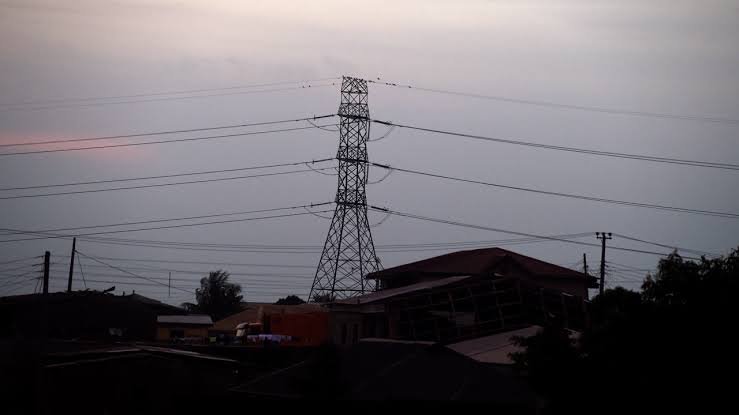
A faulty power line of the Jos Electricity Distribution Plc. (JED) electrocuted eight persons at Kabong community in Jos North Local Government Area of Plateau on Saturday, killing six of them.
The faulty line emitted sparks and electrocuted the victims in the various homes at about 3 a.m., just as it razed houses and shops in the community.
Mr Istifanu John, Sole Administrator of the Jos North Local Government Council, who visited the scene, described it as very unfortunate.
He said the accident inflicted other losses on the state and called on the JED to fix all faults that might have triggered the nightmare.
“This is pathetic because it is an avoidable situation.
“Those that lost their lives didn’t go anywhere to look for trouble; they died in their homes.
“As government, we are pained by this development.
“We call on JED to ensure that all faulty power sources are fixed to avoid this monumental loss in the future,’’ he said.
John condoled with the bereaved families and called on residents to be wary about they use of electric appliances.
In his remarks, spokesman of the traders association in the community, Mr Solomon Odidi, said seven shops were razed.
Odidi blamed the incident on erratic power, supplied by the JED only at night.
He commended the Plateau Fire Service for its timely response, which he said minimised the number of casualties and staved further damages.
Odidi appealed to government to support the bereaved families and those whose properties were destroyed in the accident.
The African Development Bank (AfDB) President, Dr Akinwuni Adesina, says corruption is not an African issue.
Adesina said this in a statement made available to the News Agency of Nigeria (NAN) in Abuja on Saturday.
According to him, what is important is to continue to improve transparency, accountability and the use of public resources.
“The global financial crisis that brought the world down in 2008, that was not in Africa. We have no Wall Street. That collapse came from greed, from corruption, from fraud.
“You have people cooking the books that are in the financial industry in Europe, not in Africa. Corruption is not an African issue.
“The issue is that is not to say that there’s none. What you have to do is to continue to improve transparency, accountability and the use of public resources.”
According to Adesin, he discovered during his first visit to Eritrea that the country has zero per cent corruption record.
“During my first visit to Eritrea, I was talking to UN Development Programme staff. You know what they told me? That, in Eritrea, corruption is zero per cent.
“Why do we not talk about that? That’s the kind of thing that we want to do. For us as a development bank, we take good governance very seriously.
“As far as I am concerned, people’s resources do not belong in other people’s pockets. Governments must be accountable to their people,” he said.
According to the AfDB boss, there has to be transparency on how resources are acquired and used. That’s why we have a governance programme.
He said:“when you get money from us, we also support you technically. You are accounting for those resources.
“I don’t want to minimise that Africa has a significant amount of illicit capital flows; it does anything between 80 billion and 100 billlion dollars a year.
“ But guess what? Those that are doing that are the multinational companies. And so what we have got to do is bring a searchlight to that.”
On how Africa could improve its position in the global value chain, Adesina expressed sadness about the continent’s constant position at the bottom of the value chain.
According to him, the fastest way to poverty is through exporting raw materials, but the highway to wealth is through global value chains.
He said this could be achieved by adding value to everything you have, from oil to gas to minerals to metals and food. We must add value.
“The issue is, we have to invest right; we have to make sure the governance environment is right; we have to make sure the incentives are right.
“Africa must take a position that it is no longer going to be at the bottom but at the top,” he said.
Commenting on the Bank’s support to food security in Africa, the AfDB boss said, “I don’t think that you can have development with pride unless you can feed yourself.
According to Adesina, the 81 shareholders of the AfDB provided it with an increase in the bank’s capital at the end of 2019, from 93 billion to 208 billion dollars.
The AfDB boss said the figure was the highest capital increase in the bank’s history.
He said the increase, however, allowed the bank to do an emergency support facility of 10 billion dollars in COVID crisis response for Africa.
Adesina said the bank inaugurated a 1.5 billion dollars emergency food-production facility to mitigate the global geopolitical crisis leading to a food crisis in Africa.
On the need to restructure the international financial systems, Adesina said, “what is very important for us is the issue of the Special Drawing Rights (SDRs).
“Africa needs to have a lot more resources for financing climate, but what is actually out there is not enough.
“We have on the table right now the special drawing rights of the IMF. But when they were issued, 650 billion dollars were issued, Africa got 33 billion dollars.”
“Its 4.5 per cent, its not good. You have small countries in Europe that got more and that is not fair and not inclusive.”
According to him, African Heads of State are asking for 100 billion dollars to be re-channelled from the countries that got it and don’t use it, or need it.
“We might think of maybe just adjusting it a little bit. And calling it Supporting Development Revitalisation. That’s also SDRs,” he said.
The National Universities Commission, Saturday morning knocked the National Board for Technical Education over the introduction of a “top-up degree” scheme for graduates of Nigerian polytechnics at the level of Higher National Diploma.
The universities’ commission in a statement signed by its acting Executive Secretary, Chris Maiyaki, noted that the move was in clear violation of its mandate.
Earlier, the NBTE had announced a partnership with foreign universities where HND graduates could convert their diplomas to degrees through a one-year conversion course, following the dichotomy which has continued to exist between graduates of universities and polytechnics.
The move had received praise from HND graduates across the country, but the NUC in a strongly-worded statement urged the NBTE to stay put on its plan.
The statement reads, “The attention of the National Universities Commission has been drawn to the news (online) that the National Board for Technical Education has officially introduced a one-year top-up degree programme in Nigerian Polytechnics to enable holders of the Higher National Diploma to convert their certificates to the first degree with foreign accredited universities.
“The online news, which was credited to the Executive Secretary of the NBTE, Prof Idirs Bugaje, and the Board’s Head of Media Unit, Mrs Fatima Abubakar, revealed that the action was in furtherance of the advocacy for the removal of the existing dichotomy between degree holders and HND graduates in their various places of work, and to enhance the beneficiaries’ opportunities for further studies.
The NUC wishes to inform the Management of the NBTE and the general public that the “Bill for an Act to Abolish and Prohibit Dichotomy and Discrimination between First Degree and Higher National Diploma in the Same Profession/Field for Employment, and for Related Matters”, which was passed by the 9th National Assembly in 2021, is yet to be assented to by Mr President and Commander-in-Chief of the Federal Republic of Nigeria. So, even though agitation continues to grow for the abolition of the dichotomy in Nigeria, there is, at the moment, no law that has removed the dichotomy between a university degree and the HND.
Both the NUC Establishment Law (CAP N81, LFN, 2004) and its Operational Law: Education (National Minimum Standards and Establishment of Institutions) Act, CAP E3 LFN, 2004) vest in the Commission the powers to superintend and regulate university education in Nigeria, lay down minimum academic standards in the nation’s Universities and other degree-awarding Institutions, and accredit their programmes.
The statement further stressed that the National Universities Commission is the only body empowered by law to regulate university education in Nigeria.
It added, “Thus, the Commission is the only constitutionally empowered regulatory agency for university education in Nigeria. Pursuant to the sustained commitment of the NUC to the development of a balanced, well-coordinated and productive University System that guarantees the delivery of quality education relevant to national development, and in the face of global competitiveness.
“The university degree awarded by the Nigerian University System or any cognate Institution is not the same as the HND awarded by Polytechnics in Nigeria. In the Nigerian higher education space, the processes, contents and methods required for the acquisition of a university degree are substantially different from those needed for HND programmes;
“At the post-graduate level, the requirements for admission into any Master’s degree programme in Nigerian Universities for candidates with HND are, among others, the acquisition of a Postgraduate Diploma from a recognised University in an area relevant to that for which the Master’s admission is being sought. To this end, it is implicit that beneficiaries of the NBTE’s Top-Up Programme shall be subjected to extant admission requirements by Nigerian Universities, should they desire to further their studies in the NUS.
The statement also warned the unsuspecting general public and all relevant Ministries, Departments and Agencies to note that the NUC “is not a party to and, indeed, disallows the so-called Top-up Scheme, being concocted by the NBTE.”
Finally, the NUC warned the NBTE to focus on its mandate.
In light of the above, the advice of the NUC is that the NBTE should focus on its core mandate and desist from introducing programmes that are outside its jurisdiction and not supported by any law in Nigeria. The Commission does not entertain any intrusion into its lawfully assigned mandate”, the statement concluded
After what looked like a rumour during the week, it has been confirmed that pop star David Adeleke, popularly known as Davido and his wife, Chioma are now proud parents of a set of twins.
In a viral video yesterday, the couple was seen stepping out of the hospital in the United States, holding their newborn twins. The were driven home in a Beantley, belonging to grandfather, Deji Adeleke. Davido was all over the moon as pictures were taken outside the hospital in Atlanta, Georgia.
Chioma was seen seated on a wheelchair cuddling the twins with Davido standing by her side.
In an Instagram post, Davido wrote “I love this moment.”
It was gathered that the singer was not happy with his friend, Samklef when he allegedly leaked the video of the singer and Chioma with their newborn twins.
Recall that Davido had earlier asked fans to stop circulating old images of them in a hospital during the birth of their late son, Ifeanyi Adeleke, which surfaced online.
The three-year-old died after drowning in a swimming pool at their Lagos residence last year.
The death of the lad left the pop star and his wife heartbroken and inconsolable, until now that God has wiped away their tears and made their joy full.
Meanwhile, in Lagos, emotions ran high yesterday when the remains of the mother of another Nigerian superstar, Wizkid were laid to rest.
Wizkid’s mother, Mrs Jane Dolapo Balogun, died on August 18, 2023 in London. A candlelight procession in honour of the singer’s mum was held on Wednesday with Wizkid making his first public appearance following a month-long period of silence as he grieved the loss of his mother.
Speaking at the burial ceremony, an emotional Wizkid said “I know everyone in my family shares this pain with me, and I know God in his infinite mercy is going to…it is impossible for the pain to go away, but I pray God to comfort us to be able to get on with the rest of life. God will comfort every one of us. The pain is profound. It hurts deeply, the deepest pain I’ve ever felt in my life. I’m lost and I pray God will comfort everyone of us. I’m lost without you, mum. I love you so much “
Wizkid grew up in a polygamous home with a Muslim father and a Christian mother. His father married three wives.
Abuja (Flowerbudnews): China’s Belt and Road Initiative (BRI), an initiative of Chinese President Xi Jinping, marks its 10th year of existence this October.
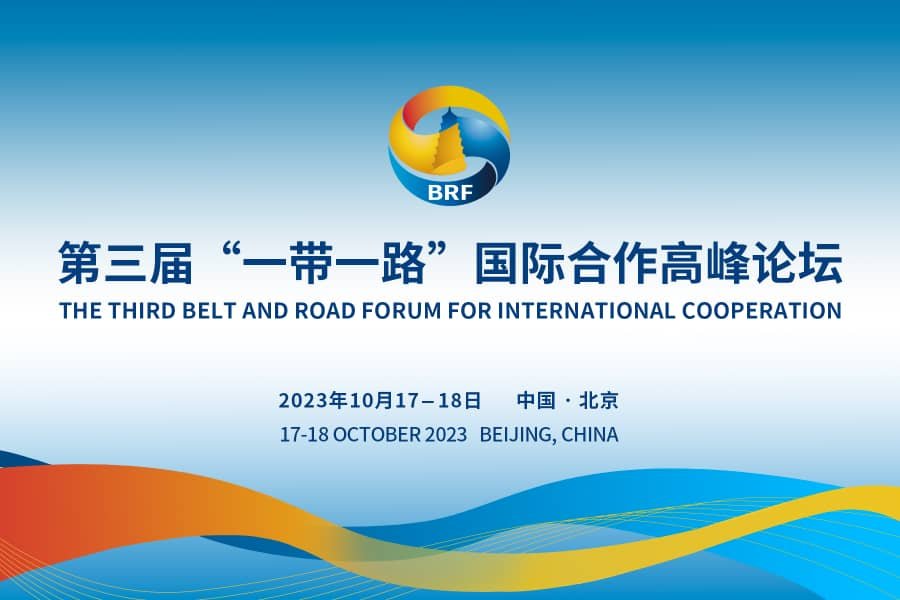
As part of the activities to celebrate the 10th Anniversary of the BRI, over 100 world leaders signatories to the initiative and cooperation partners are to assemble in Beijing between October 17 and 18 for the 3rd Belt and Road Forum with a theme: “High Quality Belt and Road Cooperation: Together for Development and Prosperity”.
BRI, also known as “New Silk Road” is a programme aimed at building a Silk Road Economic Belt and 21st Century Maritime Silk Road, in cooperation with related countries.
The Initiative was unveiled by President Xi Jinping during his visit to Kazakhstan and Indonesia in 2013 and so far, there are 152 active signatories to the cooperation agreements of the initiative from all corners of the globe.
The Initiative focuses on promoting policy coordination, connectivity of infrastructure and facilities, unimpeded trade, financial integration and closer people-to-people ties via consultative processes and joint efforts with the overall goal of bringing appreciable benefits to all.
Meanwhile, the Initiative and its core concepts have been incorporated into the schemes of the G20, the Asia-Pacific Economic Cooperation (APEC), the Association of South East Asian Nations (ASEAN) and the Shanghai Cooperation Organization.
The BRI has become an important platform for achieving the United Nations (UN) 2030 Agenda for Sustainable Development.
It is pertinent to note that since its debut in 2013, the initiative has progressed with remarkable vigour and vitality, while benefiting many countries among its members and other partners around the world through joint efforts and participation.
At the moment, the BRI has become one of the most popular international platforms that are specifically designed to promote all-round multilateral cooperation.
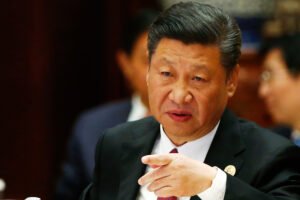
China’s President Xi Jinping attends a summit at the Belt and Road Forum in Beijing on May 15, 2017. Chinese President Xi Jinping urged world leaders to reject protectionism on May 15 at a summit positioning Beijing as a champion of globalisation, as some countries raised concerns over his trade ambitions. / AFP PHOTO / POOL / THOMAS PETER (Photo credit should read THOMAS PETER/AFP/Getty Images)
China and its cooperation partners have foregrounded and upheld the principle of extensive consultation, joint contribution and shared benefits. They have also remained committed to the vision of open, green and clean cooperation, while pursuing excellent, people-oriented and sustainable development, so as to explore new opportunities and stimulate growth in the world.
In the first decade of its existence, perceptive observers have noted that the achievements of the BRI are multifaceted.
The perceptible feats include the development of cooperation partners and the promotion of the people’s well-being, among others. The Initiative has also helped to foster new energies for economic development.
For instance, a report of the World Bank disclosed that the BRI had increased the trade of participating partners by 4.1%, attracting 5% more foreign investment and levelling up the GDP of low-income countries by 3.4%.
Similarly, as part of the accruing benefits, the GDP share of emerging and developing economies in the world has increased by 3.6% from 2012 to 2021.
The World Bank further estimated that by 2030, the BRI would generate $1.6 trillion in global revenue each year, accounting for 1.3% of global GDP from 2015 to 2030, while not less than 40 million people would be lifted out of poverty under the auspices of BRI.
Another notable achievement is that by the end of 2022, the investments of Chinese enterprises in the cooperating countries have created 421,000 local jobs, with more than 3,000 projects being executed; thus fulfilling the development aspirations of the people in many participating countries of the initiative.
In terms of financing, multilateral financial cooperation institutions such as the Asian Infrastructure Bank, Silk Road Fund and the New Development Bank were established to address potential funding challenges that could inhibit the provision of the needed infrastructure in the developing countries.
In the last 10 years, the BRI has also facilitated connectivity between China and countries along the Belt and Way route in the five priority areas.
As of the end of June 2023, China has signed more than 200 contract agreements on jointly ventures under the BRI with 152 countries and 32 cooperating partners. And from all indications, trade has grown exponentially between China and its partners in the BRI in the past decade.
Through the BRI platform, China has been able to establish a connectivity framework involving six corridors — a unique kind of routes that significantly promoted the connectivity of landlocked countries in the Asian region such as Kazakhstan, Nepal and Laos with the world — by building roads and railways.
Besides, there is an intercontinental China-Europe freight railway, which is currently hauling goods from China to many European countries at a minimum period of time. This freight rail express has opened up a novel channel of trade between Asia and Europe by land, thereby becoming an anchor of stability for global supply chain.
As regards the African continent, there is no gainsaying the fact that in the last 10 years, the continent has benefited from BRI’s projects massively.
This is probably due to the fact that China believes that Africa is part of the history and natural extension of the BRI.
The declaration of the Forum on China-Africa Cooperation (FOCAC) in 2018 in Beijing and its 2019-2022 African Plan emphasised that Africa occupied an important position in the BRI Cooperation. Today, many African countries witnessed the emergence of infrastructure projects such as roads, railways, dams, airports, seaports, health facilities and sports facilities, among others.
Although the initial focus of the BRI was on Asia, Africa later received the particular attention of the Initiative with major investments in East Africa, where Beijing, under the BRI platform, initiated a range of infrastructure development projects in Kenya, Ethiopia and Tanzania.
In Kenya, the multi-million dollar Nairobi-Mombasa Standard Gauge Railway (SGR) was built for passengers and goods on that route. In Ethiopia, a similar SGR project was executed and completed and it is known today as Addis-Djibouti railway. In Tanzania, there is TAZARA railway linking the port city of Dar el Salam in Tanzania with Zambia’s central province.
On the other hand, Nigeria in West Africa has had a fair share of the BRI infrastructure projects in the last 10 years. Some of the projects include Abuja-Kaduna standard gauge rail line, Abuja metro rail system, Lagos-Ibadan standard gauge rail line, Lekki Deep Sea Port in Lagos, five new airport terminals in Lagos, Abuja, Port Harcourt, Kano and Enugu, Zungeru Hydro Power Plant as well as Abuja township roads.
In spite of the growing incidence of trade protectionism and unilaterism across the world, trade and infrastructure development projects involving China and African countries have continued to flourish significantly, thereby signifying deepening economic relations between the two sides.
President Xi Jinping, in his address in 2019 on the sidelines of the G20 Summit in Osaka, Japan, said that China and Africa had become strategic partners, while assuring that the fundamental aspirations of China and Africa for a robust cooperation and development would remain unchanged regardless of any external influences and extraneous factors.
The Chinese leader then reiterated that the concerted resolve of China and Africa to jointly build a closer community with a shared future would not waver. (Flowerbudnews)
Lawal Sale is an Abuja-based Global Affairs Analyst. (lawalmaida1@yahoo.com)