
Blog

  • LEADERSHIP DEFICIT AND POLITICAL CRISES ROCKING ECOWAS REGION

    LEADERSHIP DEFICIT AND POLITICAL CRISES ROCKING ECOWAS REGION

    By Paul Ejime

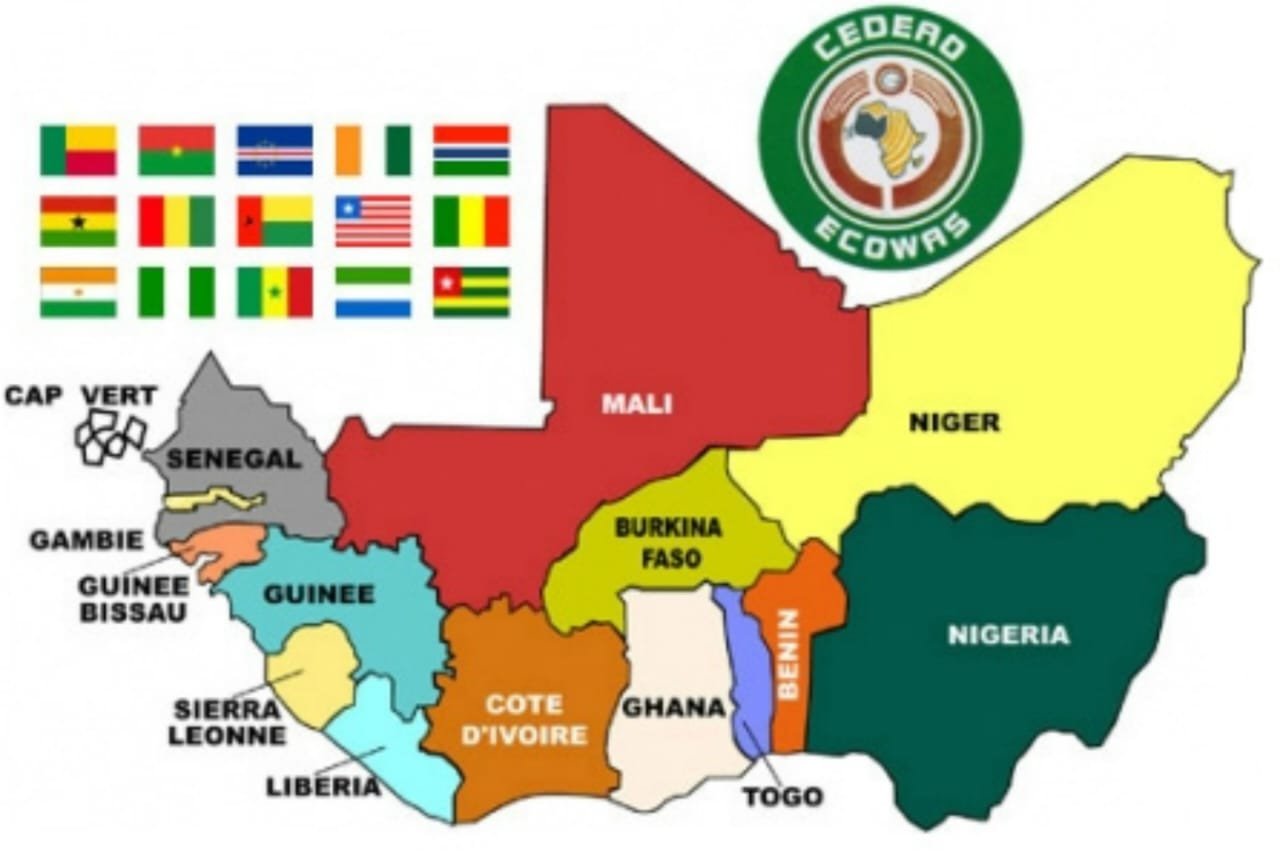
    The failure of the Economic Community of West African States (ECOWAS) to follow through with its recent threat of military intervention to restore constitutional order in Niger, the fourth of its member States to have descended into a military dictatorship within the last four years is embarrassing enough. But the regional organisation faces even greater reputational damage from its lethargic response to disturbing “political and constitutional coups” in the region.

    Until a decade ago, ECOWAS boasted a good track record in political conflict/crisis prevention, management, and resolution, including international acclaim for ending the civil wars in Liberia and Sierra Leone, followed by the restoration of peace in other member States such as Cote d’Ivoire, Guinea, Guinea Bissau, and Niger.

    These successes were achieved through a combination of sanctions and preventive diplomacy relying on regional instruments and protocols, which have been adopted by other organisations, such as the African Union.

    For instance, the 1999 ECOWAS Protocol Relating to the Mechanism for Conflict Prevention, Management, Resolution, Peacekeeping (the Mechanism), and the 2001 Supplementary Protocol on Democracy and Good Governance have been used to stabilise the region progressively and incrementally and promote democratic governance, especially by applying the policy of ‘Zero Tolerance’ to power obtained or maintained by unconstitutional means.

    Between 2009 and 2010, three member States – Guinea, Niger and Cote d’Ivoire were suspended for violating the 2001 Protocol. Specifically, in 2009, the tenure elongation plan of the then Niger President Mamadou Tandja, was halted and he was forced to reverse his dissolution of the country’s parliament.

    Also, the post-election crisis in 2010 and subsequent civil war 2011-2012 in Cote d’Ivoire were eventually resolved with ECOWAS inputs to international efforts.

    The regional organisation also bluntly refused to deploy observers to the 2011 ‘sham’ elections conducted by the then Gambian dictator Yahya Jammeh. Citing the absence of a conducive democratic environment and level-playing field reported by its fact-finding Mission to the Gambia, ECOWAS refused to recognise the results of that election.

    Jammeh went ahead with another election in 2016, but the post-election violence eventually resulted in his forced exile in Equatorial Guinea in 2017, through an ECOWAS-led international intervention. That crisis could have been avoided if the international community had supported ECOWAS’ principled stance in 2011.

    Set up in 1975 primarily to foster economic development and regional integration, peace and security were injected into the ECOWAS regional agenda because of the myriad political conflicts and governance challenges, including civil wars that followed the formation of the regional organisation.

    To their credit, ECOWAS leaders of that time responded promptly and with urgency, often militarily, to halt the slide of the region into anarchy, and to salvage the organisation’s credibility, through the rigorous application of normative and institutional frameworks to support the aspirations of the peoples based on shared values of democracy, the rule of law, human rights, and market economy.

    Unfortunately, those aspirations and ECOWAS’ glory appear to have receded into the distant past, no thanks to leadership failures at national and regional levels.

    Granted that the political environment has since evolved charactered by different hues of insecurity, especially terrorism, religious extremism, asymmetric warfare, and global economic recession, but it also behoved ECOWAS leaders to think outside the box.

    Instead, the regional organisation has become largely ineffective because its leaders have allowed the lack of principle to gain foothold over time, due to their pursuit of personal ambitions, greed, corruption, authoritarian tendencies, and insensitivity, with regional protocols completely ignored on observed in breach.

    Four ECOWAS member States – Mali, Guinea, Burkina Faso, and Niger, are presently under military dictatorships after several coups, with three of the countries Mali, Burkina Faso, and Niger, forging a coalition and Defence Alliance, that falls short of their withdrawal from ECOWAS.

    The collaboration by the four suspended member States, that are also enduring ECOWAS-imposed sanctions, could be part of their “survival strategy.”

    Even so, ECOWAS cannot dismiss such unwholesome developments or the resurgence of coups in the region, with two attempts each reported in Guinea Bissau and Sierra Leone, resulting in simmering political tensions in both countries following post-election disputes.

    The opposition in Sierra Leone has rejected the results of the June presidential election after the national electoral Commission declared sitting President Julius Maada Bio re-election with 56.17% over his opposition party rival Samura Kamara.

    Also troubling is President Umaro Sissoco Embalo’s decision to dissolve Guinea Bissau’s opposition-controlled parliament. This followed violence that greeted last week’s gunbattle which the government called an ‘attempted military coup’ after the legislature condemned the clashes between the National Guard and the State armed forces.

    Meanwhile, the Bissau government has remained silent on the casualty figure and the number of arrests, adding to the dozens that were rounded up after the February 2022 reported coup attempt in that country.

    Many analysts consider some of the foiled coup reports as a ploy by the governments involved to silence the opposition.

    More importantly, Embalo’s dissolution of the parliament is in blatant violation of Article 64 of Guinea Bissau’s Constitution and therefore, “a constitutional coup.”

    The former Portuguese colony operates a semi-presidential system, which emphasises separation of powers with the majority party or coalition, in this case, the opposition PAIGC in control of parliament, government and the National Guard, while the National armed forces report to the President.

    Announcing the latest parliament dissolution in a presidential decree, the second time in two years after the reported coup attempt in February 2022, Embalo, who is also accused of operating a private army, said a new election would be held on an unspecified date. However, the country’s constitution forbids the dissolution of parliament 12 months before an election.

    Guinea Bissau is one of the countries where ECOWAS has invested large human and financial resources over the years in peacekeeping and stabilisation.

    An ECOWAS military Mission is in place in the country. It was only sent back in February 2022 following the withdrawal in 2020 of a larger Mission, ECOMIB, deployed in 2012.

    Also, recently in Senegal, which will hold a crucial presidential election in February 2024, President Macky Sall, has gone on “political rampage,” by proscribing an opposition party and sacking members of the national electoral Commission, a move considered “a political coup.”

    It is not only ironic but inconsistent that ECOWAS, which is usually quick to condemn military coups has remained silent on the political and constitutional coups threatening peace and security in Guinea Bissau and Senegal, and by extension, the region.

    ECOWAS’ response has equally been timid to the developments in Sierra Leone, where the government is reportedly targeting opposition members in the aftermath of two reported coup attempts from September.

    Military rule is an aberration in the Modern World, and military coups cannot be justified, neither should “political, constitutional, ballot box, or human rights coups.”

    ECOWAS member States must realise that there is strength in unity, but individually, they will be preyed upon by foreign powers be they from Europe, the Americas, Russia, or China.

    There is no doubt that ECOWAS and its present leaders have derailed on the dreams of the organisation’s founding fathers. They, therefore, owe themselves and more than 400 million citizens of the community a constitutional duty and responsibility to right the wrongs and guarantee good governance, based on democratic principles and international best practices.

    The ECOWAS Commission management and regional leaders must not allow the sacrifices of past leaders to be in vain.

    Nigeria, the regional powerhouse, current Chair of the ECOWAS Authority, and the organisation’s largest financial contributor has to step up and lead by example.

    Democracy may not be a panacea, but through credible elections, it provides the necessary choice for transition to normalcy, particularly in West Africa’s fragile and politically restive environment.

    As noted by the famous British Prime Minister Sir Winston Churchill in 1947:

    “Many forms of government have been tried in this world of sin and woe. No one pretends that democracy is perfect or all-wise. Indeed, it has been said that democracy is the worst form of government except all those other forms that have been tried from time to time.”

    A former ECOWAS Commission President Ambassador James Victor Gheho also affirmed during a presentation in Chatham House, London in 2011: “We made a conscious choice with the genuine belief that while even the most credible elections may not produce good leaders, at least they offer the electorate the opportunity to remove bad ones. ECOWAS, therefore, encouraged Member States to interrogate and refocus their style of governance.” (Flowerbudnews)

    *Paul Ejime is a Global Affairs Analyst and Consultant on Peace & Security and Governance Communications

  • NAFDAC addressing issuance of pending companies licence – Director

    NAFDAC addressing issuance of pending companies licence – Director


    By Mujidat Oyewole

    Ilorin:   The National Agency for Food and Drug Administration Control (NAFDAC) has assured companies that their registration licences are being processed.

    The Director of North Central Zone of the agency, Mr Shaba Muhammed, said that the agency have addressed the issue of pending issuance of companies licence.

    The director disclosed this while speaking with the News Agency of Nigeria (NAN) in Ilorin on Friday on the sideline of his inspection tour to Kwara.

    Muhammed said that the issue of pending licence had been addressed at the top management meeting.

    He said that the NAFDAC director general had given an order that all the pending registration of the agency’s products should be completed within two weeks.

    “All the states, zones and directors in NAFDAC are to make their submission latest by today, Friday.

    “This is to ensure that the technical directorate that are concerned with registration of the products will conclude their work within another two weeks,” Muhammed said.

    The director however warned that late renewal of licence attracts penalty and it is multiple of the amount of the registration.

    He explained said that the penalty was aimed at encouraging companies to renew their certification licence before the expired day.

    (Director of NAFDAC, North Central Zone, Mr Shaba Muhammed, tours Kwara, meets with stakeholders in Ilorin.)

    Mohammed however said that during his routine inspection tour, they usually organise training or hold meeting with stakeholders.

    He stressed the importance of his visit, stating that the new State Coordinator, Mr Nadabo Nathan, was just deployed to Kwara.

    “I will like to see the facilities and have meeting with some selected stakeholders on NAFDAC activities and look into their challenges to know how to address them.

    “That is what we did today and the objective is to know their challenges with the state office and NAFDAC generally,” he said.

    The director said that the inspection team was able to pay unscheduled visits to some companies in the state.

    According to him, they inspected company facilities and their process of production, as well as access the area of production.

    “Usually we pick a few companies among the list of registered companies under the state, which will not be known to them, in order to see the true picture of them.

    “We visited two pharmaceutical companies and each of them have the standard certified factories.

    “We also visited a food industry which possessed state of the earth equipment, and a water factory that produces bottle and sachet water and we met them in good working condition,” he said. (NAN) (www.nannews.ng) / Flowerbudnews

  • Breaking:  UK court orders P&ID to pay Nigeria £20 million as damages and compensation

    Breaking: UK court orders P&ID to pay Nigeria £20 million as damages and compensation


    BREAKING: UK court has ordered P&ID Limited to pay Nigeria £20 million as damages and compensation.

    The sentence followed Nigeria’s victory in an $11 billion judgment debt which was heard in October.

    The court directed the sum to be paid to Nigeria in the next 28 days. (Flowerbudnews)

  • Minister seeks collaboration with IHRO-Africa to enhance socio-economic, education development

    Minister seeks collaboration with IHRO-Africa to enhance socio-economic, education development


    By Flowerbudnews

    The Minister of Innovation, Science and Technology , Chief Uchenna Nnaji, says his ministry’s collaboration with International Human Rights Observatory Africa (IHRO-Africa) will enhance socio-economic and educational development in the county.


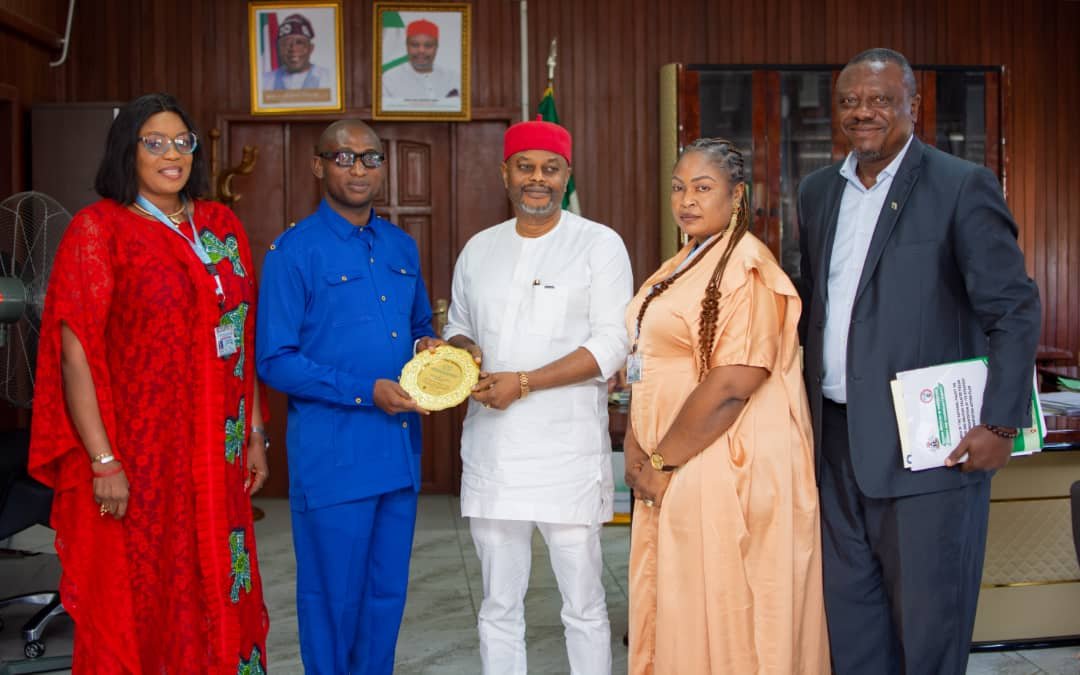
    Nnaji said this when he received members of IHRO-Africa, led by Amb. Dr Chimbo Obieze, Special Envoy and Country Director of IHRO-Africa, that paid a diplomatic visit to his office in Abuja.


    The statement on the diplomatic visit on Friday was released to newsmen in Enugu on Saturday.

    The minister said that it was a pleasure to host the diplomatic visit of members of IHRO-Africa, adding: “I am particularly impressed by IHRO-Africa’s dedication to promoting human rights, supporting education and fostering social-economic integration in Africa”.


    “Learning about IHRO-Africa’s ongoing initiatives, especially their work in support of the African Charter was both enlightening and inspiring.


    “The organization’s impact is commendable and I believe our collaboration can further amplify these efforts,” he said.


    Nnaji said that his ministry was eager to explore concrete avenues for collaboration based on “our shared visions”, adding: “Their (IHRO-Africa) insights and expertise will be invaluable in advancing our joint initiatives”.

    Earlier, Obieze applauded the minister’s notable achievements and doggedness in using innovation, science and technological platforms to address the challenges of socio-economic development across the federation within his short period in office.


    “IHRO-Africa is an international civil society organization registered with its international headquarters in the USA; and its continental headquarters in France, Nigeria, Sierra Leone and Kenya.


    “We appoint special envoys globally for Diplomatic Missions. IHRO-Africa supports the African Charter which was universally adopted at the OAU meeting of African Heads of State and Government held in Kenya on June 27, 1981.


    “Indeed, the Charter lists the rights and duties that should be respected at all times according to the Universal Declaration of Human Rights (UDHR) adopted by the United Nations General Assembly on Dec. 10, 1948,” he said.


    According to him, IHRO-Africa is not taking these conventions/charters for granted that is why we deem it necessary to pay Your Excellency this Diplomatic visit to accelerate peace, diplomacy, climate change and to promote science and innovation technology.


    “We believe that a collaborative effort with the Ministry of Innovation, Science and Technology can significantly contribute to the advancement of our shared goals.


    “These shared goals are within the 4-point Agenda of IHRO-Africa, which we offer through our Support Children Education Fund (SCEFUND) Technology, which includes: To promote science, technology and climate change control and achieving Africa Union (AU) Agenda 2063.

    “To change the narrative of online fraudsters into youths’ technology creative hub for Sustainable Development Goals (SDGs) and to use new technology to fight Ponzi Scheme Master (PSM) node.


    “Lastly, to develop Innovation, Science and Technology Decentralized Protocol Bond (ISTTPB) through block chain technology for easy access of quality education and empowerment of tech-innovative drive,” he said.


    Among members of IHRO-Africa that came for the diplomatic visit included: Amb. Uzoamaka Ezedioranma, Head of Operation IHRO-Africa and Amb. Chinaelo Ogbata-Ejorh, IHRO-Africa’s Special Envoy to South-East on Women Cares, Children Education and Good Governance. (Flowerbudnews)

  • Governor suspends school principal for alleged sexual scandal

    Governor suspends school principal for alleged sexual scandal


    By Zubairu Idris
    Katsina:.  Gov. Dikko Radda of Katsina State has directed for immediate suspension of a staff of Ministry of Education in the state for alleged sexual harassment of a female student.

    The directive is contained in a statement issued by the Director Press, Office of the Secretary to the State Government, Mr Abdullahi Aliyu-Yar’adua, and made available to newsmen on Friday in Katsina.

    The statement said, “Gov Dikko Radda has received a report of alleged sexual harassment against one Lawal Ibrahim, now a staff of the Ministry of Education.

    It said Ibrahim was the then Principal of Government Day Secondary School, Dantankari, Dandume Local Government area.

    “In consequence therefore, the governor directed the Commissioner for Basic and Secondary School Education to immediately suspend Lawal Ibrahim and investigate the allegation with dispatch.

    “Take appropriate action and report back to the governor.”

    The statement further directed the Commissioner of Police to investigate the allegation.

    “The Commissioner of Police should investigate the allegation, and to also investigate the Divisional Police Officer, Dandume, for compromise on the matter, and report back to the governor,” the statement said. (NAN) www.nannews.ng /Flowerbudnews

  • ENSG places robust, proactive equipment, sensitisation upscale to tackle fire outbreaks

    ENSG places robust, proactive equipment, sensitisation upscale to tackle fire outbreaks


    By Flowerbudnews

    Enugu: The Enugu State Government has started implementing robust and proactive equipment, man-power and sensitisation upscale to tackle fire outbreak and ensure “zero fire losses’’ this dry/harmattam season.


    The Director of Enugu State Fire Service, Engr. Okwudiri Ohaa, told newsmen in Enugu on Thursday that the state fire service had been making proactive preparation to ensure that the state government’s “zero fire losses’’ initiative is achieved.


    Ohaa said that Gov. Peter Mbah restoration of water supply to Enugu after 20 years had robbed off tremendously well on the job of the state fire service and increase its efficiency and service delivery to the residents of the state.

    He said that the restoration of water, after just 180 days in office as promised by Gov. Mbah during his electioneering campaign, had resuscitated water hydrants belonging to the service especially in its fire stations.


    “As we work to achieve the “zero fire losses” initiative this season; His Excellency Dr Peter Mbah has up scaled our operation by his laudable provision of water to Enugu in his first 180 days in office, thus, resuscitating our water hydrants within and in the outskirt of Enugu metropolis.


    “With adequate and steady water supply from our water hydrants scattered all over the state; our work, as first responders to fire outbreak incidents, is made easy for us as well as increased our efficiency rate,” he said.


    He also said that provision of the water hydrants had made government public potable water accessible to people and nighbourhoods that live around the areas where these water hydrants are located.

    Ohaa, who is also the Chief Fire and Rescue Officer of the state, said that the state government also gave a recent directive for installation of fire extinguishers on all government-owned public buildings to ensure fire safety this season.


    According to him, the service has undertaken the training of civil servants occupying these public buildings on how to use and maintain these fire extinguishers for ir prevention and maximum positive result.


    “Also, graciously, His Excellency has given us approval and funding to procure those things we usually need during this (critical) season; and in fact our suppliers in Lagos has given me phone number of the truck that are coming to drop something for us.

    “Most especially the chemicals we use. Funds for it have been released and we have made necessary payment and before tomorrow the truck will be arriving here in Enugu and dropping the items.


    “Most of the chemicals like AAF (foam-making agent), which we are purchasing nothing less than 40 drums; equally paid for dry chemical powders, we equally paid for hoses, branches, fire man axes among other requirements,” he said.


    The director noted that as part of pro-active preparation, 21 staff of the Enugu State Fire Service are currently undergoing in-service training in order to build their capacity and skill or maximum service delivery.


    He said that the service within the past three weeks had engaged in massive media and stakeholders’ sensitisation on prevention and putting up emergency contingent plans to forestall fire outbreaks in the state.


    “I have been on the air in most media houses even using local dialect to remind our people on the need to be cautious this season and do due diligence in switching off all electrical appliance at the close of work/business or while leaving home in the morning hours.


    “They should also avoid putting on fire indiscriminately and totally avoid bush burning under the guise of hunting bush meat or other reasons.

    “We have in the past weeks engaged the educational board offices and traders in various markets on fire prevention and need to have functional fire extinguishers and Enugu State Fire Service emergency numbers,’’ he said.


    Ohaa noted that the “state fire service is planning to extend its robust sensitisation and engagement to all major markets in the state within the next two weeks before Christmas”.(Flowerbudnews)

  • Stakeholders seek end to gas flaring in Africa

    Stakeholders seek end to gas flaring in Africa


    Abuja: Participants at the 2nd edition of the International African Energy, Oil and Gas Summit organised by African Peace Magazine Ltd have called for an end to gas flaring in Africa.

    The call was made in a communique jointly issued at the end of the summit held in Angola by the Chairman and Editor-In-Chief of the magazine, Justice Suleman Galadima (rtd.) and Mr Noah Ajare.

    A copy of the communique was made available to newsmen in Abuja on Friday.

    The five-day event, which began on Nov. 30, ended on Dec. 4.

    (L-R Mr. Msuega Tese of integrated Solutions Angola, Noah Ajare Editor in Chief of African Peace Magazine, Samiala Umar Permanent Secretary Department of Power Katsina State, Dr. Udochu Ogbonnaya Executive Director Green Energy International Ltd, Dr. Tolorunse Adebola Josep Legal Adviser, Nigerian Midstream and Downstream Petroleum Regulatory Authority, Abdullahi Abubakar Matazu General Manager Katsina State Rural Electricity board , H.E. Professor Monique Oshame Ekpong (KSJI), the outgoing Ambassador Extraordinary and Plenipotentiary of the Federal Republic of Nigeria to the Republic of Angola, H.E Dr. Faruk Lawal Deputy Governor Katsina State, The Chairman of the APM, Hon Justice Suleiman Galadima JSC, OFR, CFR, His Royal Highness Sir, David Serena-Dokubo Spiff Ada IX, Paramount Ruler of Spiff Town, Bayelsa State, Abdulkarim Sa’id Nigerian National Petroleum Corporation (NNPC), Prince Bar Olusegun Ilori Director Green Energy International Ltd, and Malado Ikechucku Esq.)

    The attendees agreed that there is an urgent need to accelerate the transmission from fossil fuel to green energy.

    They said that the reliance on fossil fuels has had adverse impacts on the environment, “while the world’s energy needs are growing.

    “Like many other regions, Africa has the difficulty of striking a balance between environmental sustainability and energy needs.

    “There are several requirements for a seamless energy transition.

    “It includes the need to lessen the negative effects of climate change while promoting economic growth, ensuring energy security, and reducing carbon emissions.”

    They said achieving these goals would require embracing renewable energy sources, including biomass, solar, wind, and hydro.

    The communique observed that most African countries, rich in oil and gas like Nigeria and Angola, are yet to be able to eradicate poverty, thus the citizens are not benefitting maximally from the proceeds of the oil revenue.

    It also observed that African economy is heavily reliant on oil and gas, and as such, there is an urgent need to diversify the economy.

    The conference, therefore, resolved that sustained broad based economic growth and poverty reduction would be critical to Africa’s economic growth and stability.

    “Specifically, the summit called on African states and governments to refocus efforts on infrastructure development, improve power generation, improve agricultural productivity, and expand jobs in rural areas.

    “There should also be greater attention on youth employment through education and entrepreneurship skills training.

    “The summit stressed the need for a smooth energy transition and the need to embrace artificial intelligence.

    “The summit analysed the critical issue of security and its intertwined relationship with economic prosperity,” among others.

    The summit also resolved that that all personnel and agencies responsible for preventing, controlling, and/or cleaning up oil spills in Africa should do more.

    “They should be trained and to follow the standard operating procedure.

    “Training should be conducted annually. All spills should be documented and maintained.

    “This should involve the host communities, the companies and the government,” it said.

    The event, which was attended by about 240 registered conferees, was declared open by the Deputy Governor of Luanda, Jorge Miguêns-Augusto representing the Governor of Luanda Province, Manuel Homem.

    The keynote speaker was Professor Anthony Adegbulugbe, Chairman of Green Energy International Ltd (GEIL) and former Special Adviser on Energy Matters to former President Olusegun Obasanjo, represented by Prince (Barr.) Olusegun Ilori board member and director at GEIL.

    Goodwill messages were received from President of the African Development Bank, Dr. Akinwumi Adesina; Gov. Dikko Umar Radda of Katsina State, represented by the Deputy Governor, Dr. Lawal Faruk, among others. (Flowerbudnews)

  • Enyimba FC, United Nigeria Airline sign N100m sponsorship agreement

    Enyimba FC, United Nigeria Airline sign N100m sponsorship agreement


    By Flowerbudnews

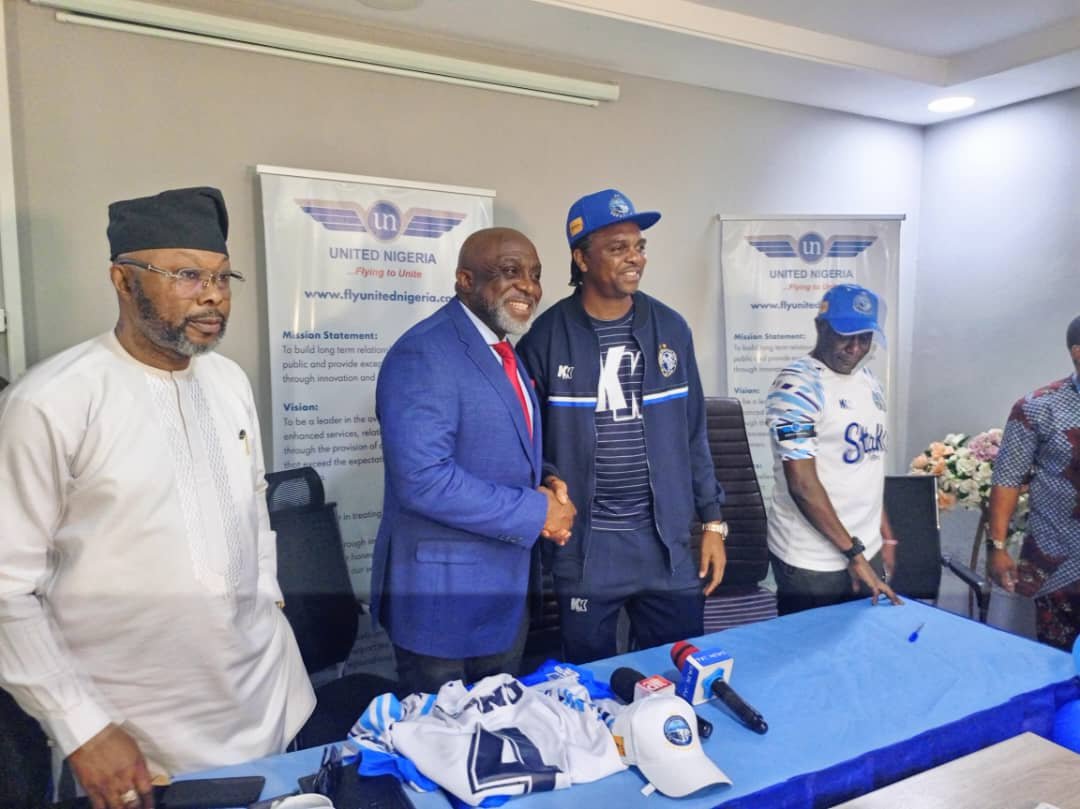
    Enugu: The Enyimba Football Club, on Friday, signed an initial N100m agreement with the United Nigeria Airline for sponsorship of the club-side.


    The sponsorship agreement is within two years period of relationship and activities.


    Speaking at the agreement signing ceremony in Enugu, the Chairman of the Enyimba FC, Nwankwo Kanu, popularly known as Papilo, expressed his joy over the sponsorship of the United Nigeria Airline.


    Kanu applauded the Chairman of the Airline, Prof. Obiora Okonkwo, for appreciating the sacrifice his team (Enyimba FC) had done for the country, and made the country proud internationally.

    “Today is a special day, Enyimba FC is 24 year before I came in as chairman, we have not had such. So from the people of Abia State, His Excellency, Gov. Alex Otti, the staff, the club and the league, we really appreciate the sponsorship.


    “Enyimba Football Club, the League itself needs people and organization of such.

    “The United Nigeria Airline is to unite everybody and football is one of the biggest tools to unite Nigeria,” he said.


    Kanu said that the United Nigeria Airline had come to help and they prayed and believed that other airlines could also help Nigeria football development.

    “Coming to Enyimba FC, which is one of the biggest football clubs in Africa, this is to show that things are getting much better.


    “It is not going to be easy for us but with what is happening today, Enyimba will still be Enyimba and be on top,” he assured.


    Earlier, Okonkwo said that the mantra of the United Nigeria Airline was flying to unite Nigerians.


    According to him, the airline is seeing football as an important factor that unites Nigeria people, regardless of their tribe, race and state, even where they are coming from.

    “Soccer is one thing that when playing, you only support with emotional sentiment that gives you joy, so in our corporate social responsibility, we see that as an important thing we can identify with and we do not find anyone than working with Papilo,” he said.


    He said that Kanu’s team had contributed so much in the lives and joy of Nigerians.


    The chairman congratulated Kanu for the appointment he had taken with Enyimba, adding that it was going to take a lot of sacrifice from him.

    “I hope the understanding agreement will make your engagement easier and make you succeed,” he said.


    He applauded Gov. Otti for appointing Kanu, commending him for putting a round peg into a round hole. (Flowerbudnews)

  • Appeal Court fines Gov. Makinde, others N50m for withholding ex-council chiefs’ funds

    Appeal Court fines Gov. Makinde, others N50m for withholding ex-council chiefs’ funds


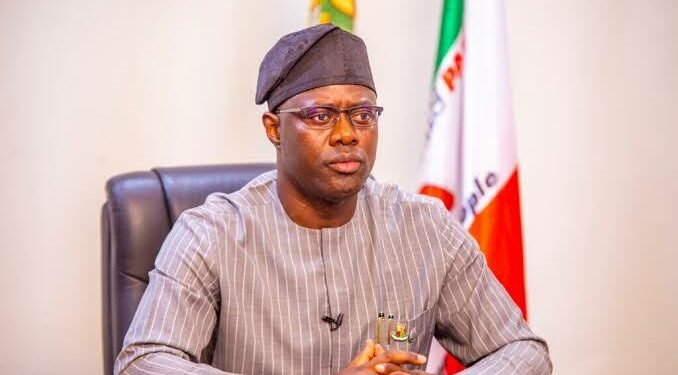
    Abuja:  The Court of Appeal in Abuja, on Friday awarded N50 million in damages against Gov..Seyi Makinde of Oyo State, and six others for failure to pay the outstanding balance of N3,374,889,425.60 (N3.4 billion) from the N4,874,889,425.60 (N4.9 billion) debt, arising from a May 7, 2021 judgment of the Supreme Court.

    A three-member panel of justices, in a unanimous judgment, condemned Makinde’s conduct, which it described as disrespectful of the nation’s judicial system.

    The court affirmed the April 27 decision of the High Court of the Federal Capital Territory (FCT) ordering the state governor to paid the outstanding balance.

    The News Agency of Nigeria (NAN) reports that the N4.9 billion debt arose from the judgment of the Supreme Court given against Makinde, the state’s Attorney-General (A-G), Accountant-General and four others in an appeal by chairmen and councillors elected on the platform of the All Progressives Congress (APC), but sacked on May 29, 2019, by Makinde, upon assuming office.

    In the judgment, the appellate court upheld the arguments by the lawyer to the ex-council chiefs, Musibau Adetunbi, SAN, resolved the two issues, identified for determination, against the appellants and dismissed the appeal filed by Makinde and six others for lacking in merit.

    The court awarded N50 million cost against Makinde and co-appellants, to be paid to the ex-council chiefs led by Bashorun Mojeed Bosun Ajuwon.

    The judgment was on the appeal marked: CA/595/2023 filed by Makinde, the Oyo State’s A-G, the Commissioner for Local Government and Chieftaincy Affairs, Accountant-General of Oyo State, Speaker of Oyo State House of Assembly, the House of Assembly and Oyo State Independent Electoral Commission (OYSIEC).
    In the lead judgment, Justice Danlami Senchi held that, as against the contention by the appellants, there was no dispute in relation to the amount that constituted the judgment debt.
    The judge referred to a letter written on Dec. 13, 2021, by the A-G of Oyo State, where the state put the salaries and allowances due to the ex-council chiefs at N4,874,889,425.60 and pledged to pay everything within six months.

    He said the court could not allow Oyo State Government and its officials to approbate and reprobate; blow hot and cold at the same time by claiming the amount constituting the debt was not ascertained despite the letter by the A-G and the fact that the appellants took steps to settle the debt by making part payment.

    Justice Senchi also faulted the appellants’ contention that the ex-council chiefs failed to first obtain the consent of the Oyo State A-G before initiating a garnishee proceeding to seize the state’s funds to settle the judgment debt.

    The judge said asking the ex-council chiefs to first seek and obtain the consent of the Oyo A-G, who was one of the judgment debtors, amounted to making him to be a judge in his own case, “which requirement is unfair to the judgment creditors.”

    “The ex-council chiefs were in order to have initiated the garnishee proceeding, because there was a judgment debt to be paid by the appellants by virtue of the judgment of the Supreme Court,” he said.

    The Supreme Court had, in its May 7, 2021 judgment, declared the action of the ex-council chiefs, who sued through 11 representatives, led by Bashorun Majeed Ajuwon, as lawful and ordered the Oyo State Government to compute and pay them their entitled salaries and allowances within three months of the judgment.

    Rather than comply with the judgment, the Oyo State Government paid only N1.5 billion, prompting the judgment creditors (the ex-council chiefs) to initiate a garnishee proceeding against Makinde and others before the High Court of the FCT.

    In the April 27 ruling, Justice A. O. Ebong of the High Court of the FCT issued a garnishee order absolute, directing Makinde and others to pay the balance of the judgment debt on instalment basis, begining with N1,374,889,425.60 to be paid immediately.

    Justice Ebong ordered them to subsequently pay the remaining N2b billion at N500 million quarterly, with the first instalment payable on July 31, a decision Makinde and others challenged at the Court of Appeal.

    NAN reports that it was the April 27 ruling by Justice Ebong that the Court of Appeal affirmed in the judgment delivered on Friday.(NAN)(www.nannews.ng) / Flowerbudnews