Blog

  • NAFDAC shuts 240 shops over fake drugs, beverages in Aba

    NAFDAC shuts 240 shops over fake drugs, beverages in Aba

    No fewer than 240 shops on Cemetery Road Market, Aba in Abia State have been shut down over fake and counterfeit drugs by the National Agency for Food and Drug Administration and Control, NAFDAC.

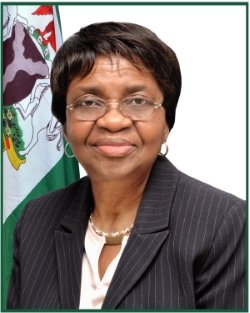
    The drugs and other products confiscated were worth more than N700 million, according to the Director General of NAFDAC, Prof. Moji Adeyeye.

    Adeyeye said the raid was carried out within the first two weeks of December 2023 and that many such raids had been going on in the country.


    She decried the increase in the number of counterfeiters in the country. She charged citizens to be more careful of what they buy and consume as most of these counterfeit products, including beverages and consumables, had adverse and long-term health implications for those who consume them.


    “We have carried out raids in different parts of the country, and we have seized goods worth millions of Naira. The latest raid is the one that happened at Cemetery Road Market in Aba.


    “NAFDAC intercepted counterfeiters engaged in the production of a variety of beverages. They include alcoholic and non-alcoholics wines, as well as consumables.


    “This was achieved due to several weeks of intelligence gathering. And we were able to carry out a sting operation and burst the criminal activities in the market that had been going on for a long time. They were now like a cartel.


    The faked drinks

    “Some of the activities of the nefarious counterfeiters included the production of all kinds of wines from a wide variety of brands.They range from Schnapps, Dry Gin, Hennessy, Four Cousins, Chelsea to London Dry Gin and Gordons.


    “They also counterfeited non-alcoholic beverages like Eva wine and Coca-Cola products, among others.


    The criminals re-validated expired products. And all of these operations were carried out in a less-than-conducive environment with water that was not pure.

    During the raid, about 240 shops were closed down, and 1,500 cartons of the counterfeited products were destroyed.


    “Three hundred cartons were seized, and 10 persons were arrested at the scene of the crime and will be charged to court. The goods destroyed and seized from this illegal operation were valued at about N700 million,” she said.


    She urged Nigerians to always buy their beverages from reputable supermarkets and to avoid any deals that were too good to be true as they could be selling counterfeited drugs.


    “Nigerians need to use the ‘Fours Ps’ when they are shopping. They should ensure that where they are buying their beverages are reputable supermarkets and not just roadside stalls..

    They should also not fall victim if the prices are too low to be believable. If the prices are low, then the product may not be from a good source.


    “Packaging of the product is also very important. If the seal of the package is broken or it looks odd, then it probably may be the work of the counterfeiters.


    “If the product smells badly, then that is another sign that it is a bad or counterfeited product, and consumers should look out for all these signs.


    “Overall the product itself must be checked to ensure that it is not contaminated or a bad one. The World Health Organization (WHO) study in 2019 shows that alcohol consumption is tied to various cancers.”


    She also highlighted some of the achievements of NAFDAC in 2023, which included a media parley with health journalists in different regions of the country to discuss the harmful effects of bleaching cream.

    She also highlighted the deployment of MonkeyPox and human papillomavirus (HPV) vaccines, which were brought into the country based on mutual recognition and to be used for the treatment of the diseases.




  • Poisonous“ ponmo and Nigeria’s untapped recycled tyre ecosystem

    Poisonous“ ponmo and Nigeria’s untapped recycled tyre ecosystem


    By Muhyideen Jimoh, News Agency of Nigeria (NAN)

    At Dei-Dei abattoir, located on the outskirts of Abuja, a thick smoke is billowing continuously. Idris and other sweating young men work energetically, hauling large chunks of hide skinned from slaughtered cows into the smearing fire fulled with tyres and plastics.

    Under the heat from the sun and fire, they are assisted by Aisha and a group of women whose dresses have turned black from regularly working in the smoke.

    Aisha and her team are washing the chunks of hide in equally blackened water and getting them ready for the market as vans take turns to load their portions.

    As the fires go down, more tyres and plastics and hauled to further fuel the inferno as the butchers work to meet the large demand in the ever-increasing ponmo market.

    Cooked cow hide, otherwise known as ponmo in Nigeria is a favourite meat enjoyed by millions of Nigerians. Many migrants to Nigeria have also fallen in love with it.

    It is considered a taboo in some parts of the country to have a proper meal without a slice of ponmo.

    However, researches have shown that ponmo may turn out to be poisonous if processed by the burning it is in tyre or plastics-generated fire as is the practice in many abattoirs across Nigeria.

    The U.S. Agency for Toxic Substances and Disease Registry (2012) revealed that “tyre derived fuel” (TDF) contained several heavy metals such as lead (Pd), zinc (Zn), and Copper (Cu) that could be carcinogenic when exposed to consumers over a long period.

    The Veterinary Council of Nigeria (VCN) also warned against consumption of such meat, stressing that it could contain cancer-causing chemicals from the burnt tyres.

    “The more we eat those meats roasted with tyres, the more we are prone to health risks.

    “There are alternatives and healthy ways of de-skinning meat rather than using tyres. Burning tyres contaminates the meat, degrades the environment and pollutes the atmosphere,” Dr Fadipe Oladotun, an official of VCN told the News Agency of Nigeria (NAN).

    This writer’s visit to major abattoirs in Abuja, which include: the Karu, Dei-dei, Kubwa and Gwagwalada abattoirs, showed that in spite of the health risks associated tyres and plastics-processed ponmo it remains is a common practice.

    At Karu abattoir, tucked in the outskirts of Abuja, the unavoidable welcome by the stench of filthy environment occasioned by years of burnt tyres and plastics.

    The pollution is palpable even to the most skeptic of environmental contamination.

    Isa Adamu said he has been involved in the business of roasting slaughtered animals with tyres for no fewer than five years.

    According to him, they burn scrap tyres to roast the meat because he tyres are cheaper sources of fuel, though they are not entirely ignorant of environment and health implications.

    “We use these tyres for the meat because it burns sharp sharp and the used tyres are cheap to get around, so it makes our work easier,” he said.

    Adamu said he was aware of the environmental hazard of this practice, but claimed he was not aware it could contaminate the meat and be carcinogenic.

    The NAN investigation also shows this is the practice is rampant in Abuja, due to weak effort by the authorities to address it.

    A Professor of Environmental Science at Addis Ababa University (AAU), Seyoum Leta, who said the practice also obtains in some African countries, stressed the need to stop this harmful practice.

    He said doing so would not only safe potential cancer cases but also reduce emission of Greenhouse Gas Emissions (GHG) from those abattoirs.

    “Burning scrap tyres will have not only health effects it will also largely contribute to greenhouse gas emissions and hence climate change with its implications for climate change.

    “This practice releases what we call SOx, NOx, VOC and PM which are precursors of GHGs. Burning this resources is also a waste of resources as this can be recyleable material,” he said.

    Leta told NAN that a number of alternatives can be explored by Nigeria, such as biomass based briquettes which are eco-friendly.

    “Biomass-based briquettes are generally considered green technology compared to petroleum-based fuel such as tyres, so this is a good alternative in this regard,” he said.

    The don advised Nigerians to embrace recycling of scrap tyres into beautiful furniture, shoes, mats and tiles.

    Katharina Elleke, Project Designer, FlipFlopi Project Foundation, an East Africa-based NGO that built a sailing boat from recycled plastics in Kenya emphasised the need for Nigerians to embrace recycling plastics and tyres.

    “We are East Africa’s circular economy movement that built the world’s first 100% recycled plastic sailing dhow.

    “We use heritage boat building and waste-plastic innovation to create public engagement and drive policy action to ban all single use plastics and ensure all other plastics are part of a circular economy,” she said.

    Elleke said African countries, including Nigeria, can tackle plastic pollution, through an effective plastic recycling system and keying into the circular economy model.

    The Managing Director, FREEE Recycle Limited, Ifedolapo Runsewe said with Nigeria generating over three million scrap tyres annually, a lot more needs to be done to tackle the environmental/health challenge they pose.

    She said that recycling of such tyres would go a long way in reducing environmental pollution and boosting Nigeria’s economy.

    Sustainable environment stakeholders say all hands must be on deck in creating awareness and right investment in tyre recycling, while stepping up sensitisation and sanctions against burning of tyres.

    They say this will engender good health and economic wellbeing of Nigerians. (NANFeatures) Flowerbudnews

  • Court to hear report of settlement in ex-workers’ suit against ABU Jan. 30

    Court to hear report of settlement in ex-workers’ suit against ABU Jan. 30

    Abuja:  The National Industrial Court, Abuja, on Monday, fixed Jan. 30, 2024, for further report of settlement in a suit filed by 110 former staff members of Ahmadu Bello University (ABU) against the institution.

    Justice Rakiya Haastrup adjourned the matter after counsel for the claimants, Adegboyega Kolade, and defendants’ lawyer, Abubakar Is’haq, agreed to await the computation format of the two federal government agencies involved.
    The News Agency of Nigeria (NAN) reports that while the 110 ex-staff members are the claimants, ABU is the sole defendant in the suit
    Upon resumed hearing on Monday, Kolade informed the court that the claimants joined the defendant at a meeting as National Pension Commission (PENCOM) as instructed.
    He craved the indulgence of the court for his colleague, Femi Adedeji, who was at the meeting, to brief the court on what transoired.
    Adedeji notified the court that during the meeting, both parties were properly guided on the position of the law regarding the pension and gratuity of the judgment creditors (110 former workers).
    He said the parties also had meeting with the Pension Transitional Arrangement Directorate (PTAD) on how their clients would be settled amicably.
    The lawyer said he met with learner friend to the judgment debtor (ABU) on how to implement the information gotten from these government agencies.
    “I equally hinted my learner friend on the need to submit to a third party like an arbitrator or referee because there may be information we may not be able to resolve for them to find a balance for the two of us,” he said.
    Adedeji prayed the court for an order for the parties to submit themselves to arbitrators or a referees who were experts in the field in accordance with Order 29 of the rules of the court, or alternative dispute resolution (ADR) of the court.
    Corroborating Adedeji’s submission, Kolade said by virtue of Section 31 (a), (b) and (c) of National Industrial Court Act, 2006 and order 29 of the rules of the court, the judge had the power to appoint a referee or an arbitrator in agreement with parties.

    “This is a situation where we need pension consultant to come in,” he said, insisting that there were grey areas the employer (ABU) was yet to comply with on contributory pension scheme since 2007 in accordance with pension act.
    Kolade, who alleged that the ABU had not given them the format of its computation despite their request, said the institution planned to enforce its calculation on their clients but Is’haq denied the allegation.

    Is’haq, said though parties met at PENCOM on Dec. 11 with representatives of the agency, he said the agency made it clear that it was its responsibility to calculate and compute all the entitlements of all those ex-workers who had crossed to Pension Reformed Act (PRA) 2004 with a definite day of June 2007.

    He said they were told it was the duty of the employer to submit their records of service and they would take care of whatever they are duly entitled to while those who are under old pension act, PTAD would takes care of them.
    Is’haq said though a letter requesting for a written clarification on this was submitted to PENCOM in order to tender it in court, unfortunately, they were yet to get it.

    He, however, disagreed on appointment of an arbitrator saying it was not possible under the law because an appeal on the computation of the entitlement by the university and another appeal by CBN on the order absolute attaching the judgment sum had been entered.

    Besides, the lawyer said the Court of Appeal also had arbitration process which parties could submit themselves to, and above all, that parties could sit together and resolve the issues in good faith.

    Justice Haastrup, who said there must be a compromise and the principle of give and take should be adopted in the resolution, urged counsel to be ready to lose and win in the approach.

    She said the court would not go outside the scope of PENCOM and PTAD.

    The judge directed the parties to get the documents regarding PENCOM and PTAD’s computation with a view to resolving the matte

    She adjourned the matter until Jan. 30 for further report of settlement.

    NAN reports that the claimants’ appointments were terminated in 1996.

    However, as part of the order of the court, the institution converted the termination letters to reinstatement or retirement letters as applicable to each staff members.

    The parties as part of terms of settlement had agreed on arrears of salary computations, but have failed to reach an agreement on the pension and gratuity computations.(NAN)(www.nannews.ng) / Flowerbudnews

  • N3.5bn debt: Court freezes Oyo State govt.’s accounts in 10 banks

    N3.5bn debt: Court freezes Oyo State govt.’s accounts in 10 banks


    Abuja:  A High Court of the Federal Capital Territory (FCT), Abuja has issued an order attaching the accounts of the Oyo State Government in ten commercial banks in the country.
    The order was issued by Justice A. O. Ebong, in a ruling on a garnishee proceeding initiated by ex-council chiefs in Oyo State, who were sacked on May 29, 2019 by Gov. Seyi Makinde.
    The News Agency of Nigeria (NAN) reports that the sacked local government chairmen and councillors had, in 2021, got a N4,874,889,425.60 judgment against Makinde and other officials/agencies of the state.
    The other officials/agencies listed with Makinde as judgment debtors, by virtue of the May 7, 2021 judgment of the Supreme Court, are the Attorney-General, Commissioner for Local Government and Chieftaincy Affairs, Accountant-General of Oyo State, Speaker of the House of Assembly, the House of Assembly and the Oyo State Independent Electoral Commission (OYSIEC).
    The garnishee proceeding was intended by the ex-council chiefs, led by Bashorun Majeed Ajuwon, to recover the balance of N3,424,889,425.60 (N3.5 billion) which is outstanding from the actual judgment sum, from which Makinde paid only N1.5 billion in 2022.
    What was outstanding in respect of the Supreme Court judgment was N3,374,889,425.60, but the Court of Appeal in Abuja added N50 million, which it awarded as cost against Makinde and others in a judgment on Dec. 8, dismissing their appeal.
    The banks in which the state government’s accounts were blocked are Zenith Bank, United Bank of Africa (UBA), Wema Bank, First Bank of Nigeria, Ecobank, Guaranty Trust Bank, Access Bank, Polaris Bank, Jaiz Bank and Union Bank.
    Justice Ebong delivered the ruling on Dec. 15 on a motion marked: BW/M/85/2023 but its certified true copy (CTC) was gotten on Monday.
    He ordered the garnishees (the banks) to file affidavits and attend the court on the next adjourned date to show cause why the garnishee orders nisi hereby granted should not be made absolute.
    The judge awarded N300,000.00 as cost against the judgment debtors; ordered that a copy of the order be served on Makinde and others and adjourned till Jan. 5, 2024 for hearing.
    NAN recalls that on May 7, 2021 when the Supreme Court gave judgment, voiding Makinde’s sack of elected local government chairmen and councillors in Oyo State, the apex court gave similar judgment in respect of Katsina State and ordered both states to pay the salaries and allowances of the effected ex-council chiefs.

    Justice Ejembi Eko, who delivered the lead judgment in the Oyo State case, condemned the decision by Makinde to unlawfully sack the elected council chiefs before the end of their tenure.

    But, while the Katsina State Government had since paid its ex-council chiefs, who were unlawfully sacked, the Oyo State Government had failed to pay the ex-council chiefs in the appeal marked: SC/CV/556/2020.(NAN)(www.nannews.ng) / Flowerbudnews

  • Bellagio Airlines Appoints Former Presidential Spokesman as Executive Director

    Bellagio Airlines Appoints Former Presidential Spokesman as Executive Director


    By Biola Lawal

    Abuja (Flowerbudnews): Former presidential spokesman, Ima Niboro, has been appointed as Executive Director in charge of Government Affairs and Strategic Communications by Bellagio Airlines.

    This was announced today in a statement personally signed by the Chairman and CEO of the airline, Dr. Oludare Akande, OON, Flowerbudnews reports.

    Dr. Akande described Niboro as an excellent choice given his vast experience in high end roles in government and public affairs.

    “Our board of directors was unanimous in the choice of Mr. Niboro as our pioneer government and strategic communications Executive Director. He brings on board decades of experience in leading roles both in media and government relations.”

    “Mr. Niboro was Special Adviser, Media and Publicity, to former President Goodluck Jonathan, and before then, Senior Special Assistant to the Vice President in the same role.

    “Upon completing his tour of duty in the presidency, he was appointed Managing Director of the News Agency of Nigeria, Africa’s biggest News Agency.

    “The board of directors is glad to welcome Mr. Niboro to our airline and to a future of growth, success and prosperity. We are thrilled to have him on board.”

    Dr. Akande, in the statement, also announced the appointment of Mr Olubunmi Oluwadare as the Snr. Branding Partner (SBP) of Bellagio Airlines. (Flowerbudnews)

  • Breaking:   Court stops INEC from conducting fresh election into 26 defected Rivers lawmakers’ seats

    Breaking: Court stops INEC from conducting fresh election into 26 defected Rivers lawmakers’ seats


    Abuja: A Federal High Court in Abuja, has restrained the Independent National Electoral Commission (INEC) from conducting fresh election to fill the seats of the 26 Rivers House of Assembly members who defected from the Peoples Democratic Party (PDP) to All Progressives Congress (APC).

    Justice Donatus Okorowo, who gave the ruling in an ex-parte motion moved by counsel to the defected lawmakers, Peter Onuh, also restrained the INEC, PDP and the house of assembly from declaring their seats vacant and withdrawing their respective Certificate of Returns pending the hearing and determination of the motion on notice.

    Justice Okorowo equally gave “an interim order of injunction restraining all the defendants from interfering with or impeding in any way or attempting to interfere with or impede in any way the performance of the applicants’ official and legislative functions as the speaker, the deputy speaker and members, respectively, of the Rivers State House of Assembly, pending the hearing and determination of the motion on notice.

    “An order of interim injunction is hereby granted restraining the defendants/respondents, jointly and or severally, by themselves or their agents, from interfering with or impeding in any way or attempting to interfere with or impede in any way the full enjoyment of the official rights and privileges of the plaintiffs/applicants as the speaker, the deputy speaker and members, respectively, of the Rivers State House of Assembly, pending the hearing and determination of the motion on notice.

    “An order of interim injunction is hereby granted restraining the 5th and 6th defendant (I-G and DSS), by themselves, officers, subordinates, servants or agents from denying or refusing to provide security for the plaintiffs or howsoever withdrawing their security details or personnel or failing to provide details or personnel or failing to provide adequate security for the plaintiffs/applicants for the purpose of enabling them to continue with the performance of their constitutional legislative and oversight functions pending the hearing and determination of the motion on notice.”

    The judge, who granted the reliefs on Dec. 15 (Friday) but a certified true copy (CTC) of the ruling sighted by News Agency of Nigeria (NAN) Sunday night, ordered the applicants to undertake damages in the sum of N250 million.
    Okorowo adjourned the matter until Dec 28 for hearing the motion on notice.

    NAN reports that the 26 lawmakers had, in the motion ex-parte marked: FHC/ABJ/CS/1681/2023/ dated Dec 13 and filed Dec 15, sued INEC, PDP, the assembly, clerk of the assembly, Inspector-General (I-G) of Police and Department of State Service (DSS) as 1st to 6th defendants respectively.

    The motion, which was deposed to by the factional Speaker of the assembly, Mr Martins Chike-Amaewhule, sought five reliefs.(NAN)(www nannews.ng) /Flowerbudnews

  • Buhari @ 81: Buharists celebrate ex-leader’s pro-people agenda, forthrightness

    Buhari @ 81: Buharists celebrate ex-leader’s pro-people agenda, forthrightness


    By Flowerbudnews
    Enugu: Buharists, on Sunday, extolled former President Muhammadu Buhari sterling qualities, especially his pro-people agendas, his Spartan and forthright lifestyle even as the immediate past leader clocks 81.


    A notable Buharist and former Director-General of Voice of Nigeria (VON), Mr Osita Okechukwu, said this in a facilitation massage made available to journalists in Enugu.


    Okechukwu noted that Buhari raised Nigeria and devoted his public service to service to the common man during his administration and other befitting services he rendered to the nation.

    He recalled how Buhari raised a marshal plan to confront the challenge of food security in the country, regretting that insurgency slowed down the drive to make Nigeria the food basket of Africa.


    Part of the statement reads: “It is with gratitude to Almighty God that we, the Buharists, celebrate and proclaim a hearty happy birthday cheer to our icon, former President Muhammadu Buhari, GCFR on his 81 years on earth.


    “As we, the Buharists wish him healthier and fruitful years ahead, we recognise that his birthday is the appropriate time to recount his pro-people policies, his resistance to World Bank’s anti-peoples policies, even as military Head of State.

    “Billions of naira in bail-out funds were granted to state governments, social investment programmes, reduction of infrastructural deficit and the famous Buhari’s unprecedented agrarian revolution to enhance Nigerians prosperity.


    “We, the Buharists, make bold to state that because of his passion for food security he invested more than any other Federal Government in agriculture post 1970.


    “Regrettably, we lament the truism that palpable insecurity diminished his quest for food security as his credo was, we must produce what we eat.”


    Okechukwu said that Buharists, therefore, appealed to President Bola Tinubu, to continue with some of the laudable programmes, particularly “Buhari’s Agrarian Revolution”.

    According to him, these programmes included the Green Imperative Programme designed to mechanise agriculture nationwide and Anchor Borrowers Programme under whatever nomenclature.


    “We are happy that President Tinubu promised to continue with our icon’s initiatives, because that is a befitting way to honour the image of this great Nigerian who loves the poor and cares for the nation,” he added. (Flowerbudnews)

  • Make Enugu hospitable hub for productive economic activities – Economist urges Enugu govt

    Make Enugu hospitable hub for productive economic activities – Economist urges Enugu govt


    By Flowerbudnews

    Enugu:  A Development Economist, Prof. Chiwuike Uba, has urged Enugu State Government to concentrate on making the state hospitable hub for productive economic activities, which necessitates a paradigm shift in the government’s approach.


    Uba, the Executive Director, Amaka Chiwuike Uba Foundation (ACUF) Initiative for Policy and Governance, an NGO, gave the advice while speaking with newsmen in Enugu on Sunday.


    He spoke on the sidelines of the recently released proposed 2024 Budget of ₦521.6 billion of Enugu State, tagged: “Budget of Disruptive Economic Growth”, presented to the Enugu State House of Assembly.

    The economist said: “It becomes abundantly clear that concerted efforts must be made to rectify the current situation by a paradigm shift in the government’s approach in terms of fostering an atmosphere of collaboration, support, and guidance to businesses.


    “By embracing this approach, Enugu State stands poised to attract new investments, propel existing businesses to greater heights, and ultimately fortify its economy to thrive in the competitive landscape of today’s Nigeria”.


    He noted that the proposed 2024 budget, which is the financial blueprint of the state for the upcoming year, seems to had overlooked or rather misjudged the prevailing trend of the state’s cash flow.


    The economist said that despite the scarcity of factors and incentives needed to promote business growth, enhance productivity, and alleviate poverty in the state, the proposed budget failed to adequately address these pressing issues.

    “Currently, Enugu State finds itself languishing at the bottom of the ease of doing business rankings, a dismal position that raises serious concerns about the rationale behind the exorbitant fee rates imposed within its boundaries.


    “In the latest 2023 Nigeria Sub-national Ease of Doing Business Report, Enugu State is shamefully placed as the 36th among all states and the Federal Capital Territory, indicating a blatant disregard for fostering a business-friendly environment.


    “Furthermore, the state fares no better in the realm of Economic Opportunities, as it languishes at the 30th spot out of the total 36 states and the FCT.


    “While the improvement of the state’s Internally Generated Revenue (IGR) is undoubtedly crucial, the greater urgency lies in devising astute and collaborative initiatives that incentivize existing businesses and entice new enterprises to grace the state’s doorstep,” he said.

    Uba noted that regrettably, businesses in the state must provide for themselves almost all the basic amenities that should rightfully be within the purview of the government, forcing them to shoulder an unfair burden.


    According to him, while the government and its agencies opportunistically extract rents from the private sector in a predatory fashion.


    He acknowledged the social obligation of citizens to fulfill their tax and other non-tax responsibilities, however, said that the government must exercise caution and avoid the perilous path of stifling the very entities responsible for generating the golden eggs.


    “A meticulous examination of the state’s third-quarter budget implementation report reveals a rather disheartening reality, with the Ministry of Commerce and Industry’s total recurrent expenditure by September 2023 amounting to a mere N124 million, including a paltry N1.2 million spent by the SME promotion.


    “However, it is imperative to recognize that the creation of a conducive business environment inherently stimulates the emergence of opportunities, paving the way for the establishment and expansion of enterprises that, in turn, generate employment opportunities.

    “These jobs subsequently become subject to taxation, effectively bolstering government coffers.


    “Unfortunately, the prevailing sentiment among most businesses in the state is that the governmental agencies exhibit a disproportionate enthusiasm for uncovering alleged wrongdoing, even in the absence of any evidence, rather than providing the essential guidance and support needed to ensure regulatory compliance.


    “Consequently, only a scant few businesses feel comfortable reaching out to state agencies for assistance or clarification regarding regulations,” he added.(Flowerbudnews)

  • NAFDAC Adopts Critical Measures to Curb Diversion of Industrial Food Products into Open Markets

    NAFDAC Adopts Critical Measures to Curb Diversion of Industrial Food Products into Open Markets


    By Biola Lawal

    Abuja (Flowerbudnews): The National Agency for Food and Drug Administration and Control (NAFDAC) has adopted critical measures to effectively curb diversion of unbranded industrial food products, especially milk and cereals, into the open market.

    NAFDAC Director General, Prof Mojisola Adeyeye said that the critical measures became necessary to protect undiscerning consumers
    against the potential health hazards posed by the diversions and their attendant dispensing in unsanitary conditions.

    Prof. Adeyeye spoke on Friday at an end-of-year stakeholders open dialogue and feedback session with food manufacturing companies, warning that the Agency would henceforth, be more critical in issuing permits for importation of bulk food raw materials.

    The dialogue session was held to rub minds on how to serve the NAFDAC stakeholders better in the coming year by reviewing the outgoing year, a NAFDAC statement issued on Sunday by Resident Media Consultant, Sayo Akintola, disclosed.
    .
    Prof Adeyeye observed that the diversion were possibly from the warehouses of food manufacturing companies with their attendant health hazards for the undiscerning consumers because of the mode of dispensing in unsanitary conditions.

    The NAFDAC Boss said that that the Agency had now put in place, additional measures to curb the incidence of unbranded cereals and other food items of industrial sizes that enter into the open markets.

    The Director General, Prof. Mojisola Adeyeye, who was represented by the Director of Food Safety and Applied Nutrition (FSAN), Mrs. Eva Edwards, registered the concerns of the Agency over the perennial problem of ubiquity of bulk food items that are found in the markets, possibly from the manufacturing plants or their suppliers, describing it as unacceptable.

    Prof. Adeyeye said that going forward the Agency would be more critical with the process of issuing permits for importation of bulk food raw materials from 2024.

    The Director General noted that the items enter the country because companies have applied to use them in the manufacture of their NAFDAC registered products, noting with dismay that we are concerned that we find these items being sold in measures, scoops in the open markets.

    ”So we are looking at that process of issuing permits for bulk food raw materials very critically’: She stated.

    According to her, the Agency has put in place additional measures for assessing and verifying the utilisation records of each company that applies for import permits to import bulk food raw materials.

    We dont want to just see your stock cards, we want to know what you imported in the previous year. We want to know what you used because there are some calculations that we need to make, she explained.

    She went further to remind the manufacturers that the Agency knows the ingredients that are used in their products, adding that she had the opportunity to have one-on-one discussions with some companies and it was discovered that sometimes companies request far more than they require, because they feel that the quantities are going to be cut by the Agency.

    The NAFDAC boss however, emphasised that If they can show records of utilisation of the quantities requested in a previous cycle, that it was used, we will check and do our calculations and if we realise that yes that company is doing business to those levels, we look at the quantity requested and grant approval.

    She acknowledged that businesses exist to make a profit, adding that when you are projecting for the coming year, obviously you are also thinking about doing more business. There is always some allowance for that.

    She said what we dont want to see is that diversion into the open market. We dont want people measuring milk and cereals in cups and measures in 2024. It is an unhygienic practice. It is not good for the general population in terms of food safety and hygiene.

    She said that NAFDAC would continue to advocate for the support of her partners and stakeholders in the quest for better, safer, healthier, more nutritious food, adding that we all stand to benefit from this as we are all consumers.

    Speaking in the same vein, the Chairman, Technical Committee of the Association of Food, Beverage, and Tobacco Employers (AFBTE), Mr Fred Chiazor, commended NAFDAC for its proactiveness in responding to developments in the industry.

    He noted that FSAN as a Directorate sees the stakeholders as partners and not as criminals. It is a Directorate that wants improvement, and this is a win-win. We are happy that you are doing what you should be doing to grow the industries.

    He said that NAFDAC and the stakeholders would continue to partner to find areas of better collaboration and improvement in the coming year.

    Nestle Nigeria Plc, Ajinomoto Foods Nigeria Limited, Flour Mills of Nigeria Plc., Coca Cola Nigeria Plc, Nigeria Bottling Company Plc., Guinness Plc., OK Foods, Cadbury Nigeria Ltd, CHI Ltd, UAC and NB Plc are some of the over 50 food manufacturing companies at the forum.(Flowerbudnews)