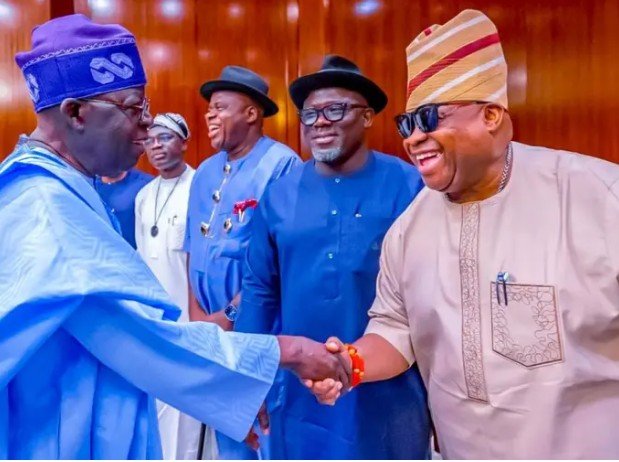

– In fact, President Tinubu owes Governors Ademola Adeleke, Abba Kabir Yusuf, and Alex Otti a sincere thank you. These governors have shown Nigerians what subsidy-derived revenues can accomplish when managed responsibly. Their performances have given citizens practical examples of what they should be demanding from their respective state governments.

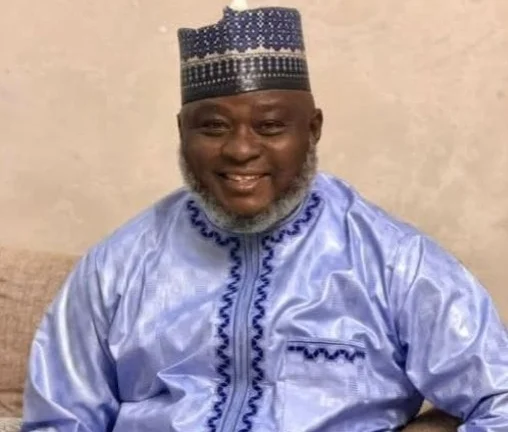
By Dr. Sani Sa’idu Baba
Having traveled extensively across Nigeria over the years, I have had the privilege of observing firsthand the realities of governance and development in different parts of our country.
I first visited Osun State in 2021 and again in May 2022. During those visits, I traveled through several communities and observed the developmental realities on the ground.
Recently, I returned to Osun, and I must confess that I could hardly recognize the state I once knew.
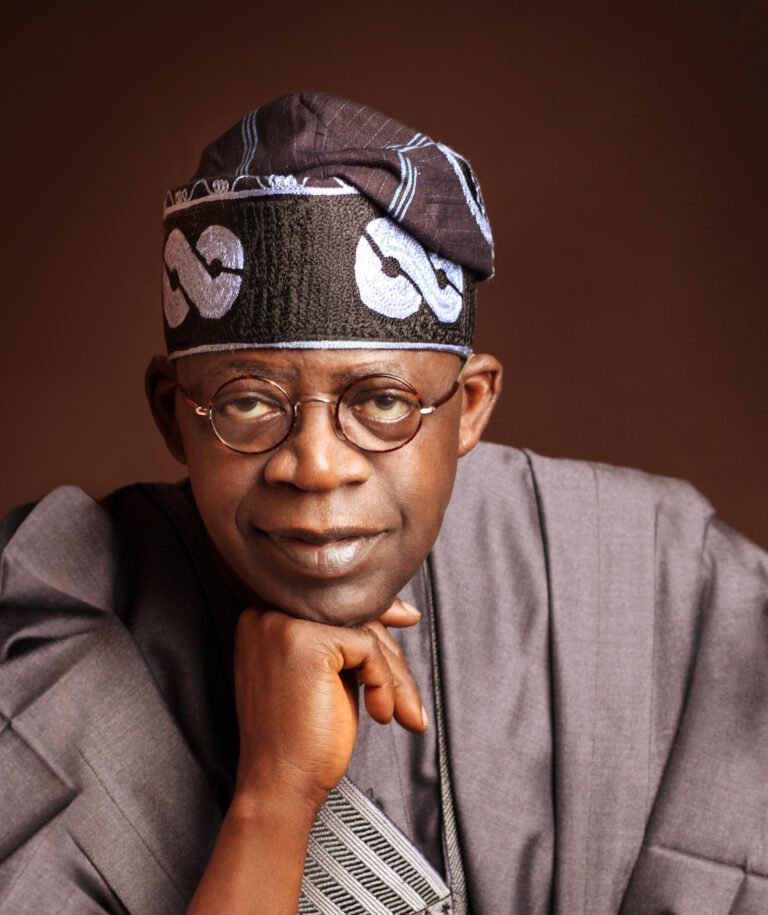
The transformation I witnessed was remarkable and convincing enough for me to conclude that if the additional revenues accruing to states from fuel subsidy removal were utilized the way Governor Ademola Adeleke of Osun State, Governor Abba Kabir Yusuf of Kano State, and Governor Alex Otti of Abia State have utilized theirs, President Bola Ahmed Tinubu would not be facing the level of criticism he receives across the country today.
Since the removal of fuel subsidy in May 2023, Nigerians have endured enormous hardship. Transportation costs have skyrocketed, food prices have become unbearable, rents have increased dramatically, and many families struggle daily to survive.
Yet while citizens bore the pains of the policy, state governments began receiving unprecedented revenues from the Federation Account. The real issue therefore is no longer whether subsidy was removed, but what governors are doing with the resources generated from that decision.
Based on my observations across the country, I have come to a simple conclusion: Osun State has become one of the clearest examples of how subsidy-related revenues can be translated into visible development when leadership is focused on the people.
Healthcare provides one of the strongest examples. Through the Imole Medical Outreach Programme, thousands of residents have received free medical treatment, including surgeries for cataracts and hernia, services many families could never have afforded under normal circumstances.
Thousands of senior citizens and vulnerable residents have also been enrolled in the Osun Health Insurance Scheme free of charge, ensuring that healthcare is not reserved only for the wealthy.
Beyond healthcare, the Adeleke administration has implemented various social intervention programmes aimed at cushioning the effects of economic hardship.
Through the Imole Business Empowerment Scheme, small business owners have received support in the form of POS terminals, start-up grants, and interest-free loans. These interventions have particularly benefited women, youths, and cooperative societies, creating opportunities for economic survival during difficult times.
Infrastructure development is equally visible across the state. During my recent visit, I personally observed significant improvements in parts of Osogbo, Ede, Iwo, and Gbongan. Roads that were once difficult to navigate have received attention, while rural electrification projects and portable borehole water schemes have extended development beyond the urban centers.
Before my recent visit to Osun State, I came across a video of former President Olusegun Obasanjo speaking during the commissioning of some of Governor Adeleke’s projects, including the VIP Lodge and major road networks.
In his characteristic jovial manner, Chief Obasanjo remarked in Yoruba: “Mr Governor, they call you a dancer. But you are dancing to praise God. And I heard you are working hard for your people.”
He urged Governor Adeleke to ignore distractions and the shortcomings of previous administrations and remain focused on delivering dividends of democracy to the people.
At the time, I considered it a generous endorsement from a respected elder statesman. However, after my recent visit to Osun, I now better understand why Obasanjo made those remarks.
One experience stood out for me. Seeing light virtually everywhere across Osogbo helped me understand why Governor Adeleke is popularly called “Imole.” In Yoruba, Imole means “Light,” and the visible improvements in infrastructure, electrification, and public services across the state give practical meaning to that nickname. Development, after all, is the light that dispels the darkness of poverty and neglect.
Governor Adeleke’s commitment to long-term development is equally evident in its approach to the power sector. By signing the Osun Electricity Law, Governor Adeleke positioned the state to address chronic electricity challenges through off-grid and renewable energy solutions. This is the kind of forward-thinking policy many states should be emulating.
Education has not been neglected. Instructional materials have been distributed to schools, and the state’s performance in national examinations has reportedly improved significantly.
Combined with the payment of salary and pension arrears inherited from previous administrations, these measures have helped restore confidence among workers, retirees, students, and families across the state.
In retrospect, my initial criticism of President Bola Ahmed Tinubu’s subsidy removal policy was understandable, given the uncertainty and hardship that followed. Today, however, I see the issue differently. The policy itself is not necessarily the problem. The bigger challenge lies with governors who fail to translate increased revenues into tangible benefits for their citizens.
Osun State, much like Kano and Abia States, has demonstrated that when leadership is people-oriented, even painful economic reforms can produce meaningful outcomes.
In fact, President Tinubu owes Governors Ademola Adeleke, Abba Kabir Yusuf, and Alex Otti a sincere thank you. These governors have shown Nigerians what subsidy-derived revenues can accomplish when managed responsibly. Their performances have given citizens practical examples of what they should be demanding from their respective state governments.
More importantly, they have exposed the scale of resources now available to states. Citizens can now ask legitimate questions: If these states can build roads, improve healthcare, support businesses, expand social welfare programmes, and invest in education, what is preventing others from doing the same?
The real debate surrounding subsidy removal is therefore no longer about the availability of resources but about the quality of leadership managing those resources. If Nigeria truly wants to understand what the benefits of subsidy removal should look like, it should stop listening to excuses and start studying examples such as Osun, Kano, and Abia States.
As an outsider with no political stake in Osun State, I believe the people of the state should carefully reflect on the transformation they have witnessed under Governor Ademola Adeleke. Elections are ultimately a report card on performance. They should be about results rather than rhetoric, delivery rather than promises, and tangible impact rather than partisan sentiments. When leaders demonstrate commitment to improving the lives of ordinary people, democracy demands that such performance be acknowledged and encouraged.
For me, the contrast between the Osun I saw in 2021 and the Osun I recently revisited is striking. The difference is visible, measurable, and difficult to ignore. If the current pace of development is sustained, Osun may well become one of the strongest examples in Nigeria of how responsible leadership can convert public resources into public good.
The lesson is simple: when leadership works, even difficult policies can produce positive results. And when leadership fails, even abundant resources become invisible to the people they are meant to serve.
(Dr. Sani Sa’idu Baba writes from Kano, and can be reached via drssbaba@yahoo.com)
About Flowerbudnews
Established by Hon. Biola Lawal, a former Acting Managing Director of the News Agency of Nigeria (NAN), FLOWERBUDNEWS is a consortium of active veteran journalists, experienced Multimedia broadcast experts and image makers.
We are drawn from both public and private sectors of Nigeria’s media Industry with a common determination to enhance the practice of responsible journalism..
Lawal, on his part, is also a former Honourable Commissioner for Information,Youth, Sports and Culture of Osun state, his home state.
Biola Lawal had also successfully served two tenures as Press Secretary to the ECOMOG Force Commander in Liberia during the Liberian and Sierra Leone Civil wars. He was an outstanding NAN Defence and War Correspondent for many years.
The retired NAN Acting Boss holds the honour of being the only journalist that served two terms on the ECOMOG international assignment due to his high professionalism and decency.
He is a Co-Author of the book; ECOMOG, A BOLD ATTEMPT AT REGIONAL PEACEKEEPING! Edited Mrs Magaret Voght. The book remains the most. factual, detailed and authentic book on the ECOWAS sponsored ECOMOG Military operation.