By Bassey Asuquo
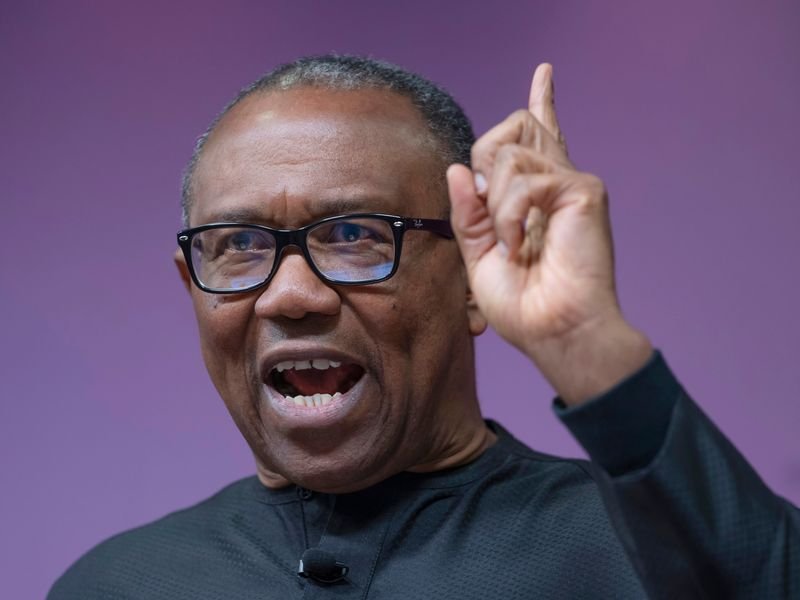
TMSG has described the reaction of the Presidential Candidate of the National Democratic Party (NDC), Peter Obi, to the federal government’s plan to discontinue the junior secondary and senior secondary school separation policy as misleading and fatally flawed, saying it reflects his poor understanding of the Nigerian educational sector.
In a statement signed by its Chairman, Emeka Nwankpa, and Secretary, Dapo Okubanjo, TMSG wondered why a former governor would find it hard to understand that the flaws identified in the policy could be corrected now to guarantee continuous basic education for the ultimate benefit of the nation’s educational system.
The statement read in part: “We find it baffling and bewildering that the NDC Presidential Candidate, Peter Obi, who is always quick to condemn any policy of the President Bola Tinubu administration, has claimed that the federal government’s plan to discontinue the separation of Junior and secondary schools is an admittance of its poor grasp of the complexity and dynamics of the education sector.
“It would have been understandable if it had come from an individual who had never been a governor, especially as state governments are largely in charge of basic education, which includes primary and junior secondary schools.
“But here is a former two-term Anambra state governor who is known to have declared in 2006 that education was not for the poor, lashing at efforts of the Tinubu administration to correct a policy that some subnationals have bungled almost irretrievably.
“For the avoidance of doubt, plans to revert to the old policy of a unified junior and secondary education stemmed from credible data available to the federal government, which showed that a large number of students dropped out at the junior secondary level, leaving the entire education system crisis-ridden.
“We indeed were startled to hear the Education Minister, Dr Tunji Alausa, saying that there are about 80,000 public primary schools in the country compared to 15,000 junior secondary schools.
“More shocking is the information that while about 24 million pupils are enrolled in primary schools, only about 4 million of them completed senior secondary.
“The implication of this is bad for the nation’s future at a time and era when education makes the difference. We fully endorse and support any data-driven initiative by the Bola Tinubu administration to retain students in schools across the country after completing their basic education.
“Which is why plans to revert to a unified secondary education policy that will leave no room for a break in education may be a good way to ensure that students do not drop out of junior secondary schools. The implications of such a glaring mismatch are too critical for any serious and responsive government to ignore.
“So we find it baffling that a Presidential candidate who headed a subnational government would claim that the failure of the junior secondary school policy was a reflection of poor funding on the part of the federal government.
“We expect that Peter Obi should be aware that subnational governments have administrative and financial control over basic education, and it is within their remit to fund schools in their respective domains.
“The only way the federal government could be held liable is in the area of policy, so we insist that the onus is on the Tinubu administration to ensure that it puts good policies in place in the education sector.”
“It is also surprising that Peter Obi, who is on record as a former state governor who never built any school throughout his 8-year tenure, could resort to blaming President Bola Tinubu for the recent poor performance by students in English and Mathematics in the West African Secondary School Certificate Examination (WASSCE).
The group added that the revamped Technical and Vocational Education and Training (TVET) in Nigeria, which now provides incentives to attract young Nigerians with payment of monthly stipends, starter packs and payments of take-off grants, is one of the reforms introduced by the administration in the education sector.
The group cautioned Nigerians against buying into Peter Obi’s angst against every policy move of the Bola Tinubu administration, especially on education, where he pursued a lacklustre anti-people educational policy
The group argued that Peter Obi has nothing to offer in education, noting that even by his own public admission, the former Anambra State Governor did not build any completely new schools from scratch during his eight years in office.