





Year: 2026

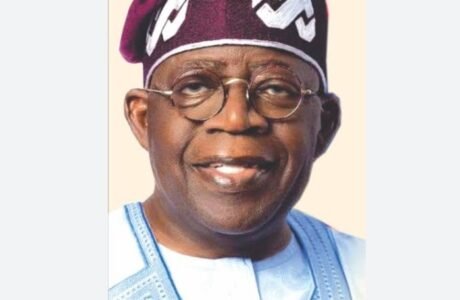
  • TDF hails Tinubu for speedy implementation of FG-ASUU agreement

    TDF hails Tinubu for speedy implementation of FG-ASUU agreement


    By Danladi Ahmed

    The Democratic Front (TDF) has hailed what it described as the speedy implementation of the new agreement reached with the Academic Staff Union of Universities (ASUU).

    In a statement signed by its Chairman, Mallam Danjuma Muhammad and Secretary, Chief Wale Adedayo, TDF argued that the agreement will pave the way for harmony in public universities.

    It said: “We commend President Bola Ahmed Tinubu for the speedy implementation of key welfare components of the renegotiated agreement between his government and the Academic Staff Union of Universities (ASUU).

    “The implementation of the 40% increase in the Consolidated Academic Allowance (CAA) for University lecturers, after reaching an agreement a few months ago with the academic union, shows President Tinubu’s passion to advance the course of education in Nigeria, and his avowed commitment to maintain his enviable track record of fulfilling his campaign promises.

    “The Democratic Front has always considered President Tinubu a consistent leader who delivers on his campaign promises. It is for this reason that we embrace every promise made by the President with unconditional optimism.”

    The group pointed out that the move amounted to a different approach from what lecturers were used to.

    “For decades, Nigeria has laboured under the agony of persistent neglect and disruption of its university education systems, on account of the lack of prompt payment of salaries and deserving emoluments to university lecturers.

    “But with the swift implementation of the renegotiated agreement between ASUU and the Tinubu administration, the outlook for uninterrupted academic sessions in Nigerian universities is brighter.

    “We sadly recall that persistent industrial strike actions by ASUU in the last four decades have largely disrupted academic curriculum and crippled the potential of Nigerian universities.

    “The negative impact of ASUU’s incessant strike actions on the nation’s education and economy, has been devastating, as it compelled Nigerians to send their children and wards to study in foreign universities.

    “Scarce foreign exchange that ought to have been conserved for internal socioeconomic use and consolidation, was wasted on payment of foreign school fees.

    “In the first half of 2025 alone, approximately $1.39 billion (roughly N2.16 trillion) was spent on foreign education by Nigerian parents and students. This is one of the reasons TDF applauds Tinubu’s ongoing efforts at reviving and transforming Nigeria’s university education system through the new agreement with ASUU.

    “Under this new order of Government-ASUU relationship, we anticipate that a four-year duration course/academic programme in a public university, which sometimes takes seven years to complete, will take exactly four years to conclude, due to harmony and stability in the nation’s academic curriculum.

    “We are convinced that the implementation of the renegotiated agreement between the Government and ASUU, will motivate members of the academic union to put in renewed efforts towards uplifting the standard of qualitative education in public universities in the country.”

    The group also appealed to the Nigerian public for continued support for President Tinubu as he embarks on efforts to reposition the country.

    End

  • Peter Obi’s utterances on the Student Loan Scheme, disappointing, show a lack of empathy-Group

    Peter Obi’s utterances on the Student Loan Scheme, disappointing, show a lack of empathy-Group


    By Iyiola Olalere

    The Social Advocacy Front (SAF) has expressed disappointment that the former Presidential candidate of the Labour Party, Peter Obi described the student loan programme of the President Bola Tinubu administration as a wasteful venture.

    It stated in a statement signed by its Chairman, Tahir Ibrahim Tahir, and Secretary, Shehu Attah, that the thinking behind that comment was flawed.

    “It is deeply concerning and disappointing that Mr. Peter Obi, the presidential candidate of the Labour Party in the 2023 general elections, would choose to disparage such a laudable and life-changing initiative as the Nigerian Education Loan Fund (NELFUND).

    “His comments, which appear unpatriotic and partisan, undermine a scheme that has brought measurable relief and hope to hundreds of thousands of Nigerian students and their families.”
    SAF provided insights into the scheme and wondered how a politician could describe it in an uncomplimentary manner.

    “For the avoidance of doubt, NELFUND was established to implement the Nigeria Student Loan Scheme, signed into law by President Bola Ahmed Tinubu in April 2024.

    “The Fund provides interest-free loans to students in public universities, polytechnics, and colleges of education to cover tuition fees and essential living expenses.

    “The scheme, which commenced operations in May 2024, is specifically designed to eliminate financial barriers to tertiary education and empower students from low-income backgrounds to pursue their academic aspirations without undue economic hardship.

    “Under the programme’s clear and humane guidelines, beneficiaries are required to begin repayment only after securing employment and completing the National Youth Service Corps (NYSC).

    “Repayments are further capped at a maximum of 10% of the beneficiary’s income, ensuring minimal financial strain on graduates.

    “As of today, NELFUND has disbursed ₦155 billion in tuition and upkeep support to over 780,000 students, while approximately 1.3 million tertiary students have applied for the loan nationwide.

    “Students from 262 tertiary institutions have already benefited, underscoring the growing reach and positive impact of the scheme on Nigeria’s education sector.

    “Against this backdrop, it is troubling that a programme of such demonstrable value could be labelled “wasteful” for political expediency.

    “The Social Advocacy Forum (SAF) strongly advises Mr. Peter Obi to desist from politicising a policy intervention that offers a sustainable and inclusive funding pathway for Nigerian students, ensuring that no student is denied education due to inability to pay tuition or meet basic living costs.

    “We urge Mr. Obi to reassess his position, seek proper clarification on the structure and impact of the scheme, and refrain from further mischaracterisation of NELFUND,” it said.

    The group also shed some light on some other policies of the Tinubu administration in the education sector.

    “In addition to NELFUND, the Federal Ministry of Education has announced plans for nationwide implementation of Technical and Vocational Education and Training (TVET).

    “TVET focuses on equipping learners with practical, hands-on skills and technical competencies for specific trades and professions.

    “It is designed to bridge the skills gap, enhance employability, and promote entrepreneurship in sectors such as automotive technology, ICT, hospitality, construction, and other critical industries.

    “These initiatives represent some of the bold, innovative, and comprehensive education funding and skills-development reforms of the Renewed Hope Administration. They deserve commendation and constructive engagement, not unwarranted condemnation.

    “We reiterated the Forum’s strong support for the NELFUND scheme and commended President Bola Ahmed Tinubu’s administration for its courageous reforms.

    “We further reaffirmed SAF’s endorsement of NELFUND, TVET, and other transformative programmes that have continued to attract national and international recognition,” it added.

    End


  • Massive Crowd Welcome El-Rufai into Kaduna on Friday

    Massive Crowd Welcome El-Rufai into Kaduna on Friday


    Massive crowds on Friday, welcomed former Kaduna State Governor, Malam Nasir El-Rufai, into the city following his ordeal at the airport on Thursday.

    In a video obtained by our correspondent, supporters were seen thronging the streets, surrounding El-Rufai’s motorcade on his way to Jummat Mosque.

    The clip showed the enthusiastic crowd cheering and waving at the former governor, highlighting his continued influence and support within the state.

    Observers noted the unusually large turnout, signaling strong public interest in his visit.

  • Alleged extortion of inmates: Lawyer asks NCoS CG to probe, sanction officers at Kuje Prison

    Alleged extortion of inmates: Lawyer asks NCoS CG to probe, sanction officers at Kuje Prison


    A legal practitioner, Mr Bala Dakum, has petitioned the Controller-General (CG) of Nigerian Correctional Service (NCoS), Sylvester Nwakuche, over allegations of corruption, abuse of office and extortion of inmates levelled against the controller in charge of Kuje Prison and his officers.

    Dakum, in the petition dated February 11, 2026, and received same date, also copied the Minister of Justice and the Attorney-General of the Federation (AGF), Mr Lateef Fagbemi, SAN, and his counterpart in the Ministry of Interior, Olubunmi Tunji-Ojo.

    He called on the CG to carry out an independent and thorough investigation into the allegations against the officers and to mete out appropriate punishment to erring officers.

    “I am a Solicitor to over 100 inmates in Kuje Correction Centre Abuja, in my capacity as a legal practitioner and concerned stakeholder in the administration of justice system, I hereby petition you.

    “It is with deep sense of responsibility that I write on behalf of my clients to formally bring to your attention a series of grave allegations bordering on abuse of office, corruption and gross misconduct against the Controller in charge of the Kuje Correctional Centre, Abuja (name withheld) and his aides.

    “The inmates, their families, and other credible sources have repeatedly alleged that the officer has used his position to facilitate a systematic extortion of inmates through his aides (names withheld).

    “These acts reportedly include, but are not limited to, demands for unlawful payments in exchange for access to basic rights and privileges such as medical attention, movement within the facility, humane treatment and other services that inmates are legally entitled to without inducement.

    Dakum, who is the Principal Partner of B.I. Dakum & Co law firm, alleged that these acts are carried out with the knowledge, consent or tacit approval of the controller in charge, thereby creating an environment of fear, exploitation and injustice within the facility,

    “Such conducts, constitute serious violation of the Nigerian Correctional Service Act, the Public Service Rules and the constitutional rights of inmates, as well as undermines public confidence in the correctional system, safety of inmates, officers and the administration of justice as a whole.

    “The situation is creating serious agitations among the inmates and unless you act fast, the situation may degenerate into chaos and the safety of the officers and inmates will be in danger.

    “Given the sensitive nature of the allegations and the strategic position occupied by the officer, there is a reasonable apprehension that his continued stay in charge of the Kuje Correctional Centre, Abuja may interfere with any impartial investigation, intimidate potential witnesses, or lead to suppression of evidence,” he said.

    Dakum, therefore, made three demands.

    “That an independent and thorough investigation be instituted immediately into the allegations of extortion, abuse of office, and misconduct against the officers (subject their accounts to forensic investigations).

    “That the officers be redeployed or transferred to a non-sensitive post pending the conclusion of investigations, in order to preserve the integrity of the process and ensure the safety of my clients.

    “That appropriate disciplinary and legal actions be taken against the erring officers.”

    The lawyer said he was compelled to write the petition in the overriding public interest and the need to protect the rights and dignity of persons in custody.

    “I trust in your office’s commitment to upholding the highest standards of professionalism within the Nigerian Correctional Service.

    “However, in the unlikely event that No immediate action is taken, I shall not hesitate to petition other relevant law enforcement and anti-corruption agencies for proper investigation.

    “I did not attach evidence of transfer of funds to the officers in issue in the interest of safety of my clients some of whom are still in their custody. I shall present the evidence at your request.

    “Please accept the assurances of my highest professional regards,” he concluded.

    When contacted in a telephone interview on Thursday, the Public Relations Officer of NCoS, Ms Jane Osuji, said though she was not in receipt of the petition, she requested that a copy of it be forwarded to her.

    “I will find out if we have gotten it and if anything has been done, then I will get back to you,” she said.

    After some hours of her receipt of the document, another phone call was put across to Osuji.

    However, in her response through a WhatsApp message, the PRO said these are allegations the NCoS CG would not take lightly.

    “Thank you very much for reaching out to me on the above.

    “Kindly let me revert back to you by tomorrow (Friday) on it.

    “These are allegations the Controller-General does not take lightly. I need to confirm he is in receipt of the petition and bring it to his notice, please.

    Thank you and good night,” Osuji responded.

    But as at the time of filing the report on Friday, Osuji was yet to get back.

  • Breaking: INEC releases timetable for 2027 polls

    Breaking: INEC releases timetable for 2027 polls


    The Independent National Electoral Commission (INEC) has issued a timetable notice for the 2027 general election.

    ccordingly, while the Presidential and National Assembly elections will be held on February 20, 2027, the Governorship and State Assembly elections will be held on March 6.

    INEC Chairman, Prof. Joash Amupitan, disclosed this at a news conference on Friday in Abuja.

    Recall that INEC had, on February 4, disclosed that despite the apparent delay in the passage of the amended Electoral Act currently before the National Assembly, it had finalised the election timetable and schedule of activities.

  • Ramadan: MUSWEN reaffirms confidence in leadership of Sultan as President-General of NSCIA

    Ramadan: MUSWEN reaffirms confidence in leadership of Sultan as President-General of NSCIA


    The Muslim Ummah of South West Nigeria (MUSWEN) has reaffirmed confidence in the leadership of the Sultan of Sokoto, Alhaji Muhammad Sa’ad Abubakar, CFR, mni as the President General of the Nigerian Supreme Council for Islamic Affairs (NSCIA).

    MUSWEN stated this on Friday in a statement signed by Alhaji Rasaki Oladejo, President and Professor Wole Abbas, Executive Secretary, and made available in Abuja.

    The statement came against the backdrop of announcements by some individuals and groups regarding the commencement date of the 2026 Ramadan fast.

    The announcement was made in disregard for the established and recognised process of moon sighting under the leadership of the President of the NSCIA, to signal the commencement of the Ramadan fast.

    Calling on Muslims in the South West, in particular and Nigeria, in general, to shun disunity, MUSWEN urged them to “be wary of the antics of people who do not wish Islam and Muslims well.”

    “Their agenda and design for Muslims in Nigeria, and indeed the world over, is ‘divide and conquer’. We must not fall into this trap.”

    MUSWEN added that the watchword for Muslims in this circumstance must be the Quranic verse which says:”And hold fast, all of you together, to the Rope of Allah, and be not divided among yourselves; and remember Allah’s Favour on you, for you were enemies one to another but He joined your hearts together, so that, by His Grace, you became brethren…Surah Al ‘Imran (3:103).”

  • Inquiry: Group cautions agencies against political interference

    Inquiry: Group cautions agencies against political interference
     A group of concern citizens of Sokoto, has urged anti-corruption agencies to be wary of political interference regarding the commission of inquiry’s outcomes that allegedly discovered mismanagement of funds by past government officials.
    The group, Sokoto Progressive Vanguards made the call in a statement signed by it’s Chairman, Dr Yusha’u Abdullahi and issued to the newsmen on Friday in Sokoto.
    It was recalled that on Feb. 3, this year the Sokoto State Judicial Commission of Inquiry led by Justice Ma’azu Pindiga had submitted it’s report and unraveled about N117 billion allegedly mismanaged by immediate past administration of Gov. Aminu Tambuwal in the state.
    The group urged the Economic and Financial Crimes Commission (EFCC), Independent Corrupt Practices and Other Related Offences Commission (ICPC), Police and Department State Services (DSS) not to consider any politicians, who were desperate on incriminating former Gov. Tambuwal and his associates.
    ” The presentation made by the judicial commission of inquiry contained allegations against Tambuwal’s administration, we look forward to adhered transparent legal procedures.
    ” It was allegedly circulated that present administration join hands with some groups and individuals who nurse political differences with Tambuwal on discrediting Tambuwal stewardship when he was governor.
    ” The desperation was glaring to the public noticing the propaganda and other unfounded information being circulated to allegedly tarnish the image of immediate past administration of Tambuwal at all cost.
    ” We notice the procedures from the initial stage of the commission of inquiry sittings which was elongated from two weeks to more than three years and composition of members,” the group said.
    According to the group, infractions being investigated should go beyond Tambuwal’s administration as he inherited many issues from the government that came before him.
    ” We consider the investigation between 2015 to 2023 as undermining the procedure of fair play because it was reported that a petition was pending before EFCC on past governor before Tambuwal.
    ” We understand that present administration concentrate only on discrediting the good services of Tambuwal rather than doing good projects to the citizens of Sokoto state.
    ” The issues highlighted desperation, political bitterness and witchunt allegedly using rumours, political slanders and unfounded information to accuse Ex-Gov. Tambuwal and his associates on wrong doings, rather pursuing the interest of state’s development”. The group added.
  • Sokoto, International Alert inaugurate committee on climate-peace project

    Sokoto, International Alert inaugurate committee on climate-peace project

    Sokoto, International Alert inaugurate committee on climate-peace project

    The Sokoto State Government, in partnership with International Alert Nigeria, has inaugurated a Project Steering Committee for implementation of the Powering Peace through Climate Action II project.

    The inauguration followed resolutions adopted by stakeholders in peace-building, humanitarian and development sectors during a meeting on Thursday in Sokoto.

    The move is aimed at strengthening coordinated responses to emerging climate-related security challenges.

    Senior Project Officer, International Alert, Mr Sanusi Audu, said climate change was shrinking grazing areas, reducing agricultural productivity and threatening livelihoods, thereby intensifying pressure on natural resources across many vulnerable communities in Nigeria.

    Audu explained that declining access to land and water created competition among occupational groups, especially farmers and herders, leading to disputes that were largely resource-driven and increasingly linked to environmental stress factors.

    He warned that addressing insecurity without recognising climate drivers would allow root causes to persist, stressing the need for climate-sensitive strategies to ensure long-term peace, stability and sustainable national development outcomes.

    Vice Chairman of the committee, Mr Mustapha Umar, emphasised the urgency of integrating climate considerations into conflict prevention and resolution frameworks at community, state and national levels for more effective interventions.

    Umar, also Director of Relief and Rehabilitation at the State Emergency Management Agency, guided participants to outline actions including advocacy visits, community sensitisation and promotion of local ownership of climate resilience initiatives.

    The District Head of Gagi, Alhaji Sani Umar-Jabbi, underscored the importance of coordinated strategies addressing climate and conflict challenges simultaneously to ensure inclusive responses involving government institutions, traditional authorities and grassroots stakeholders.

    Umar-Jabbi called for conflict-sensitive policymaking that addressed underlying causes proactively, noting that climate change aggravated gender-based violence, poverty, social dislocation and declining educational outcomes in affected communities.

    He stressed that mitigating climate impacts required collective action by government, civil society, development partners and citizens to achieve sustainable solutions capable of strengthening resilience and preventing recurring conflicts.

    Participants observed that prioritising climate-sensitive conflict approaches would deepen understanding of the climate-security nexus and enable policymakers to design interventions addressing environmental pressures alongside socio-economic vulnerabilities effectively.

    They added that adopting adaptive strategies could reduce climate-related conflicts, promote sustainable peace, support livelihoods and enhance resilience among populations most exposed to environmental and economic shocks.

    The committee members include representatives of government ministries, community organisations, traditional institutions, persons with disabilities, civil society groups and the media.

  • REAL-TIME E-TRANSMISSION IN NIGERIA WITHOUT E-VOTING: CLARIFYING THE LAW, THE TECHNOLOGY, & THE MISCONCEPTIONS

    REAL-TIME E-TRANSMISSION IN NIGERIA WITHOUT E-VOTING: CLARIFYING THE LAW, THE TECHNOLOGY, & THE MISCONCEPTIONS


    (A Response to Senator Adegbomire & P. D. Pius)

    By Sylvester Udemezue

    *INTRODUCTION*

    Two recent public commentaries have reignited debate on electoral reform in Nigeria. P.D. Pius, Esq., in his article titled, _“Electronic Transmission of Results is Not a Magic Wand”_ (and published on 10 February 2026), argues that electronic transmission is over-emphasised and is easily manipulable. He appears to regard electronic transmission as conterminous with electronic voting. On his part, distinguished Senator Niyi Adegbonmire, SAN, is reported to have argued that real-time transmission of results can only happen where e-voting exists, and since Nigeria does not practice electronic voting, e-transmission cannot apply to Nigeria (see _‘“Real-Time Transmission Can Only Happen With Electronic Voting, Nigeria Doesn’t Have E-Voting” – Senator Adegbonmire SAN On Electoral Act’_(12 February 2026). With utmost respect to both distinguished colleagues, these positions appear to arise from a fundamental misunderstanding of what “real-time electronic transmission” means within Nigeria’s electoral framework. This commentary therefore clarifies the concept, explains the relevant legal and technological realities, and addresses the issues for the benefit of stakeholders and Nigerians.

    *WHAT “REAL-TIME ELECTRONIC TRANSMISSION” ACTUALLY MEANS*

    According to most standard English dictionaries, the expression “real-time” simply means happening immediately as something occurs, occurring without delay, taking place instantly and simultaneously. Accordingly, “real-time electronic transmission” means the instant electronic sending or receiving of information at the very moment it is produced, without delay.

    *THE CRUCIAL QUESTION: TRANSMISSION OF WHAT?*

    In the Nigerian context, considering distinguished Senator Adegbomire’s declaration, a crucial question may be asked as to exactly what is expected to be transmitted since Nigeria does not practice e-voting. This is where most confusion begins. To properly and accurately answer this question, it is important to state that, contrary to the impression the respected Senator tried to create, different electoral systems transmit different things. In countries practicing electronic voting, real-time e-transmission refers to e-transmission of votes themselves, and automatic computation of results. However, Nigeria does NOT practice electronic voting. Accordingly, real-time transmission in Nigeria cannot logically refer to transmitting of votes. But this does not mean that “real-time” transmission does not and cannot apply in the Nigerian context.

    *HOW REAL-TIME E-TRANSMISSION APPLIES IN NIGERIA*

    In Nigeria, what the law provides for is very specific: real-time electronic transmission of scanned copies of the duly completed and endorsed Polling Unit Result Sheet (known as Form EC8A). This means that immediately after voting ends at the polling unit, votes are counted and announced. Form EC8A is completed, signed and duly stamped, as required by law. The Form is then scanned electronically at the polling unit, and uploaded instantly to INEC’s IReV portal before officials leave the polling unit.

    *FOUR ESSENTIAL ELEMENTS OF REAL-TIME E-TRANSMISSION IN THE NIGERIAN CONTEXT*

    In my humble opinion, for e-transmission in the Nigerian context to truly qualify as “real-time,” four conditions must coexist:

    1. *There must be transmission:* this means there must be some form of uploading or sending, or transfer.

    2. *The subject of what is transmitted must be specific:* What must be transmitted is a scanned copy of the duly completed and signed Form EC8A.

    3. *Transmission must be electronic:* This means that the transmission must occur digitally, not manually.

    4. *Transmission must be “real-time”:* This means that the e-transmission of the scanned copy of the duly completed and signed Form EC8A must be done instantly, directly from the polling unit, immediately after signing, and before officials leave the polling unit for the collation centre.

    *WHY THESE FOUR ELEMENTS ARE ESSENTIAL*

    The four elements set out above must co-exist in order to eliminate post-voting human interference. Once a scanned copy of the duly completed and signed Form EC8A (result sheet) is digitally uploaded and instantly from the polling unit, it becomes publicly verifiable, tampering (with the hard copy of Form EC8A submitted at the collation) becomes futile, and electoral fraud becomes extremely difficult to perpetuate anytime afterwards.

    *THREE DISTINCT MODELS OF E-TRANSMISSION EXIST WORLDWIDE*

    A major source of misunderstanding is failure to distinguish between different forms of electronic transmission. In my respectful opinion, there exist three principal global models of electronic transmission of election results.

    1. *MODEL ONE: Electronic Voting (e-Voting):* This is used in some countries (jurisdictions). Also, the Nigerian Bar Association (NBA) has adopted it for its national officers’ elections. Basic features of this model include: (i) Votes are cast electronically; (ii) Results are generated automatically; and (iii) Transmission occurs simultaneously with voting. A major weakness of this model is that it is highly vulnerable/susceptible to hacking and coding manipulation. This is the system my learned friend, Mr. P. D. Pius mistook for to be the Nigerian model. Contrary to his supposition, Nigeria does NOT use this model.

    2. *MODEL TWO: Manual Voting Plus Direct Entry of Raw Figures:* Essential features: (i) Votes are counted manually; (ii) the figures are manually entered into a digital system (in the same way one composes an email or WhatsApp message); and (iii) the raw numbers are then transmitted (just as one sends an email or uploads a message to a WhatsApp platform). A major weakness is that manipulation may occur during manual data entry into the digital system, before upload. For example, actual results showing Party A = 540 and Party B = 670 could be altered during entry by a compromised polling official (unless closely monitored by independent observers) to Party A = 940 and Party B = 360. This model is used in some countries, such as Kenya.

    3. *Model Three: Upload of Scanned Result Sheets (Nigeria’s INEC Adopted Model):* This is Nigeria’s model. The process goes thus as provided in the Electoral Act, 2022: (i) Manual voting occurs at the polling unit; (ii) Votes are counted at the polling unit; (iii) Form EC8A is completed and signed at the polling unit; (iv) The form is scanned at the polling unit; and (v) The the scanned copy of Form EC8A is then digitally uploaded (e-transmitted) instantly to IReV (INEC’s online collation platform).

    *WHY THE NIGERIAN MODEL IS THE MOST SECURE*

    This model preserves physical evidence, ensures digital transparency, maintains multiple verification trails, and enhances public auditability. In sum, result manipulation becomes extremely difficult once polling officers leave the polling unit or at any time thereafter.

    *WHY VAGUE LEGAL WORDING CAN DEFEAT ELECTORAL INTEGRITY*

    I recently read a news report stating that a Senate Committee reportedly proposed that electronic transmission should occur “after Form EC8A has been signed and stamped.” The provision, as quoted in the report, reads: “The Presiding Officer shall electronically transmit the results from each polling unit to the IReV portal in real time, and such transmission shall be done after the prescribed Form EC8A has been signed and stamped by the Presiding Officer and/or countersigned by the candidates or polling agents available at the polling unit.” (See: _“How Three Southern Senators Blocked Real-Time Electronic Transmission of Election Results – Report,”_ published on 09 February 2026). With due respect, this wording is extremely and dangerously vague. Such a provision permits or envisages transmission (i) at the polling unit; or (ii) at collation centres; or (iii) outside the polling unit hours or days after the balloting. Thus, the law could be formally complied with and yet substantively abused. With due respect, real-time transmission will lose its meaning/essence if e-transmission can occur “after” results leave the polling unit. As I wrote earlier, the polling unit is the only stage in the electoral process where result sheet (Form EC8A) remains relatively protected from interference. Once Form EC8A leaves the polling unit, it becomes vulnerable to human discretion, logistical challenges, political pressure, and opacity. Therefore, if electronic transmission does not occur directly from the polling unit on election day and within the election time-frame, it loses its purpose. Transmission carried out after officials leave the polling unit, after manual collation has begun, or on a later date cannot prevent fraud; it merely digitizes a process that may already have been compromised.

    *POST-VOTING PROCEDURES UNDER THE ELECTORAL ACT*

    Under the Electoral Act, 2022, the requirement is that after voting ends at the polling unit, votes must be counted at the polling unit, and results must be announced publicly. Thereafter, and still at the polling unit, Form EC8A must be completed, signed, and stamped, and copies of the duly signed copy must be given to candidates or their agents immediately, after which the Form must be scanned, and the scanned copy immediately (in real time) e-transmitted to the iReV. A poster copy must be displayed at the polling unit. This stage marks the beginning of post-voting procedures, where real-time transmission logically belongs.

    *SPECIFIC RESPONSE TO ARGUMENTS BY P.D. PIUS, ESQ.*

    Two main claims were made by my learned friend, P.D Pius, Esq.:

    1. First, he argued that electoral reform should start from party primaries. With due respect to my learned friend, both reforms are necessary, and there is nothing wrong with the two aspects of reform proceeding simultaneously. Electoral credibility and transparency must never be made to wait if the integrity of the process must be secured.

    2. Second, my learned friend claims that electronic transmission is easier to rig. According to him, it may be far easier and cheaper to manipulate results through computer coding than to mobilize people to alter figures at ward level, something any technically knowledgeable person can confirm. With due respect, this claim is founded on a wrong premise; it conflates and confuses Nigeria’s model with electronic voting systems which Nigeria does not operate. Nigeria’s system only entails the transmission of the duly completed, signed and scanned result sheets (Form EC8A), not digital vote data. With due respect, manipulating the Nigerian system would require altering physical signed forms, multiple copies, publicly accessible records. And, this is far more difficult than manipulating manual collation, contrary to my learned friend’s claim.

    *CONCLUSION*

    From the foregoing, it is clear that (contrary to the learned Senator Adegbonmire’s claim) “real-time” electronic transmission of election results can effectively operate without e-voting under the Nigerian system. In Nigeria, “real-time” electronic transmission does not mean electronic voting; it means the instant electronic upload of duly completed, signed, and scanned polling-unit result sheet (Form EC8A) directly from the polling units to the iReV immediately after voting, before the Form (result sheet) is taken out of the polling unit. It is respectfully submitted that if made indispensable, this system would enhance transparency, credibility, electoral integrity, and public trust. The issue, therefore, is not technological feasibility but political will. As Kofi Annan rightly observed, “Elections are not just about who wins, but about the process by which the will of the people is expressed and respected.”

    *Post Scriptum:*
    The demand for real-time transmission is not partisan; it is a call for transparency, accountability, credibility, and democratic legitimacy. Nigeria would benefit from making it a strictly mandatory and non-negotiable legal requirement, with clear consequences, such that any election result not electronically transmitted in accordance with the law would be invalid. For the Nigerian model of electronic transmission to become mandatory, two steps are required: (a) the National Assembly must enact it into law, and (b) the Executive must assent to it. Ultimately, the choice is ours: either to embrace a new path toward electoral integrity or remain with practices that undermine credible democracy. As John C. Maxwell observed, life is defined by the choices we make, and we must be prepared to live with their consequences.

    (Respectfully,
    *Sylvester Udemezue (Udems)*
    (Member, NBA’s Law Reform Committee)
    08109024556, udemsyl@gmail.com.
    (12 February 2026))