





Year: 2026

  • FCT polls: Council chairman expresses hitch-free process amidst low turnout

    FCT polls: Council chairman expresses hitch-free process amidst low turnout


    By Veronica Dariya

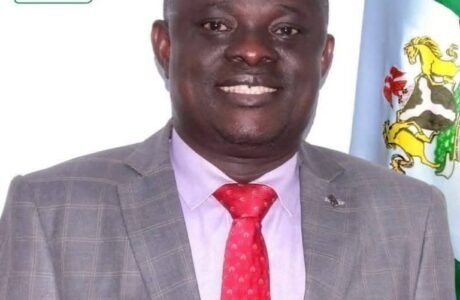
    Bwari (Abuja),  Mr John Gabaya, the Chairman, Bwari Area Council of the FCT, on Saturday said the ongoing FCT area council elections in Bwari would be hitch-free and successful in spite of low turnout of voters.

    The chairman said this while speaking with newsmen shortly after he casted his vote at his village, at Tokulo Primary School polling unit 002 in Bwari Area Council.

    Gabaya, who said the exercise started timely, expressed optimism that voters would come out to cast their ballots in due time.

    The chairman also encouraged residents of the area to remain peaceful, while assuring that all due process shall be followed to ensure their votes count.

    Also speaking, the Secretary of the council, Mr Eli Kadanya, said that he was happy with the peaceful process so far, adding that it was obvious that the elections would end well.

    Kadanya, after casting his vote, commended the officials for a smooth process, while also appreciating voters for a peaceful conduct so far.

    News Agency of Nigeria (NAN) reports that low turnout of voters marred the area council election in Bwari area as accreditation and voting commenced as at 9: a.m. in most polling units.

    Some INEC officials were seen sitting and hopefully waiting for voters at many centres.

    One of the early voters, Mrs Murna Bulus, a 70 year-old woman, said she came out before 7:00 a.m. because she used to get things done early enough.

    “I am a retired Air Force officer so I am used to waking up early and once I want to go somewhere, I want to get there on time and do what I need to do timely enough and return.”

    Bulus also said that she came out to vote because it was her right and patriotic duty as a citizen of the country.

    NAN also reports that while some residents were casting their votes, others remained indifferent while going about their normal businesses. (NAN) (www.nannews.ng)

  • Church Delivers Bride ‘To Satan’ Over Alleged Refusal of Sex

    Church Delivers Bride ‘To Satan’ Over Alleged Refusal of Sex

    ‎Church Delivers Bride ‘To Satan’ Over Alleged Refusal of Sex


    ‎By Adewale Owoade

    ‎An Abuja-based church, Holiness Revival Movement Worldwide, has expelled a newly married woman, Oyiza, from its congregation for allegedly refusing to consummate her marriage with her husband, Isaac.

    ‎The couple, who resided in Ibadan, Oyo State, were joined in matrimony on September 6, 2025, after completing traditional rites in Okene, Kogi State, and a court wedding in Ibadan.

    ‎However, shortly after the ceremony, the marriage reportedly ran into crisis as the bride resisted her husband’s attempts at intimacy, insisting that she did not love him. She was said to have accused her mother of coercing her into the union.

    ‎Saturday PUNCH gathered that repeated efforts by both families and church leaders to resolve the dispute failed, as the bride allegedly remained adamant.

    ‎In a video posted on the church’s YouTube channel in February, the International Director of the movement, Pastor Paul Rika, announced her expulsion after five months of mediation.

    ‎During the announcement, the cleric described her as a “demon,” declared that she must be punished and accused her of spiritism. He urged members to pray for her “destruction,” alleging that she had brought shame to the assembly.

    ‎“So, we have delivered her to Satan. We have expelled, excommunicated her. You want to bring shame — what do you mean that you don’t love Isaac?” he said.

    ‎The cleric also referenced past cultural practices in which reluctant brides were compelled to go to their husbands’ homes.

    ‎Speaking in the video, Isaac described the marriage as suffocating.

    ‎“If I came back from work and sat at the dining table, she would say no. I was not even free until I bathed and changed my clothes. It was a struggle,” he said.

    ‎“In the kitchen, if she was cooking and I returned home tired, she would ask me to join her because I promised to assist her. Everything felt like I was in a cage.”

    ‎Isaac said he made several efforts to show love and affection but claimed his wife did not reciprocate.

    ‎Oyiza was not present in church to respond to the allegations levelled against her.

    ‎A marriage counsellor, Sunday Anani, who commented on the development, said societal pressure often forces individuals into marriages they are not emotionally prepared for.

    ‎“Society does not let some people be free. It is time for you to get married. Some would rather not touch the concept of marriage at all, but society forces them into it,” he said.

    ‎Anani noted that sexual trauma or previous abuse could also contribute to resistance to intimacy.

    ‎“Sex is emotional before it becomes physical. Without a heart connection, it is difficult, especially in marriage, for intimacy to happen,” he said.

    ‎“If someone has experienced sexual assault or near-rape in the past and has not healed from that trauma, it can make it difficult to open up to a partner.”

    ‎He also questioned the decision to proceed with the marriage despite prior reservations.

    ‎“If a woman has already told you she does not want sex, why go ahead to marry her?” he asked.

  • Engineering A Better Future: Khalil Mustapha Adegboyega(Repete) – The Voice, The Vision, The Vote For Ibadan North

    Engineering A Better Future: Khalil Mustapha Adegboyega(Repete) – The Voice, The Vision, The Vote For Ibadan North

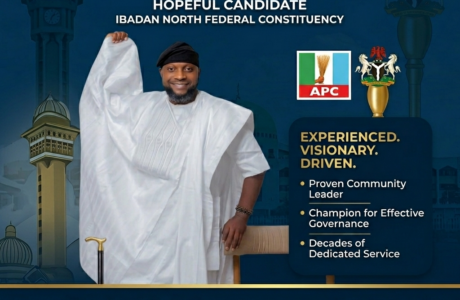
    In a time when leadership demands not just promises but proven dedication, Engr. Khalil Mustapha Adegboyega, affectionately known as Repete, stands out as a beacon of hope, integrity, and actionable vision for Ibadan North Federal Constituency. A seasoned engineer by profession and a compassionate leader by calling, Repete embodies the perfect blend of technical expertise and heartfelt service—a leader ready to build a future where every voice is heard and every community thrives.

    Why Repete? Because Leadership is About Service, Not Status.

    Born and raised within the vibrant communities of Ibadan North, Repete understands the hopes, struggles, and aspirations of the people firsthand. His journey from a local boy with big dreams to an accomplished engineer reflects his unwavering commitment to excellence and resilience—a story that resonates with every hardworking family in our constituency.

    As an engineer, Repete has mastered the art of solving complex problems with precision, innovation, and sustainable solutions. Now, he’s bringing that same skill set to politics—to fix, build, and transform Ibadan North into a model constituency of progress, opportunity, and inclusive growth.

    What truly sets Repete apart is his approachability, humility, and genuine love for the people. Whether he’s engaging market women, students, artisans, or elders, he listens with empathy and acts with urgency. His nickname “Repete” isn’t just a name—it’s a promise to repeat excellence, repeat accountability, and repeat service at every turn.

    “He’s the kind of leader we need—smart, sincere, and strong-willed.”

    Join the Movement: Let’s Build Ibadan North Together!

    This is more than a campaign; it’s a collective mission to reclaim our future. With Engr. Khalil Mustapha Adegboyega (Repete) as our representative in the Federal House of Representatives, we won’t just dream of change—we’ll engineer it, brick by brick, community by community.

  • Nigeria and Risks of Multi-Power Security Deals*

    Nigeria and Risks of Multi-Power Security Deals*


    *By Richard Ikiebe

    Lately, Abuja has embarked on signing or deepening defence partnerships with the United States, China, the United Kingdom, Russia, France, India, Saudi Arabia, Pakistan and now, Türkiye, often within overlapping time frames and against a backdrop of unrelenting insecurity. On paper, this looks like strategic diversification. But given Nigeria’s weak institutions and fragmented loyalties, these multi-power deals risk multiplying internal vulnerabilities rather than delivering autonomy.

    In international relations, hedging is meant to be a sophisticated strategy. Middle powers cultivate ties with rival blocs at the same time; securing trade, weapons, intelligence and diplomatic cover from each without fully joining any camp. Done well, hedging buys room to manoeuvre in a fluid world.

    However, successful hedging demands a coherent centre. It assumes the state has a clear hierarchy of national interests, reasonably disciplined security institutions, and a political class that can resist turning every external relationship into a patronage asset. Nigeria does not enjoy those conditions. The federation remains riven by sharp regional, ethnic and religious cleavages. Security agencies are still deeply exposed to politicisation, often shaped by “loyalty clubs” and patron-client networks rather than by doctrine.

    When you pile complex, overlapping military partnerships on top of a jaundiced domestic terrain, what you get is a crowded and inflamed marketplace in which foreign and domestic actors bargain over influence with contaminated information.

    The recent pattern is revealing. With Washington, Nigeria has moved into a new phase of security cooperation: advanced air platforms, intelligence-surveillance-reconnaissance support, kinetic assistance against extremist camps, and a growing noncombat troop presence focused on training, coordination and operational support.

    London has formalised a Security and Defence Partnership with Abuja on doctrine, special operations, maritime awareness and joint planning. Paris, too, is embedding itself through operational training and intelligence cooperation in the Sahel and Lake Chad basins.

    At the same time, China has stepped in as a defence-industrial partner, promising technology transfer and local production of ammunition and advanced equipment. Moscow maintains a framework for training and equipment supply, while Riyadh has concluded a renewable defence memorandum covering training, logistics, counter-terrorism and intelligence.

    New Delhi and Islamabad both court Abuja with staff talks, courses and high-level visits. For its part, Türkiye has upgraded its role from arms supplier to full-spectrum partner with Nigeria, combining drones, helicopters and naval platforms with special forces training and real-time intelligence.

    Add ECOWAS, the African Union, the UN and smaller bilateral channels, and Nigeria’s security ecosystem is now densely populated with external actors, many of whom are rivals among themselves and carry their own regional agendas.

    From Abuja’s official podium, this is sold as diversification and a strengthening of “defence architecture”. However, from the vantage point of a fragile bureaucracy, it looks more like a multi-layered web, too complex for the state to see, let alone control.

    In its current fragile state, Abuja risks overestimating its capacity to juggle many rival interests at once. Great powers can absorb shocks and play multi-board games; a state with weak institutions and contested loyalties cannot.

    When external hedging meets internal fragmentation, rival domestic factions increasingly hitch their loyalties to different external partners. One elite unit becomes the Americans’ partner of choice; another cluster is drawn to Russian or Chinese; religious and cultural affinities pull others toward Saudi Arabia, Pakistan or Türkiye; while historic and educational ties still make British links the default home for another group.

    Over time, these alignments risk consolidating Nigeria into a patchwork of “mini-Nigerias”, divided along old ethno-regional and religious fault lines. But the greatest risk would appear in information and intelligence sharing.

    What was designed to widen access to intelligence, military equipment and expertise risks degenerating into counter-hedging platforms. Trust dies in the hands of competing layers of interests, and doubts about Nigeria’s ability to prevent leaks of valuable information multiply. Gradually, the partners stop treating Nigeria as a trusted ally and instead see her as a contested space to be monitored and managed.

    The Horn of Africa offers a cautionary story. Over the past decade, states around the Red Sea and Gulf of Aden have welcomed bases, training missions and facilities from almost every major military actor: the US, China, European navies, Gulf states, Türkiye and others.

    It is instructive that external militarisation has not stabilised the region. Parts of Somalia, for example, saw courting foreign interest as a route to de facto independence and recognition. Neighbouring nations and distant powers alike treated ports, coastal enclaves and airfields as instruments in larger rivalries.

    Although Nigeria is vastly different from the Horn of Africa, the logic is uncomfortably familiar. When many external actors plug into a fragile political-security ecosystem, they amplify fractures and turn domestic disputes into wildfires.

    Certainly, Nigeria should have partners. Isolation is neither realistic nor desirable. Strong, coherent middle-power states can hedge because they possess the institutional spine to decide who does what, where, and on whose terms. Weak, divided states hedge at their peril. For Nigeria today, multiplying security deals without first consolidating doctrine, professionalising institutions and building a minimal national consensus risks crossing that line.

    Nigeria’s leadership like to speak of strategic autonomy, but sovereignty is not the ability to sign more MoUs than your neighbours. It is the ability to say “yes” and “no” from a position of internal strength. Abuja must now invest seriously in developing its own strength, its multi-power security systems. Diplomacy will remain a dangerous overexposure when we invite the world into our house, when our foundations are still visibly cracked.

    *Dr Richard Ikiebe is a Media and Management Consultant, Teacher and Chairman, Board of Businessday Newspaper***

  • ECOWAS Commission, Nigeria, Sued Over Alleged Unlawful Nomination of Judges

    ECOWAS Commission, Nigeria, Sued Over Alleged Unlawful Nomination of Judges


    By Taiwo Olamide Oluboyo

    The Trustees of the Centre for Community Law (CCL), a Nigerian-registered NGO, and ProfessorAmos Osaiogbovo Enabulele have instituted legal proceedings against the ECOWAS Commission and the Federal Government of Nigeria, challenging the “unlawful” nomination and appointment of judges to the Community Court of Justice.

    The suit filed at the ECOWAS Court of Justice in Abuja on 6th February 2026 was formally registered on 12th February 2026 with reference No. ECW/CCJ/APP/08/26,

    The CCL and Professor Enabulele are listed as Applicants, while the ECOWAS Commission and the Federal Republic of Nigeria are named as Respondents.

    The Applicants contend that the “process for nominating judges to the ECOWAS Court failed to comply with the mandatory provisions of the Rules of Procedure of the ECOWAS Community Judicial Council and Article 3(1) of the Protocol on the ECOWAS Court of Justice.”

    They are also praying the Court to determine, among other issues, “whether it is lawful for (ECOWAS) Member States, particularly Nigeria, to nominate and appoint judges (to the Court) without adhering strictly to the prescribed procedures and mandatory requirements, including wide publicity of vacancies and transparent selection processes.”

    The Applicants argue that the “ECOWAS Commission requested nominations from Member States without ensuring compliance with the established rules designed to guarantee transparency, competitiveness, and merit-based selection.”

    In support of their claims, the Applicants “rely on paragraph 47(xi) of the Final Communique” of the Sixty-Eighth Ordinary Session of the ECOWAS Authority of Heads of State and Government, held on 14th December 2025 in Abuja.

    The Communique, annexed as Exhibit C to the application, stated that Nigeria, Benin, Liberia, The Gambia and Togo were chosen to nominate the next college of judges for the ECOWAS Court.

    The Applicants said that, following the allocation, “the nomination process in Nigeria and at the level of the ECOWAS Commission did not comply with the requirements for public advertisement and transparent selection, thereby excluding qualified candidates and undermining due process”

    Enabulele, the first Applicant, is a Professor of Public International Law, Barrister and Solicitor of the Supreme Court of Nigeria, while the CCL, the second Applicant, is a non-profit advocacy organisation, whose objectives include monitoring compliance with ECOWAS laws and promoting accountability within Community institutions.

    The Applicants argue that unless the Court “intervenes, individuals may be appointed to the ECOWAS Court bench without following proper procedures, thereby affecting the integrity, independence, and credibility of the regional judicial institution.”

    In addition to the substantive suit, the Applicants have also filed an Application “for Expedited Procedure pursuant to Article 59 of the Rules of the Community Court of Justice, urging the Court to determine the matter urgently.”

    They said that the “Respondents are taking active steps to nominate and appoint judges and that any delay could render the case nugatory if appointments are concluded before judgment.”

    Furthermore, a Motion by the Applicants for Interim Orders “is seeking restraining orders against the Respondents to halt any further steps in the nomination and appointment of judges pending the determination of the suit.”

    Among the reliefs sought by the Applicants in the originating application are declarations that the nomination and appointment process must strictly comply with the Rules of Procedure of the ECOWAS Community Judicial Council and the Protocol on the ECOWAS Court of Justice.”

    They are also seeking “orders compelling the publication of vacancies for judicial positions and directing the Respondents to publish the names and curriculum vitae of nominated candidates to enable community citizens to comment.”

    The Applicants further pray the Court “to prohibit the Community Judicial Council from accepting nominations obtained without proper advertisement and to issue such further orders as may be necessary to preserve the integrity of the Court.”
    The Respondents are required to file their defence within fifteen days of service, failing which the Applicants may proceed, and judgment may be given in the Respondents’ absence.

    The Centre for Community Law said the “suit is aimed at safeguarding the rule of law within ECOWAS institutions and ensuring that judicial appointments to the Community Court reflect transparency, merit, and strict compliance with the governing legal instruments.” No date has been fixed for the case hearing.

    *Taiwo Olamide Oluboyo is a Lawyer with the Centre for Community Law*

  • Group hails Tinubu’s swift assent to the 2026 Electoral Act

    Group hails Tinubu’s swift assent to the 2026 Electoral Act

    Group hails Tinubu’s swift assent to the 2026 Electoral Act

    The Tinubu Media Support Group (TMSG) has endorsed President Bola Tinubu’s swift assent to the Electoral Act 2026 within 24 hours of its passage by the National Assembly.

    In a statement signed by its Chairman Emeka Nwankpa and Secretary Dapo Okubanjo, TMSG expressed confidence that it would enable the Independent National Election Commission (INEC) to quickly adopt new provisions in the amended law in conducting the 2027 elections.

    It said, “We see the decision by President Bola Tinubu to sign the reworked 2022 Electoral Act into law within a few hours of its passage as a demonstration of political will to ensure an improved electoral process which the new law envisages.

    “We are aware that the provision for electronic transmission of election results had been contentious, to the extent that a casual observer of the Nigerian polity could think it is the only key provision of the new law, but like many people, we acknowledge that codifying it in the electoral law is a demonstration of a readiness for a better process.

    “So, for the first time, the country’s electoral law would be recognising the use of the Bi-modal Voter Accreditation System (BVAS) and the result viewing portal, IREV, which were just INEC guidelines in 2023.

    “And although the 2026 Electoral Act provides for electronic transmission of results from polling units to the IREV, there are also provisions for manual transmission of Form EC8A result sheets as a backup where technology fails.

    “Unlike some Nigerians, we do not see anything wrong with the fallback plan but we agree with the President that no matter how beautiful a process is with improved technology, the onus lies on the people manning it to show good faith and ensure that the votes of the people really count at the end of the day.

    “There are indeed a lot more provisions in the new law to pave the way for a better electioneering process and these include the one that streamlines party primaries into either consensus or direct primary, as well as the provision for early release of funds to the election management body.

    “There is also a reinforced control of over-voting while sanctions for electoral offences including falsification of results are now stiffer.

    “In addition, the mandatory notice period for elections was reduced from 360 days to 300 days which now gives INEC the leeway to adjust the timetable for the 2027 election which was to clash with Ramadan next year.”

    “And by signing the amendment bill a few days before the Area Council Election in the Federal Capital Territory (FCT), it is obvious that the President is keen on ensuring that the 2026 Electoral Act takes immediate effect. Nigerians would also have an opportunity to see some of the key provisions of the new electoral law become operational, especially the electronic transmission of results,”

    The group further noted that it looked forward to the present INEC management using the new law as a basis for a credible electioneering process that would be more widely acceptable than previous ones.

    End

  • Gov. Adeleke Earns More Commendation as Osun Awards Contract for Completion of 55.6km Iwo-Oshogno-Ibadan Road


    splits 55.6km Iwo–Osogbo–Ibadan road to three contractors for speedy completion

    …3.6KM Iwo dual carriageway 50 percent completed—Osun govt

    The Osun State Government has awarded  contract for a speedy completion of the 55.6-kilometre Iwo/Osogbo/Ibadan road project to address transportation bottlenecks between Osun and Oyo states.

    The good news was announced by the State Director of Highways, Engr. Maruf Ojebode while speaking during an inspection of the ongoing 3.6-kilometre dual carriageway in Iwo,

    Ojebode disclosed the government had awarded the construction job to three contractors  fast-track execution, strengthen inter-state connectivity, and stimulate economic activity along the corridor.
    The Contractors are Pecular Ultimate Concerns, Kimzee Global Resources, and A’skorg Integrated Service Limited, Ojebode disclosed, assuring that ‘:the contractors will be mobilised this month, and the work will commence on the road.”

    On their part. residents of Iwo have commended the administration of Ademola Adeleke over the construction of a 3.6-kilometre dual carriageway in the town, alongside other ongoing infrastructure projects across the ancient city.

    They described the interventions as a boost to mobility, safety, and local commerce, noting that the road upgrades would ease traffic flow, improve access to businesses and public institutions, and reflect a renewed focus on grassroots development.

    Engr. Moruf Ojebode also noted that Governor Adeleke had set a new pace in infrastructure delivery by constructing the first dual carriageway in the town.

    According to him, “This administration awarded a 3.6KM dual carriage way from Odo-Ori market to Oja-Oba to the post office. From Oja Oba, we have the spot that leads to Oluwo’s palace; this is phase one of the project in Iwo.

    ”We have a second phase which has not commenced, that is from Post office to Adeeke, Iwo/Ibadan road, but phase one, the success we have on the road is 50%, the drainage has been completed, we have the walkway and the median that are ongoing.

    “We have internal roads that have been completed in Iwo, which are Ansarudeen to Puti road, Fesu Agbowo road, and Post office to Oke-Ifa, Army junction to Jagun Ode road, and Junction Osogbo to Oke-Ola road. These roads are added to the dual carriageway; this administration will set a pace for the dual carriageway in Iwo too.”

    Commending the Adeleke’s infrastructural drive, the Chairman of Iwo Board of Trustees, Prof Lai Olurode, disclosed that, “as the president of the Iwo Board of Trustees, we have had occasions to engage the governor, to appreciate him for the good job that he is doing in Iwo, even though we expected him to have done more in Iwo, but he’s constructing dual carriages Way, the first of its kind in the Iwo local government.

    “In this context, road infrastructure. You can see the Adeleke revolution in Osun state, in terms of road construction, from what I’ve seen in other towns, and I see it happening in Iwo.”

    Prof. Olurode urged Adeleke to concentrate on the completion of the Osogbo/Iwo/Ibadan road so as to connect the township roads to it to be more efficient in usage.

    Also, the Iyaloja of Iwo land, Chief Mujidat Sarumi, said the ongoing road project, when completed, would improve the economic activities of the community.

    “This project is a very laudable one; it is opening our economy to a diverse community. I want to urge our people to vote for Adeleke for a second term in office. This will make him do more for us in Iwo.”

  • Alleged pregnancy complications: SunTrust Bank MD seeks court permission to travel abroad

    Alleged pregnancy complications: SunTrust Bank MD seeks court permission to travel abroad


    Halima Buba, the Managing Director (MD), SunTrust Bank Ltd, on Thursday, sought an order permitting her to travel to the United States (US) for medical treatment in relation to pregnancy complications.

    Buba, who is currently facing a six -count money laundering charge, told Justice Emeka Nwite of the Federal High Court in Abuja through her counsel, Johnson Usman, SAN.

    The News Agency of Nigeria (NAN) reports that the bank MD, alongside her Executive Director/Chief Compliance Officer, Innocent Mbagwu, are being prosecuted by the Economic and Financial Crimes Commission (EFCC) over alleged 12 million dollar fraud.

    They were arraigned on July 13, 2025 and admitted to N100 million bail each with one surety each in the like sum.

    Justice Nwite also ordered that their international passports be deposited with the court registry.

    However, Buba, who was also in court on Thursday, in the motion on notice, dated Feb. 2 but filed on Feb. 3 by Usman marked: FHC/ABJ/CR/180/2025, sought three orders.

    She prayed the court for an order varying the conditions of bail granted to her on June 13, 2025.

    She also sought an order releasing her international passport to enable her travel out of Nigeria for her medical treatment and for such other medical follow ups.

    Buba equally sought an order directing the chief/deputy chief registrar for the temporary release of her travel documents to enable her travel out for the medical treatment.

    Giving seven grounds why her application should be granted, Buba said since she was admitted to bail, she has never abused it and she had always attended court sittings.

    The MD, who said she needed the leave of the court to travel abroad for medical treatment, said the treatment required her urgent attention and she would complete same and return the document before the next adjourned date.

    In the affidavit in support of the motion, Buba said she needed the permission to travel on Feb. 15 and return back by February ending.

    “That I am pregnant and the pregnancy has some complications that requires an expert in the field.

    “That I registered my ante-natal medicals with Deda Hospital, Jahi Abuja.

    “”That upon being examined by the Chief Medical Officer of Deda, there is a discovery of some complications and referred my medical situation to Bridge Clinics, Maternal-Fetal Medicine Specialist at Indiana University Health, Carmel, Indiana, United States of America,” she said.

    She said she had been scheduled for urgent medical treatment in the US.

    According to her, I am ready and willing to be in court on any date this honourable court deems appropriate to adjourn the charge for continuation of hearing having regards to this application.

    Buba, who undertook to return to the country after the treatment, said she would not jump bail if the application is granted.

    She, therefore, urged the court to grant her request in the interest of justice.

    But the EFCC’s lawyer, Ogechi Ujam, vehemently opposed the application after Buba’s counsel moved the motion.

    Ujam told the court that a counter affidavit was filed on Feb. 3, praying the court to refuse the application.

    She stated that all the depositions by Buba were false, speculative and misleading.

    The lawyer submitted that contrary to Paragraph 10 of Buba’s affidavit, the date proposed by her to travel had been overtaken by event.

    She said contrary to the MD’s averment in her Exhibit B which purports to be a medical report, the consultant did not express his inability to treat her.

    She argued that Buba did not submit herself to the treatment of the hospital in Exhibit C and the hospital could not have confirmed her current medical status to necessitate her recommendation to travelling outside of Nigeria.

    The lawyer argued that contrary to her application, there was nothing to show that the Nigerian doctors or the Nigeria healthcare system is incapable of treating or managing her pregnancy and health care needs.

    Ujam said the bank MD did not explore the Nigerian health care system and there is nothing to show that any other Nigerian doctor at any Nigerian Hospital have advised her to see a foreign doctor or travel for treatment.

    According to her, there is no medical appointment scheduled for the 1st defendant/applicant by the proposed hospital for any treatment procedure.

    Ujam stated that she was informed by Mr Ahmad Yahaya, one of the medical doctors serving in the EFCC and which she verily believed that Buba can be effectively treated by other hospitals in Nigeria.

    She reminded the court that trial had progressed in the case with the prosecution calling three witnesses who had given very serious incriminating evidence against Buba.

    She said, in the counter affidavit, that the offences for which Buba is facing trial are serious as they border on money laundering and having called three witnesses, there is higher incentive capable of tempting the defendant to evade trial or even relocate from the country beyond the reach of the court.

    “That it is a fact in the public space that it has become a trend that in criminal high profile cases, defendants always bring up medical reasons to travel outside the country to avoid standing trial,” she said.

    Ujam said Buba had not put forward any material to show that her said medical condition cannot be treated in Nigeria.

    The lawyer, therefore, urged the court to refuse Buba’s application.

    After listening to the lawyers, Justice Nwite adjourned the matter until March 4 for ruling.

  • BREAKING! Danger Looming for Nigeria as Israeli Parliament Knesset Formally Debates Biafra, MK Compares Alleged Igbo Suffering to Holocaust 

    BREAKING! Danger Looming for Nigeria as Israeli Parliament Knesset Formally Debates Biafra, MK Compares Alleged Igbo Suffering to Holocaust 


    – –  Alleges that about 6 Million Igbos have been Killed in Nigeria since the end of the nation’s civil war in 1970


    In a historic and emotionally charged session on February 18, 2026, the Israeli Knesset formally debated the situation in Biafra, with a senior lawmaker invoking the memory of the Holocaust to demand international intervention and drawing a direct comparison between the six million Jews murdered by Nazis and the estimated six million Igbo lives lost since 1967.

    The debate, which IgbereTV has obtained and translated exclusively, marks the first confirmed high-level parliamentary discussion on Biafra in Israel in decades and signals a potential shift in international attention toward the decades-old self-determination struggle.

    Opening the debate, MK Ya’akov Margi of the Shas party delivered a passionate address from the Knesset podium, directly comparing the Igbo experience to the Jewish Holocaust.

    “From then until today, the numbers are unfathomable. The data in our hands indicates that since the end of that war until our days, approximately two and a half million people of Biafran origin have been killed. In total, over all these years, we are talking about a fact of nearly six million souls.”

    Margi paused deliberately on the figure:

    “Six million. A chilling number, horrifying, and it tells us something. What we, as Jews, have known. This number shakes the heart and the depths of the soul.”

    He warned of ongoing persecution, alleging that the Igbo face a stark choice reminiscent of historical ultimatums:

    “The Igbo people are facing a cruel choice once presented to them by a former Nigerian Justice Minister: To convert to Islam, to die, or to live in eternal exile.”

    Margi framed the issue as a moral imperative for Israel, invoking the nation’s historical trauma as grounds for action.

    “Why should we intervene? The Jewish conscience obligates us. The Jewish conscience obligates us to intervene and to shout.”

    He directly called on Israel’s Ministry of Foreign Affairs to:

    “Raise this issue on every platform, in every international forum. Awaken the human conscience of the nations of the world, of the Gentiles. We have a feeling that it does not exist, as we experienced on our own flesh.”

    Concluding his address, Margi declared:

    “I call out here, from the podium of the Israeli Knesset, to the great world, to the entire world to wake up. To place this on the agenda.”


    Courtesy: Igbere TV