Year: 2026

  • Nana Akufo-Addo Heads ECOWAS Election Observation Mission to Benin

    Nana Akufo-Addo Heads ECOWAS Election Observation Mission to Benin


    *Cotonou, Benin : Ghana’s immediate-past President, H.E. Nana Akufo-Addo, is head of the 120-member Economic Community of West African States (ECOWAS) Election Observation Mission (EOM) to the Republic of Benin’s Presidential election on 12 April 2026.

    Supported by a Technical Team led by the ECOWAS Commissioner for Political Affairs, Peace and Security Ambassador Abdel-Fatau Musah, the Mission will observe all key aspects of the processes leading up to the election – campaigns, Election Day activities, and during the post-election period.

    The Observation Mission will also meet with various stakeholders, including Government institutions, political parties, civil society organisations, the media and development partners.

    The objective is to sustain ECOWAS’ involvement in supporting the electoral process and promoting a democratic culture in West Africa.

    As part of the consultations, the ECOWAS Long-Term Election Observers (LTOs) already deployed in the country, met on Wednesday, 24 March, with officials of the Benin National Electoral Commission, CENA, led by its Chairman, Sacca Lafia.


    He briefed the EOM team led by Mr Serigne Mamadou Ka, Head of ECOWAS Electoral
    Assistance Division (EAD), on the Commission’s preparations, including training of electoral officials and logistical plans such as the distribution of electoral materials.
    Mr Lafia assured that CENA envisaged no difficulties, building on the legislative and municipal polls, which it conducted in January.

    On Tuesday, the ECOWAS Resident Representative in Benin, Ambassador Amadou Diongue, briefed the LTOs on the political background and context of the presidential vote.

    The team also met with Mr Francis Oke, former ECOWAS Representative to the African Union in Addis Ababa, and also former head of the ECOWAS Electoral Assistance Division.

    Some 8 million voters, registered by CENA from among Benin’s estimated 15 million people, will choose a new president to replace outgoing President Patrice Talon, who will be completing his constitutionally allowed two terms.

    The ruling coalition is fielding Mr Kossi Mbuèke Romuald Wadagni, the Finance Economy Minister, as its flag-bearer, while the opposition Presidential candidate is Mr Paul Hounkpè.

    Under the Benin constitution, a candidate requires 50%+1 vote to win the presidency. If the first round of balloting is inconclusive, the two front-runners will go into a run-off vote within 28 days. But with two candidates in the April 12 race, a run-off vote is not envisaged.

    The presidential election, which follows the legislative and municipal polls in January, is taking place in a political environment characterised by constitutional reforms and a profound shift in the institutional and partisan landscape, including a foiled military coup in December 2025.

    ECOWAS deployed a pre-election fact-finding mission to Benin from 7 to 17 January 2026, which consulted with political stakeholders, including government representatives, political party coalitions, CENA and civil society actors.

    ECOWAS has reaffirmed its commitment to support the country in organising a credible, transparent and peaceful presidential election, toward the consolidation of democracy, good governance, peace and stability in the region.
    _____________________________________________________________________
    For further information about the mission, please contact:
    Mr Serigne Mamadou Ka, Head of ECOWAS Electoral Assistance Division (EAD)
    ska@ecowas.int or +234 808 888 2132
    Mr Luther Barou, in charge of Electoral Operations
    lbarou@ecowas.int or +234 909 483 3333

  • Present Crop of Politicians Cannot Fix Nigeria

    Present Crop of Politicians Cannot Fix Nigeria


    By Richard Ikiebe

    Nigerian politicians, as presently selected and incentivised, are structurally oriented toward extraction and survival, not toward the long-term state-building the country urgently needs.

    What does Nigeria lack in politics that can reform and rebuild our ship of state?

    Since 1999, Nigerians have voted repeatedly, witnessed largely “peaceful” transfers of power, and watched new parties and coalitions rise under hopeful banners. Each round arrives wrapped in the language of rescue: “restoration,” “change,” “next level,” “renewed hope.” Despite the abundance of slogans, life for most Nigerians is a perpetually unravelling. Insecurity stubbornly persists across the country, the unemployment rate rises monthly, and infrastructure continues to decay. And in many sectors, conditions have worsened.

    It may be easy to conclude that we merely chose the wrong leaders and should try again. However, after a quarter-century of cycling through similar outcomes, we must ask whether the deeper problem lies with how politics itself is organised and incentivised in Nigeria. The time has come to rethink leadership and statecraft beyond who occupies an office.

    We must begin with the uncomfortable question of whether politicians produced by our current system can realistically fix Nigeria. If politics is structurally misaligned with the work of state-building, then even well-intentioned politicians are like builders trying to repair a collapsing structure with the wrong tools: their efforts, however sincere, are unlikely to produce lasting transformation.

    On the surface, Nigeria appears to be a competitive democracy: parties contest elections, courts hear petitions, and incumbents sometimes lose. Yet electoral competition is thin, as the same political class circulates across parties, defections are frequent, and yesterday’s opponents become today’s allies, leaving voters unable to distinguish parties beyond slogans and personalities.

    Under a winner-takes-all setting, politics is less about policy visions than about rival networks fighting for access to state-controlled resources – oil rents, licences, contracts, regulatory power and the security apparatus. Whoever wins office gains wide discretion over allocating these benefits, so elections become battles over rents rather than strategies for solving national problems.

    In this situation, most politicians adopt an “extractive mindset”. The elective or appointed office is primarily a route to personal and group gain because that is what the system demands; it is what it rewards. Imagine an “extractive spectrum” from 1 (inclusive, service-driven leadership) to 10 (office as loot). Nigeria’s dominant actors cluster in the upper half, especially those controlling party structures, candidate selection and campaign finance.

    Even well-intentioned entrants quickly meet clientelist demands of appeasing godfathers, funding costly political “structures,” and rewarding vote-mobilisers. Once in office, intense pressure to “recoup” from financiers, supporters and personal insecurity makes non-extractive behaviour not just difficult but politically suicidal.

    There are sincere people in Nigerian politics who genuinely want to improve education, infrastructure, health and security. Their good intentions are routinely blunted, diverted or punished by the very structures in which they operate.

    A reform-minded governor who tries to clean up procurement, rationalise payroll or shift funds from patronage to long-term investment soon collides with entrenched interests. Party leaders who feel undermined and public servants who supplement their salaries through loot-sabotage implementation. The governor quickly faces bleak choices: to become part of the system, or confront and risk isolation, become weakened or even removed.

    The same logic applies to a legislator who demands transparency, resists padded budgets or insists on open competition. The lesson to others is unmistakable: idealism is costly in practice in systems where virtue is a liability. Reform-minded politicians are often absorbed, and they pull back towards “normal” behaviour, or marginalised and expelled. Is it a wonder that repeated appeals to “good people” to enter politics have not yielded the transformative results?

    Politics, at its best, is an instrument of statecraft: the long-term work of building a capable state that secures justice, security and prosperity. Statecraft is the work of statesmen or women, leaders who steadily invest in enduring institutions; they accept personal cost to serve a higher national purpose and the common good. Nigeria desperately needs statesmen; our current political orientation remains overwhelmingly short-term and self-serving.

    Elected officials are preoccupied with day-to-day survival and the next election, so they prioritise quick, highly visible projects laden with contracts and photo opportunities. The system is saturated with loyalty-driven appointments and incessant reshuffles that weaken institutional capacity. Efforts to strengthen the judiciary, professionalise the civil service or depoliticise security agencies are routinely sidelined. The consequences are evident: opaque security expenditures, erratic policy shifts and short-term revenue raids steadily undermine investor confidence.

    We keep searching for the incorruptible president, visionary governor, or “bridge-building” party leader as if the right person alone could rescue the system. Character matters, but placed inside a deeply extractive, short-term political order, it cannot bear the burden we assign to it.

    A leader of real integrity needs a coalition that shares their reform goals and extends beyond the party machine: institutional partners in the civil service, business, civil society and the professions who can sustain reforms when political winds shift.

    Without such backing, even remarkable individuals are constrained, compromised or removed. As presently organised, Nigerian partisan politics is structurally ill-suited to deliver the deep, patient state-building that the nation needs.

    The task ahead is to cultivate and elevate a different kind of leadership, a more deliberate elevation of genuine nation-builders in the practice of statecraft; men and women who think as state-builders first and politicians, if at all, a distant second.

    (*Dr Richard Ikiebe is a Media and Management Consultant, Teacher and Chairman, Board of Businessday Newspaper*)

  • Ede:  Omolade Preaches Love, Kindness, Urges Citizens to remain Steadfast

    Ede:  Omolade Preaches Love, Kindness, Urges Citizens to remain Steadfast

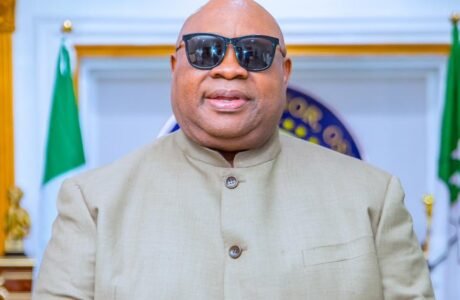
    (Governor Ademola Nurudeen Adeleke of Osun State)


    By Iyiola Olalere

    Ede (Osun)  Barr. Adedolapo Omolade, an
    aspirant for Ede South State Constituency,
    *Osun State House of Assembly, has urged Osun people to remain focused and united to further achieve prosperity.

    Flowerbudnews reports that Barr. Omolade made the call in a public message to further sensitise Osun indigenes, especially the people of Ede South Local Government area on the need to remain steadfast and committed.

    Barr. Omolade wrote:

    As we embrace the beauty of a new week, I encourage us all to remain hopeful, steadfast, and committed to the values that bind us together as one people.

    Success is to wake up each morning and consciously decide that today will be the best day of your life. What you do today can improve all your tomorrows.

    Let us continue to show love to one another, extend kindness where it is needed, and stay united in our shared vision for a better and more prosperous Ede South.

    May today bring peace to your homes, joy to your hearts, and renewed energy.


  • ‘US, Israel Voted Against Decision,’ As UN Declares Transatlantic Africa Slave Trade Gravest Crime Against Humanity

    ‘US, Israel Voted Against Decision,’ As UN Declares Transatlantic Africa Slave Trade Gravest Crime Against Humanity


    123 votes in favour, while the United States, Israel, and Argentina voted against it, and 52 countries, including Britain and European Union member states, abstained.

    The United Nations (UN) General Assembly has formally declared the transatlantic African slave trade as “the gravest crime against humanity”, in a decision widely seen as a significant step towards healing and the pursuit of reparations.

    According to the UN, for over 400 years, more than 15 million men, women and children from Africa were the victims of the tragic transatlantic slave trade, one of the darkest chapters in human history.

    The resolution was adopted on Wednesday, with 123 votes in favour, while the United States, Israel, and Argentina voted against it, and 52 countries, including Britain and European Union member states, abstained.

    “The transatlantic slave trade was a crime against humanity that struck at the core of personhood, broke up  families, and devastated communities,” UN Secretary-General Antonio Guterres said.

    “To justify the unjustifiable, slavery’s proponents and beneficiaries constructed a racist ideology, turning prejudice into a pseudoscience.”

    The resolution not only recognised the historical injustice but also urged countries involved in the slave trade to pursue reparatory justice through formal apologies, compensation, and policies aimed at addressing systemic discrimination.

    United Nations (UN)

    It further called for the “prompt and unhindered restitution” of cultural artefacts, including artworks, monuments, and archives, to their countries of origin.

    Ghana’s President, John Dramani Mahama, who strongly backed the move, addressed the assembly before the vote, describing the resolution as a step towards healing.

    “Today, we come together in solemn solidarity to affirm truth and pursue a route to healing and reparative justice,” he said, adding that it would serve as “a safeguard against forgetting.”

    The resolution explicitly condemned “the trafficking of enslaved Africans and racialised chattel enslavement of Africans” and underscored the lasting impact of slavery, including ongoing racial discrimination and what it described as neo-colonial structures.

    It also encouraged member states to promote dialogue on reparatory justice and support educational programmes on the transatlantic slave trade.

    Transatlantic slave trade. Credit: Britannica

    In addition, the resolution called for stronger collaboration among regional organisations such as the African Union, the Caribbean Community, and the Organization of American States to advance reconciliation efforts.

    According to the UN, for over 400 years, more than 15 million men, women and children were the victims of the tragic transatlantic slave trade, one of the darkest chapters in human history.

    In commemoration of the memory of the victims, the General Assembly, in its resolution 62/122 of 17 December 2007, declared 25 March the International Day of Remembrance of the Victims of Slavery and the Transatlantic Slave Trade, to be observed annually.

    The resolution also called for the establishment of an outreach programme to mobilize educational institutions, civil society and other organizations to inculcate in future generations the “causes, consequences and lessons of the transatlantic slave trade, and to communicate the dangers of racism and prejudice.”

    Since then, every year on 25 March, the International Day of Remembrance for the Victims of Slavery and the Transatlantic Slave Trade has offers the opportunity to honour and remember those who suffered and died at the hands of the brutal slavery system.

    This International Day also aims at raising awareness about the dangers of racism and prejudice today.

  • GOVERNANCE DOES NOT JUST NEED INTENTION, IT NEEDS PRESENCE – AVM Iyamu

    GOVERNANCE DOES NOT JUST NEED INTENTION, IT NEEDS PRESENCE – AVM Iyamu


    By AVM  AKUGBE IYAMU (Rtd)

    Governance provides the opportunity for leadership to be professional while they are emotionally disembling because you can’t take spaces without consequences.

    Effective leadership does not announce itself with sparks, sometimes it shows up quietly disguised as admiration, someone who understands urgency and the struggle of their country and create explanations that don’t feel like luxuries.

    Intention on it’s own is not enough to bridge economic and structural imbalances as Nigerians are asked to survive conditions they were never designed for. That is why Leadership should be about editing oneself and minimise your feelings to protect what is already at strain.

    This is because when soon becomes eventually and eventually becomes undefined, what exactly are we preserving: governance or a semblance of one.

    It becomes not broken at once, not dramatically but patience is stretched thin and governance has to be redefined.
    Every nation that is suffering from hunger, insecurity, poverty and inequality need a leader who understands urgency.

    A hungry population cannot wait for comfort, a struggling generation cannot wait for indifference. Leadership demand discipline and a willingness to place public welfare above personal convenience and every opportunity in leadership carries one central purpose; to help mankind, and leadership that dies without producing good work become increasingly meaningless.

    Governance does not just need intention, it needs infrastructure. It needs empathy, commitment and reality and when those things are removed, what remains in governance is not always enough no matter how strong the leadership is.

    Most often, Nigeria convert single hiccups to huge problems that last a decade to solve. Why does the simple solutions that people seek like electricity, pipe borne water, public safety and primary healthcare still hold our society hostage?

    Life in Nigeria requires attention elsewhere and everywhere with the conversation often centred around stability, security and broader questions of where we are headed as a nation. We need to understand where we are while allowing room for where we want to go because the citizens are left negotiating to follow, to wait or quietly let go.

    Let governance be consistent, let it be intentional, let governance be something leaders practice and not postpone. If all else fails, remember that every day is good day to chose your citizens even if no one sends appreciation.


    (AVM (RTD) AKUGBE IYAMU MNSA fsi, a
    CONSULTANT ON CLIMATE CHANGE AND ANALYST ON ENVIRONMENTAL POLICIES, is the PRESIDENT ASSOCIATION OF ENVIRONMENTAL PROTECTION AND CLIMATE CHANGE PRACTITIONERS)

  • Fair: Dangote reaffirms commitment to strengthening Nigeria’s industrial base, MSMEs

    Fair: Dangote reaffirms commitment to strengthening Nigeria’s industrial base, MSMEs

    Fair: Dangote reaffirms commitment to strengthening Nigeria’s industrial base, MSMEs


    The Dangote Group has reaffirmed its commitment to strengthening Nigeria’s industrial base and supporting Micro, Small and Medium Enterprises (MSMEs) in the country.


    The South East Regional Director of Dangote Cement, Mr. Olatunbosun Jinadu, stated this on Thursday in Enugu during the Dangote Special Day at the ongoing 37th Enugu International Trade Fair organised by the Enugu Chamber of Commerce.


    Jinadu noted that while MSMEs remained the backbone of both local and global economies, their competitiveness in Nigeria was hindered by high production costs including energy, raw materials availability and infrastructure challenges.


    To address these challenges, he highlighted the group’s long-term growth agenda, which focused on industrial expansion, consolidation, and cross-border investments aimed at boosting Africa’s self-sufficiency in critical sectors such as energy, manufacturing, and infrastructure.


    According to him, the strategy includes plans to expand the capacity of the Dangote Refinery from 650,000 barrels per day to 1.4 million barrels per day and the scaling up of the fertiliser production to 12 million metric tonnes annually.


    The director noted that the company was also increasing output at its polypropylene plant to meet rising demand across packaging, textiles, automotive, medical, and construction industries.


    He said, “Nigeria’s economic transformation must be anchored on local production and industrial self-reliance.


    “Dangote Refinery remains a flagship project driving local content development through job creation, skills transfer, and the engagement of Nigerian professionals.”


    On the theme of the fair: “Empowering MSMEs for Global Competitiveness”, the director said that the theme showed that “the fair is not just an exhibition of products, but a clarion call to strengthen the MSMEs”.


    He said that MSMEs formed the backbone of local and global economies.


    He also urged participants to engage with Dangote’s various business units exhibiting at the fair and take advantage of opportunities to partner with the company.


    In his remarks, the President of Enugu Chamber of Commerce, Mr Nnanyelugo Onyemelukwe, commended the Dangote Group for its sustained support of the fair, while calling for deeper investment in the South-East.


    Onyemelukwe noted that the group’s consistent sponsorship of the fair for five consecutive years demonstrated its commitment to the growth of commerce and industry in Enugu State and the South-East.


    He expressed optimism that the Dangote refinery would help address the persistent challenges of fuel scarcity and high petroleum prices in Nigeria.


    The chamber boss also urged the company to work closely with the Federal Government to bring relief to citizens.


    “We are indeed happy that Dangote Group has been part of our success story.


    “The refinery should give Nigerians hope by addressing the rising cost of refined petroleum products,” he said.

  • IMT Enugu, UNICROSS sign agreement on HND top-up, postgraduate programmes

    IMT Enugu, UNICROSS sign agreement on HND top-up, postgraduate programmes

    IMT Enugu, UNICROSS sign agreement on HND top-up, postgraduate programmes


    The Institute of Management and Technology (IMT), Enugu, has entered into a strategic academic partnership with the University of Cross River State (UNICROSS) to provide top-up degree programmes and postgraduate studies for Nigerian students.

    The Memorandum of Understanding (MoU), which was signed on Thursday, marks a significant step toward bridging the long-standing gap between Higher National Diploma (HND) and university degree qualifications in Nigeria.

    Speaking after the MoU signing, the Rector of IMT, Prof. Gozie Ogbodo, described the agreement as a “historic milestone” in the institution’s pursuit of academic excellence, collaboration, and human capital development.

    Ogbodo explained that the partnership would enable holders of HND certificates from polytechnics across the country to upgrade their qualifications to Bachelor of Science (B.Sc) and Bachelor of Arts (B.A) degrees through a structured top-up programme.

    According to him, the initiative is designed to eliminate barriers that have historically limited the academic and professional progression of HND graduates.


    “This partnership is not merely a formal agreement; it is a strategic alliance aimed at expanding opportunities and creating a seamless pathway for academic growth,” he said.

    In addition to the top-up programme, rector said that the collaboration would also facilitate postgraduate studies in over twenty academic disciplines; thereby, strengthening research capacity and equipping graduates with advanced skills for global competitiveness.

    Ogbodo emphasised that the success of the programme would be anchored on mutual trust, shared values, and a commitment to maintaining high academic standards.

    He further commended UNICROSS for its willingness to collaborate, noting that both institutions share a common vision for quality education and societal impact.

    In his speech, the Vice Chancellor of UNICROSS, represented by the Director, Center for Educational Services, UNICROSS Dr. Nsed Ayip Akonjom expressed excitement with the partnership.

    He conveyed the excitement of the Vice Chancellor to IMT and promised that UNICROSS would give the programme the attention it deserves.

    The initiative is expected to benefit students, academic staff, and the broader Nigerian education sector by promoting inclusivity and innovation.

    Education stakeholders have described the partnership as a timely intervention capable of redefining higher education pathways in Nigeria.

  • Bayo Onanuga and the Quiet Architecture of Power and Strategy

    Bayo Onanuga and the Quiet Architecture of Power and Strategy


    By Hon. Tosin Olayinka, LL.B (Hons), B.L, LLM (London)

    In an age where governance is increasingly shaped by the velocity of information and the volatility of public opinion, a few figures distinguish themselves not by noise, but by clarity, restraint, and precision. Chief Bayo Onanuga, OON, CON, Special Adviser on Information and Strategy to President Bola Ahmed Tinubu, GCFR, belongs firmly in that rare class. He is not merely a government spokesman; he is a disciplined custodian of narrative, a strategist who understands that communication, at its highest level, is both an art and an instrument of statecraft.

    Onanuga’s journey to the heart of the Presidency is rooted in a long and distinguished career defined by courage, intellect, and commitment to truth. As a co-founder of TheNews magazine and a central figure in Nigeria’s pro-democracy media movement, he honed his instincts in an era where journalism demanded not just skill but sacrifice. That formative experience is evident today in his measured tone, his command of facts, and his refusal to indulge in reactionary rhetoric. He does not speculate; he informs. He does not inflame; he clarifies.

    Within the current administration of President Bola Ahmed Tinubu GCFR, Onanuga has quietly engineered a communication framework that is both responsive and deliberate. The Presidency no longer speaks in fragments; it communicates with cohesion and intent. At the centre of this recalibration is a philosophy that prioritises timeliness without sacrificing accuracy, engagement without descending into populism, and firmness without hostility. His presence on X (formerly Twitter) has become an extension of this doctrine, where he addresses concerns, counters misinformation, and reinforces government positions with a calm authority that disarms critics and reassures supporters.

    Yet, beyond the official briefings and digital engagements lies a less documented yet equally compelling dimension of Onanuga: his humility and human connection. This was brought into sharp focus during the State Visit of President Bola Ahmed Tinubu and his wife, Senator Oluremi Tinubu, to London.

    At the Hilton Park Lane, London, temporary secretariat conceived by Prince Ade Omole to galvanise Diaspora support for Mr President’s visit, Onanuga arrived alongside Hon Temitope Ajayi, Senior Special Assistant to the President on Media and Publicity, without ceremony or spectacle. They came on time and remained until the very end of a long and demanding programme, a quiet affirmation of discipline and respect for engagement.

    What stood out was not just his presence, but his conduct. He greeted attendees with a gentle bow, a subtle but powerful gesture of respect. He obliged an endless stream of requests for photographs, never once betraying impatience. His demeanour was consistently calm, approachable, and sincere. Yet it was during an unscripted moment that the full weight of his intellect and confidence became unmistakably clear. When a participant posed a difficult and highly charged question, the atmosphere shifted. Prince Omole and Ambassador JK Adebola, Chairman of Renewed Hope Global, were poised to respond, but Onanuga intervened, requesting that they allow him to address the issue personally.

    For nearly twenty minutes, he held the room in rapt attention. Without notes, without prompts, and without any visible preparation, he delivered a comprehensive and nuanced response that not only addressed the question but dismantled underlying misconceptions. He expanded the discussion into a broader exposition on the state of the nation, weaving facts with context in a manner that was both enlightening and compelling. There was no defensiveness in his tone, no attempt to score rhetorical points. Instead, there was clarity, patience, and an evident mastery of the subject. When he concluded, the audience’s response was immediate and resounding applause, not merely for what was said but for how it was delivered.

    That moment encapsulated what sets Onanuga apart. He does not merely react to communication challenges; he transforms them into opportunities for public education and trust-building. In doing so, he exemplifies a rare blend of courage and composure, demonstrating that strength in communication lies not in aggression, but in clarity and conviction.

    “Odò tó kún kì í ṣàn pẹ̀lú ariwo.” – a Yoruba Proverb meaning a full river does not flow with noise … Those who possess true power and wisdom carry themselves with quiet humility.

    His effectiveness is further amplified by a team of seasoned professionals he manages within the Presidency, including Dr Sunday Dare, CON; Chief Tunde Rahman; Hon Temitope Ajayi; Hon O’tega Ogra; Hon Abdulaziz Abdulaziz; Hon Stanley Nkwocha and others. Together, they have built a communication ecosystem that is becoming more coherent, proactive, and people-focused, reflecting the administration’s broader strategic intent.

    Ultimately, the story of Chief Onanuga is not just about a man, but about a method that prioritises substance over spectacle and strategy over sentiment. In a political environment often defined by excess, his restraint is refreshing; in a communication landscape crowded with voices, his clarity is commanding. It is therefore no coincidence that the Presidency’s messaging has gained renewed coherence and strength. It is the product of deliberate choices, informed leadership, and individuals who understand both the power and the responsibility of the spoken word.

    In recognising Onanuga’s contribution, one must also acknowledge the foresight of President Bola Ahmed Tinubu GCFR in assembling a team of experienced hands who bring depth, discipline, and credibility to governance. It is a reminder that effective leadership is not only about vision, but about the people entrusted to communicate and execute that vision. In Bayo Onanuga, the Presidency has found not just a communicator, but a master strategist whose quiet influence continues to shape Nigeria’s national conversation.

    (Hon. Tosin Olayinka, LL.B (Hons), B.L, LLM (London) is
    Programme Director,
    Renewed Hope Global
    WhatsApp: +44 7480 805585.

    ©️ Renewed Hope Global)

  • About Death:  A Food for Thought

    About Death:  A Food for Thought


    A Muslim Wrote:

    I once lived beside a mortuary.
    Not close to it, but beside it.

    Just an incomplete fence separated the house from the mortuary. If you stretched your neck, you could literally see the mortuary.

    Every day.
    Dead bodies coming in.
    Mourners crying.
    Ambulances arriving.
    Silence afterwards.

    The house had six flats and I was the only tenant.

    Not because the rent was expensive.
    Not because the house was bad.
    People were simply afraid.

    The mortuary scared them.

    But for me, that was the cheapest place I could afford during a mission assignment, and when you are pursuing purpose, comfort becomes secondary.

    So I moved in.

    And for months, I lived there alone.

    Every morning I stepped out, I saw the reality many people spend their lives trying to ignore.

    Death.

    Not in theory.
    Not in movies.
    Not in sermons.

    Real life.

    Stretchers going in.
    Bodies being wheeled out.
    Families shattered in minutes.

    I suddenly realize that the things people fight over, destroy relationships over, envy each other over, are incredibly temporary.

    The car someone is killing himself to impress people with…
    One day it will drive behind a hearse.

    The house someone built with pride…
    One day people will gather there for a condolence visit.

    The body people spend years idolizing…
    One day it will lie lifeless on a cold metal table.

    *Life is short.*
    *Purpose is urgent.*
    *Eternity is real.*

    Many evenings I would stand quietly and watch as families arrived crying uncontrollably.

    Some of the people inside those freezers probably had plans for next week.

    Appointments.
    Meetings.
    Projects.
    Dreams.

    But life had other plans.

    And every day I asked myself a question

    If my own body was wheeled into that mortuary tomorrow, what would my life have stood for?

    Not popularity.
    Not noise.
    Not social media impressions.
    But impact.

    That season recalibrated my thinking forever.

    *It taught me that the clock of destiny is always ticking, even when we are wasting time arguing about irrelevant things*.

    Some people reading this are waiting for the “perfect time” to obey God.

    The perfect time to start the assignment.
    The perfect time to preach.
    The perfect time to forgive.
    The perfect time to reconcile.
    The perfect time to become serious with God.

    *Life does not always announce when it is ending*.

    The people inside those cold rooms didn’t plan it that way.

    And yet there they were.

    Which means one thing.

    The greatest tragedy in life is not death.

    The greatest tragedy is reaching the end of life and discovering you never truly lived for what mattered.

    Allah(subhanahu wa ta’aala) calls our attention to this in Quran 16: 90:
    “*Whatever is with you, will be exhausted and whatever is with Allah(of good deeds) will remain. And those who are patient, We will certainly pay them in reward according to the best of what they used to do”*

    We are all on a journey that has an end .
    Please let’s ponder on this,

    Let us live right and always remember our end.
    {copied}

    Yah Robi, Yah Allah,
    grant us a fulfilled life and bless us with a good end🤲🏽🤲🏽

    *As-salaam alaykum warahmatullah wa barakaatuhu and good morning*