



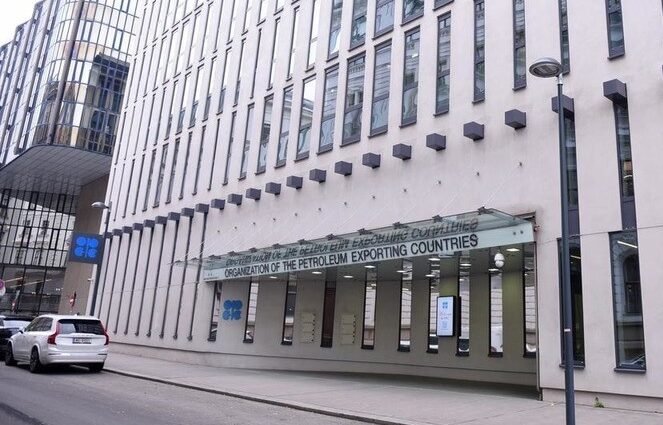
CAIRO: (Xinhua)/FLOWERBUDNEWS :– The United Arab Emirates (UAE) announced it will withdraw from the Organization of the Petroleum Exporting Countries (OPEC), marking the end of its decades-long alignment with the cartel.
The decision, framed by Emirati officials as a “sovereign, strategic choice,” is believed to better align with the country’s long-term economic vision and production ambitions. However, experts argue that the move may steer the global energy geopolitics toward a more fragmented structure.
“SOVEREIGN” DECISION
The UAE formalized its departure through a statement released by the official Emirates News Agency (WAM) on Tuesday, confirming its exit from both OPEC and the broader OPEC+ alliance.
The withdrawal is set to take effect on May 1, removing the group’s third-largest producer from its quota system. Analysts estimated that OPEC will lose about 15 percent of its capacity.
The decision followed “a careful look at current and future policies related to level of production,” Energy Minister Suhail Mohamed Al Mazrouei told Reuters, adding that the UAE did not raise the matter with any other country.
The sentiment was echoed by the Foreign Ministry, with its communications director Afra Mahash Al Hameli describing the exit on X as a “sovereign, strategic choice grounded in its long-term economic vision.”
Al Hameli said the move will give the country greater flexibility in using its energy capacity, strengthen national development, and reinforce market confidence.
DIVERGING PATHS
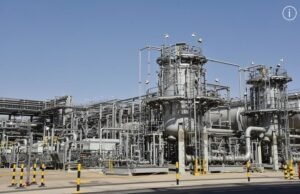
The UAE decision, analysts say, reflects a strategic pivot driven by its expanded production capacity and independent export routes, underscoring a broader ambition to become a versatile global energy leader beyond the cartel’s constraints.
Mohamed Nour El-Din Hashim, a Sudanese economist, believes the UAE’s exit is driven by a strategic desire to break free from OPEC production constraints to maximize oil revenues.
“This is true especially after Abu Dhabi has made substantial investments in expanding its oil production capacity in recent years,” Hashim said.
Though regional tensions almost paralyzed shipping through the Strait of Hormuz, the UAE possesses alternative export routes that grant it greater flexibility, he said, boosting its confidence in managing its oil policies “outside OPEC+ collective commitments.”
Aside from oil, the UAE harbors ambition to become a global energy hub in a broader sense, encompassing oil, gas, hydrogen and renewable energy, noted Emirati political analyst Abdulaziz Sultan Al-Mamari.
The country wants to pursue “greater autonomy” to better manage its “production levels” and meet its new role in the global market, Al-Mamari told Xinhua.
On a larger scale, Jumaa Mohammed, a politics professor at Iraq’s Tikrit University, argues that OPEC has increasingly struggled to balance the differing production strategies of its members.
“The strongest evidence: the UAE did not consult Saudi Arabia,” Mohammed said. “In GCC (Gulf Cooperation Council) culture, this has never happened before. Major decisions were always preceded by meetings and coordination.”
This, however, does not mean a political rupture within, Al-Mamari said.
“Gulf countries are undergoing a phase of economic and sovereign repositioning characterized by diversified tools and approaches, without affecting the foundations of strategic coordination among them,” he added.

FRAGMENTED ENERGY ORDER
The UAE’s exit not only entails oil price volatility in the short term, regional experts argue, but also signals a shift from OPEC collective discipline toward a more fragmented, market-driven energy order.
Mohammed Belqasim Al Barghouti, a Libyan political economy professor, hold the view that the exit of a country the size of the UAE, an influential producer, could weaken OPEC’s cohesion, but not its overall influence.
“In reality, the organization’s weight today largely depends on a central axis led by Saudi Arabia within OPEC, alongside its partnership with Russia under OPEC+,” Al Barghouti said.
Thus, the impact will be more on the level of discipline within the alliance rather than a collapse of the organization, he said.
Still, any signal of fragmentation within OPEC could create volatility and uncertainty in oil prices, pointed out Oytun Orhan, a senior researcher at the Ankara-based Center for Middle Eastern Studies.
“If the UAE moves to increase production outside quota constraints, this could put downward pressure on prices, especially if it coincides with a slowdown in global demand,” the researcher said.
In the long term, Sudanese political analyst Abdul-Rahman Awad said, the decision potentially marks the beginning of a new phase where national calculations trump collective discipline.
The expert warned, “The UAE’s decision could mark the beginning of a new phase in the global energy market, where traditional blocs lose their ability to enforce collective discipline, giving way to more independent policies driven by national calculations.”
Al-Mamari also believes this could accelerate a structural shift away from collective supply management.
“The decision may form part of a broader structural transformation in global energy architecture, shifting from collective control mechanisms toward a more open model, governed by supply and demand dynamics and balances of power among producers,” he said.